 Last month we reported that John Joseph Adams, editor of Fantasy and Lightspeed, had acquired both magazines from publisher Prime Books.
I think I also said “Adams has not announced if he’ll make any changes to the magazines.” Well, strike that.
After publishing the December issues of both magazines, Adams made this announcement on his blog:
We’ll be merging Fantasy and Lightspeed. But never fear: We won’t be doing away with any of Fantasy‘s fiction; each issue of the combined magazine will contain four science fiction stories and four fantasy stories. We won’t be reducing the number of stories, or replacing any Fantasy content with Lightspeed content; this will be a true merger…
Since we’re doubling the amount of fiction in each issue, we’re going to raise the price of our ebooks — but not by double: We’ll be raising the price to just $3.99. So you’ll be getting twice as much fiction, for just a dollar more per issue; plus, from here on out, each ebook edition of Lightspeed will feature exclusive content that you won’t find on our website — namely, in addition to the eight short stories you’ll also find [on] our website, each ebook issue will now feature a novella-length story.
We’ll be keeping the www.fantasy-magazine.com website up as an archive, but all future Fantasy content will appear as part of Lightspeed, at www.lightspeedmagazine.com, so be sure to update your bookmarks and RSS feeds!
Adams also announced that they’ll be eliminating the non-fiction articles that accompany each story, in order to focus more on fiction. However, they will continue to publish feature interviews and author spotlights each issue.
While I’ll miss the separate identity Fantasy had as a standalone magazine, overall I think the changes are positive. And $3.99 per issue is a real bargain for that much fiction.
We last covered Fantasy Magazine in April with issue #49.
You can read the complete announcement here, and purchase the Kindle editions of Lightspeed and the final issue of Fantasy — featuring stories from Joe R. Lansdale, Seanan McGuire, Alasdair Stuart, Naomi Novik, and Nike Sulway — for just $2.99 each.
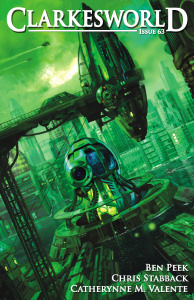 The December issue of Clarkesworld is currently online. Featured fiction: “Sirius” by Ben Peek, “In Which Faster-Than-Light Travel Solves All Our Problems” by Chris Stabback and the conclusion of Catherynne M. Valente’s “Silently and Very Fast.” Non fiction by Brenta Blevins, Jeremy L.C. Jones and Neil Clarke. The cover art is by Folko Stresse.
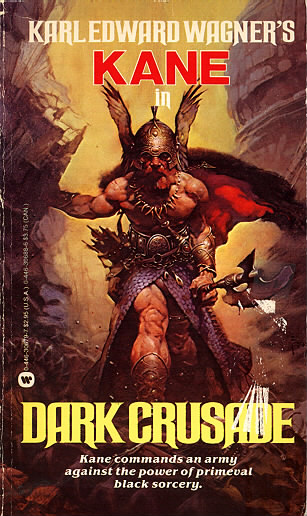 Why has swords and sorcery languished while epic fantasy enjoys a wide readership? In an age of diminished attention spans and the proliferation of Twitter and video games, it’s hard to explain why ponderous five and seven and 12 book series dominate fantasy fiction while lean and mean swords and sorcery short stories and novels struggle to find markets (Black Gate and a few other outlets excepted).
 The Prow Beast