Art of the Genre: Game Review, Paizo Bestiary Collection
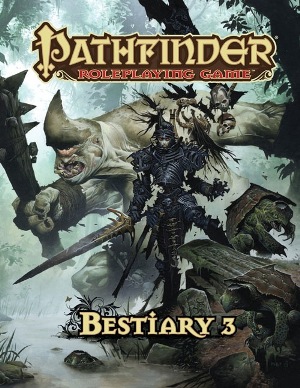
One day, long ago, I went to a Waldenbooks and picked up a copy of TSR’s Monster Manual II. It was my first monster compendium, the only other I’d seen was a borrowed copy of Monster Manual I with the rather mundane David C. Sutherland III cover. It was this book, covered by Jeff Easley, that taught me just what it was to hold the power in your hand over a world of fabled monsters.
Still, the journey into the realm of the enemy, the monster, was on well its way with that purchase, as was my apprenticeship in the profession of Dungeon Master. That trip has taken a long and twisting road through more realms of imagination that could be spoken of this day, but nonetheless, it’s been a truly special one.
Monsters, you see, are the key to everything that truly IS a role-playing game. Sure, you could make the argument that it’s about the players, the story, the social interaction, but at the core it all revolves around the conflict. This conflict, and the experience points born from it, is inherently tied to the realm of monsters.
Simply put, to be an effective Game Master [as the term Dungeon Master has become antiquated over the decades, I guess, although I still use it…] you need to have a plethora of monsters at your disposal.
This is true of any system, but even more so in a fantasy setting, and as I started playing Paizo’s Pathfinder upon its release, I’ve had the pleasure of filling my shelves with some of their rather incredible monster supplements.

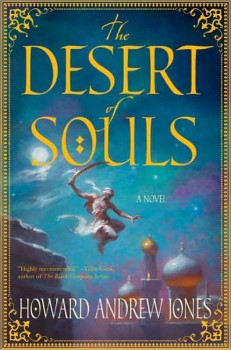 Howard Andrew Jones’ first novel The Desert of Souls has been named one of the best fantasy novels of the year by Barnes & Noble.
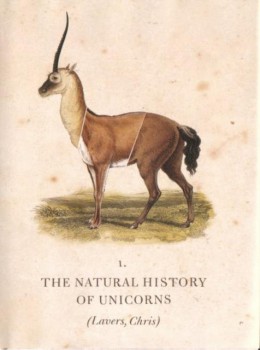 The Natural History of Unicorns (2009)
 What if one day you woke up and found yourself in charge of a publishing imprint?
 This month’s Apex Magazine features