“Farewell to Tyrn” and Notes on Self-Publishing for the First Time
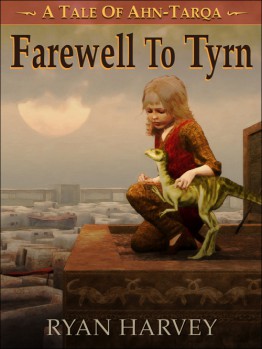 I’m taking a one-week break from Mars to do some shameless self-promotion, which I promise will be over quickly so I can regale you with a personal story. The Warlord of Mars next week, I promise.
I entered the realm of e-book publishing this week with my novelette “Farewell to Tyrn.” It is available for 99¢ at Amazon.com for the Kindle, and at Smashwords for all other e-reader formats (including vanilla plain text, which I find cool in a low-tech way).
“Farewell to Tyrn” is the second story released in my science-fantasy setting of Ahn-Tarqa. The first is my Writers of the Future-winning piece “An Acolyte of Black Spires.” Two more Ahn-Tarqa stories, “The Sorrowless Thief” and “Stand at Dubun-Geb,” are slated to appear in upcoming issues of Black Gate, so if you want to get a sense of the world, you can start with “Farewell to Tyrn.”

 John R. Fultz’s first novel, Seven Princes, has been
 Last Friday was Friday the thirteenth. It was also Clark Ashton Smith’s birthday. In memory of that conjunction, I’d like to write a bit about Smith and his work. I have only a few thoughts about Smith’s prose style; Ryan Harvey’s excellent and insightful look at Smith’s fiction can be found in four parts,
 Ivy’s Ever After
 Problem is, that’s not what Alan came to hear. Which results in tragedy (you are reading a dark horror magazine so why would you expect anything less?) that may, or may not, have been easily foreseen.