14 Questions for S.M. Stirling
 I’ve known S.M. Stirling, or Steve as his friends call him, for ten years now. He and I were in the same writers group in New Mexico, called Critical Mass, and I believe I’ve read exactly eight-five kajillion of his words. A rigorous editor and rewriter of his own work, he’d often dwarf the rest of our submissions for the month. It’s been my privilege to watch from this vantage point as he climbs the sales charts, from a well respected niche writer to now a New York Times bestselling one.
Unfortunately, my move from New Mexico to London ended my time in Critical Mass, but not the friendships or the contact, thanks to the miracles of modern technology. Steve’s career continues to move from strength to strength as he fleshes out his Emberverse series. Set in a future in which some of the laws of physics have taken a vacation, humanity must live without electricity, gunpowder, or even steam power. Any attempt to harness these old technologies falls flat. Magic and mythical visions, however, gain strength with each passing year. To me, this a brilliant fantasy premise that makes use of the science fiction conceit, “it could happen someday”. The characters learn to make castles out of concrete and swords out of scrap metal. SCA members find their fluency in Tolkein Elvish and armor making skills useful in a way they never imagined. Wicca becomes a mainstream religion, and a history professor who once worshipped the despots of old becomes one. Whether you’ve actually made your own chain mail, or merely think that’s a cool idea, you should give his books a try.
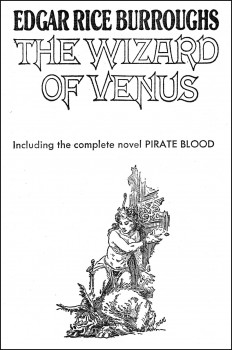 The Venus series ends not with a novel, but a novella. Consequently, this will be the shortest entry in my survey of Burroughs’s last series, but I have appended a wrap-up with my final thoughts on the Venus books as a whole.
 Last week,
 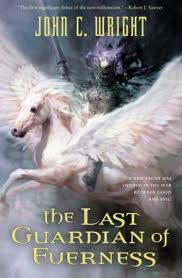 The Last Guardian of Everness
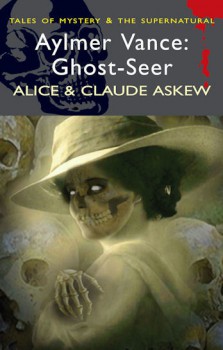 Aylmer Vance, agent of the enigmatic Ghost Circle, made his first appearance on the nightmare stage in 1914. The creation of husband-and-wife writing team Alice and Claude Askew, Vance appeared in eight consecutive issues of The Weekly Tale-Teller between July and August. The stories-“The Invader”, “The Stranger”, “Lady Green-Sleeves”, “The Fire Unquenchable”, “The Vampire”, “The Boy of Blackstock”, “The Indissoluble Bond” and “The Fear”-ranged from grotesque to gentle, and are, by and large, of a slower pace than those featuring Vance’s contemporaries, such as
 The new