Art of the Genre: The Pillaging of Kickstarter? 2: Stats & Video
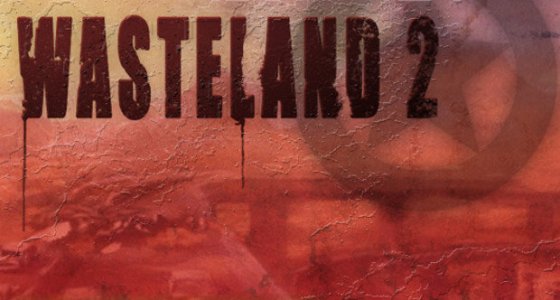
It’s been a very interesting two weeks since I posted up a little article on Saturday in my Kickstarter spot here on Black Gate. Usually, all my Kickstarter posts are met with a HUGE lack of readership or interest, most posting no more than two hundred reads, so I decided it wouldn’t be horribly impactful to post an article I titled The Pillaging of Kickstarter?
When I posted it at 12:01 AM on a Saturday morning, I had no idea that when I’d wake up the next day it would already be at over seven hundred reads. The article created a perfect firestorm of venom and vitriol spat in my general direction from every single soul who decided to comment on it, and let me assure you there were more than a couple.
My premise was that companies shouldn’t be on a grass roots movement crowd-funding platform like Kickstarter because it hurt smaller projects. That argument was flatly burned at the stake by all comers, but I was intrigued by the fact that no matter how villainous I seemed for saying what I did, there was no one with actual numbers to back their theory any more than I could back mine.
By Thursday that week my article had over two-thousand views, and some of my initial arguments had been refuted by inXile’s participation in a couple of things, first they were actually backing project with pledges on the platform, and second inXile CEO Brian Fargo had initiated a call for a program called Kicking it Forward in which 5% of total sales income from products produced on Kickstarter would be returned to the platform in the form of pledging.
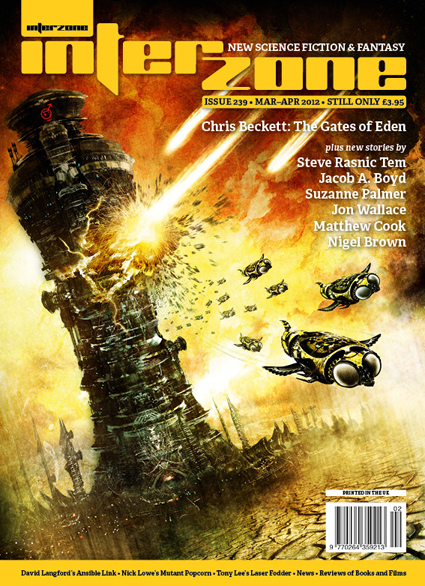 The March-April issue of Interzone features new stories by Chris Beckett (”The Gates of Eden”), Steve rasnic Tem (”Twember”), Jon Wallace (”Lips and Teeth”), Suzanne Palmer (Tangerine, Nectarine, Clementine, Apocolypse”), Matthew Cook (“Railriders”) and Nigel Brown (“One-Way Ticket”); cover artwork by Ben BaldwinJacob Boyd (“Bound in Place”); “Ansible Link” genre news and miscellanea by David Langford; “Mutant Popcorn” film reviews by Nick Lowe; “Laser Fodder” DVD/Blu-Ray reviews by Tony Lee; book reviews by Jim Steel and other contributors.
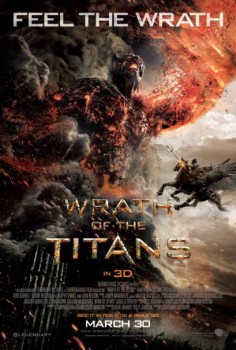 Wrath of the Titans (2012)
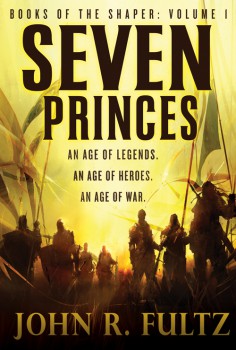 Seven Princes
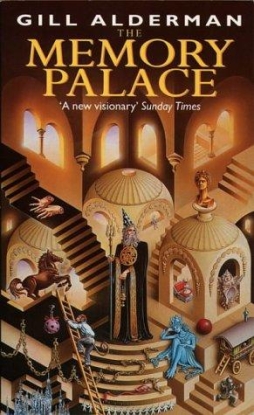 Sometimes, you need to grow as a reader to be able to appreciate a certain book. In 1996, I bought a paperback fantasy novel called The Memory Palace, by Gill Alderman. It was a whim, I suppose; maybe something about the cover appealed to me, or more likely something in the synopsis on the back, promising a story about a fantasy writer who gets lost in his fictions and confronts an archmage of his own making. Whatever the reason, I started in on it, swiftly lost interest, set it aside, and only came back to it sixteen years later.