Browsed by
Category: Writing

Wolfe’s lost road: Discovering an author’s personal essay on J.R.R. Tolkien

Wolfe’s lost road: Discovering an author’s personal essay on J.R.R. Tolkien

gene-wolfe-1Freedom, love of neighbour, and personal responsibility are steep slopes; he could not climb them for us—we must do that ourselves. But he has shown us the road and the reward.

–Gene Wolfe, “The Best Introduction to the Mountains”

J.R.R. Tolkien has so many readers, and his works have become so pervasive in the broader culture, that coming to his defense hardly seems necessary anymore. Haven’t we established Tolkien’s credentials by now? Magazines like Time have selected The Lord of the Rings as one of the top 100 novels ever written, according to Wikipedia it’s one of the top 10 best-selling books of all time with 150 million copies sold, and the movies upon which it’s based won several Academy Awards, including Best Picture. Tolkien has made it onto several college syllabi and there are academic journals and numerous critical studies devoted to his works, including Tom Shippey’s par excellence works Author of the Century and The Road to Middle-Earth.

But someone always comes along to attack Tolkien on the basis of his conservatism or religion, his perceived racism, and/or the perceived shallowness/non-literary nature of The Lord of the Rings, and I’m reminded of why we need to vigilant. For example, David Brin of Salon.com, Science fiction/fantasy author Richard Morgan (author of The Steel Remains), and Philip Pullman (author of the His Dark Materials trilogy) have all taken shots at The Lord of the Rings and/or Tolkien himself in recent years, calling him outdated and dangerously conservative (Brin), a refuge for 12-year-olds and adults who have never grown up (Morgan), and shrunken and diminished by his Catholicism (Pullman).

Now I’m not saying Tolkien is above criticism, but critics like Brin and Morgan have essentially gutted The Lord of the Rings, attacking it on an existential basis and more or less claiming it should be placed in the dustbin of history. When people take aim at classics like Ulysses or Moby Dick you rarely see criticism elevated to the level of calling into question the very existence of these works. Yet Tolkien criticism for whatever reason frequently ascends to shrill peaks of outrage.
Read More Read More

ON WRITING FANTASY: A Timeless Style

ON WRITING FANTASY: A Timeless Style

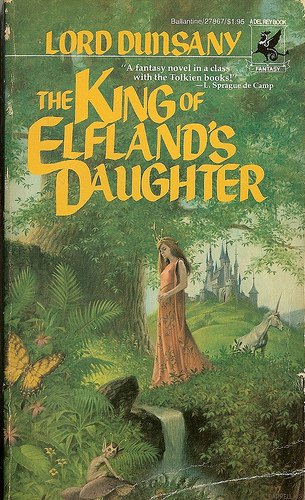
dunsany“If any man wishes to write in a clear style, let him be first clear in his thoughts…”
–Goethe

“Don’t tell me the moon is shining; show me the glint of light on broken glass.”
–Anton Chekhov

“A good style should show no signs of effort. What is written should seem a happy accident.”
–W. Somerset Maugham


The five basic Elements of Fiction are character, plot, setting, theme, and style. In a previous post I added Originality to this list, especially when it comes to Fantasy Fiction. This time around I’d like to talk about Style…what it is, why it’s important, and most importantly how to get one.

Style is important in all kinds of writing, but Fantasy has its own stylistic demands. Very few people alive today are experts at writing in Old English, Middle English, or other antique forms of language. And what’s more, very few readers want to read stories/book written in such a style.

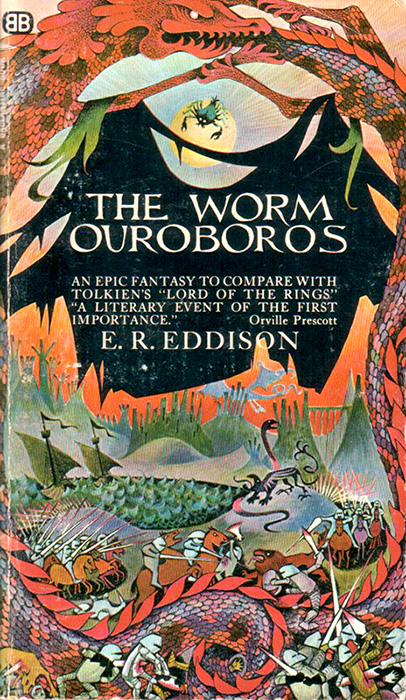
Consider this passage from E. R. Eddison’s fantasy masterpiece, THE WORM OUROBOROS:

“Then befell great manslaying between the sea-cliffs and the sea. The Demons, taken at that advantage, were like a man tripped in mid-stride by a rope across the way. By the sore onset of the Witches they were driven down into the shallows of the sea, and the spume of the sea was red with blood. And the Lord Corinius, now that he had done with feigned retreat, fared through the battle like a stream of unquenchable wildfire, that none might sustain his strokes that were about him.”

worm1For those of us who relish Shakespeare and thrill to antique forms of language, this brilliant passage is highly enjoyable. Yet there is no doubt that its style is vastly outdated and many modern readers would shy away from this fantastic novel simply because of its weight of style and ponderous language. Beauty is in the eye of the beholder, but keep in mind that Eddison published his masterwork way back in 1922. Although beautiful and perfect for the feel of high fantasy, that language just doesn’t fly today…unless you’re staging a production of HAMLET.
Instead of antique language, today’s fantasy demands a certain timelessness of language. That’s where the writer’s Style means everything.

There’s on old show-biz joke that goes: “How do you get to Carnegie Hall?” The punch line: “Practice.” It’s much the same with Style. The absolute WORST thing you can do as a young/beginning writer is consciously emulate someone’s style. Imitation may be the sincerest form of flattery, but it is NOT the best route to great writing. Style comes mainly from a writer’s subconscious and natural tendencies…it is as distinctive as a thumbprint and it can change over time. We all change as we grow, learn, and develop in life, and so it’s only perfectly natural for our writing style to change.

Read More Read More

Climbing Aboard the Dragon: 10 Tips to Better Productivity

Climbing Aboard the Dragon: 10 Tips to Better Productivity

Every writer I know has trouble writing.
— Joseph Heller

Previously in this series about writing, we’ve talked about ways to get story ideas as well as different approaches you can take to writing your story, novel, comic script, screenplay, or other related screed, tome, or pamphlet.

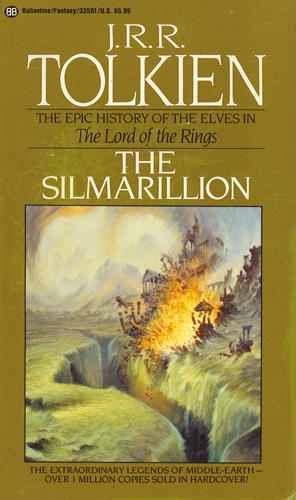
Pen image by Michael ConnorsBut what about the single most important aspect of the writing process? Yes, I’m talking about butt-in-chair time. How do you get yourself into a good schedule and motivated to write?
Very good question.

My answer? Below I’ve listed my top-ten list of tricks and techniques I’ve used that help me get more productive (and less annoyed with myself for not having gotten and writing done):

Read More Read More

ON WRITING FANTASY: The Quest for Originality

ON WRITING FANTASY: The Quest for Originality

silmarillion“Utter originality is, of course, out of the question.”

 –Ezra Pound

“It is better to fail in originality than to succeed in imitation.”
 –Herman Melville

“Originality is nothing but judicious imitation.”
 –Voltaire

How does one go about writing a great piece of fantasy? Everybody seems to have his or her own answer. A lot of that depends on what you (personally) consider to BE “great fantasy.” In my view, the fantasist must be, first and foremost, original. That’s easier said than done.

We all know that fantasy tropes, plots, and devices are recycled endlessly, and that’s as it should be, since fantasy fiction is simply the modern equivalent of the myth cycles of early humanity. The heroes, conflicts, and adventures touch on the timeless themes that run through all literature, from BEOWULF to THE ODYSSEY to LORD OF THE RINGS to our modern fantasy epics. It’s been said before that “There are no new stories, just new ways to tell them.” And that’s the job of the modern fantasy writer: to tell a mythic story in an entirely new way. 

Read More Read More

Climbing Aboard the Dragon: Three Paths To a Story

Climbing Aboard the Dragon: Three Paths To a Story

“There are nine and sixty ways of constructing tribal lays, and every single one of them is right.”
— Rudyard Kipling

Get out the map...Okay, writers. Let’s say you have a short story idea or two, but you don’t know the best way to write it. Some sage writers with some sales under their belts tell you that you Must Outline. Other wisened authors tell you to just, “Go where the story takes you,” that you shouldn’t outline at all.
So what’s a new writer to do? Who’s right?

Well, they all are, of course. They’re right about what works for them.

You have to figure out what works best for you.

Read More Read More

Locus magazine announces the 2010 Locus Awards Winners

Locus magazine announces the 2010 Locus Awards Winners

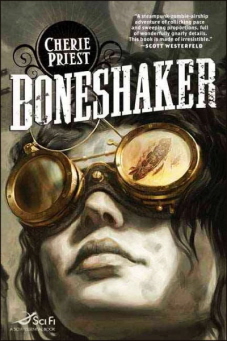
boneshaker2The 2010 Locus Awards winners were announced today, at the annual Science Fiction Awards Weekend in Seattle. The winners include:
     Best SF Novel: Boneshaker, Cherie Priest (Tor)
     Best Fantasy Novel: The City & The City, China Miéville (Del Rey; Macmillan UK)
     Best First Novel: The Windup Girl, Paolo Bacigalupi (Night Shade)
     Best Young Adult Book: Leviathan, Scott Westerfeld (Simon Pulse; Simon & Schuster UK)
     Best Novella: ‘‘The Women of Nell Gwynne’s,’’ Kage Baker (Subterranean)
     Best Novelette: ‘‘By Moonlight,’’ Peter S. Beagle (We Never Talk About My Brother)
     Best Short Story: ‘‘An Invocation of Incuriosity,’’ Neil Gaiman (Songs of the Dying Earth)
     Best Anthology:  The New Space Opera 2, Gardner Dozois & Jonathan Strahan, eds. (Eos; HarperCollins Australia)
     Best Magazine: The Magazine of Fantasy & Science Fiction

The Locus Award has been presented annually since 1971. It’s given to winners of Locus magazine’s annual readers’ poll. You can find the complete list of winners at Locus Online.

Congratulations to all the winners!

Graham McNeill’s Empire wins the David Gemmell Legend Award

Graham McNeill’s Empire wins the David Gemmell Legend Award

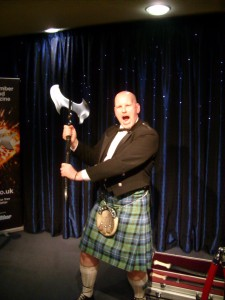
graham-and-pigstickerGraham McNeill’s novel Empire: The Legend of Sigmar (Black Library) is this year’s winner of the David Gemmell Legend Award for Best Fantasy Novel of 2009.

The list of nominees, including Brandon Sanderson, Joe Abercrombie, and Robert Jordan, was announced April 7.

The David Gemmell Legend Award  is a fan-voted award administered by the DGLA. The Legend Award for Best Fantasy Novel was first granted in 2009, to Andrzej Sapkowski’s Blood of Elves.

As winner, McNeill received a replica of the mighty Snaga, the axe wielded by Druss in David Gemmell’s novel Legend.

I think George Mann, publisher of Black Library, captured my thoughts nicely when he said:

‘We are delighted for Graham – not only is this a wonderful acknowledgement of a fine writer, but it is an important victory for franchise fiction, which is often overlooked by the wider genre community.’

The Ravensheart Award, for best Fantasy Book Jacket/artist, went to Best Served Cold – art and design by Didier Graffet, Dave Senior and Laura Brett.

The Morningstar Award for Best Fantasy Newcomer/debut went to Pierre Pevel’s The Cardinal’s Blades.

Black Library editor Nick Kyme has a lengthy blog entry on the awards ceremony here.

Climbing Aboard the Dragon: Homework Every Day

Climbing Aboard the Dragon: Homework Every Day

doorways

Being a writer is like having homework every day for the rest of your life.
— Lawrence Kasdan

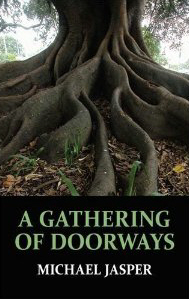
When John from Black Gate suggested I do a guest blog about writing for short fiction markets, I had to check to make sure he hadn’t intended his email for someone else. Surely he meant to send that email to my co-writer for the story “Devil on the Wind,” from Black Gate 14. That would be Jay Lake, who has over 200 story publications and counting.

But nope, the email was correct.

And a quick look at my list of stories over on my website seems to confirm the fact that I may indeed have figured how to sell a short story — fifty story publications thus far. And I have thirty more stories out to various publishers (fingers crosssed!).

Here’s the thing, though. You never figure out the trick to this writing gig. Soon as you think you’ve got it understood, you’re sunk.

Because you can’t rest on your laurels. Trust me on this — even though I’ve sold stories to great places like Asimov’s, Strange Horizons, Interzone, and to this fine magazine as well, I still get rejections aplenty. And while my focus has moved from short stories to novels, with the occasional comic script, I always have fun writing stories.

But I still have more to learn. Much more. And I’d like to share some of what I’ve learned along the way.

Read More Read More

Thinking of Heroes

Thinking of Heroes

butch_o_hare-280I’ve been pondering the need for heroes in fiction again this week, and I thought it a good time to revisit a post I’d made on the Black Gate Livejournal page a few years ago. I imagine a lot of you haven’t read it; if you have, I apologize for the repeat.
During the school year my little girl brings home reading practice sheets every week. Each day we’re to time her reading the fluency sheet for a minute, three times, the idea being that it will improve her reading. She does get better at reading each time through, naturally, but she also gets pretty bored – I suppose I would, too, if I had to read the same thing over and over three times a day. But she’s also bored because the stories as a whole haven’t been very interesting. Except for one.

She brought home the story of Butch O’Hare. I’d never given much thought to whom O’Hare airport was named after. I suppose I assumed it was named after a politician. None of these fluency stories can be read completely in a minute—she was only about a third of the way through when the minute timer dinged. My son, her older brother, was so interested that he looked up from his own homework and said “actually, that’s pretty interesting.” I agreed, and asked her to keep reading, and she was intrigued enough herself that she kept going without complaint.

Stories about heroes fascinate my family, and, I believe, humanity as a whole. I think that we’ve become so cynical that we sneer a little when we hear stories of heroics and imagine that it can’t really be true, or we wonder if the hero secretly beats his wife. We are programmed to think that we REALLY need to read stories of ordinary people or cowardly people or despicable people and that stories of heroes are for children. We’re savvy enough now not to believe everything we hear or read, because, God knows, we’ve been fooled plenty of times.

But we still need heroes. And Butch O’Hare was one.

Read More Read More

Apex Magazine re-opens to Submissions

Apex Magazine re-opens to Submissions

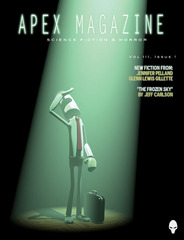
apexmagApex publisher Jason Sizemore has announced that the magazine has re-opened to submissions.

This is great news for fans, since the magazine announced last May that it was temporarily suspending publication. It began as print edition Apex Digest in 2005, swtiching names to Apex Magazine when it became online-only in 2008. It resumed online publication in June 2009 and has published monthly since. 

Note that Apex has new Submission Guidelines. The pay rate is five cents a word, and the new fiction editor is Catherynne M. Valente. The magazine has added Dark Fantasy to their list of interests (originally focused on science fiction and horror), and their Guidelines are worth the read:

What we want is sheer, unvarnished awesomeness. We want the stories it scared you to write. We want stories full of marrow and passion, stories that are twisted, strange, and beautiful. We want science fiction, fantasy, horror, and mash-ups of all three—the dark, weird stuff down at the bottom of your little literary heart. This magazine is not a publication credit, it is a place to put your secret places and dreams on display. Just so long as they have a dark speculative fiction element—we aren’t here for the quotidian.

The latest issue of Apex includes original fiction from Paul Jessup and Jerry Gordon, a reprint from Catheryyne M. Valente, Audio Fiction from Jerry Gordon, and a Dark Faith roundtable interview with Gary A. Braunbeck, Jay Lake, Nick Mamatas, and Catherynne M. Valente.

The complete magazine is also available in a downloadable, pay-what-you-want edition through Smashwords, and in a Kindle edition (for 99 cents).

Apex Book Company also recently published Dark Faith, reviewed right here at the Black Gate blog by David Soyka.