Browsed by
Category: Vintage Treasures

New Statesmen on the “Shockingly Offensive” 100 Best Fantasy and SF Novels

New Statesmen on the “Shockingly Offensive” 100 Best Fantasy and SF Novels

A Spell for Chameleon-smallLiz Lutgendorff at New Statesmen read all 100 books on NPR’s list of the best science fiction and fantasy novels — a list that includes virtually every major title the genre has yet produced. And her response mirrors a complaint I hear over and over from young fantasy readers, and especially women — the classics of our genre have very little to offer readers seeking interesting and strong women characters.

There were also books that were outright misogynistic, like a A Spell for Chameleon where characters openly talk about not trusting women… The main plot of A Spell for Chameleon is that the main character, stupidly named Bink, has no magical talent…. Along the way, he meets Chameleon, who has the unenviable magic of being smart but ugly in one phase of the moon and beautiful but stupid in another. This inevitably leads to Bink liking her… Apparently for Bink, having someone compliant was more valuable than intelligence or independence, making Bink an utter creep…

Frankly, from my vantage in 2015, it was just plain weird to read books where there were hardly any women, no people of colour, no LGBT people. It seemed wholly unbelievable. I know what you could say: it’s science fiction and fantasy, believability isn’t one of the main criteria for such books. But it is relatively absurd that in the future people could discover faster-than-light travel, build massive empires and create artificial intelligences but somehow not crack gender equality or the space-faring glass ceiling.

The consequence of the lack of women and the obvious sexism is that the books became very much like one another. My book reviews contained more profanity and I became a much more harsh critic of the genres I most enjoyed reading. They were all the same story of white guys, going on an adventure.

I’m sure Ms. Lutgendorff’s comments will be hotly debated, but I think it’s foolish to ignore her gut reaction. Like it or not, the classics of an older generation are giving way to new novels, as they should. That’s what happens in a living genre. Read the complete article here.

Vintage Treasures: The Lights of Barbrin by Joseph Burgo

Vintage Treasures: The Lights of Barbrin by Joseph Burgo

The Lights of Barbrin-smallI haven’t said a lot about the Timescape imprint from Pocket Books, one of the most prestigious publishing lines of the 80s. Founded by David G. Hartwell, it was named after Gregory Benford’s SF novel Timescape, and it produced over 100 paperbacks between 1981 to 1985 — including the four volumes of Gene Wolfe’s Book of the New Sun, Philip K. Dick’s The Divine Invasion and The Transmigration of Timothy Archer, Clark Ashton Smith’s The City of the Singing Flame, John M. Ford’s The Dragon Waiting, Donald Kingsbury’s Courtship Rite, and many others — including many Hugo and Nebula award nominees. It was shut down by Pocket in 1985, as it wasn’t producing a sufficient number of bestsellers for its budget. The line has a sterling reputation for quality. And among the many high-profile books, it also produced a number of highly regarded titles from lesser known authors… including The Lights of Barbrin, the debut fantasy from an unknown writer named Joseph Burgo.

The Quest of Ehred the Mighty

Braced by the strength of his Haziad — the four freedom fighters who represent fire, air, earth, and water — fire-bearer Ehred fought his way to importance, wielding a mighty force that made him all powerful in Nabrilehr, the land of the misfits.

But the evil Rand, barred from all Haziads because of his twisted devotion to the dangerous Unmaker, strove long and hard — and finally stole Ehred’s fire power for his own destructive use.

Now Ehred and his Haziad must steal back the blazing power — for in Rand’s hand it threatens to consume Ehred’s world!

Burgo never produced another fantasy novel, and this is his only contribution to the field. The Lights of Barbrin was published in paperback by Pocket in September 1978, and reprinted under the Timescape imprint in February 1982. It is 192 pages, priced at $2.50. The cover is by Carl Lundgren. There is no digital edition, and it has now been out of print for 33 years.

The Magazine of Fantasy & Science Fiction, August 1963: A Retro-Review

The Magazine of Fantasy & Science Fiction, August 1963: A Retro-Review

fantasy_and_science_fiction August 1963-smallHere’s an issue of F&SF from Avram Davidson’s tenure, and Davidson’s stamp is, to my eye pretty evident. It’s a reasonably significant issue simply in that it includes part of a Heinlein serial.

The features include a book review column by Davidson, in which he covers a piece of non-fiction by Patrick Moore and Francis Jackson on the possibility of Life in the Universe, some Burroughs reissues (Davidson, in recommending the books, writes “Hark! Is that the squeal of an angry throat?,” which later (slightly changed) became a story title for him), Walter Tevis’ The Man Who Fell to Earth (Davidson was unimpressed), a book on whales, and (very briefly) Cordwainer Smith’s You Will Never Be the Same, taking time to deny that “Cordwainer Smith” was ever a pseudonym of Robert Silverberg – and here I was, hoping that he would at long last reveal this in one of his bibliographic posts right here!

The cover is quite impressive – it’s by Ed Emshwiller, for Ray Nelson’s “Turn Off the Sky” – there’s a bit of a Richard Powers vibe to it, though it’s still of course Emsh… and a rare case where beautiful woman on the cover doesn’t look like his wife Carol.

There is also of course a science column by Asimov (“T-Formation,” a relatively weak outing, about large numbers), a Feghoot (about time travel and a couple of women of loose virtue – I’m sure you can guess the pun), a quite nice poem on the loss of the mystery of Venus due to Mariner II, by R. H. and Kathleen P. Reis; and, surprisingly, a letter column! Notable letters include one from James Blish complaining about the term “Science Fantasy” (“… stands as a warning that the author reserves the right to get the facts all wrong”); and one from a reader complaining about Davidson’s editorial hand and declining to renew his subscription – who was the reader? One E. Gary Gygax!

Read More Read More

The Speed Of Dark: Paksennarion vs. Autism

The Speed Of Dark: Paksennarion vs. Autism

A Dark coverWhile wandering the aisles of Powell’s Books in Portland, Oregon – the kind of store that first leaves my jaw on the floor, then leaves my irises doing swirls straight out of an animated Warner Brothers short – I found myself in the Fantasy & Sci-Fi aisle.

Can’t imagine how that happened. Especially when my shopping list could also have led me to Photography, Sports (Tennis), Literature, Horror (Anthologies), and “Unisex Apparel.” Suffice it to say that I wound up face to face with my old buddy, Elizabeth Moon. Plenty of space opera on those shelves, sure, but also the various editions of the trilogy that made her name, her Deed Of Paksennarion series, together with the two less popular follow-ups, Surrender None and Liar’s Oath.

Then came the surprises. Turns out, Ms. Moon has resurrected Paks’s world, and some few of the characters from the various Paksennarion books in Oath Of Fealty, Kings Of the North, etc.

I was sorely tempted. I was. But in the end, I decided to let my fond memories remain exactly that: fond memories. As books with second-world settings go, and especially of the sword-swinging variety, I rate the Paksennarion trilogy very highly indeed, and as for Surrender None, well, I flat out love it.

The risk of spoiling all those warm recollections was just too great.

Even so, I would have picked up one of those newer titles – risk be damned, you only live once – but then I chanced upon a Moon title that didn’t seem to fit with her other work. The cover was different, for one thing. Not illustrative. Conceptual. No high fantasy or space opera here. No, indeed. But it had to be speculative fiction of some sort, since this unlikely loner of a book, The Speed Of Dark, had won the 2004 Nebula Award.

Read More Read More

The Public Life of Sherlock Holmes: Ramblings on REH

The Public Life of Sherlock Holmes: Ramblings on REH

Ramblings_KullAxeIn a way, Robert E. Howard’s career is similar to that of Dashiell Hammett. Both men had huge impacts on their genres (Howard wrote many styles, but he’s best known for his sword and sorcery tales). Both were early practitioners in said genres. Both men wrote excellent stories for about a decade. And both men ended their careers on their own.

Hammett, who seemed more interested in a dissolute lifestyle than in writing, effectively walked away from his typewriter. He wrote his last novel in 1934 (The Thin Man) but produced literally nothing for the remaining twenty-five years of his life. He could have gone back to writing the hard-boiled stories that made his career, but he voluntarily ended his writing life.

In 1936, Howard’s mother was failing in a coma. He walked outside to his car, pulled out a gun and killed himself. His writing career was more effectively finished than Hammett’s would be.

Both were supremely skilled writers who chose to deprive the world of their talent and left decades of stories unwritten. But there was a key difference between the two. From the beginning, Hammett was acclaimed and recognized as the leader in his field. Though Carroll John Daly came first (barely), there is no comparison between the two in critical view.

Howard was not critically lauded. His first Conan tale, “The Phoenix on the Sword” (a rewriting of the Kull story, “By This Axe I Rule!”), appeared in Weird Tales in December of 1932. The next two Conan tales were outright rejected!

Read More Read More

All of Time and Space and the Wonders and Horrors Therein: Frank Belknap Long’s “The Hounds of Tindalos”

All of Time and Space and the Wonders and Horrors Therein: Frank Belknap Long’s “The Hounds of Tindalos”

The Hounds of Tindalos-small The Hounds of Tindalos back-small

I’ve been enjoying Ruthanna Emrys and Anne M. Pillsworth’s Lovecraft Reread over at Tor.com, and I was pleasantly surprised to see them deviate from the core Lovecraft canon to discuss one of the classics of the Cthulhu Mythos not written by Lovecraft himself: Frank Belknap Long’s “The Hounds of Tindalos.”

“The Hounds of Tindalos” was originally published in the March 1929 issue of Weird Tales. It can be found in several anthologies and collections, including the 1978 Jove paperback collection The Hounds of Tindalos, with a fine cover by Rowena (above; click for bigger version). You can find the complete text online here. As Anne says:

Frank Belknap Long was one of Lovecraft’s inner circle, and his “Hounds” is the first Mythos tale which Lovecraft neither wrote himself nor collaborated on. Perfect start for our consideration of the extra-Lovecraftian Mythos, that slow but unkillable creep of cosmic terror into other susceptible minds! Long would go on to create Great Old One Chaugnar Faugn and to kill a fictionalized Lovecraft in “The Space-Eaters.” But the Hounds are probably his most famous creation. Lovecraft mentions them in “Whisperer in Darkness.” Writers as diverse as Brian Lumley, Roger Zelazny, Sarah Monette and Elizabeth Bear, William S. Burroughs, and John Ajvide Lindqvist have evoked them. They also haunt video and roleplaying games, metal songs, anime, illustration. Well, why shouldn’t the Hounds be pervasive? Have angles, they’ll travel, lean and athirst.

“Hounds” has always inflicted shivers on me. This reread, I was momentarily distracted by a few infelicities. The story strikes me as way too short for its expansive subject: all of time and space and the wonders and horrors therein.

Read the complete article here.

The Digest Enthusiast #2 Now on Sale

The Digest Enthusiast #2 Now on Sale

The Digest Enthusiast 2-smallI love a lot of aspects of the fantasy and science fiction genres — books, movies, TV shows, comics, conventions, board games, video games. But it was digest magazines like Analog, Asimov’s, and F&SF that first brought me into the field, and which formed the heart of the genre for me. It was in the pages of those magazines that I first discovered my favorite authors, and was exposed to the news, reviews, interviews, art and gossip that gradually taught me just how rich the field was — and taught me to love it.

I share this experience with a lot of older fans, and that’s why you see so many reviews of old digest magazines like Galaxy, Venture, Amazing and Fantastic here at Black Gate. It’s not just that they contain great old fiction, but because the magazines are so vital to the history of the field. (And, let’s face it, because of the great cover art.) SF, fantasy and mystery digests are inexpensive and easy to collect, and at every decent-sized convention or trade show, there’s sure to be a few fans selling, buying, and swapping digest magazines.

So I was delighted to see the first issue of The Digest Enthusiast in January of this year. The debut issue was 116 pages and packed with articles on Galaxy, protective sleeves, Walter Gibson’s The Big Story, and much more, including interviews with F&SF editor Gordon Van Gelder, Phyllis Galde, editor and publisher of Fate magazine, and more.

But before I could get around to ordering it, the second issue arrived — and this one’s even bigger. Weighing it at a whopping 151 pages, it contains articles on Borderline, the Astounding Trading Cards, The Mysterious Traveler Magazine, H.L Gold’s Beyond Fantasy Fiction, Archie Comics Digests, and much more. There’s also reviews of current magazines, including Monster! #15, Asimov’s July 2015, and the July issue of Analog. There’s even four pieces of original short fiction!

Needless to say, I ordered a copy of the second issue as soon as it was available. It arrived yesterday, and I’m thoroughly enjoying it. I especially appreciated the reviews of current digests, which I found well written and enthusiastic. Here’s Rudolph Schmidt on Black Gate blogger Derek Kunsken’s novella “Pollen From a Future Harvest,” in the July issue of Asimov’s.

Read More Read More

Discovering Robert E. Howard: Howard Andrew Jones and Bill Ward Re-Read “The Phoenix on the Sword”

Discovering Robert E. Howard: Howard Andrew Jones and Bill Ward Re-Read “The Phoenix on the Sword”

The Phoenix on the Sword Weird Tales-smallOver at Howard Andrew Jones’ blog, Bill Ward and Howard Andrew Jones continue their re-read of the first Del Rey Conan volume, The Coming of Conan, with the very first Conan story, “The Phoenix on the Sword,” originally published in the December 1932 issue of Weird Tales magazine. Here’s Howard:

Look at the story’s opening quote. That’s practically the gold standard of quotes from imaginary historical sources. That fabulous “Know, O Prince” and all that follows has been imitated but rarely, if ever, equalled. This, fellow fantasy fans, is the way it’s done. Admittedly, there are a few phrases in the middle of the paragraph that are less inspired. I’m looking at “Zingara with its chivalry, Koth that bordered on the pastoral lands of Shem.” Most of the rest of the quote paints lovely word pictures, but those phrases don’t remotely approach the poetic majesty of the rest — what does Zingara look like? What does Koth look like? But the rest is lovely, and the quality picks right back up with “dreaming west” and powers on to that fantastic finish, “Hither came Conan…”

Look at the opening line of the story: “Over shadowy spires and gleaming towers lay the ghostly darkness and silence that runs before dawn.” Damn. Why doesn’t anyone write like that any more? Howard sets the scene with sharp, sensory laden description. He’s a film director guiding the camera with a fantastic establishing shot.

Their first post on this topic discussed Howard’s “The Hyborian Age.” Read the complete exchange here.

Read More Read More

Martian Pirates, Brain Creatures, and Hive Minds: Rich Horton on Ray Cummings and John Brunner

Martian Pirates, Brain Creatures, and Hive Minds: Rich Horton on Ray Cummings and John Brunner

Wandl the Invader-small I Speak For Earth-small

Brigands of the Moon-smallRich Horton’s personal blog, Strange at Ecbatan, is a great place to hang out if (like us) you love vintage paperbacks and magazines. In addition to his reviews here at Black Gate (not to mention his editing duties for The Year’s Best Science Fiction & Fantasy, the 2015 Volume of which just arrived last month), Rich also reviews forgotten bestsellers, neglected classics, and obscure books by writers who later became highly regarded. This week he takes a look at an Ace Double from 1961.

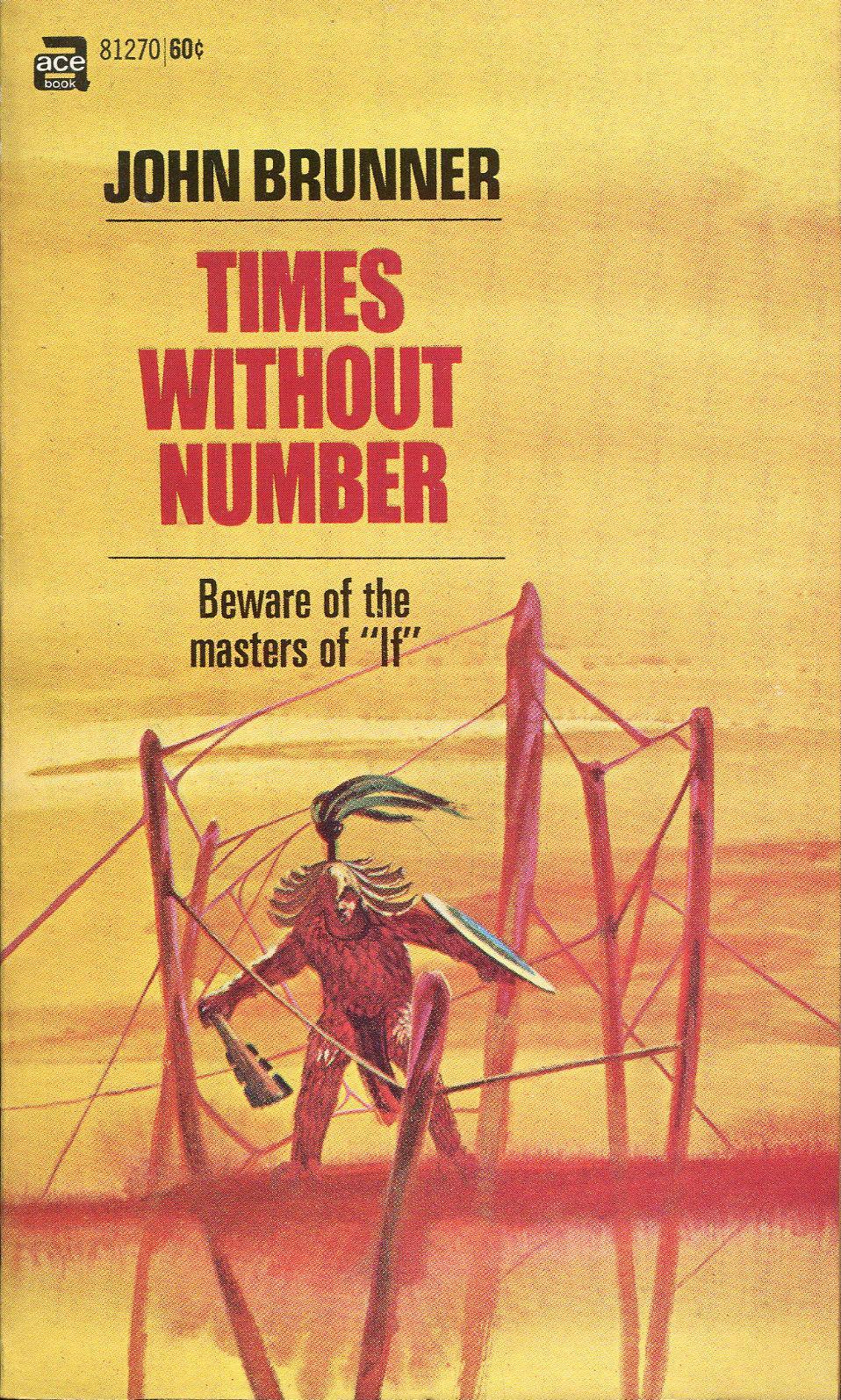
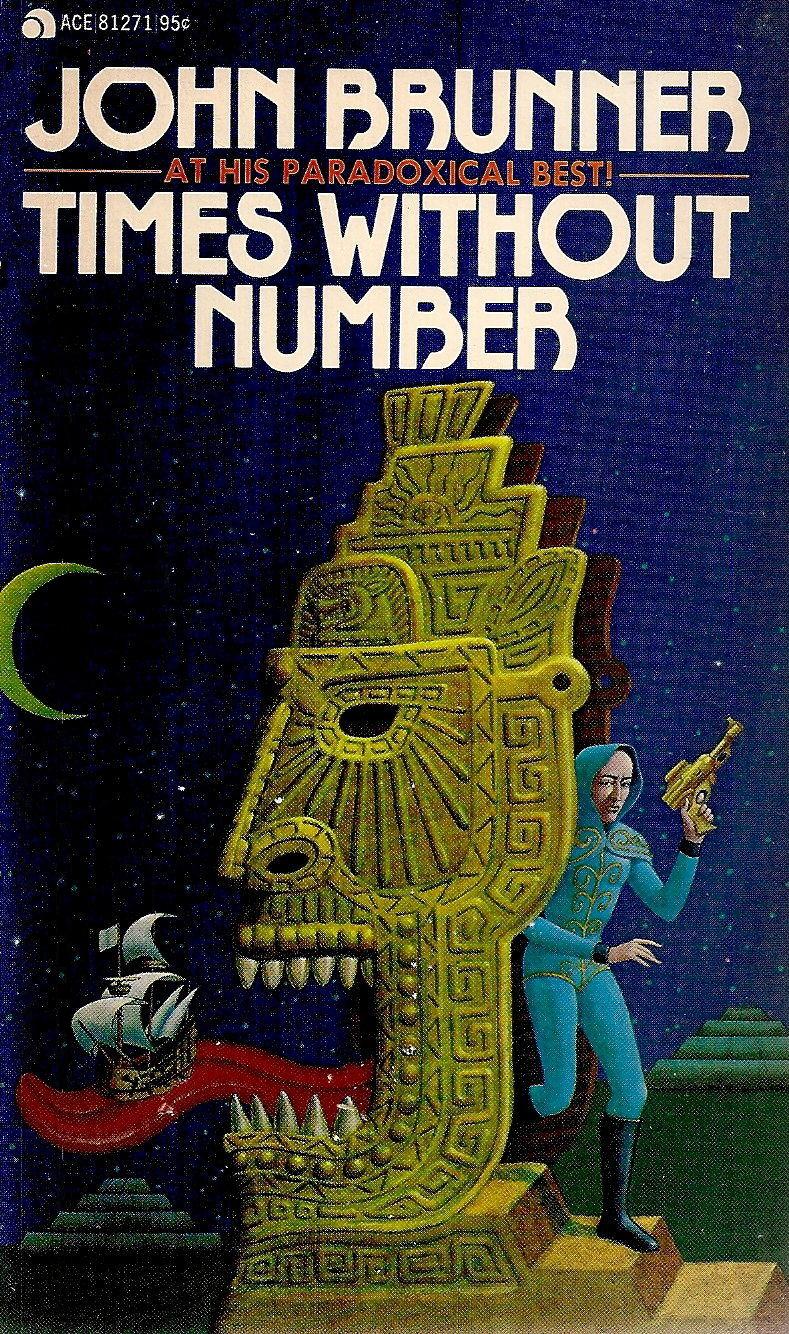
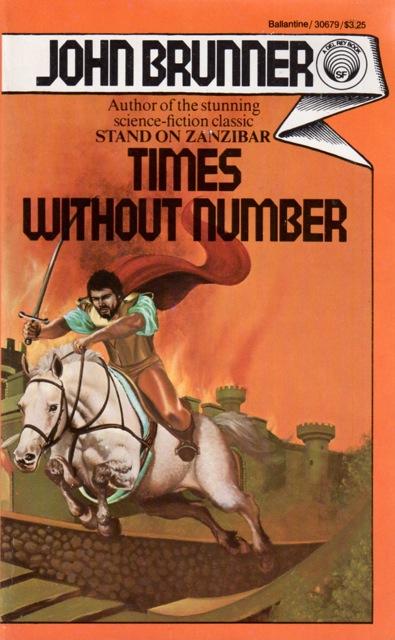
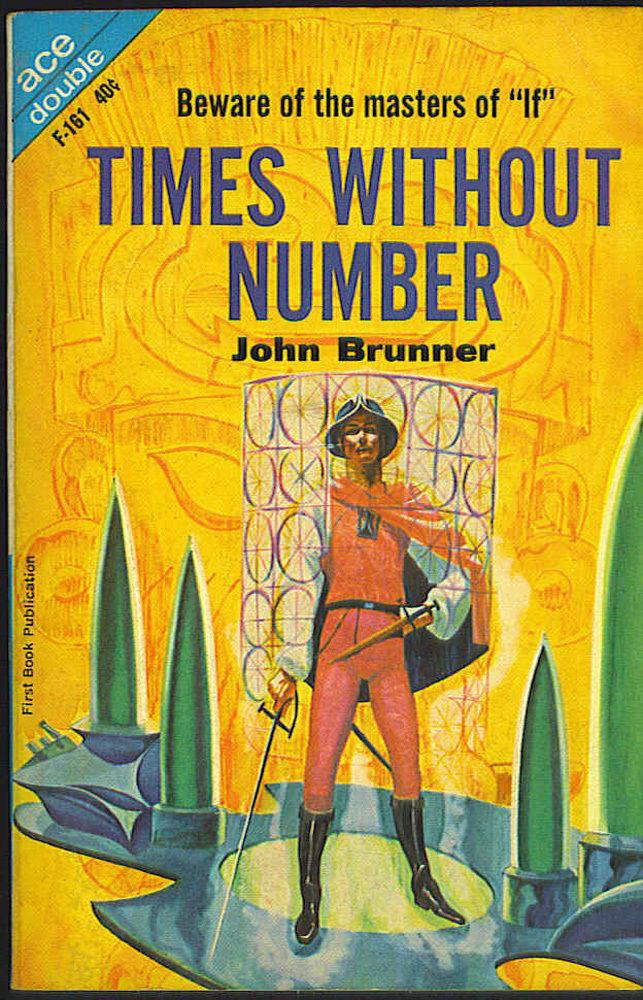
This week’s Old Bestseller post is on a book that was by no means a bestseller — it’s another Ace Double review, this time a new one (for me) — the 1961 pairing of a rather dreadful 1932 pulp serial by Ray Cummings (Wandl the Invader) with one of John Brunner’s better early short novels (I Speak For Earth), written as by “Keith Woodcott.”

Wandl the Invader was serialized in Astounding in 1932. It was a sequel to Brigands of the Moon, which began its serialization in the third issue of Astounding, in 1930. It is set in a future in which space travel is well-established within the Solar System, and essentially human civilizations have been discovered on both Venus and Mars. (Interbreeding is possible, for instance.) A small planet called Wandl has appeared in the Solar System, and Gregg Haljan (hero of Brigands of the Moon) is recruited to captain a spaceship to resist the evil intentions of the planet’s inhabitants.

Read More Read More

Vintage Treasures: The Plantagenet Novels by Allen Andrews

Vintage Treasures: The Plantagenet Novels by Allen Andrews

The Pig Plantagenet-small Castle Crespin-small

Allen Andrews is the author of a number of fine British histories, including Kings and Queens of England and Scotland, The Whiskey Barons, The Air Marshals, and Wonders of Victorian Engineering. But for genre fans, he’s chiefly remembered for two light fantasy novels he produced in the 1980s: The Pig Plantagenet (1980) and Castle Crespin (1982), both reprinted in paperback by Tor with a pair of fine covers by Victoria Poyser.

The Pig Plantagenet is the tale of Plantagenet, a pig on a 13th century farm in Poitou, France, who schemes to ruin a great hunt that will slaughter all the wild pigs and other creatures surrounding the farm. The sequel focuses more on Fulgent the Fox, who has “fairly traditional designs on a local farmer’s poultry,” and who is also part of the local animal aristocracy. One thing leads to another, and soon two very different societies are locked in deadly conflict.

Both books drew strong comparisons to Watership Down and Animal Farm, which was doubtless inevitable with any fantasy featuring farm animals, but more astute reviewers saw more in these books, especially the rather clever way in which the author depicts a class-based animal society with surprising complexity.

Read More Read More