Browsed by
Category: Rich Horton

Rich Horton Reviews Song of Time
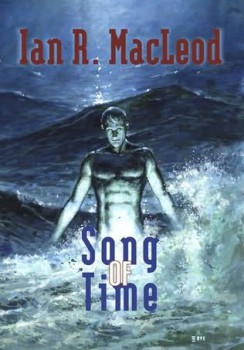
Rich Horton Reviews Song of Time

song-of-timeSong of Time
Ian R. MacLeod
PS Publishing (253 pages, $14.95, October 2008)
Reviewed by Rich Horton

Ian R. MacLeod is one of the supreme SF writers of recent years, especially at novelette and novella length, and so it is something of a disappointment that his novels seem to have struggled to find an audience. His newest work is so far only out in the U. K. from the excellent but definitely small outfit PS Publishing. Yet in considering this book I am inclined to understand its failure (so far!) to attract a trade publisher. Song of Time is not a high concept book. Indeed it is difficult to capture it with a single thematic statement. (His two Ace novels, on the other hand, were distinctly about the magical substance aether and the ways in which its use paralleled the Industrial Revolution.) Thus it is, I imagine, a bit harder to “sell” the book. And I must also add that while that is not always a shortcoming, in the present case I think it is rather. About which more later.

Song of Time opens with an aging woman rescuing a drowning man from the ocean off her Cornish house. The man, whom she calls Adam, is a mysterious figure – he has no memory, but he knows – or learns quickly – a great many things, some of which are quite unexpected. He is also a remarkably quick healer, and otherwise unusually constructed. Thus a puzzle is established – but really the book is not about this puzzle (though in the end it is solved, quite satisfactorily).


Read More Read More

Feature Excerpt: Rich Horton’s “Back to the Future: Modern Reprints of Classic Fantasy”

Feature Excerpt: Rich Horton’s “Back to the Future: Modern Reprints of Classic Fantasy”

centaurideviceContributing Editor and SF historian Rich Horton’s article for Black Gate 14 was on modern reprints of the best in classic fantasy and science fiction:

Orion, via their imprints Millennium and later Gollancz, took a different tack in keeping important SF in print. The SF Masterworks series, beginning in 1999, undertook to reprint the very best science fiction novels of the past century or so… a couple of story collections slipped in, including most significantly (to my mind) The Rediscovery of Man, by Cordwainer Smith, the complete stories of one of the oddest and most intriguing SF writers ever. Other interesting works… include what may be Jack Vance’s best singleton novel, Emphyrio; M. John Harrison’s cynical take on Space Opera, The Centauri Device; Michael Moorock’s colorful and louche science fantasy, The Dancers at the End of Time (always my personal favorite among his works); one of the most significant works from Russia: Roadside Picnic, by Arkady and Boris Strugatsky; and the complete “Roderick” novels by John Sladek, brilliant satire from one of the field’s best and darkest satirists.

As we wrap up the Sneak Preview of the massive 14th issue of Black Gate we’ve posted a lengthy excerpt from Rich’s article, in which he covers titles from Baen Books, the SF and Fantasy Masterworks lines from Orion, the Science Fiction Book Club, Wildside Press, and NESFA Press.

Rich’s previous feature articles for us include “Fictional Losses: Neglected Stories From the SF Magazines,” (Black Gate 11) “The Big Little SF Magazines of the 1970s,” (BG 10) and  “Building the Fantasy Canon: the Classic Anthologies of Genre Fantasy(BG 2).

The complete “Back to the Future: Modern Reprints of Classic Fantasy” appears in Black Gate 14.

Rich Horton Reviews The Long Look

Rich Horton Reviews The Long Look

long-lookThe Long Look
Richard Parks
Five Star (297 pages, $25.95, September 2008)
Reviewed by Rich Horton

I am tempted to propose a new subgenre of fantasy that I might call domestic fantasy, or ordinary-people fantasy, or anyway something that suggests stories set in secondary worlds, complete with magic, and for that matter complete with kingdoms and magicians and all the other Tough Guide to Fantasyland markers (even stew!), but populated by sensible (mostly) people, fairly typical of your neighbors in general attitudes (but not anachronistically so).

I’ve noted in multiple reviews of Lawrence Watt-Evans’s novels that they seem often to take a very common sense approach to grand fantastical tropes like dragons. So his work might fit. And a novel like Sherwood Smith’s A Posse of Princesses, about a bunch of pretty basic teenagers who happen to be princes and princesses in a fantasy world, seems to fit as well. You might even argue that aspects of the great model for so much contemporary fantasy, The Lord of the Rings, have this ring* of domesticity – that is to say, the hobbits – but really it is The Lord of the Rings, with its stark good versus evil theme, and with characters like the impossibly noble Aragorn and the angel-like Gandalf and the ethereally beautiful Galadriel and the disembodied evil of Sauron, that I see my domestic fantasies as reacting against. (In a respectful way – I love The Lord of the Rings, and so, I suspect, do most of these writers.)

Read More Read More

Rich Horton on Black Gate in 2010

Rich Horton on Black Gate in 2010

blackgate-issue-14-cover-150Over at The Elephant Forgets, Rich Horton continues with his review of every science fiction and fantasy short story published in Engish in 2010 (I know — wow.) On December 30th, he reached Black Gate:

Once again, Black Gate managed only a single issue in 2010, though also once again one more is nearly ready and presumably will appear early in 2011. It remains a beautiful thick magazine — and 2010’s issue was particularly thick! — with a strong and successful focus on adventure fantasy, and with a welcome (to me) tropism towards longer stories. The magazine also has a tropism towards series stories, but this issue mostly avoided sequels. This year the one issue includes 19 new stories: 1 novella, 8 novelettes, and 10 shorts (1 short-short), for a total of almost 160,000 words.

I will mention again that I am on the masthead of Black Gate as a Contributing Editor, which means that I contribute a regular column and regular reviews, and also, I suppose, that I meet with Publisher/Editor John O’Neill occasionally and amidst eating and drinking and selling books we chat about the future of the SF industry and so on.

My favorite story this year was Matthew David Surridge’s “The Word of Azrael”, which will appear in my Best of the Year book. It’s a first rate story that manages to both satirize numerous fantasy cliches and to celebrate them. Other strong stories include the novella, Robert J. Howe’s “The Natural History of Calamity”, which is basically Urban Fantasy, but with quite a clever central idea, a private detective with a difference: she detects what’s wrong with someone’s “karmic flow”, and restores the balance. Also strong was “Devil on the Wind”, by Michael Jasper and Jay Lake, concerning a group of magicians whose power arises from their own suicides (and revivals). Add strong work by James Enge, Pete Butler, Alex Kries, and Sylvia Volk — another very enjoyable issue of an always fun magazine.

5 of 19 stories (26%) are by women, a bit less than usual. Though they have published SF stories in the past, despite the Adventure Fantasy label, this year I don’t think any qualified.

Rich selected Matthew David Surridge’s “The Word of Azrael” for his Year’s Best Science Fiction & Fantasy 2011 Edition. His assessment of Black Gate in 2009 is here.

“The Word of Azrael” Selected for The Year’s Best Science Fiction & Fantasy

“The Word of Azrael” Selected for The Year’s Best Science Fiction & Fantasy

yearsbest2011Matthew David Surridge’s novellete “The Word of Azrael” has been selected for The Year’s Best Science Fiction & Fantasy 2011 Edition, edited by Rich Horton.

Congratulations, Matthew!  “The Word of Azrael” has been praised in many places since it appeared in Black Gate 14. Here’s what Rich said in his Locus magazine review in the August issue:

Even better is Matthew [David] Surridge’s “The Word of Azrael.” It concerns Isrohim Vey, who sees the Angel of Death on a battlefield and as a result is spared — more a curse than a blessing — to search again for the Angel. His search almost takes the form of a catalog of sword & sorcery tropes, his many adventures told briefly but with style and an ironic edge. Surridge both celebrates and winks at the genre. It’s very entertaining, clever, and even thought-provoking.

Read More Read More

Epic Black Gate Trailer of AWESOMENESS!

Epic Black Gate Trailer of AWESOMENESS!

Claire: How do we do this, O’Neill? I’m still new at this website editing.

John: Just type everything I say, Cooney.  First, we wanna hype Magill and Sam.

Claire: Easy!

John: Wow, you type fast. This can’t be too long. We’ve got to get right to it.

Claire: Okay. So, dear Black Gate readers, look at this cool thing my friends Magill Foote and Sam Rahn did. It’s so 21st Century. And it makes Black Gate look so cool. Not that it needed any help. And now we just post it? Beneath the cut?

John: No, no, no. It’s gotta be right here!  Do it now!

Locus Reviews Black Gate 14

Locus Reviews Black Gate 14

locus-595aThe August issue of Locus, the Magazine of the Science Fiction & Fantasy Field, contains a review of our latest issue by Contributing Editor Rich Horton.

Black Gate‘s Winter issue is positively huge… and it delivers excellent value. There are three novellas, all entertaining. My favorite was Robert J. Howe’s “The Natural History of Calamity,” which is basically urban fantasy, but with quite a clever central idea. Debbie Colavito is a private detective with a difference: she detects what’s wrong with someone’s “karmic flow” and restores the balance. In this story she takes a case for a nice young man whose equally nice girlfriend has just dumped him. Was it something he did wrong, some bad karma? Or is it something to do with her new boyfriend, a nasty piece of work who, by coincidence, has some history with Debbie? The central idea is pretty intriguing and could, I think, support a series. Nicely done, with some well-handled twists.

Rich also enjoyed “Devil on the Wind” and “The Word of Azrael”:

Devil on the Wind,” by Michael Jasper & Jay Lake concerns a group of magicians whose power arises from their own suicides (and revivals). One such witch is sent to a nearby Prince to enforce the rule of these magicians. But she learns that her allies have plans that don’t include her… Even better is Matthew [David] Surridge’s “The Word of Azrael.” It concerns Isrohim Vey, who sees the Angel of Death on a battlefield and as a result is spared — more a curse than a blessing — to search again for the Angel. His search almost takes the form of a catalog of sword & sorcery tropes, his many adventures told briefly but with style and an ironic edge. Surridge both celebrates and winks at the genre. It’s very entertaining, clever, and even thought-provoking.

The online counterpart to Locus magazine is the excellent Locus Online, edited by Mark R. Kelly.

Anthopology 101 dives into classic SF Anthologies

Anthopology 101 dives into classic SF Anthologies

anthopology-101aSF author Bud Webster informs us that his book Anthopology 101: Reflections, Inspections and Dissections of SF Anthologies, is now available from The Merry Blacksmith Press. Bud tells us:

Anthologies are the core samples of science fiction.  Through their pages, we can not only follow the growth of the genre from its very beginnings, but we can also study the past’s visions of the future.

As author of the always-fascinating Past Masters column, which examines the forgotten work of some of the finest SF and fantasy writers of the 20th Century, Bud should know.

This is one of the most intriguing titles I’ve come across in a while, and I’m really looking forward to getting a copy in my hot little hands.

The book includes an introduction from Mike Ashley, and collects 25 of Bud’s “Anthopology 101” columns  that originally appeared in The New York Review of Science Fiction, Chronicle, SFWA Bulletin, and other fine publications.

For anyone else with an obsessive interest in these fascinating and beautiful relics of early science fiction and fantasy (I’m talking to you, Rich Horton), you’ll want to jump over to the Merry Blacksmith website, where they’re offering free shipping on Anthopology 101 until August 21.

Letters to Black Gate

Letters to Black Gate

btga41Kim Patrick Weiss, of Bavaria, Germany, writes:

I tend to browse the Black Gate website every day, to check the news and, of course, read the new chapter of “The Weird of Ironspell” every Wednesday. When I read your article about Before the Golden Age by Isaac Asimov, two things immediately caught my interest: “…civilizations in grains of sand…” and “…humans in rags taking on entrenched alien conquerors…” and I knew I had to look into getting this book.
      Well, a couple minutes after I finished reading the article, and with my imagination already running wild, I decided to pick up a used copy from Amazon. I was in luck, the 1974 hardcover version by Doubleday was available for only $20. The book arrived today and I already read “Submicroscopic” and “Awlo of Ulm”, the ones that seemed the most appealing, and I can’t say I regret buying the book right away instead of checking out that website you mentioned first. Your article opened my eyes to a wider variety of sci-fi stories and authors, and I just have to say thanks for that 🙂
       It’s also a very nice experience to find out about so many old classics that I never knew existed. Your magazine and website are a great source for new (well, new to me) books and authors and I’m sure there’s still a lot more to discover in the archives. So, thanks again for a great website and an awesome magazine, both of which I hope will stay around for a long, long time!

Glad you enjoyed it, Kim.  “Submicroscopic” and its sequel “Awlo of Ulm,” both by Capt. S. P. Meek, are in fact the stories I had in mind when I mentioned “civilizations in grains of sand.”  They first appeared in Amazing Stories in 1931, and they’re still great fun today.

Read More Read More

The Year’s Best SF & Fantasy 2009, edited by Rich Horton

The Year’s Best SF & Fantasy 2009, edited by Rich Horton

years-best-2I’m supposed to be putting the finishing touches on BG 14, figuring out how to use Google Ad words, and about a million other things tonight. But man, I am beat.

Besides, the copy of Rich Horton’s The Year’s Best Science Fiction & Fantasy 2009 I ordered finally arrived a few weeks ago, and it’s been sitting there on my desk, unopened. That’s just criminal. So I packed it in early tonight, and curled up with it in the big green chair.

As we’ve established here already, Rich Horton is some kind of crazy person.  It all started with his newsgroup at SFF Net, where he was reviewing every single magazine in the entire universe.  Or as close as damn is to swearing, as they used to tell me while growing up in Nova Scotia.

Then he began compiling lists of his selections of the best short fiction of the year, and we started reprinting them on the BG website (in 2005, 2006 and 2007.)

In between, he knocked out detailed articles exploring the rich history of the SF & Fantasy genres for virtually every issue of Black Gate, starting with Building the Fantasy Canon: the Classic Anthologies of Genre Fantasy: Part One, (BG 2) and continuing with things like an exploration of The Big Little SF Magazines of the 1970s (BG 10), and Fictional Losses: Neglected Stories From the SF Magazines (BG 11).

Now he’s turned his talents to something closer to home: making books.  He’s become an anthologist of note, with over half a dozen Best SF and Best Fantasy volumes to his credit, chiefly from Prime Books.  This year Prime has re-launched the series, with a snappy new cover design and a big bump in size and page count (to 540 pages).  This is a hefty volume, with 37 short stories, detailed author biographies, and Honorable Mentions.

There are a great many Best of the Year books in the genre, but so far this is my favorite.  More later as I make my way through the book.