Yes, The Mucker by Edgar Rice Burroughs Really Is That Good
 I spent last year on an extended trip to Mars exploring Edgar Rice Burroughs’s fantastical version of the Red Planet. But after reviewing all eleven books in the Barsoom series, the time had arrived to return to Earth and the early phase of ERB’s career. Spending too much time with the final sputterings of Burroughs’s Martian stories, when much of his talent was ebbing, has a strong depressive effect. Let’s relive the enthusiasm of youth. Or middle age, in the case of Edgar Rice Burroughs. Yeah, he was a late bloomer.
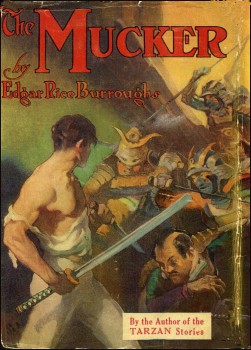
So, on the centennial of its writing, I land back on Earth with one of ERB’s grubbiest, most “realistic,” and finest works of adventure, The Mucker.
The Mucker and its closely entwined sequel written two years later, The Return of the Mucker, have long held high positions in the canon of ERB’s work — but only for enthusiasts. The general reading population, who might pick up a few Tarzan books or go through the first three Martian novels, has scant familiarity with this oddly titled work. Perhaps it’s the strangeness of the name “Mucker” — is this about the adventures of a sewer worker? — or simply that it doesn’t belong to one of the author’s famous franchises, but the book usually inspires shrugs of ignorance when brought up, mixed with measures of curiosity. Of all Burroughs’s novels, this is the one about which I get the most inquiries: “Hey, is that ‘Mucker’ thing worth reading? I’ve heard good things, but I just never got around to it.”
Let me answer the question for everyone who has asked or planned to ask: Yes, The Mucker (and its sequel) is good. Actually, superb. Burroughs gathered all the conventions from the stories and novels of the first fifteen years of pulp writing, most of which are unreadable today, and condensed them into a rollicking action yarn with fistfights, shipwrecks, cannibals, sword duels, a lost civilization, kidnappings (and not just of women), street brawls, piracy, and prizefighting. And he wrapped this all around one of his most interesting heroes, a man who goes from an alley thug without an ounce of sympathetic qualities (aside from questionable criminal “honor”) to a reformed hero in a tangled love tale.
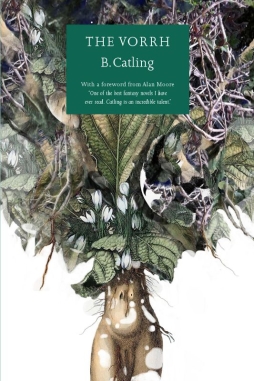 Raymond Roussel was a French surrealist writer who died in 1933, aged 56; one of his most famous works, Impressions of Africa, was a self-published novel (later turned into a play) depicting a fantastical African land based on no actual place, which contained a forest called the Vorrh. Late last year, the English sculptor and poet Brian Catling published his second novel, a story based on Roussel’s work: The Vorrh, first of a projected trilogy, described on its back cover as an epic fantasy. It’s a powerful book, precise and unexpected in its use of language and its plot construction, a dizzying and straight-faced blend of history and the unreal.