Browsed by
Category: Pulp

The Thankless World of the Continuation Author


The Thankless World of the Continuation Author

black-eyed blonde hi res cover.JPGblack_eyed_blondeDespite the title, this article is not intended as a forum for a continuation author to lament how unforgiving his critics are. Bad reviews are an inevitability and, in this instance, I’m the one bad-mouthing another continuation writer. I do not feel pangs of guilt, since the author in question is not only talented, but very successful and lauded in his industry. In other words, I’m an insignificant mouse picking on an elephant and that hopefully protects me from charges of betraying one of my own.

I recently read Benjamin Black’s The Black-Eyed Blonde, the first Philip Marlowe continuation novel in nearly 25 years. I can think of only one nice thing to say about the book and that is at long last Robert B. Parker need no longer be disparaged as the man who wrote the two worst Philip Marlowe mysteries. I am a fan of Black’s original historical mysteries, but my familiarity with his work did nothing to convince me he was a good choice to revive Raymond Chandler’s classic private eye hero, particularly when a talent such as Ace Atkins is active in the field writing new Spenser mysteries that do justice to the originals.
Read More Read More

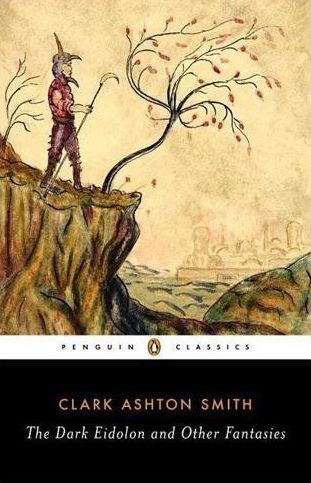
New Treasures: The Dark Eidolon and Other Fantasies by Clark Ashton Smith

New Treasures: The Dark Eidolon and Other Fantasies by Clark Ashton Smith

The Dark Eidolon and Other FantasiesAt long last, Clark Ashton Smith gets a little respect.

The highly regarded Penguin Classics line — which scholars and teachers love to rely on when drawing up things like course reading lists — has been slow to embrace pulp writers, and especially pulp fantasy writers. But in the last decade or so they’ve been correcting that oversight, starting with Lovecraft (The Call of Cthulhu and Other Weird Stories, Oct. 1999, The Thing on the Doorstep and Other Weird Stories, Oct. 2001, and more.) They’ve done a little better with other fantasy writers, including Lord Dunsany (In the Land of Time: And Other Fantasy Tales, February 2004), Arthur Machen, Shirley Jackson, M. R. James, and others.

Much of this has been the result of the efforts of editor S.T. Joshi, who now brings Penguin Classics their very first pulp sword & sorcery collection, gathering together the best work of the great Clark Ashton Smith.

Called “unexcelled by any other writer, dead or living” by H.P. Lovecraft, Clark Ashton Smith, a prolific poet, amateur philosopher, bizarre sculptor, and unmatched storyteller, simply wrote like no one else. Now, The Dark Eidolon and Other Fantasies, the much-awaited collection of poetry and prose from Clark Ashton Smith, introduces him into the Classics as a cosmic master artist who saw horror and wonder in all things, and in whose pen note a single sentence was safe.

This collection of his very best tales and poems, selected and introduced by supernatural literature scholar S.T. Joshi, allows readers to encounter Smith’s visionary brand of fantastical, phtantasmagorical worlds, each one filled with invention, terror, and a superlative sense of metaphysical wonder. The volume’s title story — a revenge tale that ends with macrocosmic stallions returning to trample a house they had formerly spared — is set in Smith’s Zothique story circle, in which the last inhabited continent on Earth watches humanity at the end-time regress to a pre-modern state.

The Dark Eidolon and Other Fantasies was published by Penguin Books on March 25. It is 370 pages — including 32 pages of Explanatory Notes on the stories by Joshi — and priced at $16 in trade paperback and $9.99 for the digital edition.

Read More Read More

Blogging Sax Rohmer’s The Island of Fu Manchu, Part Four

Blogging Sax Rohmer’s The Island of Fu Manchu, Part Four

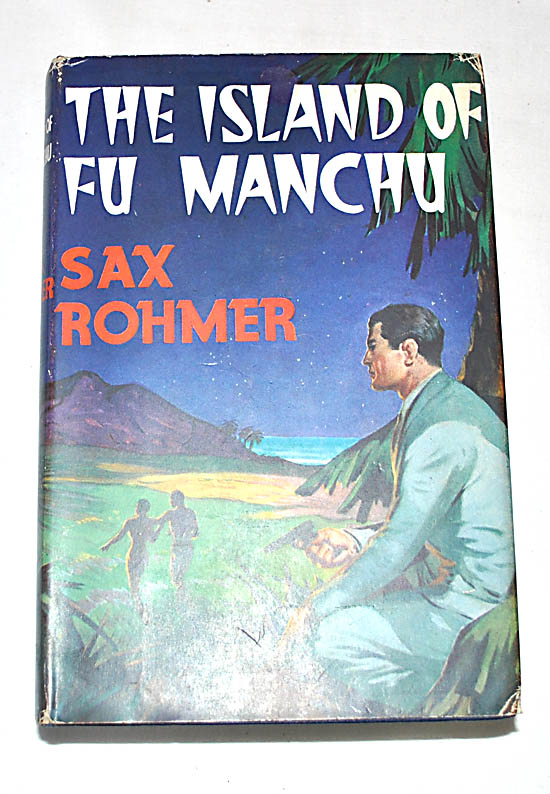
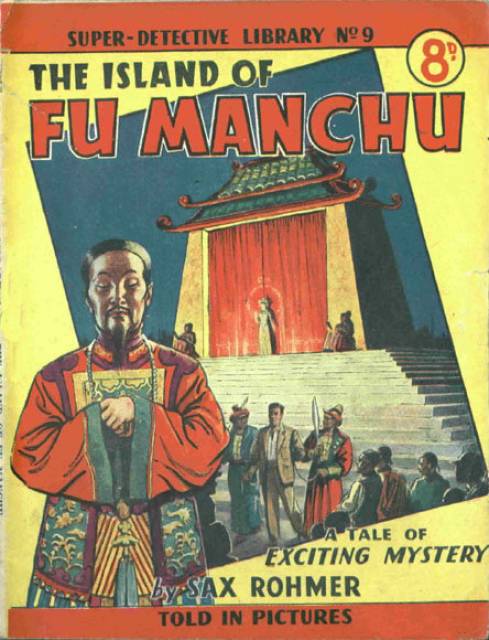
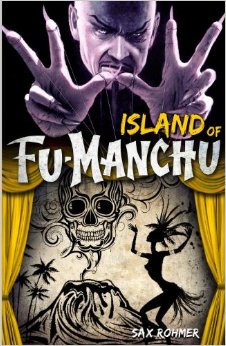
island titanisland zebraSax Rohmer’s Fu Manchu and the Panama Canal was first serialized in Liberty Magazine from November 16, 1940 to February 1, 1941. It was published in book form as The Island of Fu Manchu by Doubleday in the US and Cassell in the UK in 1941. The book serves as a direct follow-up to Rohmer’s 1939 bestseller, The Drums of Fu Manchu, and is again narrated by Fleet Street journalist, Bart Kerrigan.

The final quarter of the novel sees Rohmer really deliver the goods with Kerrigan and Sir Denis Nayland Smith successfully infiltrating the Haitian voodoo ceremony of Queen Mamaloi. While similar scenes had occurred in the past at various clandestine gatherings of the Si-Fan, the sequence most closely resembles the gathering of the followers of El Mahdi in 1932’s The Mask of Fu Manchu. Rohmer’s mastery of the art of suspense writing makes the reader believe the heroes are in genuine danger. While this is no small feat, considering the number of times Rohmer had penned similar scenes in the past, part of the success here is down to the climactic revelation of the voodoo Queen Mamaloi.

Read More Read More

Blogging Sax Rohmer’s The Island of Fu Manchu, Part Three

Blogging Sax Rohmer’s The Island of Fu Manchu, Part Three

82island corgiSax Rohmer’s Fu Manchu and the Panama Canal was first serialized in Liberty Magazine from November 16, 1940 to February 1, 1941. It was published in book form as The Island of Fu Manchu by Doubleday in the US and Cassell in the UK in 1941. The book serves as a direct follow-up to Rohmer’s 1939 bestseller The Drums of Fu Manchu and is again narrated by Fleet Street journalist, Bart Kerrigan.

The second half of the book gets underway with Sir Denis Nayland Smith, Sir Lionel Barton, Bart Kerrigan, and the local Panamanian police chief holding a council of war to discuss the enigmatic Lou Cabot. A meeting is arranged by Kerrigan and Sir Denis with the dancer Flammario, who is Cabot’s former lover. Cabot is involved with the Si-Fan and has run afoul of Dr. Fu Manchu. Both the Devil Doctor and Flammario wish to see Cabot dead.

Flammario is meant to recall Zarmi from the third Fu Manchu novel, 1917’s The Hand of Fu Manchu, but she is more bitter than seductive. The exotic dancer leads Smith and Kerrigan to Cabot’s apartment. Unfortunately, the Si-Fan had the advantage and arrived before them. The place is in a shambles and they discover Cabot’s hideously mangled corpse. Kerrigan spies Ardatha’s ring on a shelf and knows that his lost love has fallen back into the Si-Fan’s clutches.

Read More Read More

Blogging Sax Rohmer’s The Island of Fu Manchu, Part Two

Blogging Sax Rohmer’s The Island of Fu Manchu, Part Two

island cassell 1955island comic bookSax Rohmer’s Fu Manchu and the Panama Canal was first serialized in Liberty Magazine from November 16, 1940 to February 1, 1941. It was published in book form as The Island of Fu Manchu by Doubleday in the US and Cassell in the UK in 1941. The book serves as a direct follow-up to Rohmer’s 1939 bestseller, The Drums of Fu Manchu, and is again narrated by Fleet Street journalist, Bart Kerrigan.

The second quarter of the novel begins with Ardatha phoning Kerrigan just before his planned departure for his mission abroad. She shares Fu Manchu’s itinerary with him in the hopes Kerrigan will arrange for the return of Peko, Fu Manchu’s pet marmoset. After hanging up, a confused Kerrigan learns Sir Lionel managed to abduct the animal during his liberation from the clinic in Regent Park. Sir Denis explains both he and Barton understand Peko’s value as a hostage.

Read More Read More

Blogging Sax Rohmer’s The Island of Fu Manchu, Part One

Blogging Sax Rohmer’s The Island of Fu Manchu, Part One

PanamaLibFuNextSax Rohmer’s Fu Manchu and the Panama Canal was first serialized in Liberty Magazine from November 16, 1940 to February 1, 1941. It was published in book form as The Island of Fu Manchu by Doubleday in the US and Cassell in the UK in 1941. The book serves as a direct follow-up to Rohmer’s 1939 bestseller, The Drums of Fu Manchu, and is again narrated by Fleet Street journalist, Bart Kerrigan.

The previous book in the series was published just prior to the outbreak of the Second World War in Europe. Rohmer chose to portray characters such as Hitler and Mussolini under thinly disguised aliases. More critically, he chose to have these threats to world peace removed by the conclusion of the book as he naively believed a Second World War would be avoided at all costs. Over a year into the war, Rohmer had to address these issues for his readers. His excuse was a brilliant one. The prior narrative had been censored by the Home Office. Bart Kerrigan was forced to alter names and events. Hitler and Mussolini yet lived.

Interestingly, Rohmer chose to pick up the story some months after the last title and reflect changes in the lives of his characters. The Si-Fan has fallen under an unnamed pro-Fascist president who counts Fu Manchu’s duplicitous daughter among his closest allies. The Devil Doctor himself has fallen from grace within the Si-Fan, as he opposes fascism at all costs. This rift threatens to tear the secret society apart as much as the war was doing the same to governments around the world.

Read More Read More

Vintage Treasures: Doc Sidhe by Aaron Allston

Vintage Treasures: Doc Sidhe by Aaron Allston

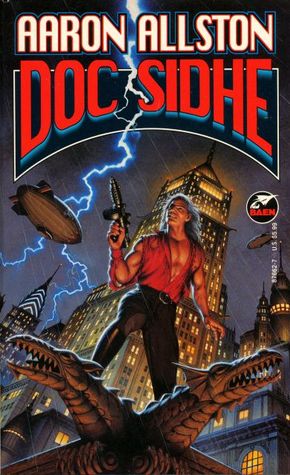
Aaron Allston  Doc Sidhe-smallWe lost prolific game designer and author Aaron Allston last week and, as often happens after we lose someone of importance in the industry, I find myself dwelling on their contributions. By the time of his death, Allston was renowned chiefly for his popular Star Wars books. But the first of his novels I ever purchased — and indeed, the one I still think of first — was his homage to Doc Savage, the 2001 novel Doc SidheDoc Sidhe is an unabashed salute to thirties pulp fiction. Here’s the book description:

Olympic kickboxer Harris Greene’s career has just self-destructed, and both his manager and his fiance, Gaby, have dumped him. While looking for Gaby, he interrupts a bizarre trio as they are kidnapping her, and he is hurled into another, very weird, universe. His only hope is Doc Sidhe, this Art Deco universe’s greatest champion of justice.

And here’s Blue Tyson’s spot-on review:

Imagine if there was a counter earth, stuck in the 30s, where, basically, elves and trolls are real. The coolest thing, however, is that Doc Savage is real, too. Except for the fact he is a Daoine Sidhe sorcerer, and has a higher mortality rate for his crew.

A down on his luck kickboxer and his girlfriend end up there, via a conjurer’s circle, and a plot to change the magical rules of relations between the two worlds. Oh, and the evil villain is Doc’s son. This is an excellent homage, a good urban fantasy, and a bit of The Untouchables, to boot…

Doc Sidhe had one sequel: Sidhe-Devil, published by Baen in 2001. It was published by Baen Books in May 2001. It is 352 pages, originally priced at $5.99. It is currently out of print; there is no digital edition. See all of our recent Vintage Treasures here.

Travel the Magic Highways with The Early Jack Vance, Volume Three, edited by Terry Dowling and Jonathan Strahan

Travel the Magic Highways with The Early Jack Vance, Volume Three, edited by Terry Dowling and Jonathan Strahan

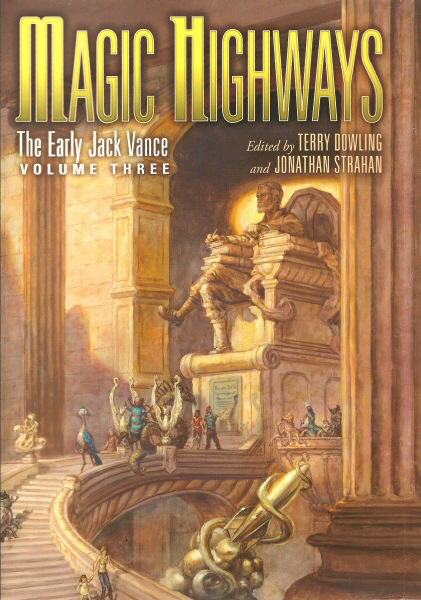
Magic Highways The Early Jack Vance-smallLast February, I wrote about how excited I was to find a copy of Dream Castles: The Early Jack Vance, Volume Two in the Dealer’s Room at Capricon. I had purchased Volume One, Hard Luck Diggings, when it was released in 2010; it is now long out of print and new copies start at around $450 at Amazon.com. Dream Castles is now sold out as well and prices are already starting to creep up, so I was pretty jazzed to find a copy when I did.

When I wrote enthusiastically about Dream Castles last year, I said:

Jack Vance, who at 96 years old is still with us, is one of the last remaining writers from the Golden Age of Science Fiction (the only other one I can think of is Fred Pohl). He is the author of some of the most celebrated SF and fantasy of the 20th Century, including “The Dragon Masters,” “The Last Castle,” and The Dying Earth novels.

Jack Vance died on May 26th of last year, and Frederik Pohl passed away less than four months later, robbing us of two of our genre’s brightest lights.

Still, their words are still with us — and what words they are. I have no idea how many volumes are projected in The Early Jack Vance (Volume Four, Minding the Stars, is scheduled to be released this month), but every one is a delight.

Part of that is the gorgeous covers by Tom Kidd; part is the high quality production and design from publisher Subterranean, and of course part of it is simply finally having the early pulp fiction of one of the greatest fantasy writers of the 20th Century collected for the first time.

Read More Read More

Leigh Brackett, J.R.R. Tolkien, and Appendix N: Advanced Readings in D&D

Leigh Brackett, J.R.R. Tolkien, and Appendix N: Advanced Readings in D&D

The Galactic Breed-smallAnd so we come to the end of our extended journey through Gygax’s Appendix N, at the hands of our intrepid guides Tim Callahan and Mordicai Knode at Tor.com.

We haven’t always agreed with the opinions of Messieurs Callahan and Knode. But that’s okay. More than okay, really… what’s the point of following along with a literary survey if we don’t get to pound the table occasionally and shout “You lunkheads!” Really, the primary pleasure we old-timers get these days is disagreeing with self-proclaimed experts. Loudly, and at length.

But overall I think Callahan and Knode, the Lewis and Clark of Appendix N, have done a fine job. They’ve surveyed every entry in Gary Gygax’s original list of authors who influenced Dungeons and Dragons, just as they promised when they set out nine months ago. Along the way, they’ve shared their opinions — sometimes as informed experts, sometimes as newbies coming to the work of the masters for the first time.

And at every stop, they’ve been honest with us on whether or not the books spoke to them as modern readers. I don’t think we can ask for anything more than that.

I’m going to miss following along with Tim and Mordicai. Whether I agreed with them or not — nodding along with “Yup, yer darn tootin’,” or banging my head on the table and cursing every reader born after 1990 — they were always entertaining, enlightening, and frequently very funny.

But we still have two last articles to examine: Mordicai’s appreciation of the grand old lady of science fantasy, Leigh Brackett, and Mordicai and Tim’s wrap-up of the entire series, their salute to J.R.R. Tolkien. Let’s see if these last two pieces bring more nodding, or table-banging.

Read More Read More

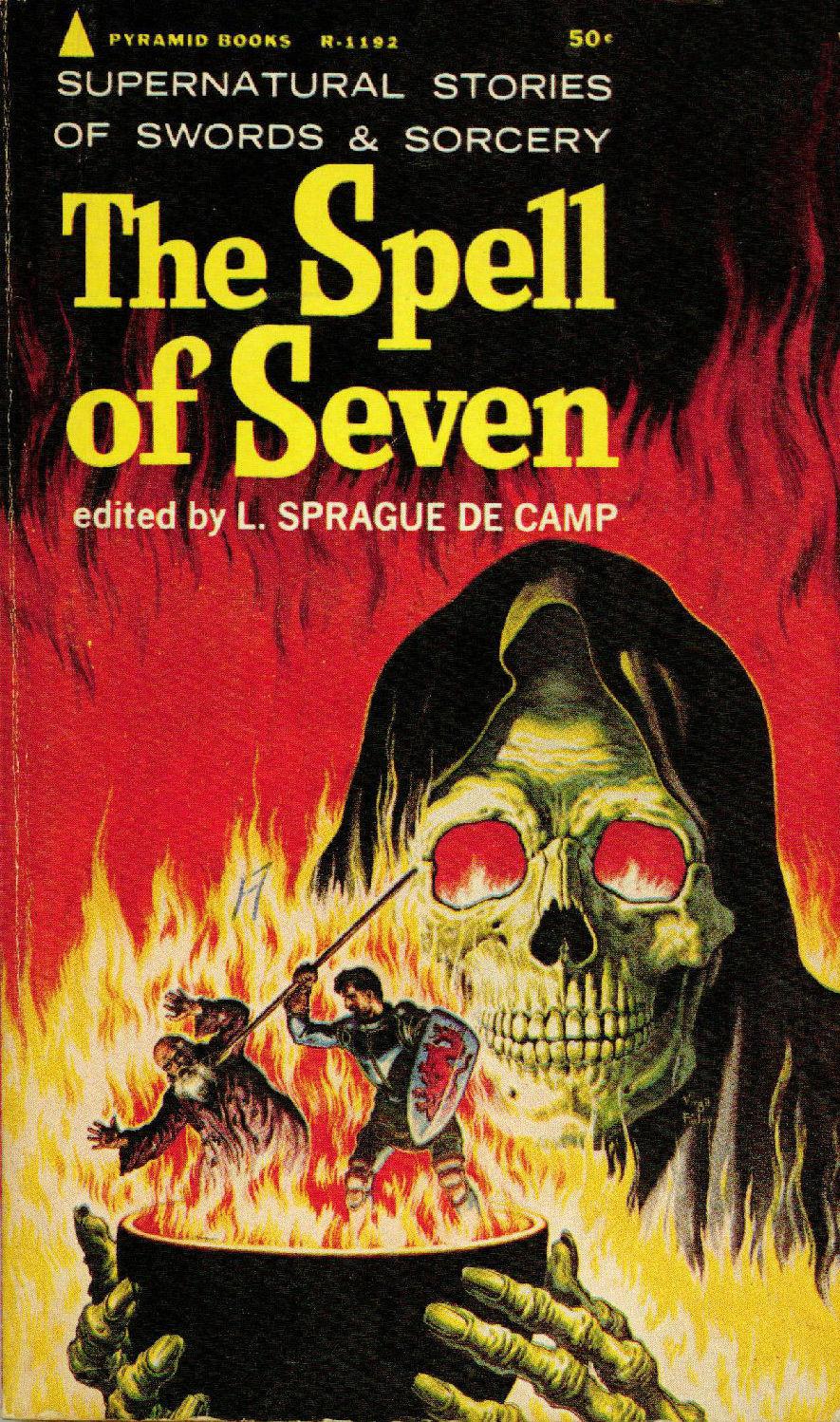
Vintage Treasures: The Spell of Seven, edited by L. Sprague de Camp

Vintage Treasures: The Spell of Seven, edited by L. Sprague de Camp

The Spell of Seven-smallIt takes real effort to keep on top of even a fraction of the exciting new work in the fantasy genre every week. Between the print magazines, online outlets like Subterranean and Beneath Ceaseless Skies, paperbacks, hardcovers, and self-published and independent work from talented folks just outside mainstream publishing, it’s exhausting. Luckily, it’s also extremely rewarding, and I feel fortunate indeed to be part of such a lively and vibrant branch of literature.

Of course, there are also weeks when I say, “The hell with it,” and settle in with a great vintage paperback.

This was one of those weeks. And the book that lured me away from the latest crop of promising new writers clamoring for my attention was L. Sprague de Camp’s The Spell of Seven, a slender sword & sorcery anthology from 1965.

I’ll admit up front that I thought that The Spell of Seven was a standalone title. I’m a child of the late 20th Century; when a book is part of a series, I expect the publisher to sell me on that up front. (It’s easier to mug me for more money that way.)

Fortunately, I have the collective hive-mind of Black Gate to call upon. One of the great lobes of that mind is Brian Murphy, who pointed out that the book was a follow-up to De Camp’s seminal S&S anthology Swords and Sorcery, and part of a successful series that would eventually evolve into a four volume survey from Pyramid Books covering the most important heroic fantasy of the time.

Here are Brian’s comments, taken from his 2011 review of The Fantastic Swordsmen.

Read More Read More