Browsed by
Category: Pastiche

Doc Savage Meets… The Grinch Who Stole Christmas
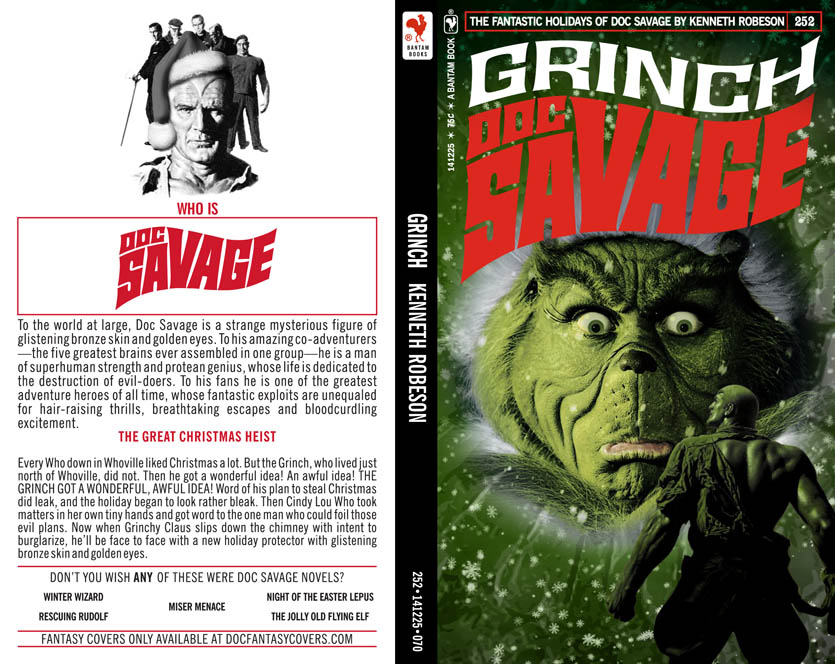
Doc Savage Meets… The Grinch Who Stole Christmas

Doc Savage Grinch-small

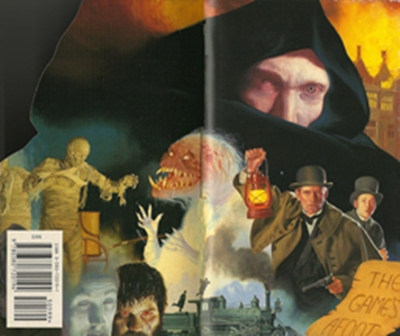
Kez Wilson has been publishing Doc Savage fantasy covers at his website for years, and they get more and more creative as the months go by. His December entry this year (#252) sees Doc Savage face off against a diabolical agent of Christmas evil. Here’s his Doctor Seuss-inspired back cover copy:

Every Who down in Whoville liked Christmas a lot. But the Grinch, who lived just north of Whoville, did not. Then he got a wonderful idea! An awful idea! THE GRINCH GOT A WONDERFUL, AWFUL IDEA! Word of his plan to steal Christmas did leak, and the holiday began to look rather bleak. Then Cindy Lou Who took matters in her own tiny hands and got word to the one man who could foil those evil plans. Now when Grinchy Claus slips down the chimney with intent to burglarize, he’ll be face to face with a new holiday protector with glistening bronze skin and golden eyes.

Wilson’s pastiche covers are based on the brilliant work of James Bama and Bob Larkin, who illustrated the original Doc Savage paperbacks from Bantam. Check out his marvelous Doc Savage Fantasy Cover Gallery to see the Man of Bronze face off against Buffy, Ming the Merciless, Cthulhu, 007, The Thing, the Terminator, Sharknado, the Hardy Boys, Barbarella, Doctor Who, Kirk and Spock, and many others.
The Public Life of Sherlock Holmes: Watson’s Christmas Trick

The Public Life of Sherlock Holmes: Watson’s Christmas Trick

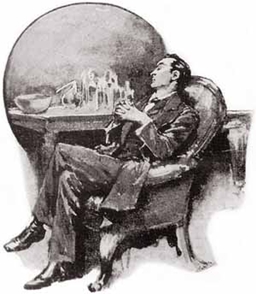
Watson_Chair2I opened the door to our rooms at 221 B Baker Street and entered, careful not to jostle the package I carried. I was immediately engulfed in the warmth of the crackling fire that blazed in our hearth. Sherlock Holmes  was in his favorite chair, looking half asleep. Opening his eyes, he turned his head and greeted me lazily.

“Ah, Watson, you have finished your rounds and holiday shopping and returned too late for Mrs. Hudson’s evening repast. However, I am sure she can be prevailed upon to provide you with some cold meats.”

Here, he stopped, and before I could reply, changed his tack entirely. “But I see that you stopped at your club, where I am sure you supped.”

You can imagine my astonishment, dear reader, to hear this. I had not uttered a word since entering the room, and I saw no way that he could know that I had indeed dined at the club. I was surprised that he hadn’t given the name of the former army colleague who had joined me.

“Holmes, this is outrageous! How could you possibly have deduced that in the few seconds I have been in this room?”

He airily waved a hand of dismissal. “Please, it is obvious.” The look on my face must have shown I was not convinced, so he continued.” Your boots have that dark sheen that is unique to the elderly boot man at your establishment. There are at least three other distinctive marks that tell me as much, but the boots alone were enough to deduce it. It is the merest child’s play. Pray, remove your coat, light your pipe and make yourself comfortable.”

Read More Read More

The Public Life of Sherlock Holmes: Frank Thomas and Holmes

The Public Life of Sherlock Holmes: Frank Thomas and Holmes

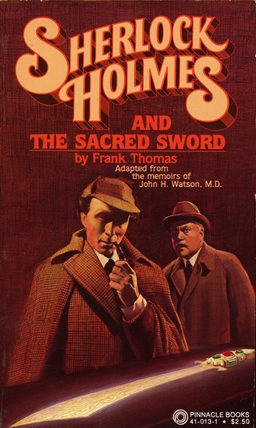
Thomas_SwordIn the nineteen fifties, thousands of American boys thrilled to the television adventures of Tom Corbett, Space Cadet. Frankie Thomas, Jr, offspring of acting parents, had been in the business for two decades when he starred in the adaptation of a popular comic strip.

It was a hit, spawning comics, books, a radio show, toys, et al. As with all shows, it ran its course and came to an end. Thomas went on to become one of America’s foremost bridge experts. That’s the card game, not the things that span waterways. His Sherlock Holmes, Bridge Detective, was a popular book on the subject (as was its sequel).

When I started branching out beyond Sir Arthur Conan Doyle’s original stories, I think that Thomas was the very first Holmes pastiche writer that I read.

Keep in mind that around 1980, pastiches were relatively uncommon. You bought Holmes books at actual bookstores: no Amazon. Indie-press Holmes stories were rather rare and hard to find. There wasn’t a self-publishing industry to speak of. So, avid Holmes fans gobbled up paperbacks by L.B. Greenwood, Richard Boyer, and Frank Thomas. Yep: same guy.

In 1979, Sherlock Holmes and the Golden Bird came out, followed the next year by Sherlock Holmes and the Sacred Sword.

Read More Read More

The Public Life of Sherlock Holmes: The Science Fictional Solar Pons

The Public Life of Sherlock Holmes: The Science Fictional Solar Pons

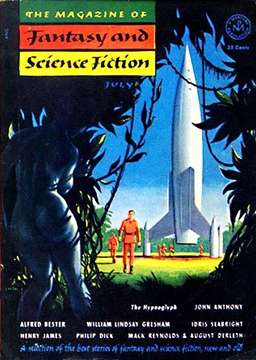
OffTrail_SnitchA few weeks ago, I wrote about the best of all Holmes pastiches, August Derleth’s Solar Pons. I mentioned that Pons had a more open-minded view towards the supernatural. This was certainly reflected in four stories that Derleth co-authored with noted science fiction writer Mack Reynolds.

Just last week, John O’Neill wrote a post about Anthony Boucher. As he mentioned, Boucher, along with J. Francis McComas, was the founder of the seminal Magazine of Fantasy & Science Fiction.

In January of 1953, they wrote to Derleth. Reynolds had submitted “The Adventure of the Snitch in Time,” a pastiche in which Sherlock Holmes receives a visitor from an alternate time-space continuum. The editors loved the idea, but, “Unhappily, Mack did not in any sense of the word recreate Holmes, Watson, or Baker Street! Outside of the plot idea, the story was, to be wholly frank, lousy!”

Also, to avoid trouble from those pesky Doyle brothers, none of the characters were named: wholly unsatisfactory.

So, the two editors wrote to Reynolds, suggesting that they have Derleth rework it into a Solar Pons story. Reynolds loved the idea, sending back, “I’d appreciate it if you’d give Augie Derleth first chance at it. It was after reading his Solar Pons stories that I got the idea for Snitch. Besides that, I’m an admirer of the old Seigneur of Sauk City and it would be a privilege to have a story appear under a collaborative by-line…”

Read More Read More

The Public Life of Sherlock Holmes: Holmes for Christmas

The Public Life of Sherlock Holmes: Holmes for Christmas

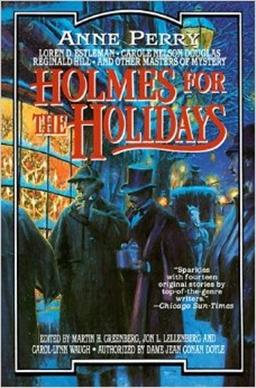
HolmesXmas_HolidaysOf the sixty Sherlock Holmes tales penned by Sir Arthur Conan Doyle, only one is set during the holiday season. “The Adventure of the Blue Carbuncle” takes place two days after Christmas and involves a worn bowler hat and a goose worth more dead than alive.

That story doesn’t actually have a whole lot to do with Christmas; it just happens to occur shortly afterwards. However, there are a few books in my Holmes library that definitely qualify as Christmas adventures.

One of my favorite anthologies is 1996’s Holmes for the Holidays, which includes fourteen Christmas-themed adventures. Any Holmes anthology is likely to be a mixed bag. However, I consider this to be among the better of the multiple-author collections on my Holmes bookshelf.

Loren D. Estleman’s (author of Holmes pastiches featuring Dracula and Jekyll and Hyde) “The Adventure of the Three Ghosts” is a sequel to Dickens’s A Christmas Carol. Texan Bill Crider (give his Dan Rhodes mysteries a whirl) also continues the Scrooge story with “The Adventure of the Christmas Ghosts.”

William DeAndrea’s “The Adventure of the Christmas Tree” is a neat piece of Christmas-themed espionage. While Anne Perry’s “The Watch Night Bell” is one of my favorite Holmes holiday stories.

Read More Read More

The Public Life of Sherlock Holmes: Meet Solar Pons

The Public Life of Sherlock Holmes: Meet Solar Pons

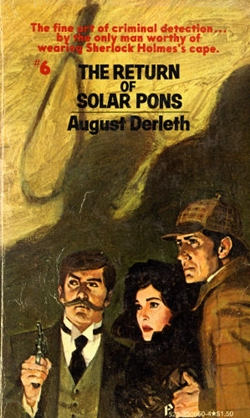
Pons_ReturnPinnacleThere have been a few posts here recently about fan fiction. That concept has been taken to its furthest extreme with the character of Sherlock Holmes. Amateur and professional writers have been penning tales about Holmes for about a century.

Parodies are stories that poke fun at Holmes. Many, such as this one I wrote (page 10), utilize Holmes himself and are clearly tongue in cheek. Others use “new” characters, such as Robert Fish’s Schlock Holmes and his Bagel Street Saga.

But the more serious Holmes tales, those that attempt to portray Sir Arthur Conan Doyle’s detective to varying levels, are called pastiches. Just about the earliest ‘serious’ attempt at a Holmes copy was by Vincent Starrett, who wrote “The Adventure of the Unique Hamlet” in 1920.

The Doyle sons (whom I wrote about here) didn’t like pastiches and they’re relatively uncommon during the first half of the twentieth century as they protected their copyright. The Doyle Estate has been fighting over the copyright right up to this month!

Richard Lancelyn Green’s The Further Adventures of Sherlock Holmes collects many of the early pastiches, including several from the nineteen forties. There are thousands of pastiches out there now. Search “Sherlock Holmes” or “Sherlock Holmes anthologies” at Amazon and you’ll get a list too big to go through. A future post will talk about some of my favorite pastiches, such as Frank Thomas’s Sherlock Holmes & the Sacred Sword and Michael Hardwick’s Prisoner of the Devil.

But this post is about the detective that Starrett called “The best substitute for Sherlock Holmes known”: Solar Pons. In 1928, August Derleth, a college freshman at the University Wisconsin, wrote to Sir Arthur Conan Doyle, asking if there were to be any more Holmes tales. Receiving an emphatic reply of “no” scrawled on his own letter, Derleth made a note on his calendar: “In re: Sherlock Holmes.”

Read More Read More

The Ballantine Adult Fantasy Series: The Spawn of Cthulhu edited by Lin Carter

The Ballantine Adult Fantasy Series: The Spawn of Cthulhu edited by Lin Carter

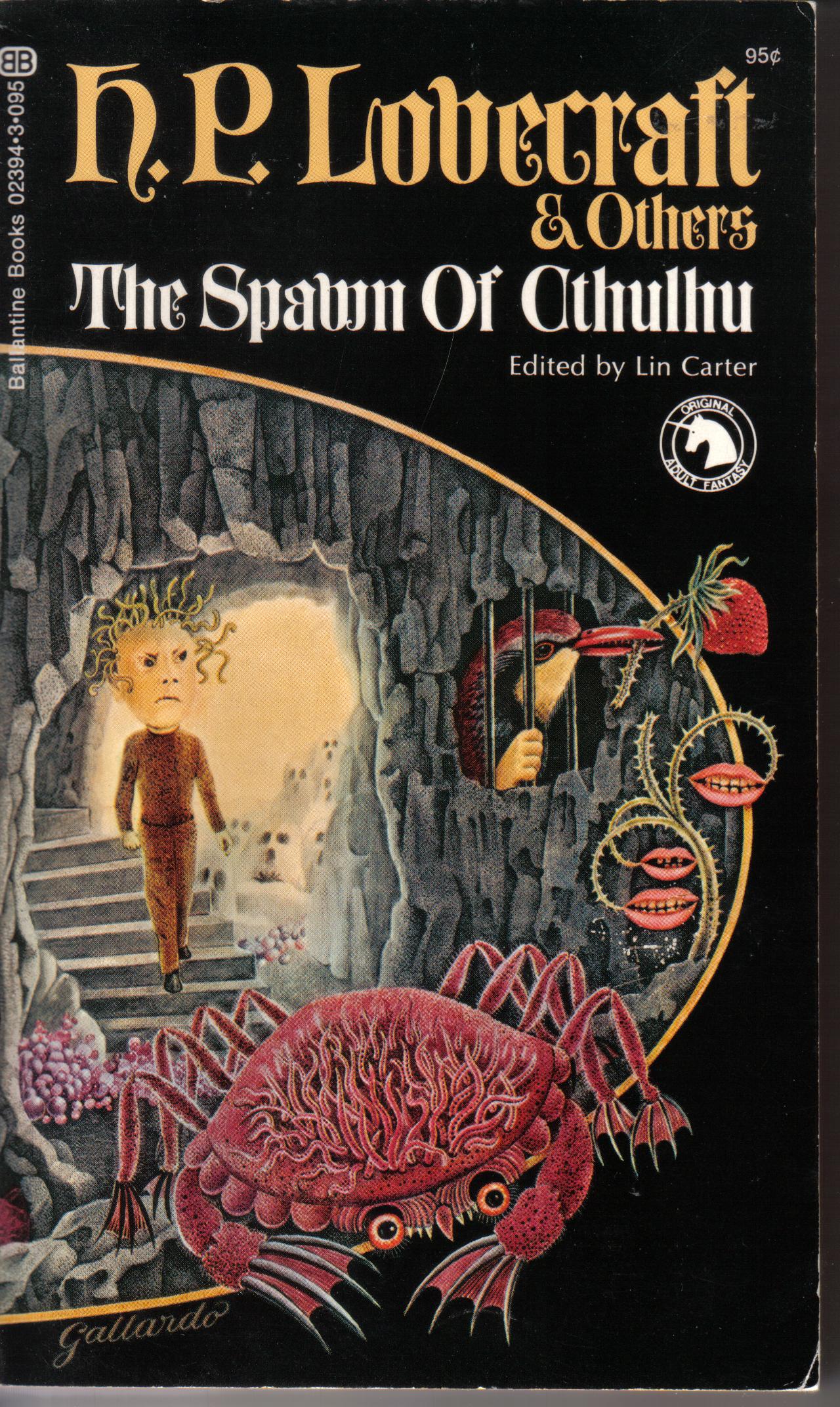
The Spawn of Cthulhu edited by Lin Carter-smallThe Spawn of Cthulhu
H. P. Lovecraft and Others
Lin Carter, ed.
Ballantine Books (274 pages, October 1971, $0.95)
Cover by Gervasio Gallardo

Lin Carter edited more than one anthology for the Ballantine Adult Fantasy series. Up until now, I’ve not discussed any of them. One reason is that where I am sequentially, there have only been two. The other reason is it’s easier to discuss a single novel than the contents of an anthology.

I’m going to break with that practice for this particular entry in the series. Carter has built a thematic Mythos anthology with The Spawn of Cthulhu. Taking references to the work of other writers referenced in Lovecraft’s short novel “The Whisperer in Darkness,” Carter then proceeds to include either the story referenced or other stories written about the Old Ones mentioned.

I’m going to include some mild spoilers in this post. If that is of concern to you, then let this paragraph serve as your warning. The discussion will start after on the other side of the Read More link just below.

Let’s start with “The Whisperer in Darkness,” shall we? It’s 85 pages long, by far the lengthiest story in the book. The story concerns a folklorist at Arkham University named Wilmarth who is writing a series of newspaper articles debunking sightings of strange bodies seen in swollen rivers and creeks after a particularly bad storm in Vermont. The articles generate some lively discussion in the paper, and are eventually reprinted in Vermont papers.

Read More Read More

The Public Life of Sherlock Holmes: The List of 7 by Mark Frost

The Public Life of Sherlock Holmes: The List of 7 by Mark Frost

List_fullcoverMark Frost made the news not too long ago with the announcement that he and David Lynch will be making a new Twin Peaks series for Showtime. Yay! Twin Peaks came to an abrupt end in 1991: just after its second season. Frost apparently wasn’t one to let grass grow under his feet, as only two years later, The List of 7 hit bookshelves.

John O’Neill wrote about (mostly the cover…) this book last year.

Frost is absolutely a fan of Sherlock Holmes. Not only is the novel’s protagonist none other than Arthur Conan Doyle and bits of his life are scattered throughout, but there are Holmes-isms aplenty. Thus, this book is a type of pastiche, though darker than any straight Holmes tale I’ve read.

Read More Read More

The Solar Pons – Fu Manchu Connection

The Solar Pons – Fu Manchu Connection

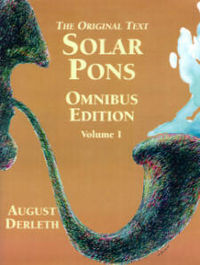
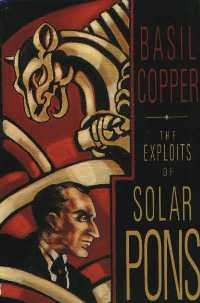
200px-OTSolarPonsOmnibusExpoloits_of_solar_ponsMy colleague Bob Byrne has already introduced many new readers to August Derleth’s wonderfully tongue-in-cheek exploits of the unlikely-named Sherlock Holmes-inspired consulting detective, Solar Pons of Praed Street.

Derleth loved tossing in nods to mystery works outside of Sir Arthur Conan Doyle’s fictional universe. These included three memorable encounters with Sax Rohmer’s insidious Dr. Fu Manchu.

“The Adventure of the Camberwell Beauty” was the first of the appearances to see publication in 1958. The story presents an unnamed Dr. Fu Manchu hiring the celebrated consulting detective to recover Karah, his beautiful young ward, who has been abducted by his archenemy, Baron Corvus. The tale is set in the early 1930s and although the first chronicled, it is not our heroes’ first encounter with the Devil Doctor.

Structured as a tribute to Rohmer’s 1933 novel, The Bride of Fu Manchu, the story reveals Karah (named for Rohmer’s Karamaneh) as the granddaughter of the Devil Doctor. Showing a nice bit of fidelity to Rohmer’s early tales, the unnamed Doctor resides in an underground Thames-side lair in Limehouse.

Read More Read More

The Public Life of Sherlock Holmes: Ellery Queen’s Misadventures of SH

The Public Life of Sherlock Holmes: Ellery Queen’s Misadventures of SH

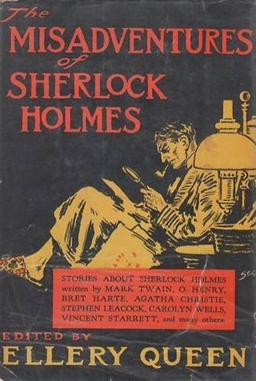
Misadventures_CoverYou’ve probably heard the name ‘Ellery Queen,’ but you may not know that it’s actually the name for joint efforts by cousins Frederic Dannay and Manfred Lee. They were important players in the mystery field for decades, with Dannay being a notable Sherlockian.

In 1943, Dannay planned The Misadventures of Sherlock Holmes, an anthology of parodies and pastiches. Unlike today, Holmes anthologies were unheard of back then. Due in large part, as we’ll see, to the management of the Doyle Estate by Sir Arthur Conan’s sons, Adrian and Dennis.

The book, by Ellery Queen, was unveiled at a Baker Street Irregulars gathering in 1944. I gave a taste what dealing with Doyle’s two sons could be like in my post on “The Man Who Was Wanted.” There’s more of the same in this tale.

Adrian heard about the collection and went off in his usual rage, telegramming his brother Denis (also a wastrel) in Spain. Denis cabled the Estate’s law firm and instructed them to demand that Queen and the publishers, Little, Brown and Company, stop publication and withdraw all copies. They were also to be sued for damages.

To quote Denis’s cable to the lawyers: “It is obviously a flagrant example of that very sort of piracy, striking at the very roots of the literary value of the property which my father left to his family, against which we have fought together in the past…books which will completely devaluate and ruin the whole value of the Holmes property, including films, radio and stage.”

Read More Read More