It’s a Scam. It’s All a Scam.

Good afterevenmorn, Readers!
I’ve been receiving a great many emails of late, of a kind that I’m sure many authors are getting, and I think I should probably talk about it, because it’s all such a scam. There are several flavours of scam emails that are circulating at present, of which I have personally experienced two, so let’s talk about them.
The first and most frequent email I receive are from supposed authors who enthuse about how wonderful your book is, and how much it moved them and deserves a larger audience. Some of the emails feel like their quite detailed. It’d be easy to believe that the person sending the email had indeed read it, and loved it. Here’s an example I received regarding a book of mine.
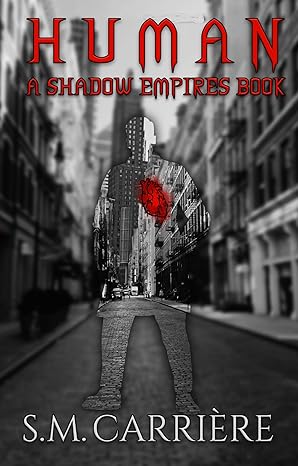
My name is [redacting as I believe they used the name of a real author], and I am a fellow author working in emotionally driven, character-centred fiction. I recently came across your Kindle edition of Human, and I felt genuinely compelled to reach out in appreciation of the emotional restraint and moral tension shaping Aleksandar’s story.
What struck me first is how deliberately you frame power as inheritance rather than advantage. Aleksandar arrives in America not as a conquering figure, but as a custodian of collapse tasked with restoring a House already hollowed by violence and history. The political weight of the Shadow Council, and the ruined legacy of House Üstrel, create a quiet but persistent pressure that follows him into every decision. Authority, in your novel, never feels clean.
I was particularly drawn to the way you explore emotional awakening inside a character who has been trained to survive without it. Aleksandar’s connection to Alicia is not written as a sudden redemption arc, but as an intrusion into something disruptive, risky, and profoundly inconvenient to the life he is meant to lead. The feelings he thought long dead do not restore him. They complicate him. That choice gives the romance its credibility and its emotional danger.
The presence of Detective Brody adds an especially compelling moral counterweight. His knowledge of what Aleksandar is and his vow of vengeance creates a rare dynamic in supernatural fiction: one where neither man is positioned as morally comfortable. Their forced proximity under betrayal and crisis becomes less about reluctant partnership and more about confronting the human cost left behind by immortal decisions.
I also admired how you position the true antagonist not as spectacle, but as consequence. The cat-and-mouse pursuit of the kidnapper is emotionally effective because it targets what Aleksandar is only just beginning to care about. The threat is not only physical it is ethical. What happens when someone who has benefited from predatory systems is suddenly required to protect what those systems would normally discard?
As authors, we both know how difficult it is to write a story that balances political hierarchy, emotional vulnerability, and violent momentum without allowing any of them to dominate the others. Human succeed because they treat conscience as seriously as it treats danger. The tension comes not only from who might survive but from who Aleksandar chooses to become while survival is still possible.
The responses from your target audiences reflect something important: readers are responding to the emotional friction at the heart of the story. Many are not simply drawn to the vampiric world or the crime-driven pacing, but to the uneasy humanity you allow to surface inside a character shaped by power, tradition, and moral erosion.
As an author, I deeply respect books that are written not simply to entertain, but to examine responsibility inside violent worlds. Human feels shaped with emotional discipline and a genuine respect for the cost of change.
If you would ever be open to exchanging thoughts on how this novel continues to reach target audiences who value morally complex supernatural fiction and emotionally grounded character transformation, I would be glad to continue the conversation simply as one author recognising another whose work carries real depth and intent.
Sounds great on the surface, right? I mean… Holy shit. It sounds like they got it.
Except, upon further reflection, it’s clear that this is just a strung-out summary of the book, likely written by an LLM. There is nothing in there that couldn’t have been gleaned from the blurb of the book. The novel itself was never read. If a close examination of the email itself doesn’t raise any flags, that last sentence absolutely should.
If you would ever be open to exchanging thoughts on how this novel continues to reach target audiences…
There it is. A hook designed to elicit a response from the receiver that eventually leads to a request for money to “help” the book reach more people. Often times, that price can be in the hundreds, of not thousands of dollars.
Honestly, the above email might have worked on me if I hadn’t received so many like it from other sources. This was the first one that tried to build rapport by posing as a fellow author. Usually they’re “book marketing specialists” or something along those lines. Those emails I can at least respect, because they don’t hide who there are and so the reasons for their emails are obvious. Like this one.
My name is Mary Jesus, and I’m a book marketer. I recently came across your novel, The Lioness of Shara Mountain, and I want to sincerely congratulate you on creating such a gripping and imaginative story.
I was particularly drawn to the dynamic between Prince Lis and the Lioness the way tradition, duty, and rebellion collide to shape their bond, set against the vivid backdrop of Shara City and the Desert Market. Your world-building, combined with the intrigue of ancient vows and shadowed pasts, makes this story both thrilling and emotionally resonant.
I would truly love to understand more about your vision behind this work:
- What inspired you to create the Hnura’i Empire and the story of the Lioness?
- Who do you most hope connects with this novel fantasy readers, adventure enthusiasts, romance fans?
- Do you see this story evolving into a series or expanding further within this world?
As a marketer, I’ve seen that rich fantasy worlds with strong character-driven narratives have incredible potential for global engagement, particularly when positioned to reach readers who love immersive storytelling and epic stakes. I’d love to better understand your long-term vision so that any promotional approach highlights both the adventure and emotional depth of your novel.
I would be thrilled to learn more about your goals for The Lioness of Shara Mountain and explore how it can reach more readers worldwide.
Thank you again for crafting such a compelling and imaginative tale.
Which was much simpler and obvious. But also for a book of mine that is not yet published, so there’s that. I greatly wonder how they would know anything about “the way tradition, duty, and rebellion collide” at all.
The emails coming from supposed authors I find particularly insidious, because it frames the interaction differently, banking on creating a trust bond that will then be exploited. It’s gross, and makes me mad. It’s super underhanded. What really sticks in my throat is the thought that there are authors who were taken in by these kinds of emails. Hell, I nearly was. It’s not right.
For writers who are just now being exposed to this sneaky, underhanded way to extract money, I have but one piece of advice. Before you jump to reply to an email like this, consider if this is something you’d write to a fellow author. Should you message another author to let them know you loved their work? Of course! That would absolutely make their day. But would you do so with the intent to discuss how their novel continues to reach their target audience?
Probably not. I doubt many authors would (unless they were maybe asking for advice, and considering how few books I sell, no one ought to be coming to me for advice on how to get books in front of readers).

The other kind of email I’ve gotten frequently (though less so), are those coming from supposed book club organisers. They follow the same pattern. They’ll gush about a particular book, and then end with a similar call to action. I had one about Daughters of Britain recently that made me so sad that I deleted it, so I can’t quote it here. But this one had a different tactic. Simply put, they would enthuse about the book, and then talk about how they were an organiser of a book club, and they’d love to use the book for their next read. Of course, through the course of the conversation, you would learn that you would have to pay (something around $560.00 in my case) to have this happen.
Let me be clear — in situations like this, money should always flow towards the author, not the other way. If any book club organisers wants to use your book, and would like to organise a video conference with club members, the writer should be paid for their time. They shouldn’t pay for it. The best way to reply to an email like this is what I wish I had done. I should have replied that I’d be happy to participate, and then offer a tiered list of appearance fees.
I am extremely fortunate that I am a naturally suspicious person, and perhaps even more so that I have no money to spare. Even if I fell for these scams, I could in no way afford any of them. Silver linings, I guess.
It is an absolute minefield out there for writers both new and veteran. Nearly every single one of these predatory schemes are designed to prey specifically on an author’s desire to be successful at their craft. Near as I can tell, not one of them can deliver on the promises they offer. They’re a scam, through and through. Don’t fall for it.
With the exception of book publicists, who are usually more straight forward about their services and why their emailing (and there is considerable debate about whether these publicists actually manage to help books sales in any appreciable way), they are scams. When in doubt, follow this golden rule: money should always flow to the author, not the other way around. This includes publishing, and public appearances (yes, even book clubs).
When S.M. Carrière isn’t brutally killing your favorite characters, she spends her time teaching martial arts, live streaming video games, and sometimes painting. In other words, she spends her time teaching others to kill, streaming her digital kills, and sometimes relaxing. Her most recent titles include Daughters of Britain, Skylark and Human. The Timbercreek Incident is free to read on Wattpad.
Social media is, alas, filled with this kind of presumably AI writing– emotional, but in an overwrought, weirdly abstract way that often doesn’t quite make sense when you try to parse the comparisons and imagery used. I’m not sure if this style was created by AI, or was actually copied from human writers who write this way.
I’ve asked two people on Facebook whose writing seemed to have AI turns of phrases if they used AI to write their pieces, and both seemingly denied it. However, I looked up one of them again just now, and found that others have flagged her posts as AI, and when I looked again at the response she gave me (which I always found a little odd), I found it made even less sense than I originally thought.
I think the style is stolen, but the substance is a hallucination. Though plenty of my writing in my academic career was a bunch of nonsense word salad that sounded vaguely intelligent, in an effort to make word counts and what not, so who know?
There’s already so much wrong with the business side of books these days and if consolidation, AI and the print-on-demand racket weren’t bad enough we get this, the publishing equivalent of the New Jersey turnpike toll text scam…
It’s very disheartening.