Browsed by
Category: News

Goth Chick News: Going for a Ride with Ichabod Crane

Goth Chick News: Going for a Ride with Ichabod Crane

image0061Until recently, we here at Goth Chick News have taken a long hiatus from commercial television. Although we readily agree there is nothing quite as frightening as reality TV, shows aimed at our particular genre were largely absent; that is until the viewing public fell in love with the likes of Walking Dead and American Horror Story, to name a few.

Lately, this tiny spark of cautious optimism has started looking like it just may catch. I mean, you can only watch so many reruns of Alfred Hitchcock Presents and Twilight Zone before you give up hoping that anything made for the small screen will ever be worth staying awake for again.

Then this week comes word that the Headless Horseman may be cutting a bloody swath through not one but two television networks in the near future.

Insert tentative happy dance here…

First up is an adaptation from the gents over at Fringe, which itself has become a cult hit for Fox.  The network has given a pilot commitment to an adaptation of The Legend of Sleepy Hollow from Fringe creators and idea wonderboys, Alex Kurtzman and Roberto Orci.
Read More Read More

How Galaxy Magazine Saved Robert Silverberg from a Life of Smoking

How Galaxy Magazine Saved Robert Silverberg from a Life of Smoking

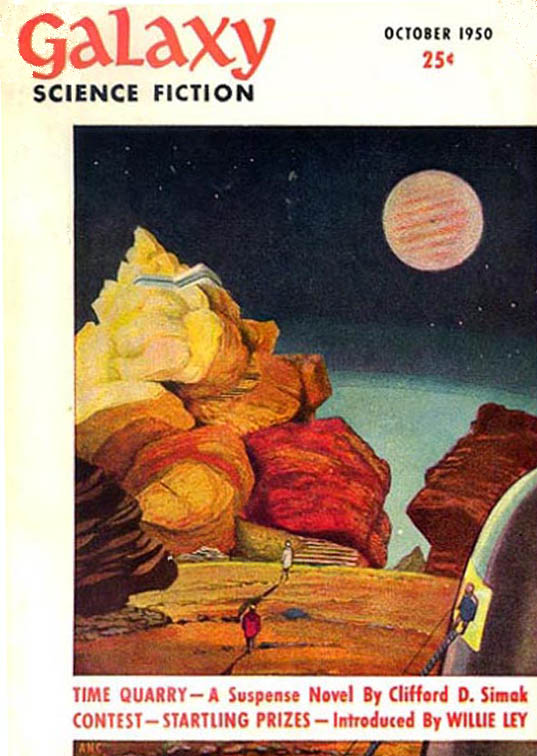
galaxy-issue-1-smallI’ve been neglecting Galaxy magazine in my recent Vintage Treasures articles. I’ve covered some of the great fiction in Analog, Asimov’s Science Fiction, and Worlds of If, but the truth is that Galaxy was on its last legs by the time I started reading science fiction and fantasy in 1976, and it folded in 1979.

But I’m not wholly ignorant of the contribution Galaxy made to the field, especially under the editorship of H.L. Gold (1950 – 1961) and Frederik Pohl (1961 – 1969). Until 1950 the field was almost entirely dominated by John W. Campbell, editor of Astounding, who was legendary in his ability to spot talent, but also held a fairly narrow view of what kinds of SF and fantasy would sell. Gold was interested in tales of social and psychological upheaval, not just the hard science puzzle fiction in Astounding, and quickly proved that readers would buy stories with that bent — as well as satire, humor, and tales where mankind didn’t always triumph in its march to the stars and inevitable conflict with alien races.

Mike Ashley, one of our field’s finest historians, credits the success of Galaxy for the huge boom in science fiction and fantasy in the fifties, when the field grew from a handful of magazines to over two dozen, saying Galaxy “revolutionized the field overnight.”

Author Robert Silverberg, however, has a more personal tale of how Galaxy changed his life. He writes:

It was the founding of Galaxy that saved me from a life of smoking. It was September, 1950, and I was a teenager with about forty cents in my pocket. A pack of cigarettes cost about a quarter then. So did the first issue of Galaxy, which had just come out. I went into a newsstand thinking I might buy some cigarettes (I had been smoking a few, not with any pleasure, but simply to make myself look older) and there was the shiny Vol One Number One Galaxy. I could afford one or the other, not both. I made my choice and lived happily ever after.

While I was too late to buy more than a handful of issues of Galaxy on the newsstand, I rectified that later in life, amassing a fair collection going back to that famous first issue in 1950. I’ve been enjoying them over the last few years, and will report in here with the very best stories I find.

Graphic Classics Half-Price Sale

Graphic Classics Half-Price Sale

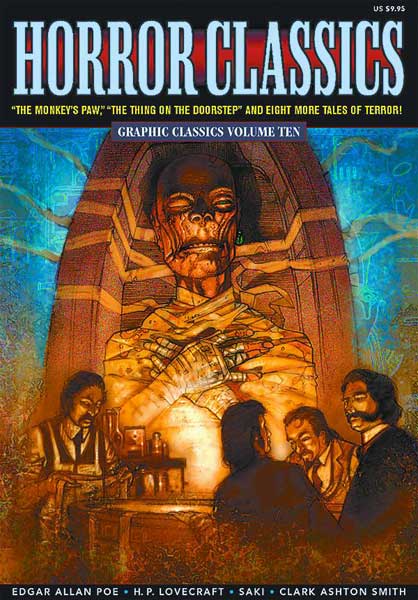
horror-classics-graphic-classics-10-2I’ve been collecting Eureka Press’ Graphic Classics for over ten years, ever since we received a review copy of Volume 1: Edgar Allan Poe, in 2001 (back when they were Rosebud Graphic Classics, a spin-off of Rosebud magazine). Tom Pomplun, longtime Art Director for Rosebud, started up Eureka Press that year to produce high quality comics anthologies, and in the last decade he’s published nearly two dozen volumes, including several that have gone through multiple editions.

A typical issue of Graphic Classics is 144 densely-packed black & white pages, containing loving adaptions of classic stories by some of the best talents in comics — including Rick Geary, Gahan Wilson, Richard Sala, Mark A. Nelson, Alex Nino, Skip Williamson, Richard Corben, Hunt Emerson, and many others. Matt Howarth’s 22-page rendition of “The Shadow Out of Time” in Graphic Classics: H. P. Lovecraft may be the finest comics adaptation I’ve ever read, period. It captured the chilling mood of that piece perfectly.

Eureka has just announced a limited-time half-price sale on their entire line of in-stock GRAPHIC CLASSICS. The sale runs August 1 through August 14, 2012, and applies only to direct sales through their website. A partial list of titles in the sale include:

  • GRAPHIC CLASSICS: EDGAR ALLAN POE – $12.95 retail / ON SALE $5
  • GRAPHIC CLASSICS: ARTHUR CONAN DOYLE — $11.95 retail / ON SALE $5
  • GRAPHIC CLASSICS: H.P. LOVECRAFT  —  $11.95 retail / ON SALE $5
  • GRAPHIC CLASSICS: JACK LONDON  —  $11.95 retail / ON SALE $5
  • GRAPHIC CLASSICS: AMBROSE BIERCE  —  $11.95 retail / ON SALE $5
  • GRAPHIC CLASSICS: BRAM STOKER  —  $11.95 retail / ON SALE $5
  • GRAPHIC CLASSICS: ROBERT LOUIS STEVENSON  —  b&w / $12.95 retail / ON SALE $5
  • HORROR CLASSICS: Graphic Classics Vol 10  —  $9.95 retail / ON SALE $5
  • ADVENTURE CLASSICS: Graphic Classics Vol 12  —  $11.95 retail / ON SALE $5
  • GRAPHIC CLASSICS: RAFAEL SABATINI   —  $11.95 retail / ON SALE $5
  • GOTHIC CLASSICS: Graphic Classics Vol 14   —  $11.95 retail / ON SALE $5
  • FANTASY CLASSICS: Graphic Classics Vol 15  —  $11.95 retail / ON SALE $5
  • SCIENCE FICTION CLASSICS: Graphic Classics Vol 17  —  color / $17.95 retail / ON SALE $7.50
  • POE’S TALES OF MYSTERY: Graphic Classics Vol 21  —  color / $17.95 retail / ON SALE $7.50

Note that some volumes are in low supply, and there is a $10 minimum purchase.

Summer 2012 issue of Subterranean Magazine now Available

Summer 2012 issue of Subterranean Magazine now Available

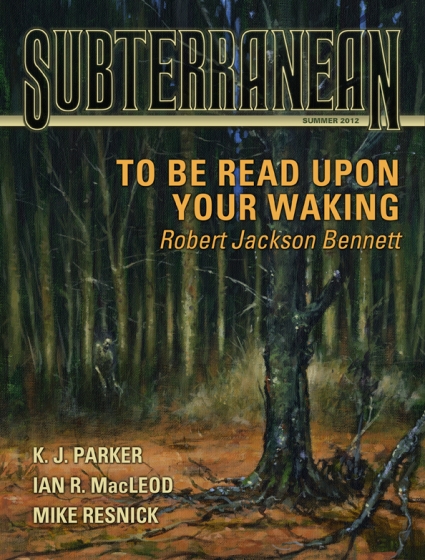
subterranean-magazine-summer-2012-2Subterranean magazine is one of the best sources of online fantasy, and also one of the most reliable. They’ve published a total of 23 issues; the first seven were print, and it became an online publication in Winter 2007. It used to be presented in a rolling format, with new fiction and articles available every week, but with the latest issue they’ve switched to posting the complete contents all at once.

Which means you can now enjoy brand new novellas by K J Parker and Robert Jackson Bennett, and original short stories by Ian R MacLeod and Mike Resnick, as well as a Notes from the Otherworld Column by Kelley Armstrong. Here’s the complete table of contents:

  • “Let Maps to Others,” by K. J. Parker
  • “Tumbling Nancy,” by Ian R MacLeod
  • “To Be Read Upon Your Waking,” by Robert Jackson Bennett
  • “The Puce Whale: A Lucifer Jones Story,” by Mike Resnick
  • Column: Notes from the Otherworld by Kelley Armstrong: “The Sky is (Probably) Not Falling”

In her mid-July fiction review column at Locus Online, Lois Tilton had high praise for the first story:

The K J Parker in particular quite restores my enthusiasm for stories… A brilliant and intriguing work, full of hidden documents, maps, codes, and forgery, as well as adventure, voyages mercantile and military, rivalry, politics, and war. There’s a high degree of historical verisimilitude, based on meticulous attention to realistic detail.

– HIGHLY RECOMMENDED

Subterranean is edited by William Schafer, and published quarterly. The Summer 2012 issue is completely free and available here.

We last covered Subterranean magazine with their previous issue, Spring 2012.

Writing of Arabia

Writing of Arabia

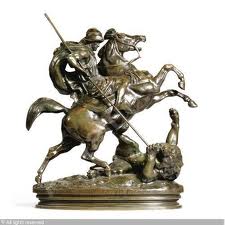
lionI get more and more e-mails about the sources I use to write about ancient Arabia, and questions about those sources come up more and more frequently every time I turn up on a convention panel. As a result, I took a long post live on my blog today about one of my favorite books, a historical memoir from the 11th century. When I talk about any of my sources in person I can only tell you how good I think it is. One of the benefits about putting my thoughts in writing is that I can provide examples from the text to prove my point.

So here, follow this link to read some truly great material from an 11th century warrior. Read on for tales of hunting, warfare, and loyal animals.

Purely by chance, another Black Gate writer took a post live about a graphic novel related to ancient Arabia over on his own web post this morning. Follow this link for more details about a stunning graphic novel known as the New Tales of the Arabian Nights over at the web site of John R. Fultz.

And  here’s a final link to a longer essay I penned about other great texts detailing old Arabia and its literature. These books deserve a far wider audience.


Howard Andrew Jones is the author of the historical fantasy novels The Desert of Souls, and the forthcoming The Bones of the Old Ones, as well as the related short story collection The Waters of Eternity, and the Paizo Pathfinder novel Plague of Shadows. You can keep up with him at his website, www.howardandrewjones.com, and keep up with him on Twitter or follow his occasional meanderings on Facebook.

World War Z Film Appears Headed for Armageddon

World War Z Film Appears Headed for Armageddon

world-war-zZombie fans everywhere should be outraged at the hot mess that is the film adaption of Max Brooks’ World War Z. Bringing in a new writer to salvage a script after principal filming surely isn’t a sign of a healthy film, nor is delaying the release date by six months. But that’s apparently what has happened to the project.

For those that aren’t familiar with it, World War Z (the book) is written in the style of Letters from Vietnam or the war documentaries of Ken Burns, as a series of flashbacks told by survivors of the great zombie war. The best part is the multiple perspectives from survivors around the globe, which lend it a high degree of realism while allowing Brooks the opportunity to insert pointed political and social commentary. The zombie plague of World War Z is deliberately left unexplained — it starts in the heart of China, half-hinted as the result of some undescribed industrial waste leak. But beginning with “Patient Zero,” an infected, gray-skinned, 12-year-old-turned zombie, Brooks manages to paint a very convincing picture of how the plague quickly spreads and threatens to overwhelm all of humanity. Brooks has done his research on politics, world economics, plague outbreaks, military tactics and technology, combat fatigue, and climate conditions.  The result feels like history, an event that really happened (or, chillingly, could actually happen).

But the one-sentence description of the film on its IMDB page is a head scratcher:

A U.N. employee is racing against time and fate, as he travels the world trying to stop the outbreak of a deadly Zombie pandemic.

Trying to shoehorn the events of the wide-ranging narrative through one character’s perspective (apparently Brad Pitt) because it conforms to the conservative Hollywood hero formula is the safe bet, but an awful idea. According to the film’s Wikipedia page, the screenplay was written by Babylon 5 and Rising Stars creator J. Michael Straczynski, who identified the challenge in adapting the work as “creating a main character out of a book that reads as a UN Report on the zombie wars”.

Huh? Why is a main character needed? You’ve got a book that’s universally loved; granted changes are always needed to convert page to screen, but why ditch the one element that made World War Z so unique? Why even bother acquiring the rights to the book only to completely rewrite it, top to bottom, save for the obvious reason of cashing in on the name value? The conceit of the “UN report” on the zombie war works in the novel, and works really well. Zombies are red-hot right now and World War Z is the hottest zombie property this side of The Walking Dead. People will pay to see worldwide zombie carnage without a hunky male lead. Or at least I would.

Leigh Brackett: American Writer

Leigh Brackett: American Writer

shannach
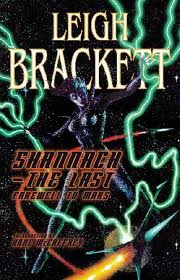
The 4th and final Leigh Brackett hardback from Haffner Press, a set collecting all her short fiction.

This 4th of July I thought I’d take a look at one of my very favorite writers, the late, great Leigh Brackett, queen of planetary adventure.

Only a few generations ago planetary adventure fiction had a few givens. First, it usually took place in our own solar system.  Second, our own solar system was stuffed with inhabitable planets. Everyone knew that Mercury baked on one side and froze on the other, but a narrow twilight band existed between the two extremes where life might thrive. Venus was hot and swampy, like prehistoric Earth had been, and Mars was a faded and dying world kept alive by the extensive canals that brought water down from the ice caps.

To enjoy Brackett, you have to get over the fact that none of this is real — which really shouldn’t be hard if you enjoy reading about vampires, telepaths, and dragons, but hey, there you go. Yeah, Mars doesn’t have a breathable atmosphere, or canals, or ancient races. If you don’t read her because you can’t get past that, you’re a fuddy duddy and probably don’t like ice cream.

A few of Brackett’s finest stories were set on Venus, but it was Mars that she made her own, with vivid, crackling prose.

Here. Try this, the opening of one of her best, “The Last Days of Shandakor.” You can find it in two of the three books featured as illustrations in this article, Shannach — the Last: Farwell to Mars, and Sea-Kings of Mars and Otherworldly Stories.

Anyway. On to Brackett.

He came alone into the wineshop, wrapped in a dark red cloak, with the cowl drawn over his head. He stood for a moment by the doorway and one of the slim dark predatory women who live in those places went to him, with a silvery chiming from the little bells that were almost all she wore.

Read More Read More

A Dance With Dragons wins the 2012 Locus Award for Best Fantasy Novel

A Dance With Dragons wins the 2012 Locus Award for Best Fantasy Novel

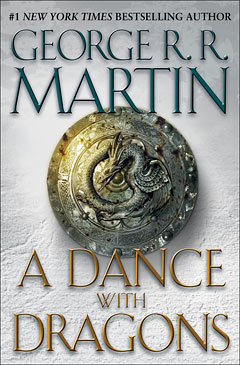
a-dance-with-dragonsThe winners of the 2012 Locus Awards were announced today:

Fantasy Novel — A Dance with Dragons, George R.R. Martin
Science Fiction Novel — Embassytown, China Miéville
First Novel — The Night Circus, Erin Morgenstern
Young Adult Book — The Girl Who Circumnavigated Fairyland in a Ship of Her Own Making, Catherynne M. Valente
Novella — “Silently and Very Fast,” Catherynne M. Valente (WSFA; Clarkesworld)
Novelette — “White Lines on a Green Field”, Catherynne M. Valente (Subterranean Fall ’11)
Short Story — “The Case of Death and Honey”, Neil Gaiman (A Study in Sherlock)
Anthology — The Year’s Best Science Fiction: Twenty-eighth Annual Collection, edited by Gardner Dozois
Collection — The Bible Repairman and Other Stories, Tim Powers
Non-fiction — Evaporating Genres: Essays on Fantastic Literature, Gary K. Wolfe
Art Book — Spectrum 18, Cathy Fenner & Arnie Fenner
Artist — Shaun Tan
Editor — Ellen Datlow
Magazine — Asimov’s Science Fiction
Publisher — Tor

The Locus Awards are presented annually to winners of Locus Magazine’s readers’ poll. The award was first given in 1971; last year’s fantasy winner was Kraken, by China Miéville. We reported on the 2011 awards here.

Congratulations to the winners, and special congratulations to Cat Valente for sweeping three categories: Young Adult Book, Novelette  and Novella.

Complete details on the 2012 winners, including all the nominees, are available at Locus Online.

The Wise Man’s Fear by Patrick Rothfuss wins the David Gemmell Legend Award

The Wise Man’s Fear by Patrick Rothfuss wins the David Gemmell Legend Award

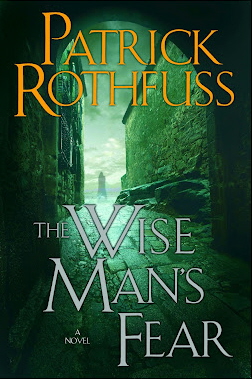
the-wise-mans-fear1Patrick Rothfuss’s The Wise Man’s Fear, the second volume of The Kingkiller Chronicles, has won the David Gemmell Legend Award for Best Fantasy Novel of 2011.

The David Gemmell Legend Award is a fan-voted award administered by the DGLA. The Legend Award for Best Fantasy Novel was first granted in 2009, to Andrzej Sapkowski’s Blood of Elves; in 2010 the winner was Graham McNeill’s Empire: The Legend of Sigmar, and last year’s was Brandon Sanderson’s The Way of Kings.

The nominees for the 2012 award also included The Heroes by Joe Abercrombie, Blackveil by Kristen Britain, Warhammer: Blood of Aenarion by William King, and The Alloy of Law by Brandon Sanderson.

The Morningstar Award for Best Fantasy Debut was awarded to The Heir of Night by Helen Lowe.

The Ravensheart Award for best Fantasy Book Jacket/artist went to the cover for Warhammer: Blood of Aenarion, done by Raymond Swanland.

Complete details are available at the DGLA website.

Congratulations to all the winners!

June Page XX Available — get the latest Pelgrane Press News

June Page XX Available — get the latest Pelgrane Press News

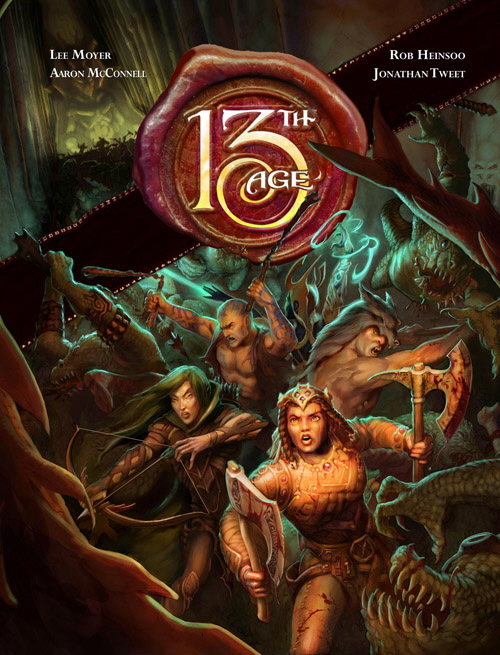
the-13th-ageSimon Rogers, publisher of Pelgrane Press, tells us a bumper-sized issue of their newsletter Page XX is now available.

I’ve been a huge fan of Pelgrane Press since they published the superb The Dying Earth role playing game nearly a decade ago, and began supporting it with one of the best small press gaming magazines ever published, The Excellent Prismatic Spray, which included articles by Gary Gygax, Robin D. Laws, Phil Masters, Steven Long, and many others.

More recently Pelgrane Press has produced Trail of Cthulhu, Mutant City Blues, Night’s Black Agents, and the highly acclaimed science fiction RPG Ashen Stars.

This latest issue of Page XX is packed with updates on three major new releases and lots of news, including the latest on their new fantasy RPG 13th Age by D&D designers Jonathan Tweet and Rob Heinsoo:

And lots more! Check out the latest issue of Page XX here.