Hercules: Hero and Victim, Part 1
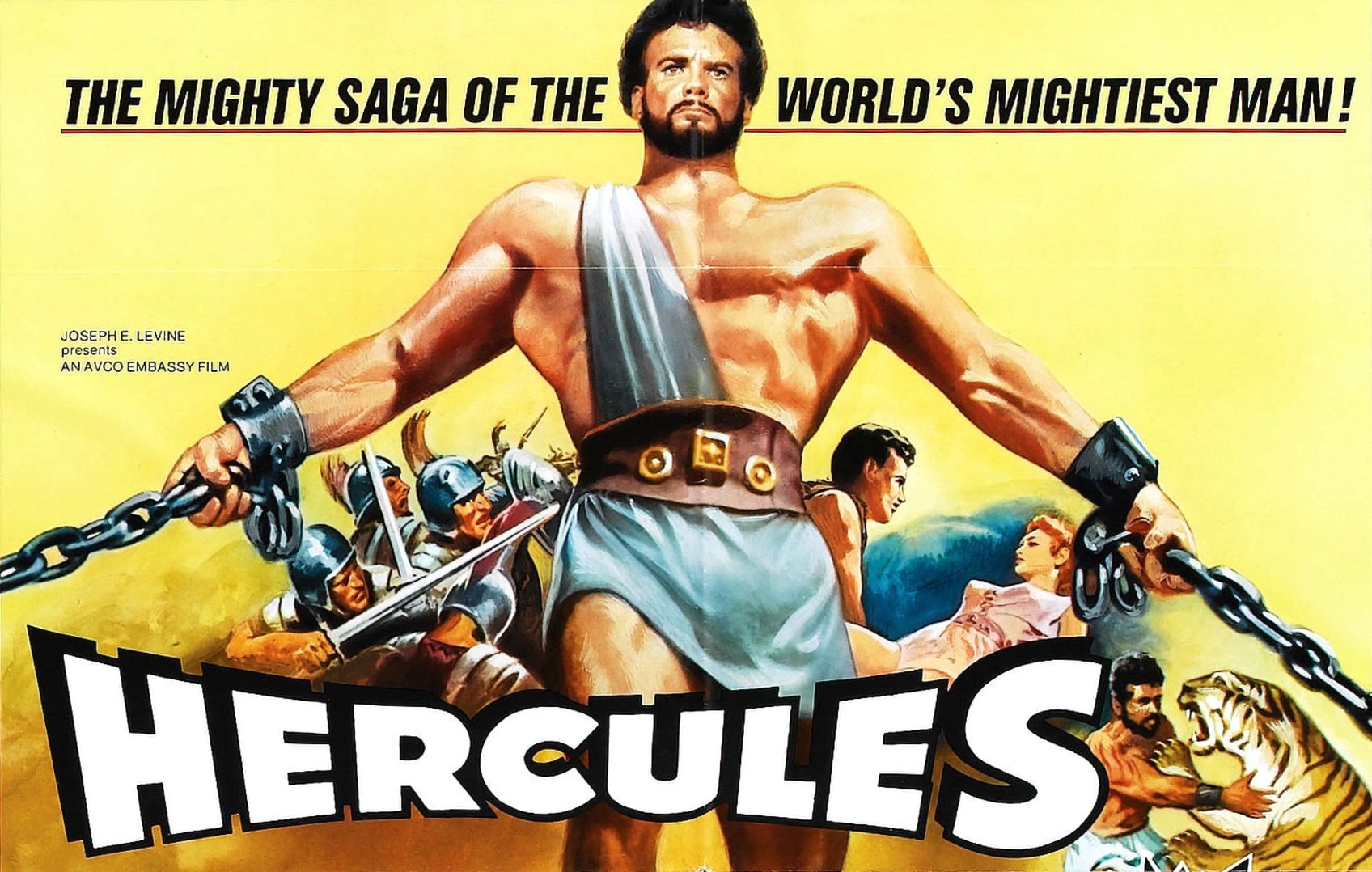
One of the greatest and probably the most famous hero in Greek mythology is Heracles, whom the Romans called Hercules, the name I first heard, thanks to certain films, when I was a kid. Some scholars call him by his original Greek name, others by the Roman version. Forgive me if I bounce back and forth between the two.
A while back, I decided to revisit three films which had a great impact on me when I was a kid, especially since I had the good fortune of seeing all three at the theater, during their first run: Hercules (1958) and Hercules Unchained (1959), both starring former body-builder and Mr. America, Steve Reeves; and Ray Harryhausen’s classic, Jason and the Argonauts (1963), where Hercules was played by Nigel Green. These led me to my grade school library, where I borrowed and devoured every book on Greek and Roman mythology I could find. In high school and afterwards, I discovered such books as Edith Hamilton’s Mythology, Bulfinch’s Mythology, by Thomas Bulfinch, God, Heroes and Men of Ancient Greece, by W.H.D. Rouse, as well as those by Norma Lorre Goodrich, Michael Grant, Carl Fischer, and Sir Richard Burton — not to forget Homer, Euripides, Ovid, and so many others too numerous to name.
Those books and those films, including the pepla films of the 1960s, had quite an effect on me. And lest I forgot, three other films also played a major part in my life: Harryhausen’s The Seventh Voyage of Sinbad (1958), Stanley Kubrick’s Spartacus (1960), and Cecil B. DeMille’s Samson and Delilah (1949); incidentally, Steve Reeves was originally cast to play Samson, but then, as things in Hollywood often go, Victor Mature eventually secured the role.
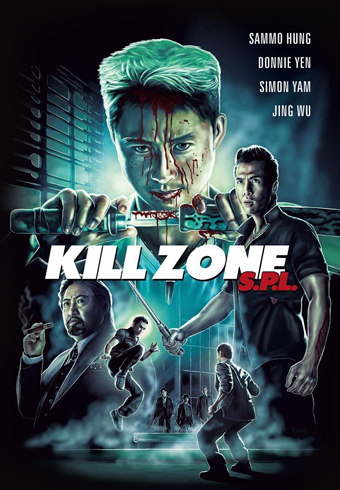 One of the lovely things about covering Fantasia is the chance to see genre classics I missed the first time around, often brought back to the screen in a restored version. Again in 2020, notwithstanding its streaming-only nature, Fantasia revived a number of great films from prior years. While my own inefficiency with scheduling meant I ended up missing Johnnie To’s A Hero Never Dies, I saw many of the others, including Wilson Yip’s 2005 movie SPL: Kill Zone (also just Kill Zone, originally SPL: Sha Po Lang, 殺破狼).
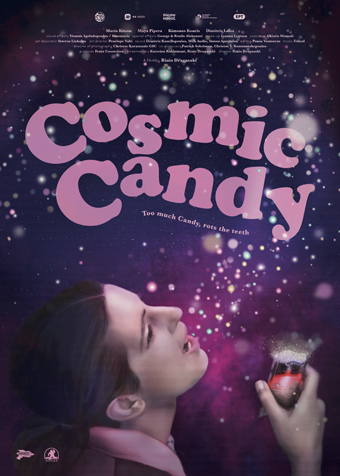 There is, or was, or might have been according to some, a movement in Greek cinema that started and flourished in the first half of the second decade of the twenty-first century called the Greek Weird Wave. This movement,
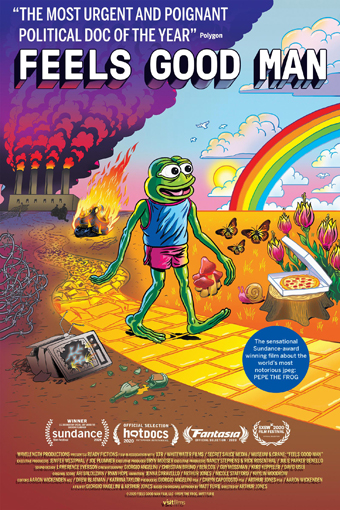 I try to keep an eye on comics, but like many people my first exposure to Pepe the Frog was as a poorly-drawn meme spouting racism. I remember reading about Pepe’s comics origin, but the name of Matt Furie, the cartoonist who created him, remained a piece of trivia. As did his comic Boy’s Club, where the frog first appeared. Now there’s a documentary telling the whole story of Furie, Pepe, and Boy’s Club — a tale of politics, appropriation, and how art can be used in ways the artist could not imagine, for worse and for better.
 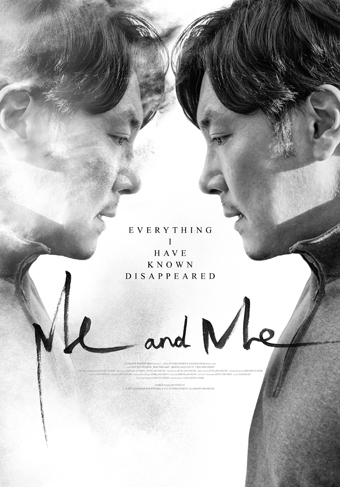 One of the genuinely wonderful things about covering a film festival is occasionally getting to be among the first audiences for a movie trying something new. That is, being an early viewer of a movie that does things unlike other movies, and getting to make one’s own mind up on whether those things work. Movies at a festival have often not had a critical consensus formed around them, and have not yet been defined by other writers or had their influences mapped out. You as the viewer are alone with the thing, almost contextless, in a way that’s rare these days.
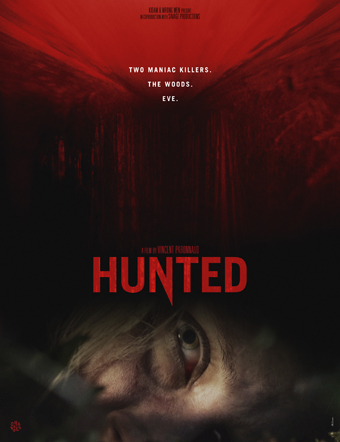 Watching a film festival at home instead of in theatres raises a question that’s become a much-debated point over the last couple of years: is the experience of viewing a movie on a TV screen essentially different and essentially lesser than watching the same movie in a theatre? I don’t think there’s a single answer to this question. Different movies and different viewers and different circumstances will create better or worse scenarios. I think it is probably safe to say that the theatrical experience has much more sensory power; that the powerful sound system and the controlled environment and the full dark of a theatre will usually be more immediately overwhelming to a viewer. But it’s reasonable to wonder if a movie that relies on sheer sensory power can be called ‘a good movie.’
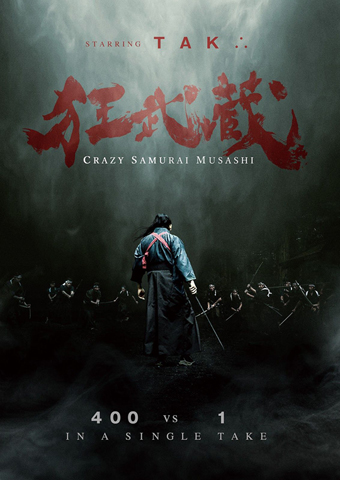 Miyamoto Musashi (1584-1645) was one of the greatest samurai and greatest swordfighters ever to live. By his own account, he fought over sixty duels and won all of them. Stories about Musashi have been told and retold over the centuries, notably including the great novel Musashi (1935-39) by Eiji Yoshikawa. Films about him have proliferated, the most famous likely being Hirohi Inagaki’s Samurai trilogy (1954-55) starring Toshiro Mifune as Musashi.
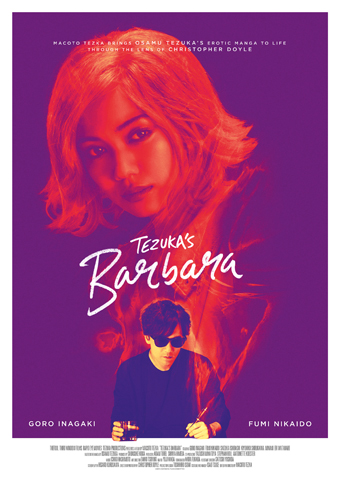 The chain of inspiration behind a work of art can be stunning to behold. Ernst Theodor Amadeus Hoffman was a musician, critic, and fiction writer in the early nineteenth century whose surreal and gemlike short stories are wonders of early fantasy. Some of those stories were worked into the libretto of Jacques Offenbach’s 1881 opera Les contes d’Hoffmann. Adapted to films at least three times, most notably by Michael Powell and Emeric Pressburger in 1951, Offenbach’s work would inspire the great manga creator Osamu Tezuka in 1973. A