Browsed by
Category: Magazines

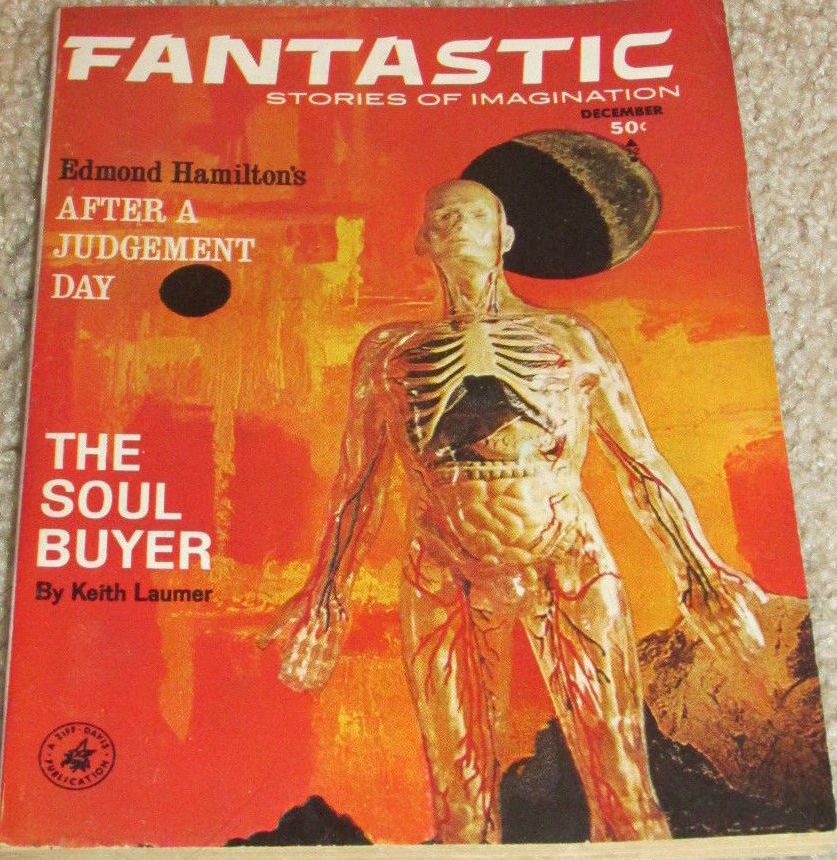
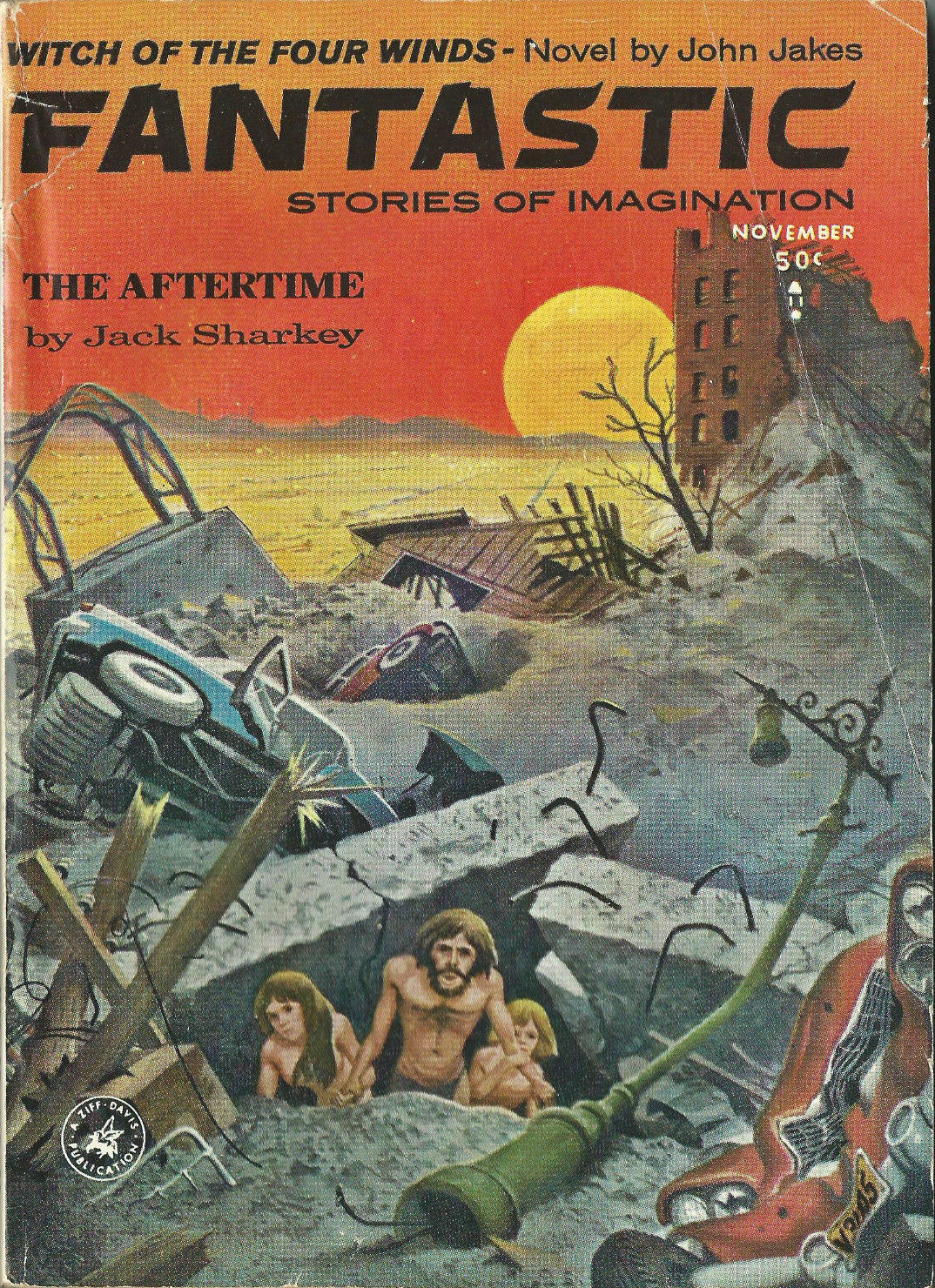
Fantastic, November and December 1963: A Retro-Review
Fantastic, November and December 1963: A Retro-Review

fantastic-november-1963-small fantastic-december-1963-small

I recently looked at a couple of issues of Fantastic with a Brak the Barbarian serial by John Jakes, and here’s another pair with a Brak serial. Indeed, this was Jakes’ first SF/Fantasy novel, and his second Brak story.

The editorials cover first, Freeman Dyson’s ideas about using gravity as an energy source (for transportation), and second, the notion of having astronauts use crayons in orbit. The covers are by Alex Schomburg (November) and Paul E. Wenzel (December), in neither case, perhaps oddly, illustrating Jakes’ novel. Interiors are by Lee Brown Coye, Virgil Finlay, and Peter Lutjens (each of them appeared in both issues). (I will note that I find Coye okay as a pure horror illustrator, which seems to have been his forte, but I thought his illustration for Jack Sharkey’s “The Aftertime” just terrible.)

There is a letter column in November (Fantastic’s lettercol, which only appeared occasionally at this time, was called According to You ...). The letters this time are by David T. Keil, Paula Crunk, and Dennis Lien. I’ve known Denny online for quite some time, first on Usenet and later via email, so that was interesting. Keil has praise for Keith Laumer and Brian Aldiss and Thomas Disch, some (generally positive) discussion of Fritz Leiber, and scorn for David R. Bunch. Paula Crunk is happy with Leiber and Laumer, but complains about some of the other dreadful stuff the magazine published. And Lien disputes a claim in an earlier letter that fantasy has gotten short shrift in Hugo nominations relative to SF. (He notes the several examples of fantasy that were nominated — 3 at least of the five short fiction nominees the previous year — and also notes that, after all, the Hugos are given at a “Science Fiction” convention.)

Read More Read More

September Short Story Roundup

September Short Story Roundup

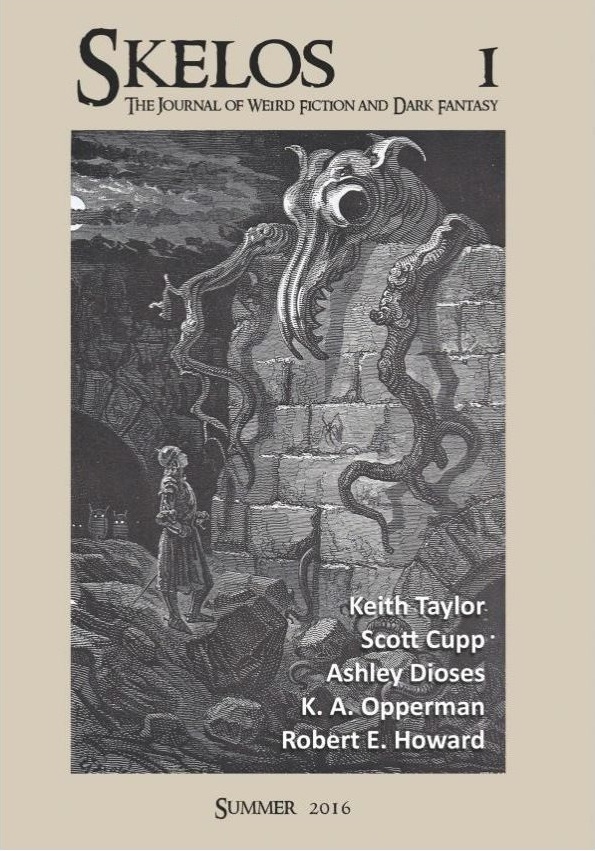
oie_413844fthp1nteWe’re still in the midst of a swords & sorcery renaissance that started around a decade ago, and now there’s a broader pulp one going on as well. Between the first issue of Skelos and the third of Cirsova, September saw a hurricane of short stories involving swords, wizards, warriors, pirates, and space pirates. Good times ahead! At least that’s my hope.

I first became aware of Skelos‘ then-impending existence with a flurry of internet activity announcing a Kickstarter this past spring. On the pledge page the magazine was heralded as “A horror and fantasy journal featuring short fiction, essays, poetry, reviews, and art by both seasoned pros and talented newcomers!” I found those words impossible to resist, and kicked in enough money to get myself billed in its pages as a benefactor, and be rewarded with a print copy and a four-issue e-book subscription.

When the print copy of Skelos 1 appeared in my mailbox last month, I was very impressed with its look and feel. The cover is decorated with a nicely creepy Gustav Doré illustration and the inside is filled with great black and white art.

Skelos is edited by a triumvirate comprising Mark Finn, Chris Gruber, and Jeffrey Shanks, but the introduction was written by Finn alone. The co-editors are looking to have an an ongoing conversation with their readers and are “willing to learn as we go, if you’re willing to talk to us about the thoughts behind the words and pictures. We want everyone to walk away feeling like they learned something new, or at least, were heard and understood.” It may be “too ambitious to try and bridge the gap between Classic Weird Fiction and New Weird Fiction,” but where they intersect is what the trio find interesting, and what Skelos intends to investigate. While there are very specific references to authors and artists from the early days of weird fiction (Lovecraft, Moore, Bok, and Finlay), there aren’t any contemporary ones. If that sounds a little vague, I believe it’s deliberate, as Skelos is still a work in progress.

Read More Read More

Interzone #266 Now on Sale

Interzone #266 Now on Sale

interzone-266-smallThe September/October issue of Interzone magazine is now on sale, with a cover by 2016 cover artist Vincent Sammy, “Heaven Spots” (click the image at right for a bigger version.)

This issue is pretty intriguing. Or, at least, Kevin P Hallett’s Tangent Online review makes it sound pretty intriguing. Here’s Kevin on Malcolm Devlin’s “The End of Hope Street.”

The twelve houses on Hope Street faced a strange blight in this horror mystery novelette. One by one, the sinister blight consumed each house making it unlivable. Failure to leave resulted in death; failure to stay away resulted in death. The displaced residents found temporary sanctuary in the other houses on the street. In all but one, that is. For Daniel Dormer, the patriarch at number twelve, felt that all this had happened to his neighbours for a reason.

When Daniel’s house was the only one still livable, he had to face the consequences of his petty prejudices.

The author develops the characters well and uses the mystery to pull the reader through the story. The enigmatic blight hangs over everything leaving the reader with many questions to answer. A pleasant and intriguing tale.

And Tade Thompson’s “The Apologists.”

Read More Read More

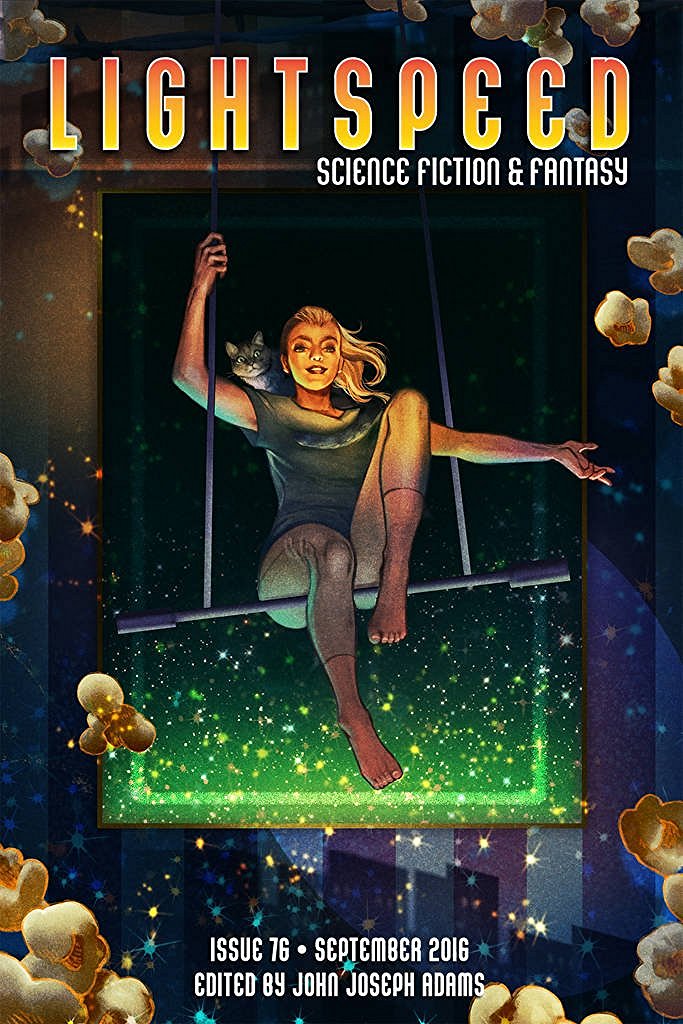
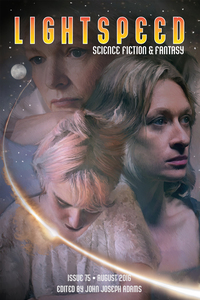
September 2016 Lightspeed Magazine Now Available

September 2016 Lightspeed Magazine Now Available

lightspeed-september-2016-smallIt’s the end of the month, and you know what that means. The complete contents of Lightspeed have now been posted online, awaiting your pleasure. Here’s Charles Payseur’s summary from Quick Sip Reviews.

The September issue of Lightspeed Magazine is all about crime and punishment. About people running from their pasts, running from authority, running from justice or injustice alike. In each of the stories there is a looming threat of some sanction. Police officers trying to maintain a status quo or a corrupt government trying to quash transparency or some nebulous force urging surrender or an actual crocodile waiting for the right moment to… These are stories that complicate crime and resistance, activism and revolution. And though they are unified by their focus on characters running from pursuit, from punishment, they show very different motivations and outcomes…

“Unauthorized Access” by An Owomoyela (10,700 words).  This is a rather fun story about activism and bureaucracy and corruption, all wrapped in a warm cyberpunk blanket… The world is a vibrant and rather different New York, filled with solar collectors and data and big government but also a grittier side, an Undercity that Aedo fears to tread and a whole lot in between. And I love Aedo as a character, trying to do the right thing while continually finding herself in the right place at the right time to do something… a tense and rather thrilling ride at times, and I would be excited to see if there’s more to come from this world and these character. A great story!

Read Charles’ complete review of the September issue here.

This month editor John Joseph Adams offers us original fantasy by Maria Dahvana Headley and Jaymee Goh, and fantasy reprints by Tim Pratt and Christopher Barzak, plus original science fiction by An Owomoyela and Sean Williams, along with SF reprints by Alec Nevala-Lee and Charlie Jane Anders.

Read More Read More

September/October Magazine of Fantasy & Science Fiction Now on Sale

September/October Magazine of Fantasy & Science Fiction Now on Sale

cc-finaly-at-worldcon-2016-small david-gerrold-at-worldcon-2016-small sarah-pinsker-at-worldcon-2016-small

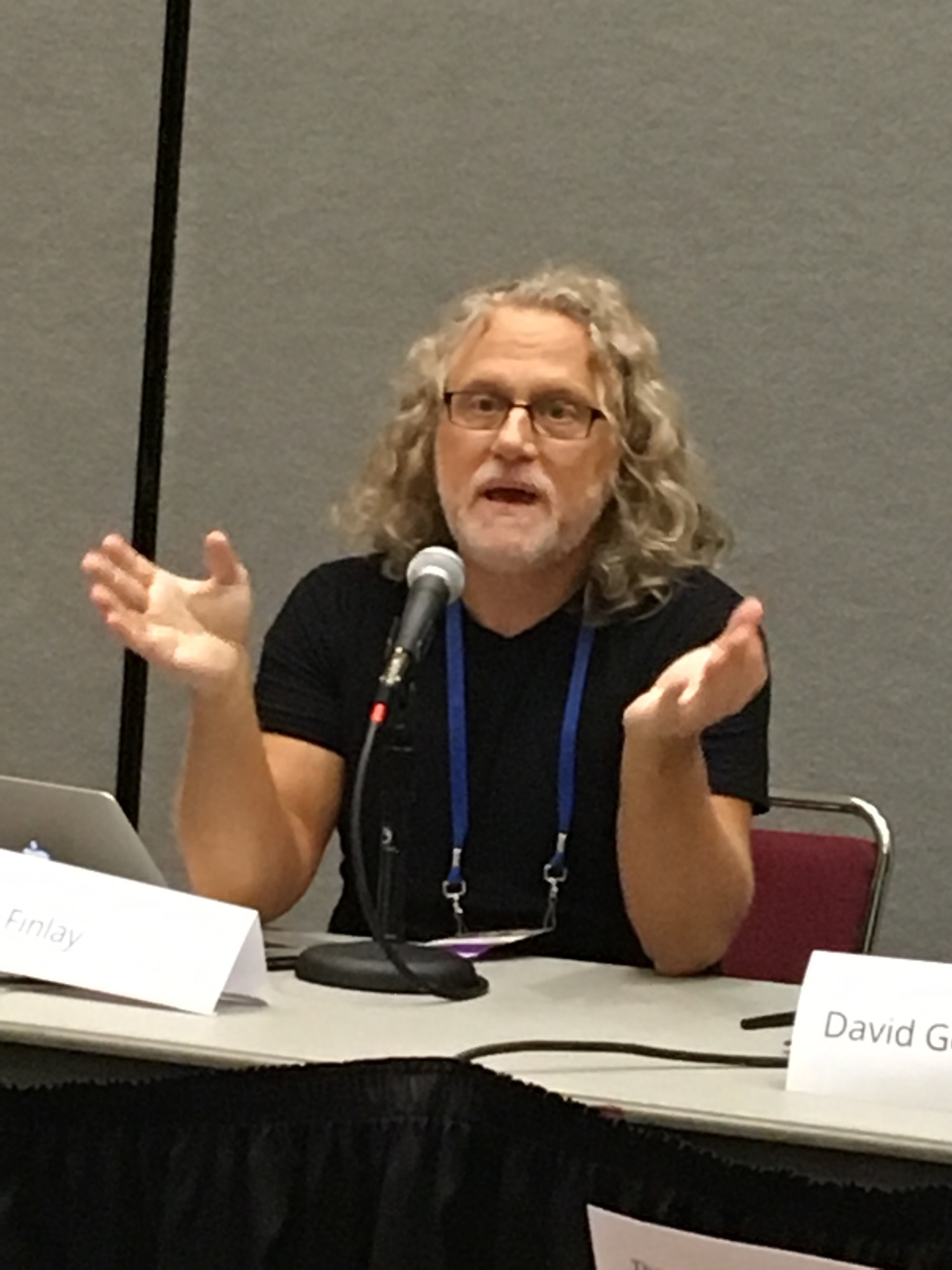
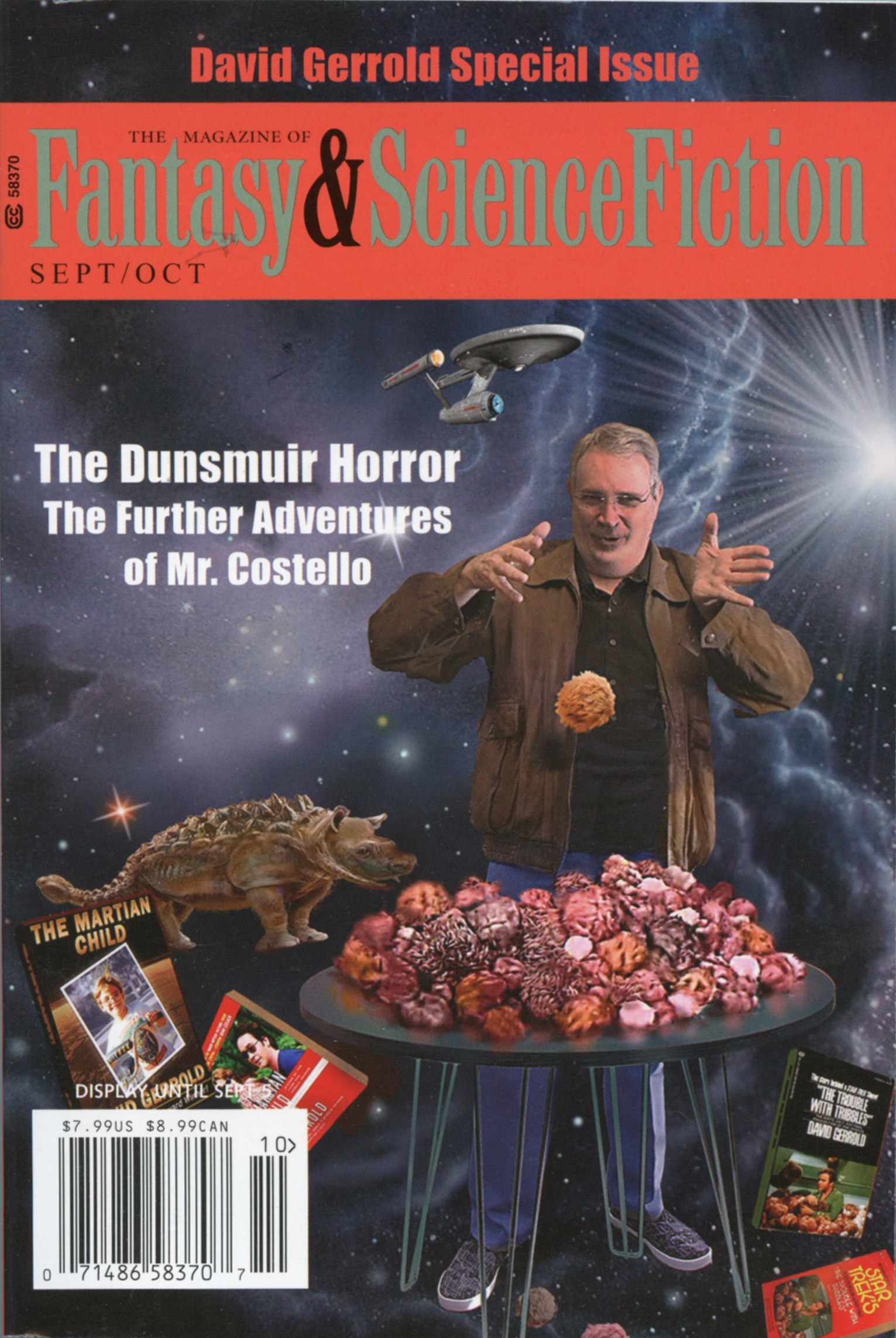
the-magazine-of-fantasy-and-science-fiction-september-october-2016-smallWhen I was at Worldcon last month, I attended the Friday morning reading group hosted by F&SF. It featured five writers reading their stories from the magazine — Cat Rambo, David Gerrold (above middle), Sarah Pinsker (right), William Ledbetter, and Esther Friesner — and was moderated by editor C.C. Finlay (above left).

It was a lot of fun… and it certainly built up anticipation for the upcoming September/October issue. Two of the authors, David Gerrold and Sarah Pinsker, read extremely enticing excerpts from stories appearing in that issue. At the end of the panel Charles Finlay announced early copies were available in the back. I got in line to get one, but ended up giving my precious copy to someone at the con, and I wasn’t able to retrieve it before flying back to Illinois (*sob*). So I had to wait impatiently for several weeks until the issue arrived in my local bookstore, and I snapped up a copy a few days ago.

It’s a David Gerrold Special Issue, featuring two new novellas by Gerrold, a memoir, and an appreciation by Kristine Kathryn Rusch, “The Amazing Mr. Gerrold.” It’s F&SF‘s first author special in over a decade, and I’m glad to see Finlay bringing the idea back. (Gerrold is having quite a renaissance in the pages of F&SF… his novelette “The Thing on the Shelf,” featuring a horror writer nominated for the coveted Stoker Award, appeared last issue.)

The issue’s “The Dunsmuir Horror,” a Lovecraft pastiche starring author David Gerold, is both funny and very disturbing. Written in the form of a letter to Gordon van Gelder, F&SF‘s publisher and former editor, from the narrator as he recovers in a mental institution (as I said… very Lovecraftian), the story relates Gerrod’s investigations into a sinister American town that tries to lure weary travelers into stopping.

It’s an exceptional piece and a very fun read, and already getting some good notice. Here’s Clancy Weeks at Tangent Online.

Read More Read More

September 2016 Asimov’s Science Fiction Now on Sale

September 2016 Asimov’s Science Fiction Now on Sale

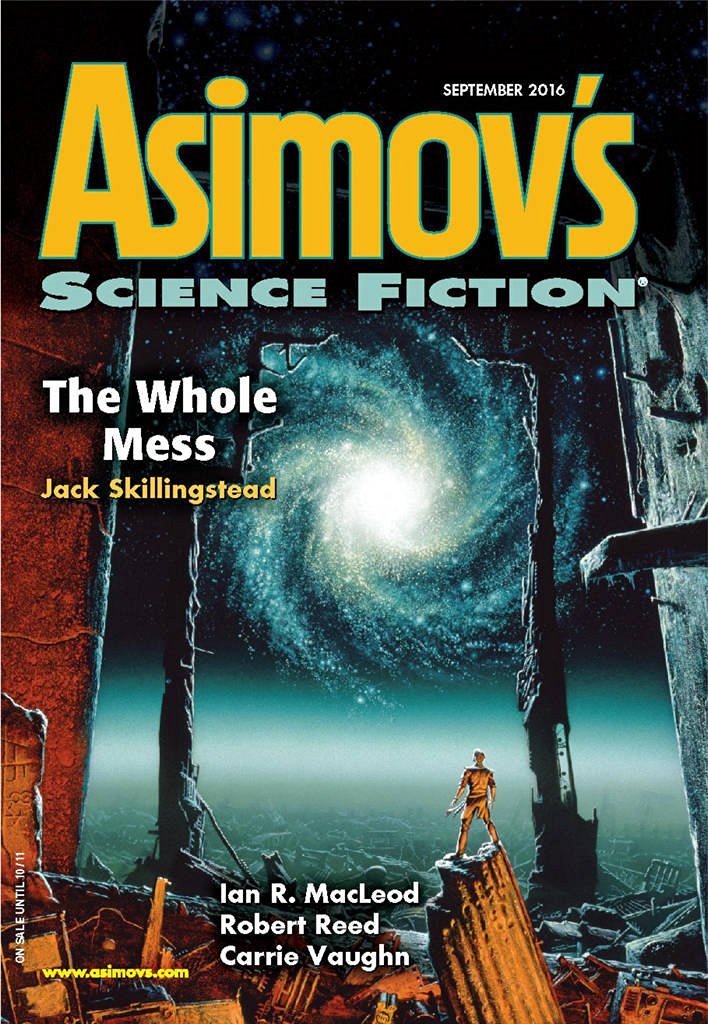
asimovs-science-fiction-september-2016-smallThe September issue of Asimov’s Science Fiction looks like a very solid issue, with fiction from Carrie Vaughn, Ian R. MacLeod, Robert Reed, Rich Larson, Jack Skillingstead, and others. Here’s the full description from the website:

Jack Skillingstead’s September 2016 novelette takes us on a terrifying journey across universes. Pursued by malevolent forces, a brilliant mathematician struggles to clean up “The Whole Mess.” Failure means destruction and subjugation. The penalty for success could be worse.

New York Times best selling author, Carrie Vaughn exposes the debilitating consequences space travel holds for some in “The Mind Is Its Own Place”; appearing in Asimov’s with her first professional sale, Tegan Moore shines a light on some dark and twisted relationships in “Epitome”; Human and Alien intelligence slowly learn to communicate in Rich Larson’spoignant excavation of “All that Robot…”; World Fantasy Award winner Ian R. MacLeod introduces us to the enigmatic “Visitor from Taured”; Peter Wood runs  us around in some vicious, yet funny and perhaps all too recognizable, “Academic Circles”; and Robert Reed tells the old tale of migration and the promised land — this time with aliens — in “Dome on the Prairie.”

Robert Silverberg’s hilarious Reflections column reveals why it’s not a good idea to exclaim, “‘Darn,’ He Smiled”; Peter Heck reviews works by Charlie Jane Anders, Laura Anne Gilman, Fred Chappell, and others; plus we’ll have an array of poetry and other features you’re sure to enjoy.

The cover is by the great Michael Whelan.

Over at Tangent Online Bob Blough raves about the issue, and especially Ian M. McLeod’s “A Visitor from Taured,” which he calls “a potential award nominee.”

Read More Read More

Check Out Postscripts, the Varied Genre Anthology Series from PS Publishing

Check Out Postscripts, the Varied Genre Anthology Series from PS Publishing

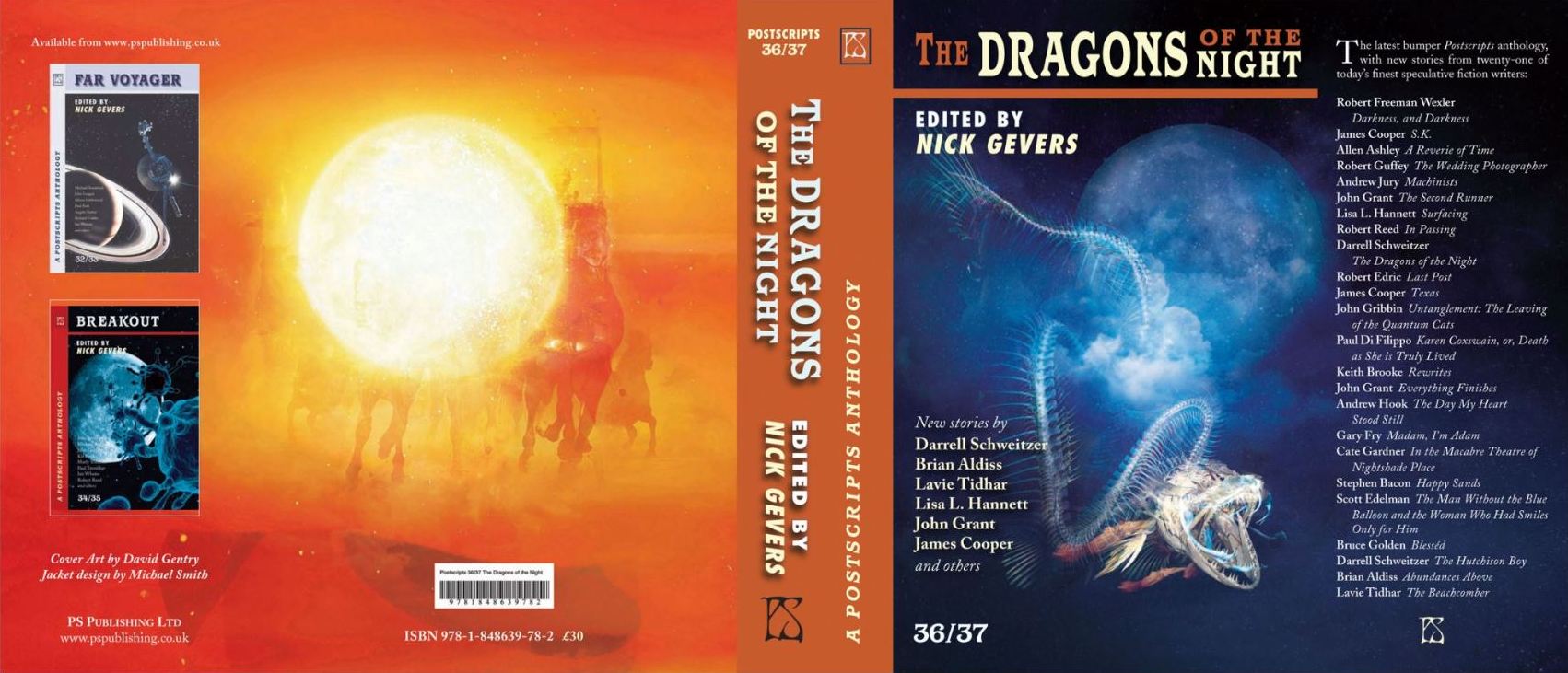
postscripts-36-37-the-dragons-of-the-night-small

Postscripts is something of an unusual beast.

It started off as a quarterly British magazine of science fiction, fantasy, horror, and crime. The first issue, edited by Peter Crowther and published by PS Publishing,  appeared in June 2004 to considerable acclaim. It won the International Horror Guild award for best periodical in 2006 and 2008, and the British Fantasy Award for Best Magazine in 2009. I snatched up the early issues as they appeared… they were a little expensive on this side of the pond, but I never regretted it.

Postscripts has undergone some changes over the years. Early issues were essentially trade paperbacks (at least in the newsstand edition; there was also a signed, numbered, limited edition hardcover for the hardcore collectors.) Starting with issue 18 the magazine transitioned to a quarterly anthology; more recently (starting with issue 20/21) it has settled into a biannual schedule, producing two fat double-sized issues every year. The trade paperbacks are also a thing of the past, the “newsstand” edition, such as it is, is a beautiful thick hardcover with a wraparound cover. The capable Nick Gevers became co-editor with issue 18, and sole editor starting with issue 32/33. Under Nick’s stewardship the magazine has published brand new stories by Brian Aldiss, Scott Edelman, Paul Di Filippo, Darrell Schweitzer, Paul Tremblay, Simon Strantzas, Robert Reed, Michael Swanwick, Paul Park, John Langan, Richard Calder, and many others.

Read More Read More

October 2016 Analog Now on Sale

October 2016 Analog Now on Sale

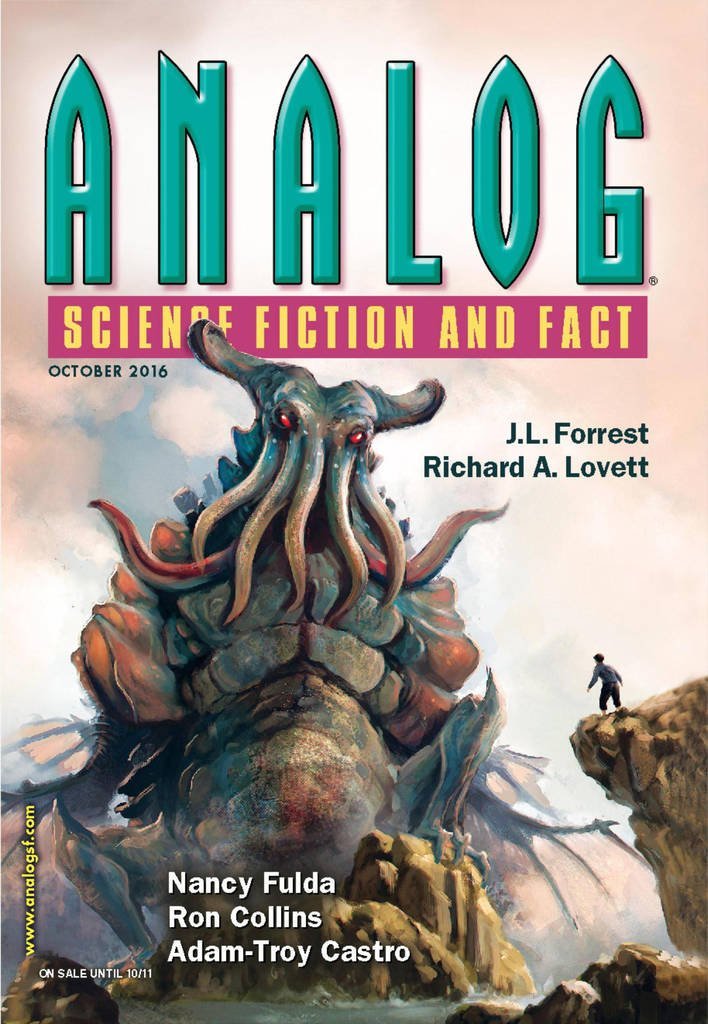
analog-science-fiction-october-smallPeople have been watching Trevor Qachari’s rein as the new editor of Analog pretty closely. It’s been four years exactly since he took over from Stanley Schmidt in September of 2012, plenty of time to get a sense of his editorial taste.

One thing I’ve noticed is that Trevor is a bit more experimental than Stan, especially in his willingness to blend genres a little. The October issue features a pair of stories that playfully mix SF and pulp thrillers, including perhaps the last thing I would have expected to see in Analog: a Shadow homage by Robert R. Chase, “Revenge of the Invisible Man.” Here’s a snippet from Jason McGregor’s review at Tangent Online.

The Shadow gets on the trail of the Invisible Man. Sort of. In the near future, a company has been working on human invisibility and has succeeded in making a human invisible — but not in getting rich off it, which means the guinea pig gets no reward either and, worse, it turns out not to be reversible. So the heads of the company start falling down stairs and having their throats cut. This prompts a call to a mysterious Power who sends his agent, our protagonist, in to discover how the invisible man has been committing these crimes from the locked room in which the company holds him. The agent adopts the name Kent Allard (one of the Shadow’s real names) for this mission (which… seems likely to be one of a series) and proceeds to investigate. The strongest feature of this story is probably the direct, sinewy prose… a good read.

While we’re at it, he’s a sample from Jason’s review of the other SF thriller, Adam-Troy Castro’s novella “The Soul Behind the Face.”

Read More Read More

Amazing, May 1963: A Retro-Review

Amazing, May 1963: A Retro-Review

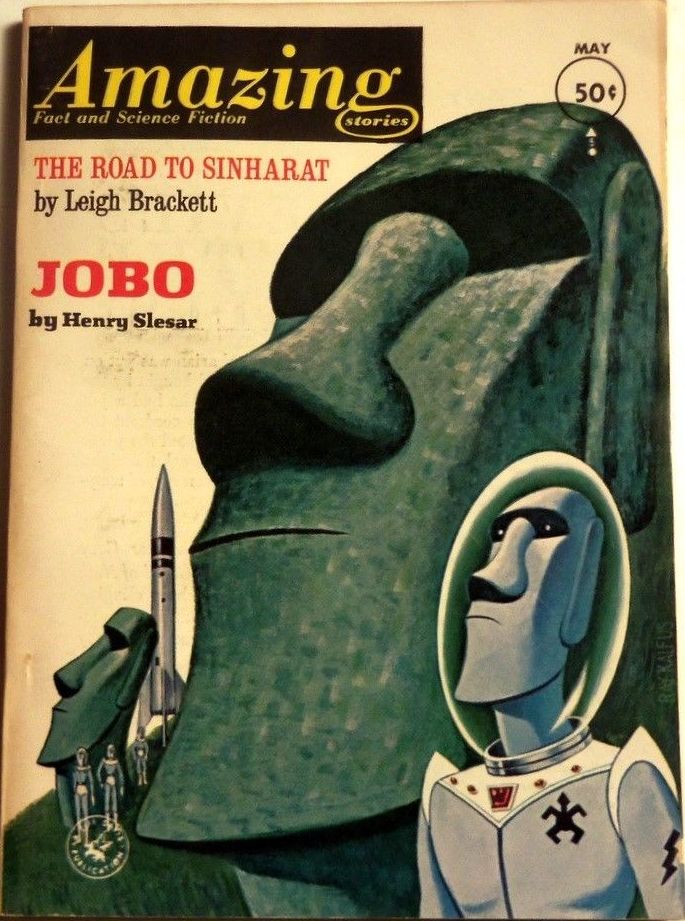
amazing-science-fiction-may-1963-smallThis is one of the best issues of Cele Goldsmith’s Amazing I’ve encountered. Only four stories, but all decent, one really good.

The cover is by Ray Kalfus, illustrating Henry Slesar’s “Jobo” in a fashion that gives away one of the story’s secrets (not that it’s that big of a secret). Interiors are by Leo Summers, George Schelling, and Virgil Finlay.

Norman Lobsenz’ Editorial opens thusly:

The New Yorker magazine, which normally does not care to admit of the existence of such a literary form as science fiction (probably because sf stories have plots with beginnings, middles, and ends, which the New Yorker fiction editors abhor)…

Plus ça change! The occasion is an approving New Yorker review of Arthur C. Clarke’s Tales of Ten Worlds, and in particular their praise for the story “Before Eden,” which was first published in Amazing in 1961.

“… Or So You Say”, the letter column, is mostly occupied with complaints about a letter in the January issue from Lorne Yacuk, which apparently complained about the “new” type of stories published in those days, particularly that they featured dull “common men” instead of “supermen.” The writers are James C. Pierce, W. D. Shephard, and Gil Lamont. In addition, Paul Gilster (from St. Louis!) praises Albert Teichner’s “Cerebrum” (mentioned in these reviews some time ago).

The Spectroscope, S. E. Cotts’ book review column, covers The Space Child’s Mother Goose, by Frederick Winsor; Moon Missing, by Edward Gorey; They Walked Like Men, by Clifford Simak; and Anything You Can Do…, by Darrel T. Langart (Randall Garrett). The only one he really approves of is the Simak.

There are two “fact” articles. One is called “A Soviet View of American SF,” by Alexander Kazantsev. It’s a reprint (translated by John Isaac) of the introduction to an anthology of American SF published in the Soviet Union. The author (Kazantsev) is said to be famous for suggesting that the Tunguska event was caused by the explosion of a Martian spaceship. His views of the stories mentioned are politically tinged to the point of parody. The other article is by Ben Bova, “Where is Everybody?”, and it’s a look at the Fermi Paradox.

Read More Read More

The September Fantasy Magazine Rack

The September Fantasy Magazine Rack

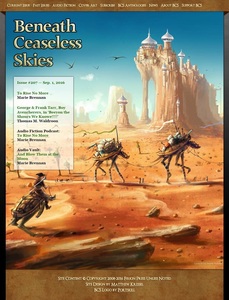
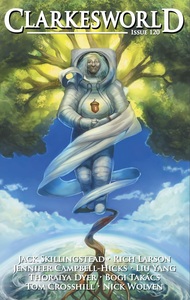
apex-august-2016-rack ares-magazine-3-rack beneath-ceaseless-skies-207-rack clarkesworld-september-2016-rack
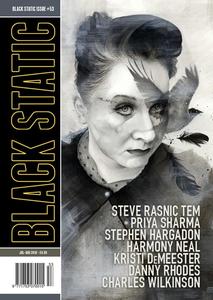
black-static-53-rack locus-september-2016-rack her-scales-shine-like-music-rajnar-vajra-small-rack lightspeed-august-2016-rack

I’ve been relying more and more on Charles Payseur’s Quick Sip Reviews to point me towards the fiction that will interest me each month. Charles doesn’t just tell me why he enjoys each story… he gives me enough detail to let me know which stories will grab my attention right out of the gate. Here he is on Rich Larson’s 12,000-word novelette “The Green Man Cometh” in the latest issue of Clarkesworld, for example.

This is a rather thrilling story about technology and damage, about ideology and fanaticism… [it] shows a nicely cyberpunk vision of Earth post-Calamity (which sounds familiar and I can’t remember if I’ve read a story or stories set in this world before), where most of the population has concentrated into one megacity. And in that megacity Eris is a cab driver with prosthetic arms and a bit of a chip on her shoulder because she was born on a neoprimitive colony and then sent away because of her disability… The action is fierce and the characters are fun. I quite liked the play between Eris and Kit, the government agent that gets assigned to her. The tech and the setting are richly explored and it’s a fun story with some nice points… Eris has to grapple with her own frustrations with the system against the terror that is what the cult plans. And yeah, it’s fun and it’s fast and it hits a lot of nice beats with its twists and turns. For an edge-of-your-seat thrilling science fiction, look no further. Very fun and very worth checking out!

Read his complete review of the issue here.

Read More Read More