Worlds Within Worlds: The First Heroic Fantasy (Part IV)
 This is the fourth in a series of posts investigating the question of who wrote the first otherworld fantasy (you can find the first part here, the second here, and the third here). By ‘otherworld fantasy’ I mean a story set entirely in another world, with no framing device to connect it to reality. Traditionally, the credit for inventing otherworld fantasy has been given to William Morris. I have another figure in mind.
You can see her there on the right.
In 1837, Sara Coleridge, the daughter of poet Samuel Taylor Coleridge, published a book called Phantasmion, which was received, and reviewed, as a fairy tale novel. And, at first glance, it certainly seems similar to the German and French fairy tales that were popular at around that time. But I don’t think it reads like a fairy tale, certainly not once it gets going.
It reads very like a high fantasy. In fact, like an otherworld fantasy.
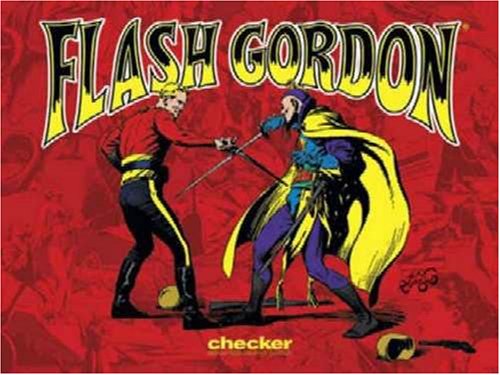
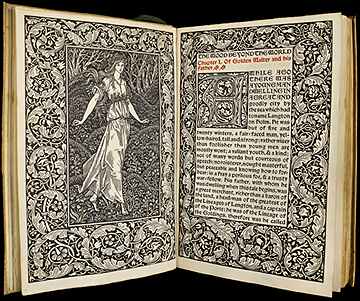 This is the third in a series of posts looking at the question of who wrote the first otherworld fantasy: that is, the first fantasy to be set entirely in its own fictional world, with no connection to conventional reality at all. It’s an innovation traditionally ascribed to William Morris, but I think I’ve found an earlier writer who deserves that honor.
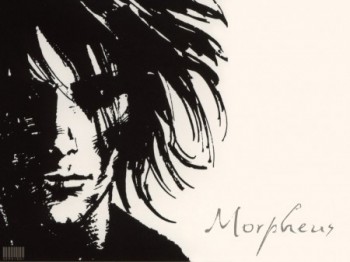 Many of my contemporaries believed that one of the most amazing comic book series ever was Neil Gaiman’s The Sandman, which ran from 1989 through 1996 – formative teenage years for me and my peers – originally by DC Comics and (from issue #47) under their Vertigo imprint. Now it looks like The Sandman has been re-optioned for consideration as a television series. Though the series creator isn’t associated with the show, there’s still reason to be hopeful.
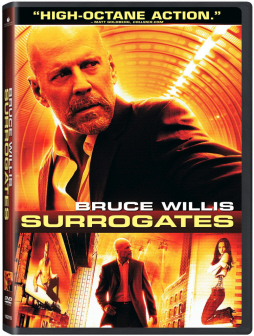 Early on in this film we see Bruce Willis with hair and looking young, and not Die-Hard bashed up, and we wonder absently if this time he’ll actually finish the film as scar-free as he began it. The Willis we begin with is quickly established as a ‘surrogate,’ the robot avatar of the real Willis character, Tom Greer, and it doesn’t take long for both Greer and his surrogate to get bashed up in familiar form.
 Have you ever woken up in an extremely good mood, found you were left enough hot water for a skin-peeling shower, stepped on the scale and found it down two pounds in spite of the bacchanalia of the night before? Have you ever leapt out of bed feeling euphoric and thought, “I really love my life?”
 Has anyone ever asked what you would grab out of your house if it was on fire and you could only make one trip? Or maybe the question was, if you knew you were going to be stranded on a deserted island, what would you take with you?
 ABC News