Browsed by
Category: Comics

The Weekly Standard on The Comic Crash of 1993

The Weekly Standard on The Comic Crash of 1993

comics1Jonathan V. Last at The Weekly Standard has written a surprisingly lucid piece of history on the so-called speculator boom, and subsequent spectacular crash, in the comics market from the late 1980s through 1997:

By the time the bubble’s soapy residue washed away, nine out of ten comic book shops in America had closed their doors. Publisher sales of new comics dropped by 70 percent. On December 27, 1996, Marvel, the General Motors of comics, filed for bankruptcy. The market for used comics was flooded with the cadaverous inventories of out-of-business stores… the contours of the industry have changed almost beyond recognition. In 1950, Marvel and DC together sold roughly 13 million comic books a month. In 1968, they put out 16 million a month. Since 1993 the overall sales trend has been inexorably downward. For January 2010, all American publishers combined sold a total of 5.63 million comics.

In the shadow of the crash, Last draws the same conclusion others have about the true value of modern comic franchises like Spider-Man and Batman:

This might sound like an industry marching toward oblivion, yet in 2009, Disney paid $4 billion to acquire Marvel (DC was already owned by Time-Warner). The reason for this gaudy valuation is that the comic books themselves are no longer important to the comic-book industry. They’re loss leaders. The real money is in the comic-book properties, which power toy and merchandise sales, theme parks, and above all else movie franchises. Since 1997, 26 comic book adaptations have gone on to gross more than $100 million at the box office. Twelve of these grossed more than $200 million. More — many more — are coming soon to a theater near you.

As a financial concern, comic book publishers are no longer in the publishing business: They’re curators of, and incubators for, extremely valuable intellectual property.

In the midst of it all, Last draws parallels to the comics crash to help explain the collapse of the U.S. housing market. Never seen that done before.  Check out the complete article here.

Some Thoughts on the Nature of a Serial

Some Thoughts on the Nature of a Serial

The Adventures of Captain MarvelSerial storytelling is something of a mystery; even more so, perhaps, than most storytelling. When done right, it seems to hook an audience, to get them to invest heavily in the story being serialised. But for whatever reason, most serial forms have been pigeonholed as strictly popular arts; serial storytellers have generally been assumed to have a low amount of literary ambition. These presumptions about serials, and the way the form works, have always intrigued me — the more so since I’ve set out to write a serial prose fantasy of my own.

Let me try to define what I mean by ‘serial.’ The OED has “(of publication) appearing in successive parts published usually at regular intervals, periodical,” which is a start. More precisely, I’m talking about a narrative told across many installments, usually on a regular schedule, with each installment except the first and last expected by the audience to be incomplete, but usually containing some element of a genre or other story convention which will satisfy the audience.

Every installment of The Adventures of Captain Marvel movie serial made sure at some point to have the titular super-hero in costume, using his powers, and usually also included fight scenes, detective work, plot twists, and exotic locales — because that was the sort of story it was, and that was what audiences were looking for. Individual chapters (or issues) of a serial may play about with these conventions — like an issue of the Steve Ditko Amazing Spider-Man, in which scripter Stan Lee apologised for not having the hero fight a villain in that particular issue, something unusual in the mid-60s. But go too far, too often, and you just end up telling a different kind of story — like, say, Scott McCloud’s Zot!, which started as a retro-adventure-hero story, and ended up becoming an examination of adventure fantasy and how it contrasts with realism.

Read More Read More

Blogging Marvel’s The Tomb of Dracula, Part Five

Blogging Marvel’s The Tomb of Dracula, Part Five

tod-25tod-24The Tomb of Dracula # 24, “A Night for the Living, a Morning for the Dead” sees the series make a quantum leap forward in terms of the sophistication of Marv Wolfman’s script. The story begins with Frank Drake and Rachel Van Helsing on the same bridge Frank nearly jumped off when he was rescued by Taj Nital two years before. Believing Dracula dead, Frank has come to both a physical and symbolic bridge in his life and feels lost. The promise of a blossoming romance with the equally damaged, but far more capable Rachel Van Helsing is the only thing that pulls him from the depths of despair. Of course, Dracula is alive and preying on innocent women on the streets of London at night while his mortal lover, Sheila Whittier sits at home alone awaiting his return and doing her best to deny the reality that the man she loves is a ruthless killer.

The complexities of Wolfman’s script only grow as the story shifts to Blade who returns to his and Safron’s apartment to find her being menaced by a vampire. While Blade quickly dispatches the vampire in particularly bloody fashion for a 1974 mainstream comic, the bigger shock is the more adult turn the book takes in content. After fading out on Blade and Safron kissing, the scene picks up later that night and we see Blade dressed only in pajama bottoms with Safron dressed only in his matching pajama tops. If this wasn’t going far enough, they are interrupted by the unexpected arrival of Trudy, a fellow exotic dancer who works at the same club as Safron. She tells of her near-miss encounter with Dracula which Gene Colan illustrates via flashback. The sequence alternates between sexy and terrifying as Dracula is portrayed at his most predatory yet by having him attack a character who readers find both desirable and sympathetic. The fact that Trudy is saved from her attack by wielding a cross is nothing for Wolfman has Dracula continue to pursue her as she runs through the streets of London clad only in bra and panties and an open overcoat while Dracula savagely taunts her until she wields the cross a second time and finally drives him off. Wolfman and Colan clearly enjoyed making the series more adult in terms of story structure and certainly content.

Blade subsequently sets out to hunt for the vampire lord he believed dead and his rematch with Dracula on the streets of London is quickly underway. Their skirmish is intercut with Taj Nital’s anguished reunion with his estranged wife in India. This time we learn the conflict between them involves their son who Taj learns is dying. The battle between Dracula and Blade concludes uneventfully, but Blade is injured both physically and psychologically by how easily Dracula defeated him. This remarkable issue concludes with Dracula returning home exhausted and paying scant attention to Sheila while Frank makes a tearful break with Rachel determined that he must find himself before he can commit to a relationship with her. The entire issue is a marvelous example of strong characterization and demonstrates how to best achieve dramatic scope in a story. Nearly four decades later, comic standards have loosened considerably, but the quality of writing does not compare with the level achieved by this title in its prime.

Read More Read More

A New and Digital DC Universe

A New and Digital DC Universe

The Justice LeagueI admit I’d been planning to write another post this week about my new fantasy web serial, The Fell Gard Codices, and why I was using the serial form, and how I thought it worked for this particular story. Then DC Comics dropped a bombshell, and since I know some of the readers here are interested in comics, it seemed worth trying to explain what happened and what it could mean.

DC has announced that they’ll be relaunching their entire line of DC Universe comics in September with new first issues. That includes all their big superhero titles — Superman, Batman, Justice League of America (to be renamed Justice League) — but excludes books from the Vertigo imprint, such as Fables. It seems that these relaunches will include some revisions to the character histories; Superman, apparently, will not only have a new costume, but some rumours suggest he’ll no longer be married to Lois Lane.

But DC announced something else as well. Starting with the September relaunch, digital copies of all DC’s books will be available online (legally) the same day they go on sale in stores. This is potentially far more important than the line-wide relaunch, and in fact the two things seem designed to play off each other.

Read More Read More

Blogging Marvel’s The Tomb of Dracula, Part Four

Blogging Marvel’s The Tomb of Dracula, Part Four

tod-20tod-19The Tomb of Dracula # 19, “Snowbound in Hell” is a sentimental favorite for me. This was the unlikely choice for Power Records to package with a 45 RPM record dramatizing the story, but it gave me my first taste of the series as a kid. This issue is a great character study with a snowbound Dracula and Rachel Van Helsing battling the elements to survive after their helicopter crashes in the frozen Alps. The ongoing subplots continue to build toward future storylines with Dr. Sun (still unseen) putting the vampire Brand through his paces while Quincy Harker learns Blade’s secret immunity to vampire bites. The story’s finish has Frank Drake successfully rescuing Rachel just seconds before she is about to fall victim to a starving Dracula who has been keeping her alive as a blood reserve. A nice change of pace issue that works well in developing the characters while advancing toward the inevitable showdown with Dr. Sun.

Issue 20, “The Coming of Dr. Sun” has Frank and Rachel hunting Dracula across the Alps by helicopter. Rachel reveals her traumatic childhood encounter with Dracula when he murdered her parents as part of his vengeance against the Van Helsing family. She reveals how Dracula was about to kill her until Quincy Harker’s timely arrival saved her. Dracula is captured by Dr. Sun’s minions who bring him to a secret hideout where Dr. Sun is revealed as a disembodied talking brain floating in a fish tank straight out of a 1950s B-movie. Clifton Graves survived the explosion aboard the ship and has been stitched back together and physically augmented by Dr. Sun. Graves attacks Dracula. Frank and Rachel stumble into the hideout and Graves is inadvertently killed by Rachel when she fires her crossbow at Dracula. The issue ends on a cliffhanger with Dracula, Frank and Rachel held captive by Dr. Sun.

Read More Read More

Blogging Marvel’s The Tomb of Dracula, Part Three

Blogging Marvel’s The Tomb of Dracula, Part Three

tod-131tod-141The Tomb of Dracula # 13, “To Kill a Vampire” really delivers on the promise of Marv Wolfman’s continuing storyline. Quincy Harker , Rachel Van Helsing, and Taj Nitall are overcome with grief over the loss of Edith Harker. Frank Drake is consumed with rage for his hated ancestor and Blade has no patience for their grieving and is eager to take the reins of the group or resume the hunt for Dracula alone. Clearly the group will continue to have issues functioning as a collective thanks to Frank and Blade’s respective personalities. Meantime, Dracula continues his reign of terror in London while an unseen Chinese criminal genius, Dr. Sun dispatches his minions to the morgue to reclaim the body of the vampire Brand.

There is a nice bit where Dracula attends a prize fight and is sickened by the spectators’ reactions to violence as entertainment. He fails to appreciate boxing as a sport from the perspective of the medieval conqueror he once was or the predator he has become. Following Edith’s cremation, there is a quiet interlude among the group of vampire hunters where Blade reveals his origin. His mother was killed by a vampire while giving birth to him. That one brief flashback provides all the information the reader needs to understand the character, his anger, and what drives him to obsessively hunt vampires. Again, Wolfman’s masterful skill with characters combined with Gene Colan’s stylish art sets this series well above the standard maintained by most comics of the era.

The issue races to a breakneck conclusion with Harker and his band of vampire hunters following a lead that takes them to Dracula’s hideout. The ensuing battle is particularly vicious. The vampire apparently has the upper hand thanks to his strength and supernatural powers when suddenly and unexpectedly Blade puts a knife through Dracula’s heart and kills him as the issue comes to an abrupt finish.

Read More Read More

Blogging Marvel’s The Tomb of Dracula, Part Two

Blogging Marvel’s The Tomb of Dracula, Part Two

tomb-of-dracula-7tomb-of-dracula-8Marv Wolfman took over scripting duties on Marvel’s The Tomb of Dracula with Issue 7. Despite the name, Wolfman was an unlikely choice for a horror title as he had never been much of a horror fan and had limited exposure to the character outside of Stoker’s original novel. Nonetheless, the decision to pair Wolfman with artist Gene Colan and inker Tom Palmer elevated the series to classic status and insured its reputation for decades to come.

Issue 7 quickly sets the stage with the introduction of Quincy Harker and his daughter Edith. Quincy is the son of Jonathan and Mina Harker born at the end of Stoker’s novel. Here he is a nearly blind old man confined to a wheelchair with his daughter and faithful dog Saint as his constant companions. He functions as a mentor to Rachel Van Helsing and Taj Nital and has welcomed Frank Drake into the fold. Quincy is an amateur inventor whose vampire hunting gadgets give the story a Bondian edge that works very well. Wolfman’s sense of history and character instantly deepens the story and gives the reader a reason to empathize beyond the immediate sense of good vs. evil.

His innate understanding of people as an amalgamation of family history, mistakes, joys, and tragedies is Wolfman’s greatest strength as an author. Even his Dracula, for all of his cruelty and savagery, is imbued with such humanity and dignity that one can’t help hoping all of them can find peace. Wolfman may be the first writer since Stoker to successfully treat the characters as real people that readers recognize as something other than stereotypes. Finding the key to that empathy is what elevates his take on the property above so many others.

Read More Read More

Blogging Marvel’s The Tomb of Dracula, Part One

Blogging Marvel’s The Tomb of Dracula, Part One

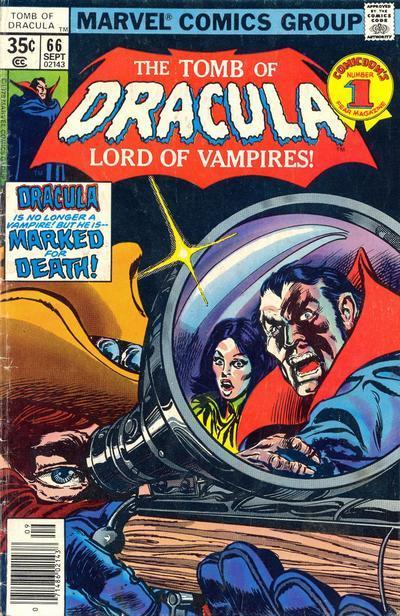
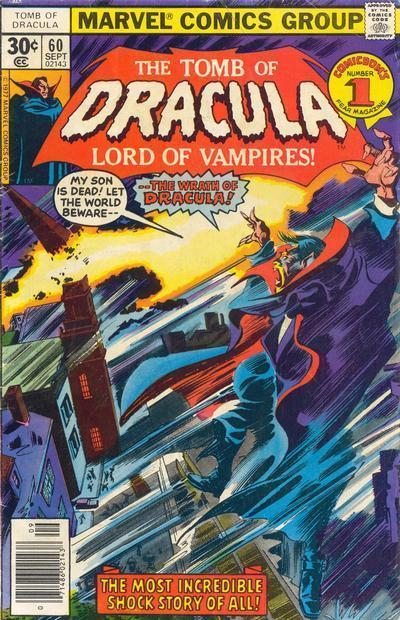
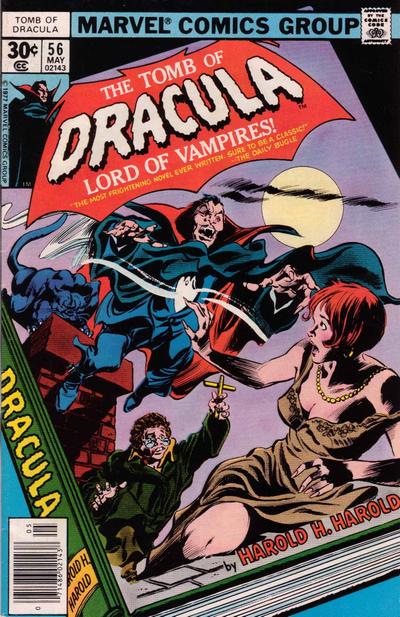
1-11tomb_of_dracula_2Marvel’s The Tomb of Dracula is beyond question the finest horror comic series ever produced – a fact made all the more amazing when one considers that since the original series ended, none of the many revivals (even those with the original’s classic creative team) have succeeded in bottling lightning a second time. Much of the success of the book is down to the surprisingly literate scripts by Marv Wolfman and the stunning artwork by Gene Colan and inking by Tom Palmer. However, Wolfman did not come aboard until Issue 7 so this first installment in an ongoing series looking at this influential comic will focus on the first six issues of a title undergoing the pangs of development.

Roy Thomas deserves the credit for bringing this series to life. It was Thomas who convinced Stan Lee that the loosening standards of the Comics Code Authority and renewed interest in the occult could make an ongoing horror comic featuring Bram Stoker’s infamous vampire count the runaway success of 1972. The Comics Code Authority came into being in the 1950s as a reaction against crime and horror comics as a result of the rather disturbed fantasies of Dr. Frederic Wertham. His 1954 study, Seduction of the Innocent imagined underage sex between Batman and Robin and convinced countless parents that juvenile delinquency was as much to blame on comic books as it was Rock ‘n’ Roll. The fact that Wertham’s book revealed more about himself than the actual content of comic books was lost on parents, whether over-protective or neglectful, who were quick to latch onto an excuse for why the post-war nuclear family was struggling. The result was the neutering of comic books for nearly twenty years and a ban on crime and horror as entertainment suitable for children.

Prior to The Tomb of Dracula, most comics companies would have turned the character into a misunderstood superhero. Marvel already had one of those with Morbius, the Living Vampire, but The Tomb of Dracula was determined to prove as revolutionary to Marvel as Roy Thomas and Barry Windsor-Smith’s adaptation of Robert E. Howard’s Conan the Barbarian. Both titles were far more adult and, at the outset anyway, far removed from Marvel’s established continuity. They were gambles that paid off in an era when Marvel deserved to call itself The House of Ideas.

Read More Read More

Art of the Genre: An Inteview with Will McLean

Art of the Genre: An Inteview with Will McLean

Two months ago I had the pleasure of writing up a small nostalgia piece on the Art of Will McLean, and after it hit the press John O’Neill gets me on my cell and tells me ‘It’s not enough!’. Ryan Harvey and I got a kick out of that, to be sure, both of us taking in some sun on the Black Gate L.A. corporate terrace. Such rants by John always elicit great mirth when we are both well aware of his location some 2118 miles away, meaning he has little power over us.

mclean-snake-ii-254Still, I was both moved and intrigued when a message from Mr. McLean showed up on my blog a few days later. This pushed me to consider that my article was indeed, as John insisted ‘not enough!’. Weeks passed, and John kept at me until he finally forced my hand with a full travel itinerary showing up at the office by Wells Fargo courier and the next thing I knew I was once again on a Zeppelin with an interview in mind.

The destination… Malvern Pennsylvania, a fine and upstanding Victorian era borough of less than four thousand people that resides some twenty-five miles west of Philadelphia, and home to Will McLean. Having spent twelve years in Maryland, this was fairly familiar country to me, and I eased into a transition from the heat of L.A. to the seemingly never ending winter of the northeast.

Read More Read More

Goth Chick News: Thirteen Questions for Horror Comic Creator Dirk Manning

Goth Chick News: Thirteen Questions for Horror Comic Creator Dirk Manning

image0141Last Sunday I told you all about NIGHTMARE WORLD comics which I had the good fortune of discovering last month at the C2E2 show in Chicago.

I also learned from you that I wasn’t the only one scaring the crap out of myself as a kid by reading this sort of contraband content by flashlight; and from the emails I got, you lot have been sneaking around doing things you’ve been told not to for some time.

Which is why you are very welcome here.

And now, fortune pats me on the head for the third time this week in the form of an email from the man himself, NIGHTMARE WORLD creator Dirk Manning.

Moved by our mutual admiration of classic tales of terror and intrigued by the readers of Black Gate, to whom he had not previously been introduced, Mr. Manning agreed to brave the probing and in depth (insert lightning and thunder sound effects here) Thirteen Questions

Are the restraints nice and snug? Then let’s begin.

Read More Read More