21 Questions for Ty Franck
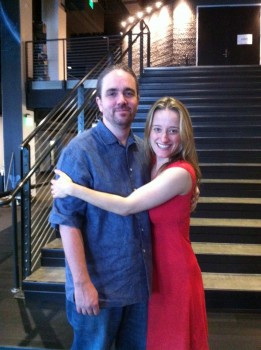
Years ago he was held up at gunpoint at his workplace, after hours. Gangsters broke in, cut the phone lines, and tied up both him and another woman who was working late. Ty managed to keep talking to get the gangsters off guard, and then when they left the room, his coworker untied him and he used the company’s internet (which wasn’t connected to the phone lines) to message another office, who in turn called 911.
Yes, this is a true story, but I haven’t gotten to the most unbelievable part yet. After the police arrived and sat Ty down for questioning. The dialogue went something like this:
“What can you tell us about your attackers?”
“Well, they were armed with a Glock 40.”
“So you know guns, then?”
“No, not really.”
“But you know Glocks?”
“No.”
“So how do you know it was a Glock 40?”
“Because they were holding it about here-” Ty mimes having a gun held to his forehead “-and you could read it on the side. It said, Glock 40.”
Ty would be my first choice of friend to have around during the zombie apocalypse. I call dibs.
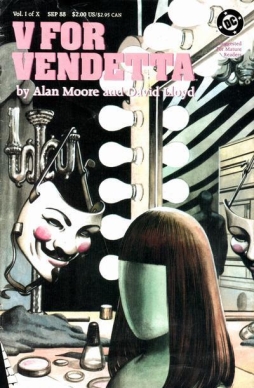 I’m taking a bit of a break from the Romanticism and Fantasy posts, as I’ve got a few other things I’d like to write about. To start with, since I discussed Alan Moore’s Marvelman a few weeks ago, I thought I’d take a look now at V For Vendetta. V started as a series that ran, like Marvelman, in the early 80s in the black-and-white anthology magazine Warrior. Though the story was left incomplete when Warrior folded, in 1988 the series was republished in colour by DC Comics, and Moore and artist David Lloyd were able to finish it as they’d hoped. (Some spoilers for the book follow; also spoilers for Watchmen, oddly enough.)
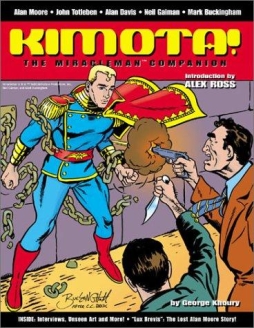 I’m going to take a break this week from the Romanticism and Fantasy posts, because I’ve just finished a fascinating book, and I’d like to talk about it. It’s not a new book, and it’s not a fiction book. It is in fact mainly a collection of interviews about a comic-book character who hasn’t seen print (officially) in almost twenty years. The book is called Kimota!, and the character has been known both as Miracleman and, originally, Marvelman.
 I was planning to start the series of posts on Romanticism and fantasy this week, but something came up in the last few days that I’d like to write about; particularly since it seems to resonate with