Browsed by
Category: Books

Adventures in Pulp Awesomeness: The Clayton Astounding

Adventures in Pulp Awesomeness: The Clayton Astounding

claytonOver at Dark Worlds, editor G.W. Thomas has completed the first of three planned reprints of the Clayton Astounding, the first incarnation of the grand old lady of science fiction.

Astounding changed its name to Analog in 1960 and continues to publish today, 80 years after its first issue hit the stands in January, 1930. In an era when most genre magazines last only a handfull of issues, that’s an incredible run.

During most of that time it’s been the single most important magazine in the field, discovering such names as Isaac Asimov, Robert Heinlein, A. E. van Vogt, and literally hundreds of others.

The first volume of this new series, The Clayton Astounding: Vagabonds of Space is 212 pages in paperback, and is now available at Lulu for $13.99.

This volume collects the best Space Opera from the Clayton years. According to Thomas, future volumes will include Out of the Dreadful Depths (undersea tales), Planetoids of Peril (stories set on moons, planets, and asteroids) and possibily “a book of space invaders, robots and mechanical enemies.” Yeah baby.

Here’s the description from Lulu:

Before John W. Campbell’s “Golden Age” (beginning in 1938) editor Harry Bates created an SF Pulp that was meant to entertain with stories of adventure and action in outer space and on far planets. This magazine has become known as “The Clayton Astounding” to delineate it from later incarnations. The first volume, VAGABONDS OF SPACE, represents the best Space Opera from the magazine’s first run of 1930-1933. Features stories by Harl Vincent, Edmond Hamilton, Anthony Gilmore, Sewell Peaslee Wright, Nat Schachner, Edwin K. Sloat and Jack Williamson. Each author is introduced with commentary by G. W. Thomas.

Fiction from an era when “space opera” meant sword fights in space with weird metal sticks.  All I need to know. You had me at “adventure and action in outer space and on far planets.”

Looking forward to the next volumes.

The Best Sword & Sorcery Stories

The Best Sword & Sorcery Stories

second-landhkmarOver at SF Signal, editor John DeNardo asked ten science fiction and fantasy writers and editors to pick the best sword and sorcery stories, and explain what makes them so good.

The writers include Black Gate authors James Enge and Martha Wells, as well as Steven Brust, Mercedes Lackey, Mary Robinette Kowal, Mark Chadbourn, P.C. Hodgell, Gail Z. Martin, Brandon Sanderson, and Lou Anders.

Here’s what James Enge had to say, in part:

There’s no doubt in my mind that Fritz Leiber’s series about Fafhrd and the Gray Mouser are the uneven apex of the disreputable S&S mountain…. Leiber was a gifted storyteller and stylist who used the stories to explore what the world is, how it’s made, what the people there are like. Every story takes you someplace different and extends your knowledge — whether the heroes are fighting gods on Rime Isle, ghosts in the unnamed west, or rats or the Thieves’ Guild or advertisers in Lankhmar city, Leiber doesn’t do retreads. And Leiber understands, as few writers do, how horror and humor are two sides of the same coin; likewise love and grief.

It’s a fascinating list, and well worth reading. And you’re sure to find more than a few good recommendations, whether you’re new to S&S or an old sword-brother.

The complete article is here.

Who Fears the Devil?

Who Fears the Devil?

who-fears-the-devil-coverWho Fears the Devil?
Manly Wade Wellman (Paizo Publishing, 2010)

Paizo Publication’s Planet Stories has brought forth another collection of the kind of grand and weird fantasy that the chain bookstores want to keep hidden from you. Who Fears the Devil?, the complete tales of Manly Wade Wellman’s “John the Balladeer” character, is one of the Planet Stories volumes I’ve most anticipated; there’s no other fantasy character quite like John, and no one else but Wellman could have created him. He’s a contemporary fantasy hero who uses folk songs instead of swords, and faces wonders from the mountain legendry of Appalachia. He’s part Weird Tales, a touch of Unknown, plus Pete Seeger and Johnny Cash.

Also called “Silver John” in promotional material because he strings his guitar with silver, but always simply referred to as “John” within the stories, Wellman’s hero is a variant on the bard of the Middle Ages who wanders the contemporary Appalachians. Or semi-contemporary; the setting is really a fantasy land based on Wellman’s love of Appalachian folklore and the spirit of its musical tradition. In the stories readers will occasionally encounter cars, trucks, air travel, and mention of John’s Korean War service, but most of the time they will find it easy to imagine that this is an Appalachia frozen in the nineteenth century, when stories and songs at the hearthside were thinly veiled truths about wizards, witch-folk, and strange beasts.

John’s songs help combat evil, as do the silver strings on his guitar. (One of the few problems I have with the stories is that the “silver against supernatural” concept turns up a few times too many.) John not only sings the ballads, he’s a collector, and in some of the stories (“The Little Black Train,” “Vandy, Vandy”) his search for old ballads brings him into the action. “Call me a truth seeker,” he tells one curious inquirer, “somebody who wonders himself about riddles and life.” When then asked if he’s a “conjure man,” he answers: “Not me…  I’ve met up with that sort in my time, helped put two-three of them out of mischief. Call that part of what I follow.”

Read More Read More

A Look at Matthew Sturges’ Midwinter

A Look at Matthew Sturges’ Midwinter

midwinter-cover-sturgesMidwinter
Matthew Sturges
Pyr  (345 pages, Trade Paperback, March 2009, $15.98)
Reviewed by Bill Ward

Midwinter is the debut novel from comics writer Matthew Sturges, and it has elves in it. In fact, it’s all about elves, taking place as it does in the land of faerie. But these elves, dear reader, are not your Daddy’s elves — or, more to the point, they are not the sort of derivative elves that tend to find their way into the fiction of writers who have trouble thinking outside their last D&D campaign. Midwinter’s Fae, in all their variety, are much more reminiscent of  the Sidhe of Celtic myth that is clearly Sturges’ jumping off point, perhaps with a bit of Tolkien and Moorcock thrown in for good measure. Those who can’t stand heavily derivative fantasy need not worry — in fact, it’s Sturges’ willingness to play with tropes and inject his tale with the unexpected that is the main attraction of his world.

For an example of one of those ‘sit up on the edge of your seat and take notice’ turns, we have an event that occurs early in the book. The premise of the quest is established quickly, and this ‘dirty dozen with elves,’ as Sturges has described the book, kicks off in much the expected direction. We are introduced to disgraced Guard Captain Mauritane, in prison, as well as his despised enemy — a Fae who conspired to bring him down in the first place. The quest is laid out (though not explained — the revelation of the true purpose of the quest isn’t provided until the end), and Mauritane’s team of fellow prisoners assembled. But just when you think the direction of things is all mapped out, Mauritane, seemingly as an aside, ends up traveling back in time (!) and participating in an episode the significance of which is only shown later. Throughout the novel Sturges shows a willingness to make a hard right without taking his foot of the gas — leaving some rubber on the road and, just  maybe, making a few white-knuckled passengers uncomfortable —  in a way that reminded me of the more daring and fluid fantasies of the past.

Read More Read More

The ABC’s of DNA and Other Thorny Themes: Daryl Gregory’s “The Devil’s Alphabet”

The ABC’s of DNA and Other Thorny Themes: Daryl Gregory’s “The Devil’s Alphabet”

the-devils-alphabetPaxton Martin has come home to Switchcreek, Tennessee, to attend the funeral of a childhood friend. He drove in from Chicago, pulling an all-nighter, because he could not decide until the last minute if he wanted to go back. He’d been living in Chicago since running away from Switchcreek, 13 years ago, after everything changed.

The opening of any number of novels, classic in its prodigal simplicity, promising Faulknerian brambles with a dash of Wolf (Thomas that is) and a thread of O’Connor. The returning son of the local preacher, reconnecting, abrading old scabs, stirring nearly-dead ashes, the stuff of Americana along gothic lines. The changes, of course, mask how much everything has remained pretty much the same. After a time, one can even overlook those changes…

Not in Daryl Gregory’s second novel, The Devil’s Alphabet. The changes in this case cannot be ignored. By anyone.

Switchcreek has undergone a profound experience in the form of mutations which swept through the small population, transforming many residents into distinctly divergent species. The genetic instructions for these people have been rewritten by some unknown process, which did not strike all people. When the changes worked their way through, Switchcreek was home to populations of what became known as Argos, Betas, and Charlies, as well as the untouched population.

Read More Read More

The Historian, or An Excuse Not to Read Dracula, the Un-Dead

The Historian, or An Excuse Not to Read Dracula, the Un-Dead

historianI don’t have a dislike for the vampire in general. I’ve repeatedly reminded myself about this  even as I cringe at the saturation in our culture of mediocre work based on supernatural bloodsuckers. (Do I really have to name the book and movie series at the center of this creative blood drain? Of course I don’t.) Vampires are everywhere today, and this visibility has reduced their effectiveness for me, no matter what “new” spin the artists claim they’re putting on the legend. Exceptions are out there—for example the action-packed novels of certain contributor to Black Gate—but today I actively avoid horror and dark fantasy and especially parodies using vampires. I want more werewolves and phantasms and cosmic weirdness. Specifically werewolves. I love werewolves.

I wasn’t always this apathetic about vampires. I had a great interest in vampire legendry and literature when I was in college, right at the time that Bram Stoker’s Dracula was an enormous hit in theaters. I was always focused on Dracula, and not as interested in other vampires. This is still true today; while I shrug at most vampire offerings, I’ll still pick up something about the King of the Undead. Perhaps it’s the history major in me, or my love of the Victorian Gothic, that pulls me back to the vampiric Transylvanian noble. Literary Dracula excursions I’ve taken over the past few years include Fred Saberhagen’s The Dracula Tape (an intriguing piece of literary criticism, but his heroic and misunderstood Dracula isn’t my flavor of garlic seasoning), the anthology Dracula in London (answering the question, “So what else was the Count doing in London Town when not desanguinizing Lucy and Mina?”), the history volume Dracula: Prince of Many Faces, and Kim Newman’s wonderful “Anno-Dracula” series. If you haven’t read these three novels and wonder if there’s anything out there that might make you feel a bit better about vampires in general, seek out the nearest used book service posthaste.

Read More Read More

The Year’s Best SF & Fantasy 2009, edited by Rich Horton

The Year’s Best SF & Fantasy 2009, edited by Rich Horton

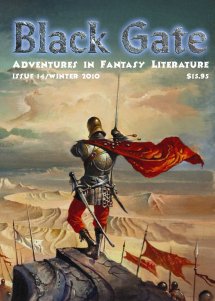
years-best-2I’m supposed to be putting the finishing touches on BG 14, figuring out how to use Google Ad words, and about a million other things tonight. But man, I am beat.

Besides, the copy of Rich Horton’s The Year’s Best Science Fiction & Fantasy 2009 I ordered finally arrived a few weeks ago, and it’s been sitting there on my desk, unopened. That’s just criminal. So I packed it in early tonight, and curled up with it in the big green chair.

As we’ve established here already, Rich Horton is some kind of crazy person.  It all started with his newsgroup at SFF Net, where he was reviewing every single magazine in the entire universe.  Or as close as damn is to swearing, as they used to tell me while growing up in Nova Scotia.

Then he began compiling lists of his selections of the best short fiction of the year, and we started reprinting them on the BG website (in 2005, 2006 and 2007.)

In between, he knocked out detailed articles exploring the rich history of the SF & Fantasy genres for virtually every issue of Black Gate, starting with Building the Fantasy Canon: the Classic Anthologies of Genre Fantasy: Part One, (BG 2) and continuing with things like an exploration of The Big Little SF Magazines of the 1970s (BG 10), and Fictional Losses: Neglected Stories From the SF Magazines (BG 11).

Now he’s turned his talents to something closer to home: making books.  He’s become an anthologist of note, with over half a dozen Best SF and Best Fantasy volumes to his credit, chiefly from Prime Books.  This year Prime has re-launched the series, with a snappy new cover design and a big bump in size and page count (to 540 pages).  This is a hefty volume, with 37 short stories, detailed author biographies, and Honorable Mentions.

There are a great many Best of the Year books in the genre, but so far this is my favorite.  More later as I make my way through the book.

Robert Low’s The Wolf Sea

Robert Low’s The Wolf Sea

wolf-seaThe Wolf Sea
Robert Low
Thomas Dunne Books — St. Martin’s Press (340 pages, Hardback, June 2008, First published in Great Britain by HarperCollins, $24.95)
Reviewed by Bill Ward

This follow-up to 2007’s The Whale Road, Robert Low’s debut novel of grim Viking adventurers questing for the lost horde of Attila the Hun, is a continuation of the story of the Oathsworn and their new and untested leader, Orm Rurisksson. Orm, still a teenager, earned a reputation as a ‘deep thinker’ amongst his Viking crew and was their choice for leader with the death of Einar the Black — the man who had led them on a doomed expedition to the very ends of the earth in the first book of this series.

The Wolf Sea begins in Miklagard — the Norse-termed ‘Great City’ of Constantinople — with the theft of the jeweled saber Orm rescued from the Volsung horde in The Whale Road.  Valuable in and of itself, perhaps even magical, the saber is also the key to finding Attila’s silver because Orm has carved its hilt with runes that will act as a guide should the Oathsworn ever return to the steppe. It turns out the saber has fallen into the hands of their old enemy, Starkad, who also seeks the fabulous treasure but has no idea that he possesses the key to finding it. Starkad is convinced that Martin, the venal priest that journeyed with the Oathsworn in their quest for Attila’s tomb, knows the way to the treasure and he sets off to the Holy Land to find him — with Orm and the Oathsworn in pursuit.

Read More Read More

Goth Chick News: Fractured Fairytales – A Review of Isis by Douglas Clegg

Goth Chick News: Fractured Fairytales – A Review of Isis by Douglas Clegg

isisDon’t talk to a wolf in your Grandma’s nighty, don’t take an apple from a creepy old lady and when in doubt, trust the house mice.

These are the very important lessons taught to us by fairytales, normally animated by Walt Disney and all with happy endings. However, when you read Isis, you’ll learn one more bit of indispensable wisdom: sometimes dead is better, and knowledge can come too late for a happy ending.

This seems to be the year for returning to old-fashioned scares, the kind that get into your head, and Douglas Clegg has done a masterful job at taking the horror story back to the campfire, or in this case, the Victorian mansion. Isis is the story of what appears to be, on the surface, a perfect and wealthy 19th century British family complete with doting mother, war-hero father, and precocious but loving children tended to by domestic servants. Belerion Hall is not a frightening but instead postcard-like stone manor house surrounded by lush gardens in which Iris and her beloved brother Harvey pass enchanted, summer afternoons.

However, things are never quite as they appear.

Read More Read More

The Ship of Ishtar

The Ship of Ishtar

ship-of-ishtar-piazoThe Ship of Ishtar
A. Merritt (Paizo Publishing, 2009)

I first read The Ship of Ishtar in a 1960s Avon paperback I found in a used bookstore in Phoenix. This copy is so brittle that I have to specially brace the book each time I open it or else the spine will separate like the San Andreas fault and the pages flutter down in a yellow autumn fall.

What I’m saying is . . . I’m extremely glad that Paizo Publishing has brought my favorite A. Merritt novel back into print in an edition that doesn’t make me afraid of the physical act of reading it. (Go buy it here.)

It’s strange that Abraham Merritt, one the biggest sellers in the history of speculative fiction, should need an introduction at all today, but sadly he does. Merritt was a journalist by vocation, the editor of The American Weekly, but his forays into writing ornate “scientific romances” starting with The Moon Pool in 1918–19 made him one of the most popular authors of the first half of the twentieth century. Today, he’s the realm of specialists, collectors, and his work is found in volumes from university publishers and small presses. In his introduction to Merritt’s breakthrough novel, The Moon Pool, Robert Silverberg pondered this turn of events that made Merritt obscure. What happened?

Silverberg offers up his own wonderings, ultimately finding the author’s eclipse inexplicable; but I think Merritt’s unusual mixture of two-fisted stalwart heroes in epic action with grandiose, mind-bending worlds of wonder painted in prose arabesques (and millions of exclamation marks!) makes him an author who doesn’t speak to mainstream genre readers today, even if he invented the clichés of countless contemporary fantasy authors. Clark Ashton Smith started as a specialty author and has remained there. Abraham Merritt was a mainstream writer who managed to Clark Ashton Smith himself after his death, ending up as a specialty author as well. Unfortunately, such is often the way of unusual talents. At least The Ship of Ishtar is now only a few clicks away for you to purchase and enjoy.

Read More Read More