Browsed by
Category: Books

Grey Maiden: The Story of a Sword Through the Ages

Grey Maiden: The Story of a Sword Through the Ages

grey-maiden4I have a habit of buying books — a compulsion, really. Older books, mostly, from book fairs and small used bookstores. Things that look unusual, and which, in the absence of an immediate reason on my part to read them immediately, often sit on my shelves for some time before I get around to them.

So I don’t remember now exactly when and where I picked up a collection of Arthur D. Howden Smith’s Grey Maiden stories, only that it was some time ago. I wish I knew now, because I’d like to go back for more, if there are any.

Arthur D. Howden Smith (1887-1945) was an early pulp writer; the collection Grey Maiden (Centaur Press, 1974) has four out of seven — or nine, depending on what reference you look at — of his stories about the Grey Maiden, the first sword ever forged from iron.

Each tale follows a different wielder, each in a different time and place, as the blade’s won and lost among battles and wars and the rise and fall of empires. All were originally published in the pulp magazine Adventure.

The four tales in the collection I have (there was at least one other collection, with more of them) include a story of betrayal and revenge among the soldiers of Alexander the Great, an account of a group of Phoenicians retreating across Italy, a story of the ebbing of Roman power in Britain, and an imagining of the first collision between the Byzantine Empire and the followers of Islam.

The stories are bleak, violent, and possessed of a dark energy that makes them utterly compelling. The history perhaps couldn’t always stand up to intense scrutiny, but is used in such a way as to make the most exciting and brutal tale possible.

Read More Read More

Time Magazine selects Swords & Dark Magic as a Summer Page-Turner

Time Magazine selects Swords & Dark Magic as a Summer Page-Turner

swordssorcery1Lou Anders reports that Time columnist Lev Grossman has selected his new anthology Swords & Dark Magic as one of two recommended “Summer Page Turners” in the July 12th issue.

The article, appearing on the stands this week, is “Page Turners: The Summer’s Hot Writers on What’s on their Nightstand, Kindle or Beach Chair.” Lev Grossman, Time magazine columnist and author of the fantasy novel The Magician, selected Swords & Dark Magic as one of two recommendations, saying:

Fantasy is going through an explosion of creativity.  Two new anthologies showcase the best of it: Stories: All-New Tales, edited by Neil Gaiman and Al Sarrantonio, and Swords & Dark Magic, edited by Jonathan Strahan and Lou Anders.

Swords & Dark Magic was published by Eos on June 22, and is edited by Anders and Jonathan Strahan. Jason Waltz reviewed it for Black Gate here.

Congratulations to Lou and Jonathan on the great press.  Good to see the new breed of sword & sorcery getting some national attention.

Dracula: From Script to Screen

Dracula: From Script to Screen

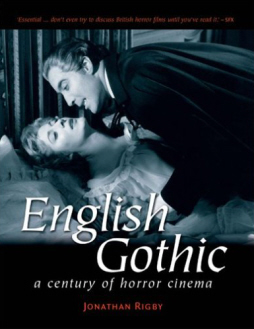
dracula_1931aDracula by Bram Stoker frequently vies with The Maltese Falcon by Dashiell Hammett as my favorite book.

Both stories are archetypes of their genres and despite endless imitations, almost every attempt to emulate the originals falls wide of the margin.

The current vogue for Twilight and its many imitations may be the worst misinterpretation of Stoker’s classic yet, despite its enviable success among pre-pubescent girls (and their emotional equals). The ignorance of most Twilight fans as to how their heroine earned her first name led me to revisit the seminal Universal Horror, Tod Browning’s Dracula (1931) starring Bela Lugosi in an iconic performance that did much to secure Stoker’s novel its hard-won place of acceptance as a literary classic.

The resulting film owed much to the stage plays which took the West End and Broadway by storm during the Roaring Twenties.

Film historian David Skal has gifted the world with several excellent books and DVD bonus features and commentaries chronicling this once untapped goldmine’s transition from page to stage to screen.

Film buff Philip J. Riley has done one better (actually twice better) by sharing with film lovers not one, but two volumes collecting the various story treatments and screenplay drafts that were languishing in Universal’s files for decades.

Read More Read More

Climbing Aboard the Dragon: Three Paths To a Story

Climbing Aboard the Dragon: Three Paths To a Story

“There are nine and sixty ways of constructing tribal lays, and every single one of them is right.”
— Rudyard Kipling

Get out the map...Okay, writers. Let’s say you have a short story idea or two, but you don’t know the best way to write it. Some sage writers with some sales under their belts tell you that you Must Outline. Other wisened authors tell you to just, “Go where the story takes you,” that you shouldn’t outline at all.

So what’s a new writer to do? Who’s right?

Well, they all are, of course. They’re right about what works for them.

You have to figure out what works best for you.

Read More Read More

James Bond vs. the Giant Squid: Pulp 007 in Doctor No

James Bond vs. the Giant Squid: Pulp 007 in Doctor No

giant-squidMania, my dear Mister Bond, is as priceless as genius.

Some time ago in the earlier days of the Black Gate blog, E. E. Knight wrote a post about the James Bond movies as classic fantasies. No argument here—especially when I consider things like The Spy Who Loved Me and Bond-drives-an-invisible-car Die Another Day.

However, the conventional wisdom about the divide between the long-running movie franchise and the series of novels and short stories that Ian Fleming wrote in the fifties and sixties is that Fleming is the realistic, grim, down-to-earth Bond, where the movies are outrageous action-filled rides.

I’m a hardcore Bond fan, but unlike most Bondians my age (born into the ‘70s and Roger Moore’s tenure) I grew up on Fleming’s Bond, not cinema’s. I read all the novels for the first time in junior high school, and at that point had only watched perhaps three of the movies. I ended up approaching the film series from the perspective of a Fleming Purist. This doesn’t mean I flip out when anything un-Fleming occurs in the movies—for Apollo’s sake, I actually get a kick out of the Space Opera/Chuck Jones cartoon called Moonraker—but it does mean I have a very different lens on than film series than even most serious Bond fans.

And here’s something I’ve learned over the years from watching the films series develop and tracing the history of the earlier movies (Goldfinger is my favorite of the movies, in case you’re interested): Fleming ain’t realistic. His novels are extremely romanticized views of espionage life, and were thought so at the time. Read John le Carré’s extraordinary The Spy Who Came in From the Cold, meant as an answer to Fleming’s spy-romances, and you’ll immediately see what flights of fantasy Fleming really took with his super-spy. Compared to many of the movies, the novels Casino Royale and From Russia, With Love seem relatively believable, but they are still escapist romances.

Here’s the key difference between the escapism of the films and the books: The movies are fantasies. The novels are pulp adventure—almost literally so.

Read More Read More

A review of Under Heaven by Guy Gavriel Kay

A review of Under Heaven by Guy Gavriel Kay

underheaven2

Under Heaven, by Guy Gavriel Kay
Roc (592 pages, $26.95, April 2010)

We don’t have that many rituals in our home. One is the creeping countdown to Guy Gavriel Kay’s newest novel. I am always a little sad when it finally comes, though, because it means years before I will see his next one.

If you liked Tigana or The Sarantine Mosaic, you will like Under Heaven. If you have not read Kay before, then do. But don’t start with Under Heaven. It’s one of his best, but you’ll want to save it for last.

Start with Tigana, then maybe A Song for Arbonne and The Lions of Al-Rassan. Jump to The Last Light of the Sun (or skip it entirely) and then go back for the two volume The Sarantine Mosaic (his second best). Then, and only then, should you read Under Heaven*.

Kay’s efforts have definitely improved with time.  A big part of that is no two stories are  in the same place, or use the same characters. I recently whipped through Jim Butchers’ twelfth Dresden installment, and am eager to read the upcoming sixth Temeraire dragon novel by Naomi Novik. Both series are fun, likely lucrative, and the authors pump out new adventures every year or two. But I sometimes wonder if they and other fantasy series novelists are a little jealous of GGK’s apparent freedom to always work on new ideas.

Read More Read More

Judgment Night: Space Opera and More From One of the Female Pioneers of the Genre

Judgment Night: Space Opera and More From One of the Female Pioneers of the Genre

judgFamed with her husband Henry Kuttner for turning out superlatively compelling and complex stories for the pulps, both jointly and singly, Catherine Moore began writing in 1933.

But she had to wait nearly twenty years for any of her fine tales to achieve single-author book form, and the volume under discussion today is the long-awaited result. It contains five stories — one actually a short novel — from the pages of John W. Campbell’s Golden Age and Silver Age  Astounding.

The title piece is the novel, from 1943. A primal space opera, it concerns the star empire of the Lyonese, whose central world is Ericon, where ancient patron gods live, remote from day-to-day affairs of the empire.

But now the vast holdings of the Lyonese are crumbling under the assault of a younger race, the H’vani. The Emperor’s heir is Juille, a daughter, and she’s determined her dynasty will continue. She wages a one-woman campaign against the wishes of her doddering father to save all that her ancestors built.

But she doesn’t count on falling in love with the H’vani ruler — or the machinations of Ericon’s living deities.

Read More Read More

Locus magazine announces the 2010 Locus Awards Winners

Locus magazine announces the 2010 Locus Awards Winners

boneshaker2The 2010 Locus Awards winners were announced today, at the annual Science Fiction Awards Weekend in Seattle. The winners include:

     Best SF Novel: Boneshaker, Cherie Priest (Tor)
     Best Fantasy Novel: The City & The City, China Miéville (Del Rey; Macmillan UK)
     Best First Novel: The Windup Girl, Paolo Bacigalupi (Night Shade)
     Best Young Adult Book: Leviathan, Scott Westerfeld (Simon Pulse; Simon & Schuster UK)
     Best Novella: ‘‘The Women of Nell Gwynne’s,’’ Kage Baker (Subterranean)
     Best Novelette: ‘‘By Moonlight,’’ Peter S. Beagle (We Never Talk About My Brother)
     Best Short Story: ‘‘An Invocation of Incuriosity,’’ Neil Gaiman (Songs of the Dying Earth)
     Best Anthology:  The New Space Opera 2, Gardner Dozois & Jonathan Strahan, eds. (Eos; HarperCollins Australia)
     Best Magazine: The Magazine of Fantasy & Science Fiction

The Locus Award has been presented annually since 1971. It’s given to winners of Locus magazine’s annual readers’ poll. You can find the complete list of winners at Locus Online.

Congratulations to all the winners!

Graham McNeill’s Empire wins the David Gemmell Legend Award

Graham McNeill’s Empire wins the David Gemmell Legend Award

graham-and-pigstickerGraham McNeill’s novel Empire: The Legend of Sigmar (Black Library) is this year’s winner of the David Gemmell Legend Award for Best Fantasy Novel of 2009.

The list of nominees, including Brandon Sanderson, Joe Abercrombie, and Robert Jordan, was announced April 7.

The David Gemmell Legend Award  is a fan-voted award administered by the DGLA. The Legend Award for Best Fantasy Novel was first granted in 2009, to Andrzej Sapkowski’s Blood of Elves.

As winner, McNeill received a replica of the mighty Snaga, the axe wielded by Druss in David Gemmell’s novel Legend.

I think George Mann, publisher of Black Library, captured my thoughts nicely when he said:

‘We are delighted for Graham – not only is this a wonderful acknowledgement of a fine writer, but it is an important victory for franchise fiction, which is often overlooked by the wider genre community.’

The Ravensheart Award, for best Fantasy Book Jacket/artist, went to Best Served Cold – art and design by Didier Graffet, Dave Senior and Laura Brett.

The Morningstar Award for Best Fantasy Newcomer/debut went to Pierre Pevel’s The Cardinal’s Blades.

Black Library editor Nick Kyme has a lengthy blog entry on the awards ceremony here.

A review of Patricia A. McKillip’s The Sorceress and the Cygnet

A review of Patricia A. McKillip’s The Sorceress and the Cygnet

sorceress-and-the-cygnetCorleu is an oddity, a white-haired youth in a black-haired tribe of wanderers.  His family has a talent for foresight, but all he has is a knack for stories.  And then one year the tribe goes south for the winter and finds itself in a marsh where time seems to stand still, where the flowers are perfect but the skies are invisible behind the mists — and no one knows how long they’ve been there. No one but Corleu notices anything wrong.

Then things get really surreal.

If you like your magic as a form of exotic science, with clearly delineated cause and effect — the sort of worldbuilding Brandon Sanderson does, for instance — The Sorceress and the Cygnet is probably not the book for you.  Little is explained, least of all the magic system.

The plot revolves around five beings whose nature is never entirely defined.  They could be gods, although they’re never worshipped.  They could be stories come to life.  They have titles rather than names.  They’re represented in the heraldry and the constellations.

They seem extremely powerful, but four of them have apparently been trapped by the fifth, the being called the Cygnet.  One of those four — the Gold King, who reads like a sun god or a death god or both — tricks Corleu into a quest to find the Cygnet’s heart.

Read More Read More