Hal Duncan’s The Book of All Hours, or Vellum and Ink
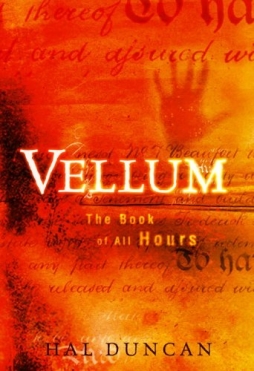 Hal Duncan’s The Book of All Hours is a dazzling, fascinating, frustrating work. A duology consisting of 2005’s Vellum and 2007’s Ink, it plays with structure and story in powerful ways, while also seeming to fall back too easily into black-and-white absolutes and traditional forms. The oddity of the book is that although in some ways it appears radically new, in other ways, as one reads further into it, it comes to feel more and more familiar.
The basic idea might have come from a Marvel comic book: hidden among mortal humans are individuals who, when they undergo certain traumas, develop great powers to shape the world — they become gods, angels, demons. Archetypes. Unkin. Their powers extend not only across time and space, but through the array of alternate worlds called the Vellum; and, as well, into worlds deeper and more profound than our own and its cognates.
A long time ago one of these Unkin created the Book of All Hours, which is, among other things, a map of the Vellum, and a text describing everything, defining everything, holding all stories and worlds within itself. Various Unkin factions want to get their hands on the Book, to rewrite it to suit themselves. The Covenant, a primal patriarchy ruled by archangels, represent one major faction. Another loose grouping is formed by seven individual Unkin, seven archetypes we trace through a range of alternate selves. These seven are (to use only one version of their various names, and a reductive description of their identities) Jack Flash, eternal rebel; Joey Pechorin, eternal traitor; Guy Fox, mastermind; Seamus Finnan, a tortured Prometheus; Don MacChuill, the old soldier; Phreedom Messenger, warrior queen; and her brother, Thomas Messenger, the eternal sacrifice.
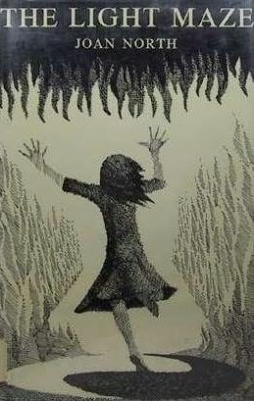 If you read a lot, you’ll soon find yourself drawn to writers who become personal favourites but who, unaccountably, go unrecognised by the wider world. A little while ago my girlfriend introduced me to a book by one of her own favourite writers, a woman named Joan North. I want to write about North here, because I was impressed by her work and I think she deserves to be better known.
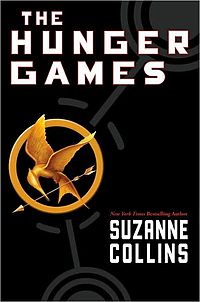 Young adult fiction has a lot going for it in recent years. In the wake of the Harry Potter craze, there’s an entire generation of young people who have grown up with the understanding that reading is a cool way to spend your time and entertain yourself.
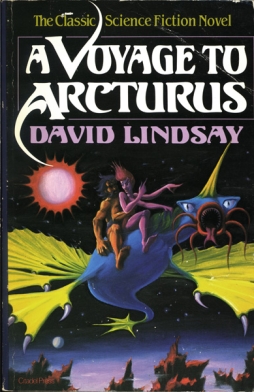 Writing about Romanticism has gotten me started thinking about forms, and conventions, and how we read a story. To some extent I’ve come to feel that contemporary ways of reacting to narrative are more classical than romantic; they’re more to do with structure and form than with trusting the individual genius. It seems to me that many readers, and critics, have become used to looking for certain things in a story, and have come to think of stories that function in a different manner as necessarily defective rather than distinct. And I feel this is a pity, since if we can’t accept the strange works of genius that succeed in defiance of everything we think we know about storytelling, then our experience of story becomes diminished.
 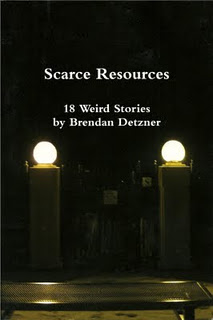 Scarce Resources, by Brendan Detzner
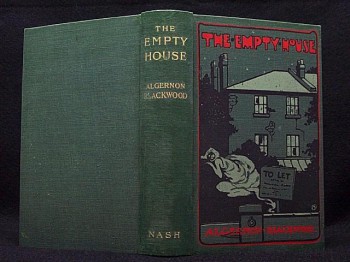 The Empty House and Other Ghost Stories (1906)
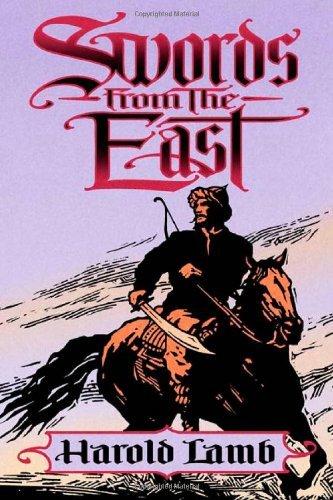 Swords from the Sea