Saladin Ahmed’s Throne of the Crescent Moon
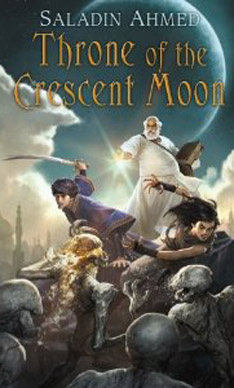 Throne of the Crescent Moon
Saladin Ahmed
DAW Hardcover (288 pp, $24.95, February 7th 2012)
So, I got Saladin Ahmed’s Throne of the Crescent Moon in the mail yesterday.
By dinnertime, after the longest bath in history (getting out would’ve meant stopping reading) and an afternoon of dissolute lounging (moving from my mattress would’ve meant stopping reading), I finished the thing. O the exclamations of delight! O the Facebook status updates!
It is quite possible, although I make no sworn confession, that I took up Throne in my own two hands, with its slick dust jacket – art by Jason Chan featuring dervish (complete with a two-pronged blade “in order to cleave right from wrong”), ghul hunter (with his blazing white kaftan that will not stain), Badawi warrior girl (awesome, green-eyed, growling, rude, and frickin’ Angel-touched too – which you have to like in a girl) and buncha vile bone ghuls with terrifyingly unsanitary teeth – and with this glossily just-read book spun ‘round and ‘round my kitchen, making noises that perhaps ought not to be approximated in print.
I have been waiting and waiting and waiting for this novel.
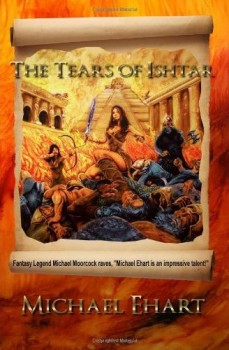 The Tears of Ishtar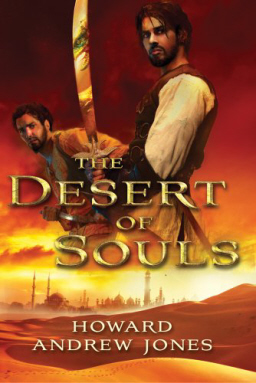

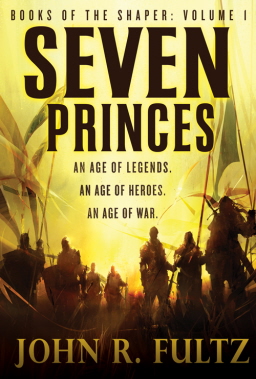 John R. Fultz’s first novel, Seven Princes, has been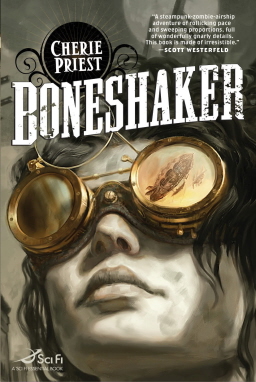
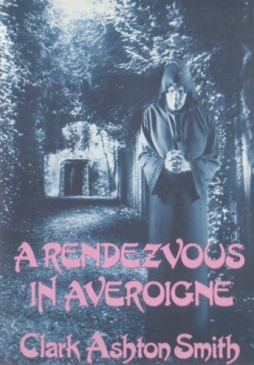 Last Friday was Friday the thirteenth. It was also Clark Ashton Smith’s birthday. In memory of that conjunction, I’d like to write a bit about Smith and his work. I have only a few thoughts about Smith’s prose style; Ryan Harvey’s excellent and insightful look at Smith’s fiction can be found in four parts,
 Is Anybody Out There?