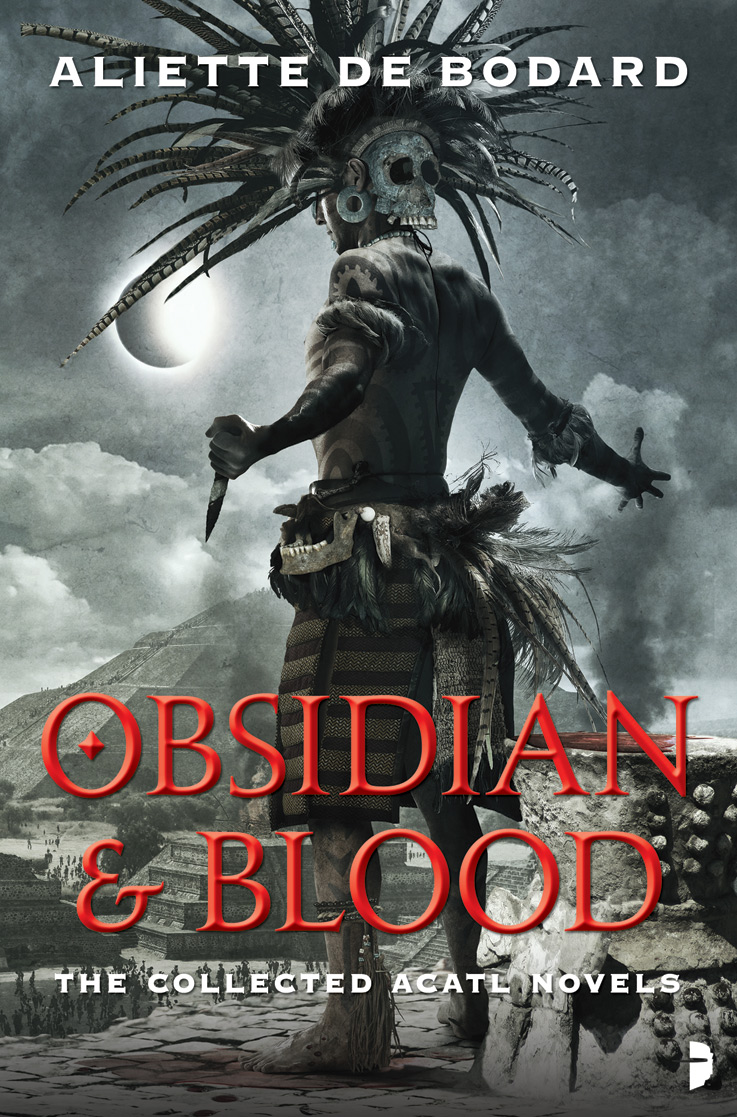
New Treasures: Obsidian & Blood by Aliette de Bodard
 As a reader over 40, I have a certain responsibility to gripe about modern fantasy. To point out how things were better in my day, complain how “kids today” just don’t appreciate good writing, and dismiss current trends as crass commercialism. It’s a thankless job, but it’s been handed down to me by countless generations of grumpy old readers, and I take it seriously.
It ain’t easy, either. For one thing, I have to ignore a lot of really excellent work by Jeff VanderMeer, Neil Gaiman, Howard Andrew Jones, James Enge, John Fultz, and dozens of others, just to have any kind of credibility at all. And when a trend comes along that I really like, I have to shut the hell up about it. And trust me when I tell you, it’s hard for me to shut the hell up about anything.
For example: when I was a kid, fantasy novels went out of print all the time. If you missed ’em, too bad for you — that was the price you paid for not getting hip to the best writers fast enough. You had to sit around and listen to all your friends talk about Do Androids Dream of Electric Sheep, nodding along and gritting your teeth. (At least, that’s what I imagine it would have been like, if I’d had friends).
Not any more. These days when a popular paperback dies, it just returns months later in a new, improved format, like Gandalf the White. Or the Priceline Negotiator.
Case in point: Aliette de Bodard’s Acatl novels. The first, Servant of the Underworld, published in paperback by Angry Robot in October 2010, was a fascinating murder mystery set in the Aztec capital of Tenochtitlan, where the end of the world is kept at bay only by the magic of human sacrifice.
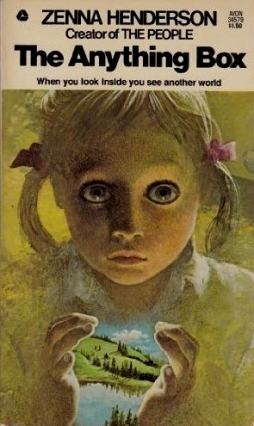 As so often happens, I was at a book fair the other week when, again as so often happens, I stumbled on a book by a writer I’d heard of at some point and about whose work I was vaguely curious. In this case, the writer was Zenna Henderson and the book was a collection of sf and fantasy short stories called The Anything Box. Which, upon reading, I found to be quite intriguing.
 Typically in these blog posts, I write about some work of fantasy, science fiction, or horror; of fantastika. I’m not sure whether the book I want to write about this time round can be described as any of those things. It’s not always, in fact, easy to distinguish what is fantastic and what is not. Does the distinction lie in what the writer has in mind, or in how the reader interprets the text? If a man who believes himself to be a magician writes about magic, is that fantasy or mimetic fiction? The author describes the world as the author understands it. The reader, reading, then sees the world as the author does: so writing is perhaps inherently magical, a possession. All words are magic words. All stories are true.