Browsed by
Category: Books

Return to Enoch: The King of Nightspore’s Crown by Raphael Ordoñez

Return to Enoch: The King of Nightspore’s Crown by Raphael Ordoñez

“Answers, he wants! Do you really think you can just go out and find the whole story somewhere, complete and cross-referenced, without any gaps or inconsistencies? I’m sorry to disillusion you, my boy, but that’s not the sort of world we live in. It’s a messy place. There are no infallible interpreters walking among the living, no emissaries sent from the blessed realm to dole out bits of lore that move history along and need never be questioned.”

Astyges speaking to Keftu, from The King of Nightspore’s Crown
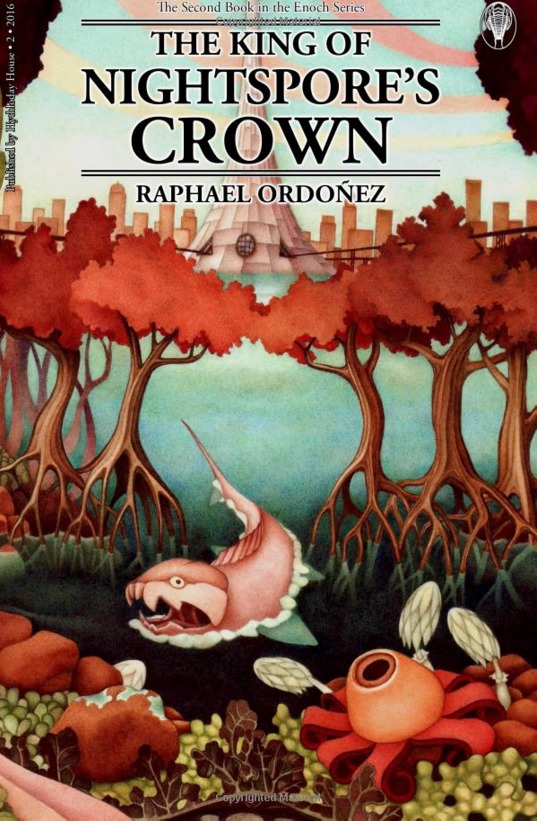
oie_201222utyzw9lrIt’s a rare fantasy story that really surprises me. Partly, I have read a lot, but often there appears to be a collective dearth of imagination. I know readers — myself included — enjoy and find easy comfort in stories filled with familiar characters and plots, but once upon a time, before fantasy became a mass-market commodity in the 1970s, there seemed to be limitless inspiration in the stories that were told. Contemporary fantasy keeps getting stuck in homage and mimicry. When faux-European settings weren’t the norm, a reader could be transported to worlds as strikingly weird as Hodgson’s sunless Night Land, Burroughs’ dying Barsoom, or the haunted corridors of Peake’s Castle Gormenghast. When there’s no limit to the colors on a fantasy writer’s palette, why do I feel like I keep seeing the same dozen or so?

It was exactly three years ago that I first encountered Raphael Ordoñez’s writing. “The Goblin King’s Concubine” (BCS #129), a captivity narrative set in a deadly, spider- and fungus-infested jungle swamp on the dying world of Antellus, was like nothing else I was reading at the time. I sought out Ordoñez’s blog, Cosmic Antipodes, and spent hours reading his older posts on things ranging from planetary adventure to painting to autism. His love for storytelling unconstrained by the modern expectations of genre fantasy were refreshing. By the end I was ensnared, and watched for new stories with anticipation. Each is strange and unique and couched within a complex cosmogony which is a mix of Old Testament, William Blake, and pulp nuttiness, among other things. It can be read about at length here.

Last year, Ordoñez self-published the novel Dragonfly (read my review here). It brings together several characters introduced previously in short stories. Unlike the discrete events of those tales, the novel is a full-blown epic. Keftu, sole survivor of a desert tribe, thinks he is the only person alive in the entire world, until he espies a glowing city floating above the ocean. He is prevented from reaching the sky-city Narva when he falls into the clutches of the Cheriopt. The Cheripot is the the “semi-divine headless social machine” that controls everything in the crumbling, ocean-encircling megacity, Enoch. He becomes by turns, a famous gladiator, a liberator, and finally, the last hope to thwart the half-goblin Zilla’s nefarious plans to throw Enoch into total chaos.
Read More Read More

Future Treasures: The Fall of the House of Cabal by Jonathan L. Howard

Future Treasures: The Fall of the House of Cabal by Jonathan L. Howard

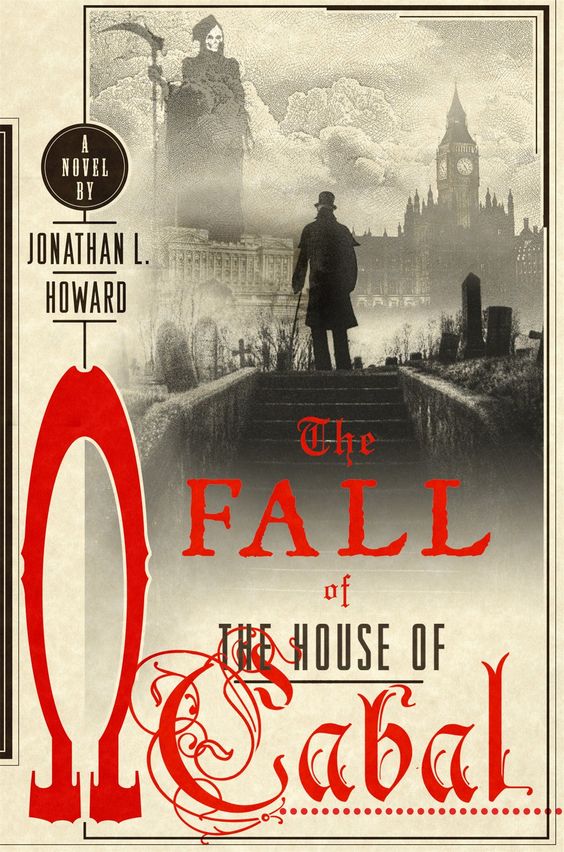
the-fall-of-the-house-of-cabal-smallJonathan is a marvelously talented fantasy author. We published two of his stories featuring Kyth the Taker, the cunning and resourceful thief whose commissions somehow always involve her in sorcerous intrigue: “The Beautiful Corridor,” (Black Gate 13) and its sequel, “The Shuttered Temple” (BG 15).

His most recent novel was Carter & Lovecraft (October 2015). He published his first novel, Johannes Cabal the Necromancer, in 2009; his newest novel The Fall of the House of Cabal is the fifth to feature gentleman necromancer Johannes Cabal and his comrades, including his vampiric brother, Horst. It arrives in hardcover from Thomas Dunne Books at the end of the month.

Johannes Cabal, a necromancer of some little infamy, has come into possession of a vital clue that may lead him to his ultimate goal: a cure for death. The path is vague, however, and certainly treacherous as it takes him into strange territories that, quite literally, no one has ever seen before. The task is too dangerous to venture upon alone, so he must seek assistance, comrades for the coming travails.

So assisted ― ably and otherwise ― by his vampiric brother, Horst, and by the kindly accompaniment of a criminologist and a devil, he will encounter ruins and diableries, mystery and murder, the depths of the lowest pit and a city of horrors. London, to be exact.

Yet even though Cabal has risked such peril believing he understands the dangers he faces, he is still underestimating them. He is walking into a trap of such arcane complexity that even the one who drew him there has no idea of its true terrors. As the snare closes slowly and subtly around them, it may be that there will be no survivors at all.

We’ve covered most of Jonathan’s recent releases here at Black Gate — including his article on writing the Johannes Cabal series, “Some Little Infamy.”

Read More Read More

A Secret Conflict During the Civil War: The House Divided Series by Sean McLachlan

A Secret Conflict During the Civil War: The House Divided Series by Sean McLachlan

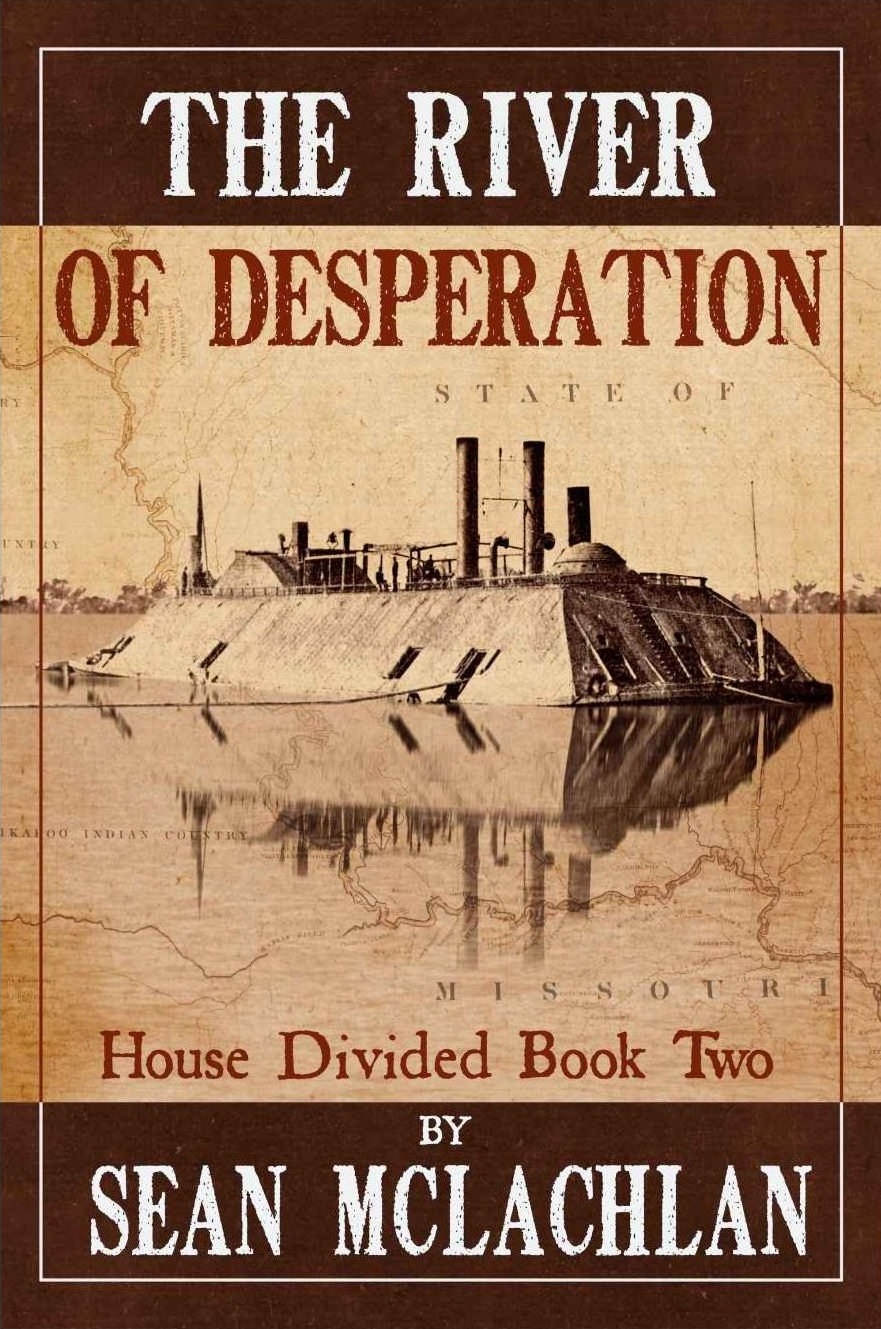
a-fine-likeness-sean-mclachlan-small the-river-of-desperation-small

Sean McLachlan, our Wednesday afternoon blogger, is primarily known around our offices as the guy with the enviable travel budget. His recent travelogues have taken him to Roman ruins in Spain, Wallingord Castle in England, a volcanic island in the Canary Islands, the National Archaeological Museum in Madrid, a writing retreat in Tangier, Morocco, and even more exotic places.

But Sean is also a prolific author. A former archaeologist, he is now a full-time writer who specializes in history, travel, and fiction. He won the 2013 Society of American Travel Writers Award for his Iraq reportage, and his historical fantasy novella “The Quintessence of Absence” appeared in Black Gate. He currently has several series on the go, including Toxic World, a post-apocalyptic science fiction adventure, and the Trench Raiders action series set in World War One. And his contemporary thriller, The Last Hotel Room, will be released later this month.

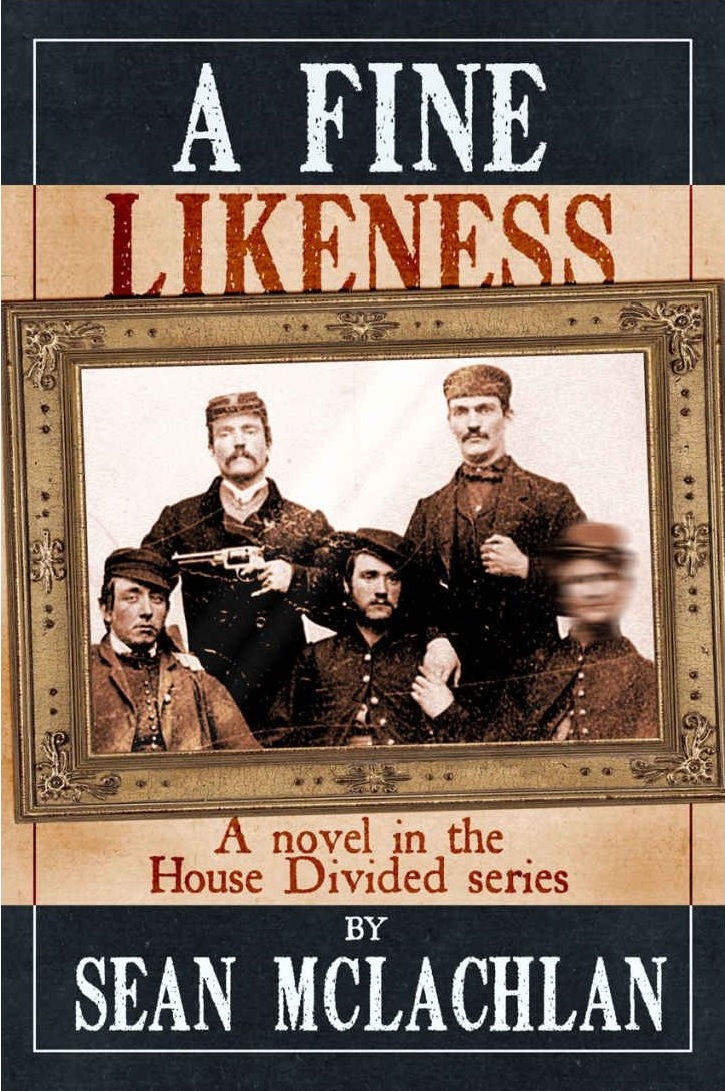
But my current favorite is his Civil War horror series House Divided, which so far consists of two novels: A Fine Likeness and The River of Desperation. Here’s what Sean told me when I asked him about the origin of the series.

Read More Read More

New Treasures: The Year’s Best Science Fiction: Thirty-Third Annual Collection, edited by Gardner Dozois

New Treasures: The Year’s Best Science Fiction: Thirty-Third Annual Collection, edited by Gardner Dozois

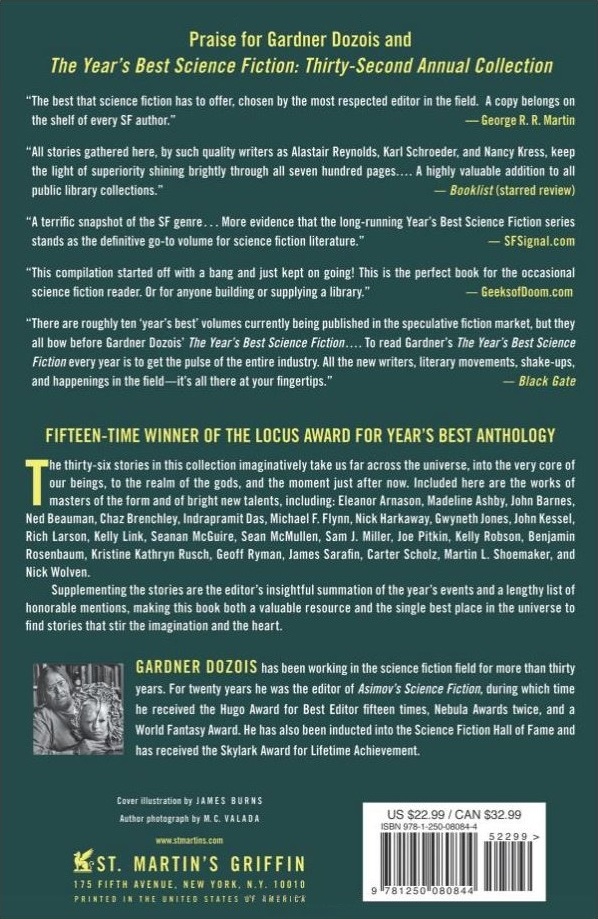
the-years-best-science-fiction-thirty-third-annual-collection-small the-years-best-science-fiction-thirty-third-annual-collection-back-small

When my copy of The Year’s Best Science Fiction: Thirty-Third Annual Collection arrived last week, I was pleased (and a little flattered) to see this quote on the back.

There are roughly ten Year’s Best volumes currently being published in the speculative fiction market, but they all bow before Gardner Dozois’ The Year’s Best Science Fiction… To read Gardner’s The Year’s Best Science Fiction every year is to get the pulse of the entire industry. All the new writers, literary movements, shake­ups, and happenings in the field ― it’s all there at your fingertips. ― Black Gate

That’s taken from my article on last year’s volume, The Year’s Best Science Fiction: Thirty-Second Annual Collection.

I’ve covered eight Best of the Year anthologies so far this year, from editors like Rich Horton, Jonathan Strahan, Neil Clarke, and John Joseph Adams. But the gold standard remains Gardner Dozois’ massive The Year’s Best Science Fiction, now in its 33rd annual volume.

Read More Read More

It’s Not Too Late to Sample Theresa DeLucci’s 5 Horror Reads for Summer

It’s Not Too Late to Sample Theresa DeLucci’s 5 Horror Reads for Summer

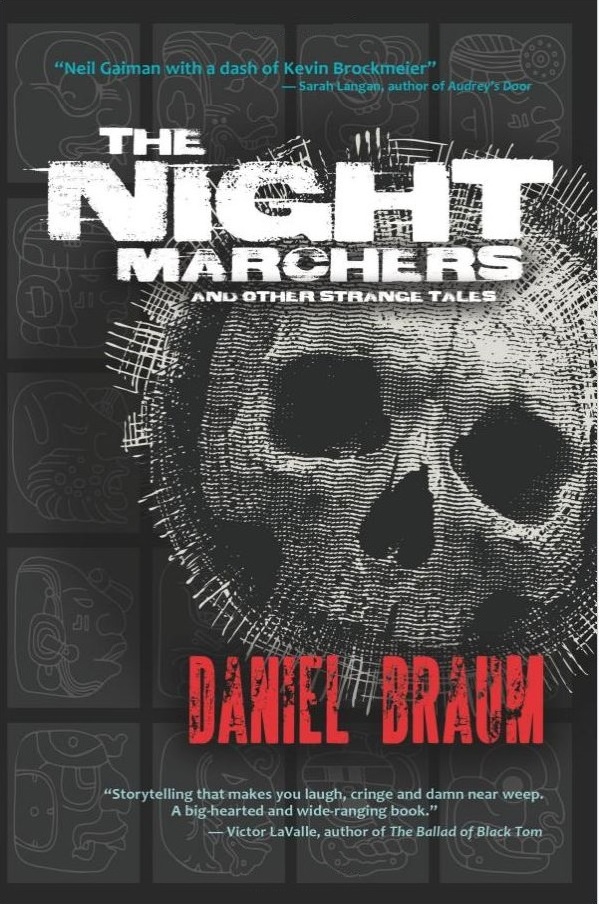
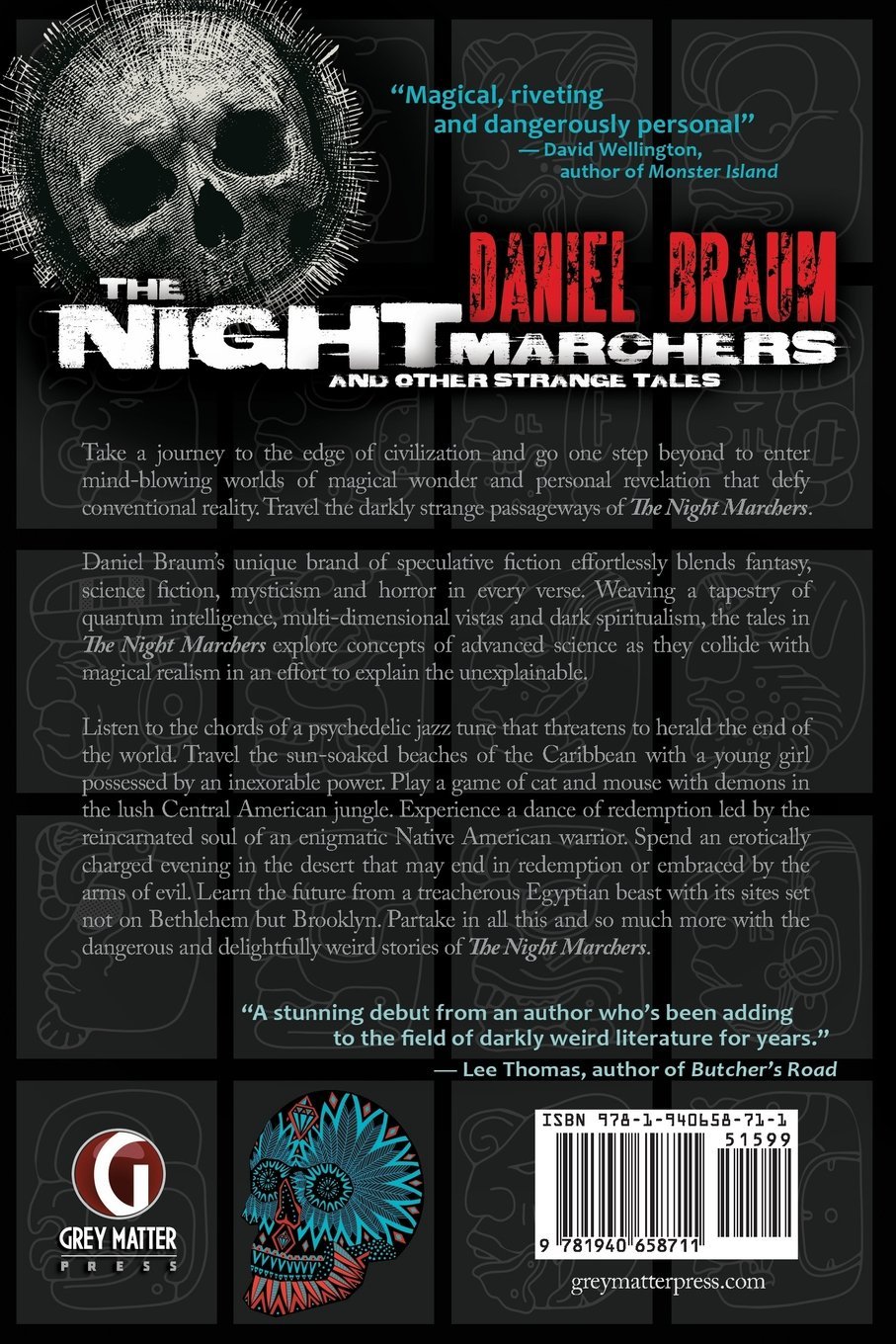
the-night-marchers-small the-night-marchers-back-small

The last day of summer is September 22. Which means I have four days left to keep the promise to myself I made when I read Theresa DeLucci’s Tor.com article Bright Days, Dark Fiction: 5 Horror Reads for Summer, and read at least two of her tantalizing selections. Top of my list right now are Michael Wehunt’s Greener Pastures and I Am Providence by Nick Mamatas. But I’m also considering Daniel Braum’s debut collection The Night Marchers.

Braum has a knack for describing the indescribable in extraordinarily accessible language. No mean feat when one is relating stories of extra-dimensional creatures and ancient, pissed-off gods. The plight of the underrepresented features prominently in a number of stories, like the title story (conquered gods of Hawaii,) “The Ghost Dance” (Native American spirits,) and “The Green Man of Punta Cabre” (ancient gods of Guatemala.) The latter story in particular was full of pathos as a missionary struggles to understand the true gods of his flock, and the ugly exploitation they suffer at the hands of civil war and invading corporation’s greed… My favorites were the desert horror of “The Moon and the Mesa” and the final story, one original to this collection, “The Sphinx of Cropsey Avenue.” A melancholy surrealist piece about riddles, misfortune, and familial duty finds a man, his fortune-telling girlfriend, and her son all linked as a found family, inextricably connected to a larger universal mystery steeped in ambivalence.

Read Theresa’s complete article here.

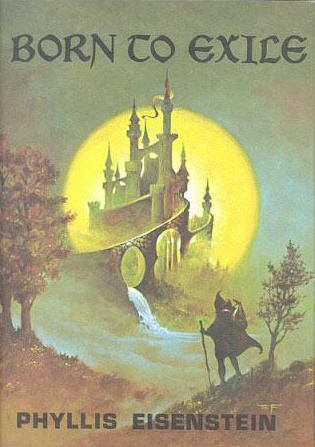
Much of a Muchness: Phyllis Eisenstein’s Born to Exile

Much of a Muchness: Phyllis Eisenstein’s Born to Exile

fabian-born_to_exile
First edition of Eisenstein’s Born to Exile
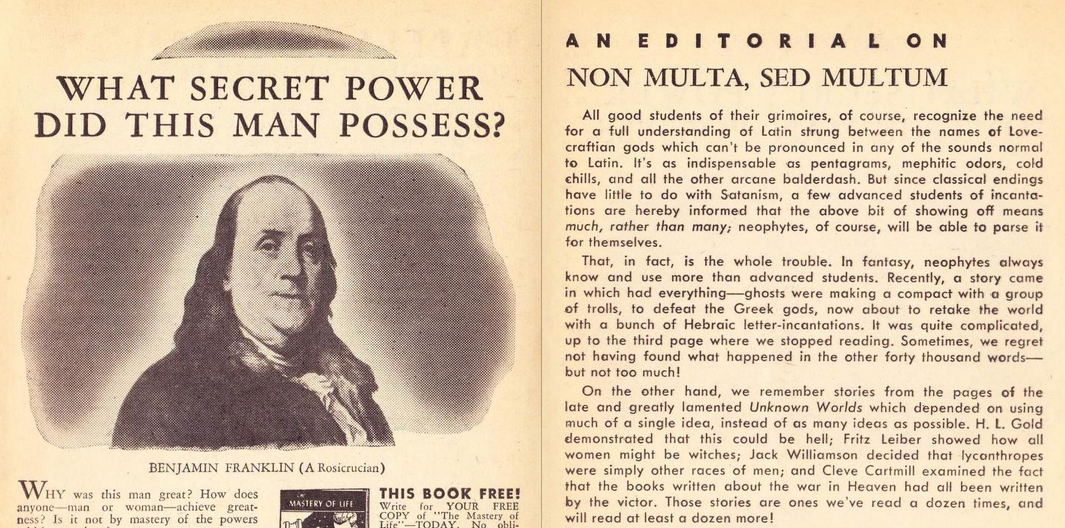
Fantasy Fiction, editorial, detail
Why was the editor of Fantasy Fiction getting stories full of mystical strangeness? We cannot tell.

Recently I was reading an editorial in Fantasy Fictionan old magazine from near the end of the pulp era. This is the kind of thing I’m apt to do, especially when I should be getting some work done, but in this case I was hooked by the title, which was one of Latin’s greatest hits about reading: NON MULTA, SED MULTUM (“not many things, but much of a thing”).

The message of the editorial was that the editor was seeing too many stories that overdid the number of fantastic elements: “Recently a story came in which had everything — ghosts were making a compact with a group of trolls to defeat the Greek gods, now about to retake the world with a bunch of Hebraic letter incantations.”

The editor felt this was bad and stopped reading on the third page. I say it sounds awesome and the editor should have been banished to the outer darkness where there shall be wailing and gnashing of teeth. But I’m of the opposite school of fantasy — the “more cowbell” school, you might call it (to allude to another classic). Some people will try to tell you that less is more, but “more cowbell” people insist that only more is more: more miracles, more fireballs, more talking squids in space.

The truth is that neither school is right or wrong; it’s just a question of what works in a given story. The advantage of the non multa, sed multum approach is that it allows the writer to explore the ramifications of a fantastic concept, and maybe work in a character or two, not to mention a more carefully detailed world.

Read More Read More

Future Treasures: The Ferryman Institute by Colin Gigl

Future Treasures: The Ferryman Institute by Colin Gigl

the-ferryman-institute-small the-ferryman-institute-back-small

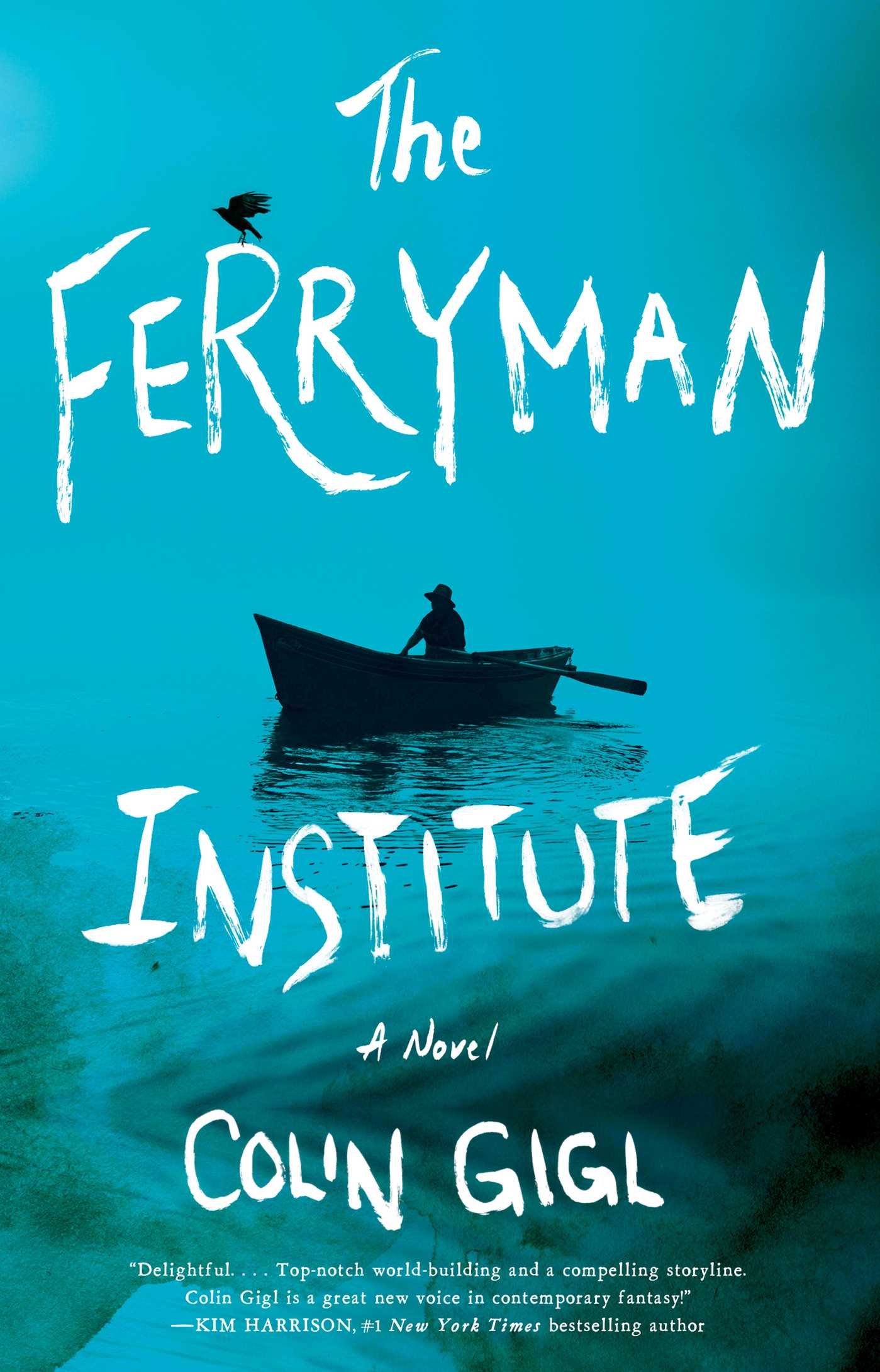
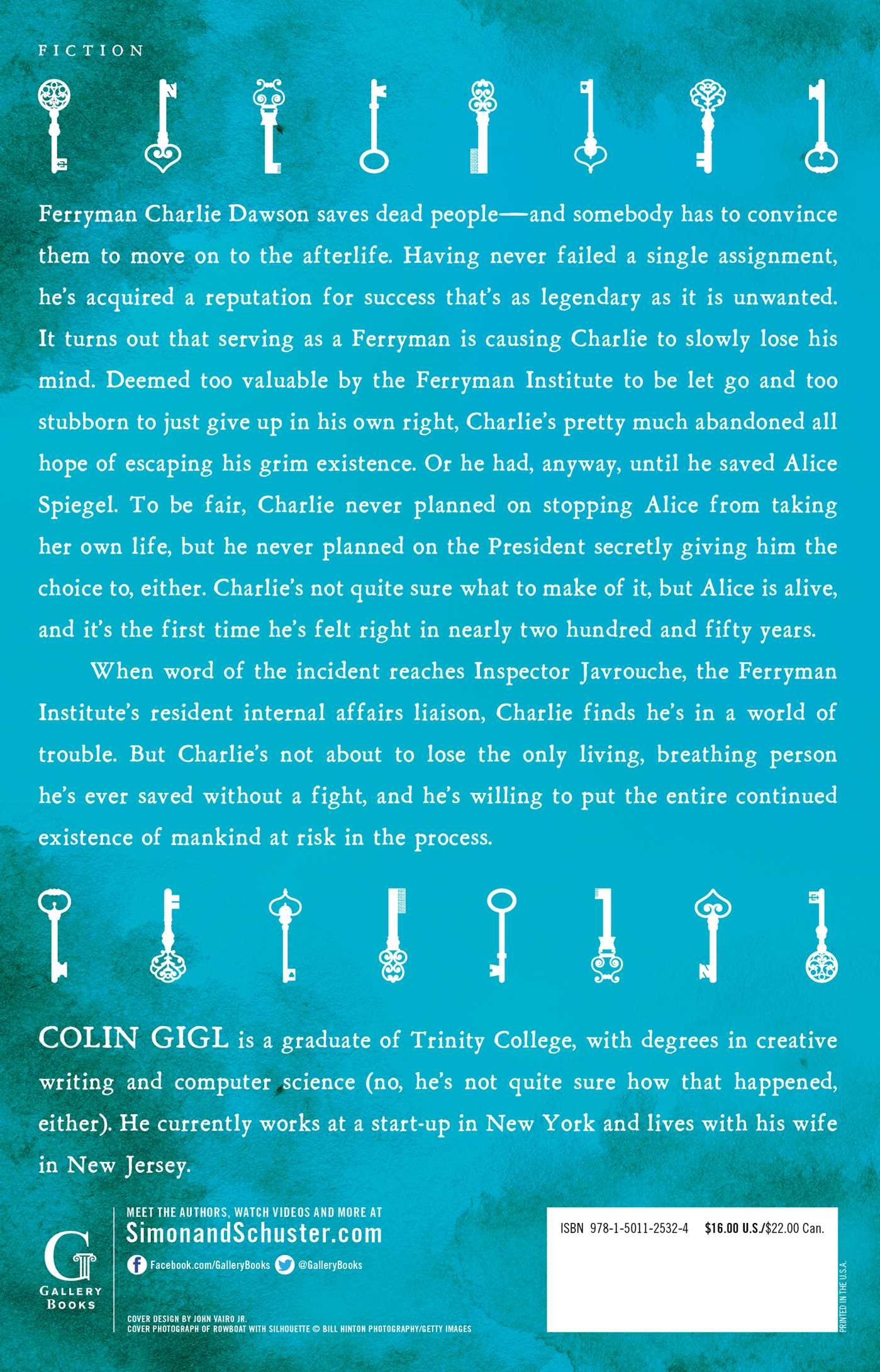
Here’s another debut fantasy with an original and intriguing premise: ferryman Charlie Dawson, condemned to transport souls to the underworld for all eternity, finds his existence unraveling after he prevents a young woman from committing suicide. And his life — such as it is — rapidly gets very complicated. In her review, Jaclyn Fulwood at Shelf Awareness writes,

Since the moment of his near-death more than two centuries ago, Charlie has been in the employ of the shadowy Ferryman Institute, guiding newly deceased souls through the departure process. When a Ferryman fails to convince a spirit to cross over, it becomes a vengeful ghost; Charlie Dawson, star of the Institute’s stable, never fails… In an age when the Institute competes with comparable organizations like the Sisters of Valhalla, Charlie is simply too good to let go. Supported by his refined mentor Cartwright, but stalked by internal affairs liaison Inspector Javrouche (the only person who actively despises him), Charlie limps through his malaise until he receives a special assignment from the president of the Institute — to see to the soul of one Alice Spiegel, a soon-to-be suicide — and is surprised with options: “Be a Ferryman or save the girl. Your choice.”

Gigl pays homage to Greco-Roman mythology while poking fun at corporate structure, but this fast-paced fantasy has its serious side, taking the real-life problem of getting stuck in a dead-end job to a more mystical but still weighty extreme. Gigl seems to realize his concept treads familiar ground; readers will find easy laughs here, but more introspection than in novels with similar premises.

The Ferryman Institute will be published by Gallery Books on September 27, 2016. It is 432 pages, priced at $16 in trade paperback and $7.99 for the digital edition. Click the images above for bigger versions, or read an excerpt at the Simon & Schuster website.

When a Trilogy Becomes a Sextuplet

When a Trilogy Becomes a Sextuplet

Michael J. Sullivan
Michael J. Sullivan

After the launch of his newest book a few weeks ago I asked writer Michael J. Sullivan if he could spare some time to talk about his writing process. In addition to being talented, Michael also happens to be one of the humblest and kindest writers it’s been my pleasure to meet. It’s my pleasure to turn the blog over to him.

I recently released Age of Myth, the first novel in my new series. It’s the one with the big tree on the cover. Since people ignore advice, and nearly everyone actually does judge books by their covers, it’s a good thing for me that trees appear to be popular (no pun on poplar intended… okay maybe it was).

My first series The Riyria Revelations is six books long. This new series was supposed to be a trilogy. You’ll note I used the word supposed in that sentence. When I write a novel it almost always tops off around the 100,000-130,000 word mark (around 375-450 pages). I don’t plan it that way — just happens. It’s the length I need to tell a self-contained tale. Apparently I also have a set number when it comes to how many books it takes to write a series. You guessed it, my trilogy grew to six books long (okay, you had help from the post’s title). No, the publisher didn’t make me expand it, and Peter Jackson had nothing to do with it. The story takes place during a great war, but the story stopped before all the conflicts were over. I had a suspicion readers weren’t going to like that. I didn’t either. Quitting before the war was 100% resolved felt unfinished.

Read More Read More

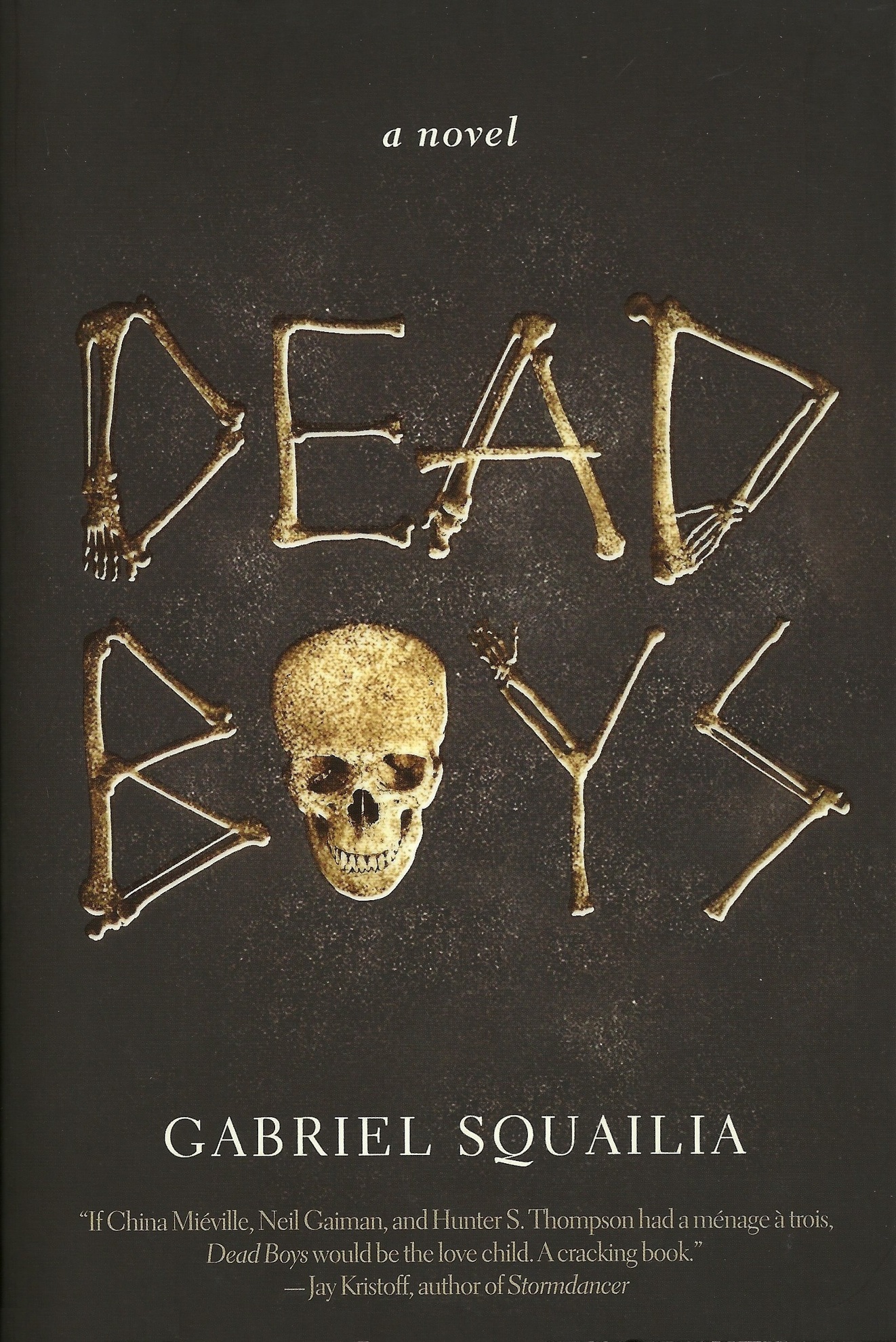
New Treasures: Dead Boys by Gabriel Squailia

New Treasures: Dead Boys by Gabriel Squailia

dead-boys-small dead-boys-back-small

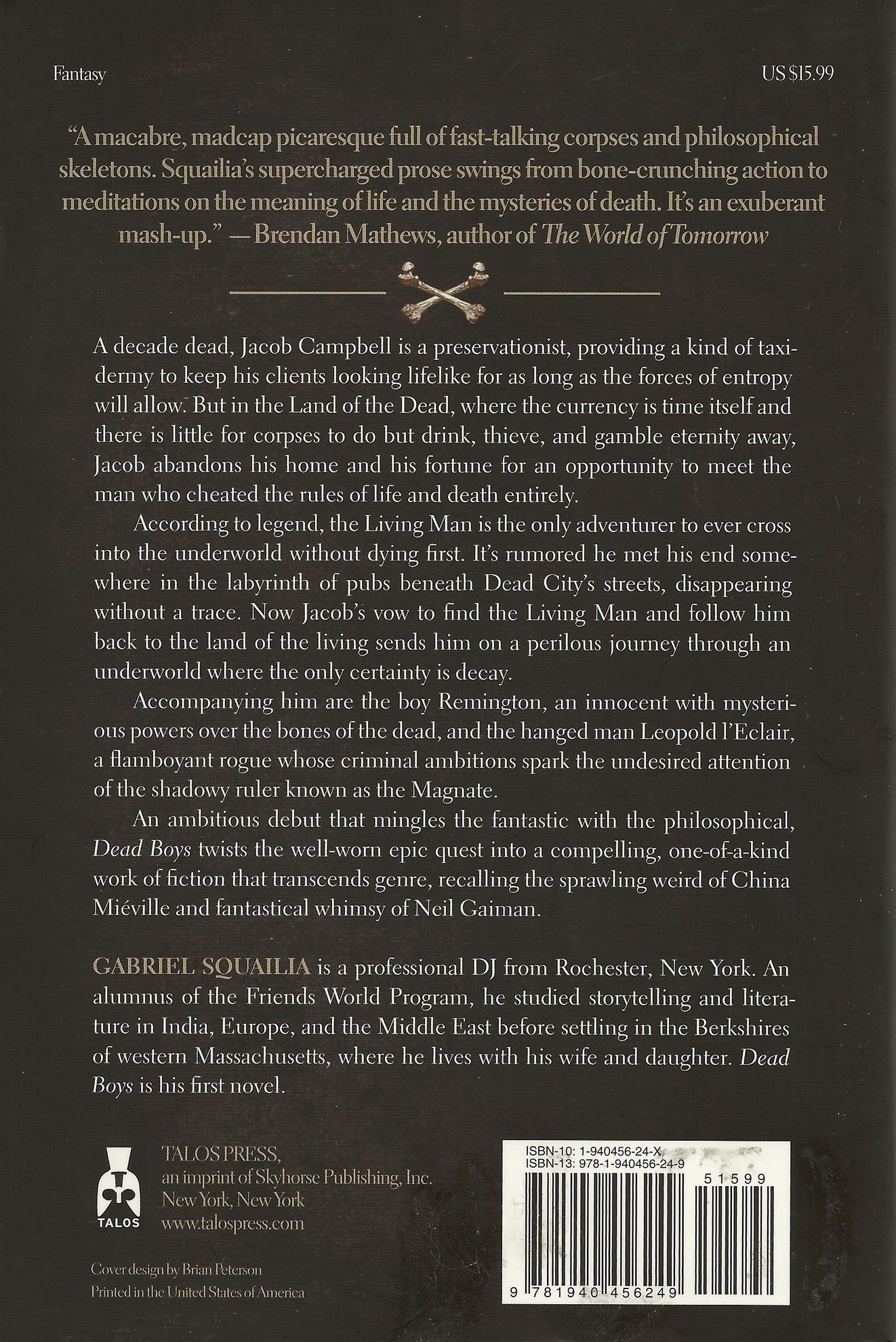
Sometimes I want to settle down with a straightforward adventure fantasy novel. And sometimes… sometimes I want something a bit more off the wall. Something like Gabriel Squailia’s debut novel Dead Boys, in which Jacob Campbell sets off across the Land of the Dead, accompanied by a boy with strange powers over bones, and the hanged man Leopold l’Eclair, searching for the Living Man, the only adventurer to cross the underworld while still alive.

Author Brendan Mathews calls it “A macabre, madcap picaresque full of fast-talking corpses and philosophical skeletons,” and Publishers Weekly praises it for its “Exquisite worldbuilding alongside a mix of humor and philosophy… This underworld is a fascinating city.” Sounds like just the thing I’m in the mood for.

Dead Boys was published by Talos on March 10, 2015. It is 278 pages, priced at $15.99 in trade paperback, and $9.99 for the digital edition. The cover was designed by Brian Peterson. Click the images above for bigger versions.

Exploring the Leonaur Science Fiction and Fantasy Catalog

Exploring the Leonaur Science Fiction and Fantasy Catalog

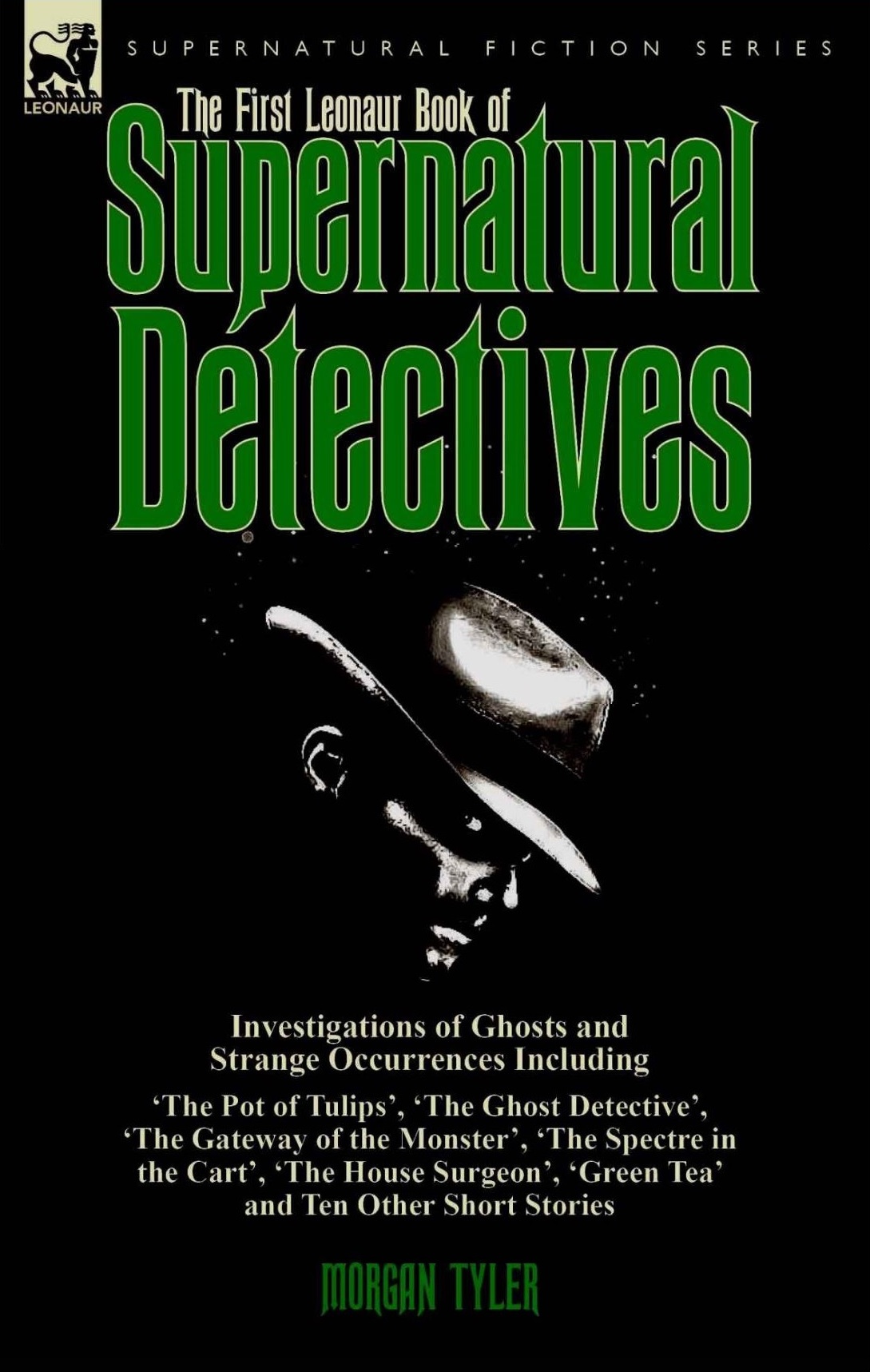
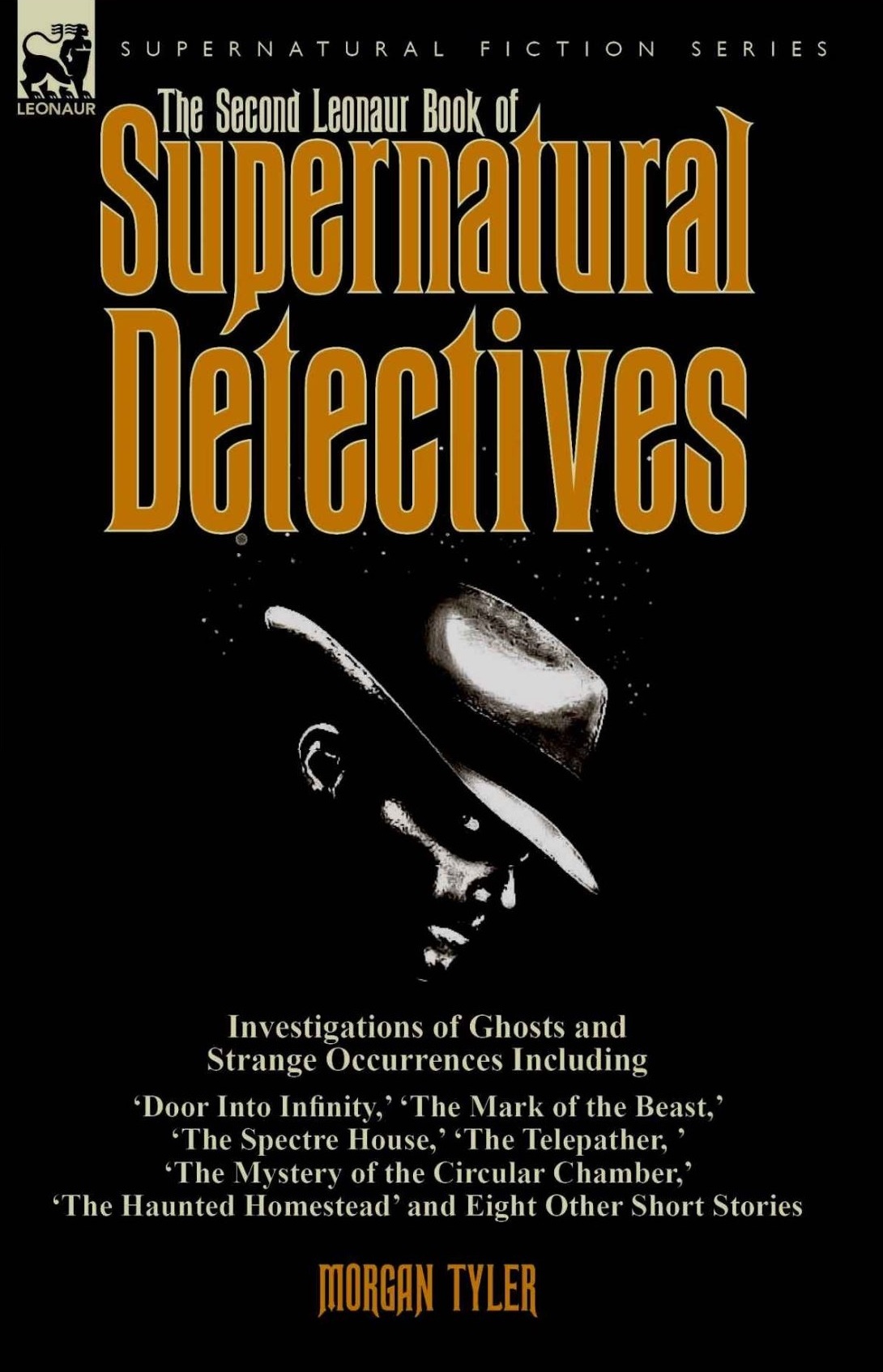
the-first-leonaur-book-of-supernatural-detectives-small the-second-leonaur-book-of-supernatural-detectives-small

I first discovered Leonaur Books when I went looking for in-print editions of Stanley G. Weinbaum, the pulp author who died in 1935. Leonaur has virtually his entire science fiction output in print in four handsome and affordable paperbacks. How cool is that? Shortly thereafter, I found Leonaur has a back catalog with enormous appeal to pulp fans, including the complete Arcot, Morey & Wade space opera stories of John W. Campbell, Jr, Guy Boothby’s Dr. Nikola tales, and collections by Homer Eon Flint, Arthur Conan Doyle, Robert E. Howard, Arthur Sellings, Rudyard Kipling, Jack London, and many others.

These guys are clearly serious about vintage fantasy and SF. But they don’t just do single-author collections. Over the past few years they’ve also assembled some top-notch original anthologies as part of their extensive Supernatural Fiction Series, like the two volume Leonaur Book of Supernatural Detectives, edited by Morgan Tyler, which contains “The Door Into Infinity” by Edmond Hamilton, a Carnacki tale by William Hope Hodgson, and stories by Joseph Sheridan Le Fanu, Richard Marsh, Gordon McCreagh, Enoch F. Gerrish, and two dozen more.

Read More Read More