Browsed by
Category: Books

A Dark and Eerie Journey: Melissa Albert’s The Hazel Tree

A Dark and Eerie Journey: Melissa Albert’s The Hazel Tree

The Hazel Wood Melissa Albert-small“My mother was raised on fairy tales, but I was raised on highways.”

Melissa Albert, via her narrator and protagonist Alice, opens The Hazel Wood with these words. The careful reader will latch on to that “but” right away, a particle suggesting that there is a great difference between the two — fairy tales and highways. Alice, raised by a single mother in a series of flights from bad luck, bad bosses and broken leases, believes there is. She is, at the book’s opening, a very typical protagonist in Young Adult fiction of the last sixty years. Outsider? Check. Troubled past? Check. Few or no friends? Check. Alice has recently undergone a drastic change in circumstances, as her mother has married a wealthy New York businessman. This has brought her a stable home, a stepfather who is at least trying to do right by her, and admission to an elite private school. There is a young man with a similar degree of wealth and a troubled past of his own.

And then things take a sharp turn off the well paved streets into new territory.

If you’re a fan of de Lint, Gaiman, McGuire or del Toro, the first line warned you. Alice has grown up on the run, not so much from mundane bill collectors but from her grandmother’s legacy. Althea Proserpine (again, a name that should set off alarm klaxons faster than a Klingon battle cruiser) was a reclusive author who wrote only one book, a set of “Tales from the Hinterlands.” Alice’s mother is dismissive of the book, loathes its cultish fans, and is insistent on forever staying far, far away from Althea’s home, The Hazel Wood.

And again, if you know fairy tales at all, you know what happens next.

No matter how hard a parent tries to keep a thing hidden from her child, it will come calling. So back onto the highway Alice goes, to find the truth of her own origins, of the mysterious book, of its legacy.

Read More Read More

The Lonely Hardcover: The Golden Road, edited by Damon Knight

The Lonely Hardcover: The Golden Road, edited by Damon Knight

The Golden Road Damon Knight-small

I’ve heard it said many a time that online shopping will never replace a good bookstore, because you can’t make those delicious unexpected discoveries online.

Well, that certainly hasn’t been my experience. My most recent example? Damon Knight’s 1974 fantasy reprint anthology The Golden Road: Great Tales of Fantasy and the Supernatural, which I found on eBay while bidding on a small collection of British fantasy paperbacks from the same seller.

Now, I’ve never even heard of The Golden Road, and I most definitely stumbled on it while I wasn’t looking for it, so it certainly counts as a delicious and unexpected discovery. Plus, I won it for a measly five bucks plus shipping, so it’s sort of like making a delicious and unexpected discovery at a neighborhood garage sale, when your neighbor has no idea how to haggle.

Why’d I bid on a book I’d never heard of? Partly because of Damon Knight’s sterling rep, which he earned with numerous highly regarded anthologies, including 21 volumes of the legendary Orbit. But also because, wow, I really had never heard of this thing, and just look at it. It’s 44 years old and it looks brand new. Plus, it’s 447 pages long, and I bet it could keep me entertained for an entire weeklong cruise to Ecuador.

Read More Read More

The Barnes & Noble Sci-Fi & Fantasy Blog on the Best Science Fiction & Fantasy Books of April 2018

The Barnes & Noble Sci-Fi & Fantasy Blog on the Best Science Fiction & Fantasy Books of April 2018

From Darkest Skies Sam Peters-small Unbury Carol Josh Malerman-small Time Was Ian McDonald-small

April is maybe the best month for new book releases so far in 2018. There’s a plethora of new titles I want to feature — and read — and I barely have time to keep tabs on them all. Jeff Somers at the Barnes & Noble Sci-Fi & Fantasy Blog isn’t helping the situation by highlighting over two dozen of the best new releases, including a fair number I was completely unaware of. Here’s a few of his more interesting selections.

From Darkest Skies by Sam Peters (Gollancz, 352 pages, $26.99 hardcover/$13.99 trade paperback, April 10)

Detective tropes are given a techno-philosophical twist in this sci-fi mystery. Two hundred years in the future, an alien race known as the Masters have terraformed Earth and spread humanity into the universe, settling us on dozens of colony worlds. Keon Rause is a government agent returning to service on the planet Magenta after a five year leave of absence while he mourned his wife, a fellow agent killed in a terrorist explosion while investigating an unknown lead. Rause isn’t alone; he’s come back with an AI version of his wife, a digital reconstruction crafted from every trace of data she left behind — and crafted with the purpose of helping him figure out how and why she really died. Cashing in every favor he has left from his previous life, he finds himself following in her footsteps even as he struggles with his feelings for the simulacrum he’s created. It all leads to an impossible choice when he and his team stumble onto a disaster in the making: save the planet and lose his wife forever, or let something terrible happen and solve the mystery?

From Darkest Skies is Sam Peters’ debut novel. The sequel, From Distant Stars, is already scheduled to arrive on August 21.

Read More Read More

My 300th Black Gate Post: Why I Write About What I Write About

My 300th Black Gate Post: Why I Write About What I Write About

cushing02 godzilla-2014-1108x0-c-default steve-reeves-and-sylva-koscina-in-hercules-pietro-francisci-1958 john-carpenter-bw j allen st john tarzan

This is my three hundredth post at Black Gate. This year also marks the tenth anniversary of my first post as a regular blogger. I remember when John O’Neill first invited me to be a part of this project, back when none of us had any idea where it would go — I certainly didn’t think it would last for a decade and that I’d still be around. Or that John would win a World Fantasy Award for it. Yet here the site is, ten years later and a World Fantasy Award richer, and I still can’t believe people show up to read what I have to say about Hercules movies, Godzilla, and Tarzan. It’s humbling to be part of a site with such a wealth of amazing material, great contributors, and so many dedicated and intelligent readers.

I’ve changed enormously as a nonfiction writer over these ten years, and most of the changes happened because of Black Gate. When I started my regular posts, I had only a blurry vision of the sort of blogger I wanted to be. The reality has turned out different because I made interesting discoveries about my own tastes along the way: specifically, what it is that I most enjoy writing about. I once imagined I’d write primarily about fantasy literature, Conan pastiches, and writing techniques. Now I write about monster movies, John Carpenter, and Edgar Rice Burroughs.

To mark my personal anniversary, I’m going to offer an apologia of sorts — an explanation of why I write about the topics I write about most frequently on Black Gate. None of these were in the plan on Day 1, and I’m probably the person who’s most curious about how these subjects turned into my main nonfiction focus.

Read More Read More

New Treasures: Blackfish City by Sam J. Miller

New Treasures: Blackfish City by Sam J. Miller

Blackfish City-small Blackfish City-back-small

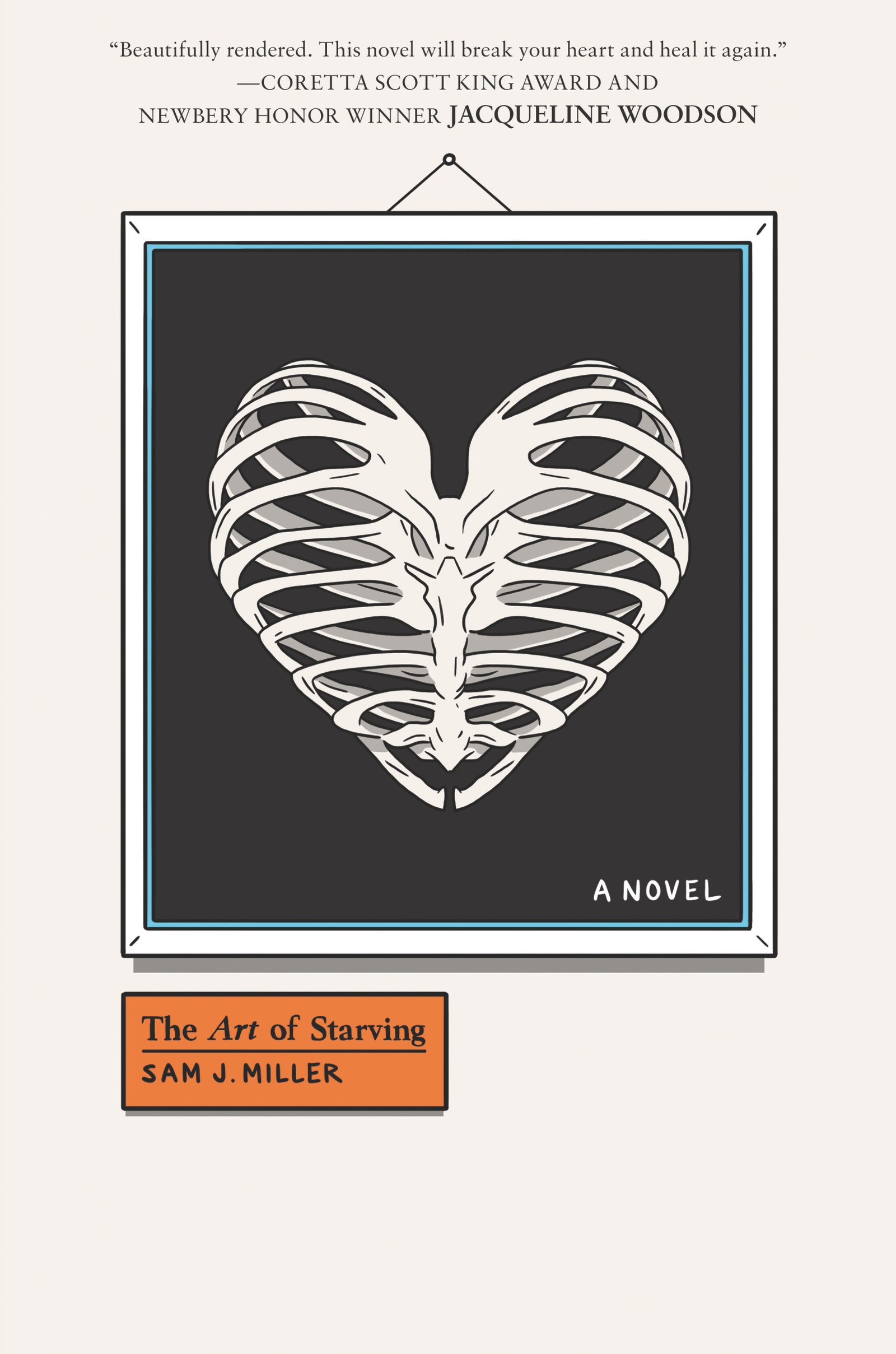
Sam J. Miller’s short stories have been nominated for the Nebula, World Fantasy, Sturgeon, and Locus Awards. His debut novel The Art of Starving (2017), a YA tale about a boy who discovers that starving gives him superpowers, was nominated for the Andre Norton Award, and was an honorable mention for the 2017 Tiptree Award. John DeNardo selected it as one of the Best Bets for SF, Fantasy and Horror in July. His new novel Blackfish City is one of the most anticipated SF books of the year. It arrived in hardcover this week.

After the climate wars, a floating city is constructed in the Arctic Circle, a remarkable feat of mechanical and social engineering, complete with geothermal heating and sustainable energy. The city’s denizens have become accustomed to a roughshod new way of living, however, the city is starting to fray along the edges — crime and corruption have set in, the contradictions of incredible wealth alongside direst poverty are spawning unrest, and a new disease called “the breaks” is ravaging the population.

When a strange new visitor arrives—a woman riding an orca, with a polar bear at her side — the city is entranced. The “orcamancer,” as she’s known, very subtly brings together four people — each living on the periphery — to stage unprecedented acts of resistance. By banding together to save their city before it crumbles under the weight of its own decay, they will learn shocking truths about themselves.

Blackfish City is a remarkably urgent — and ultimately very hopeful — novel about political corruption, organized crime, technology run amok, the consequences of climate change, gender identity, and the unifying power of human connection.

Blackfish City was published by Ecco on April 17, 2018. It is 336 pages, priced at $22.99 in hardcover, and $11.99 in digital formats. The cover was designed by Will Staehle. Read a sample chapter at the Orbit Books website.

In 500 Words or Less: Gods, Monsters and the Lucky Peach by Kelly Robson

In 500 Words or Less: Gods, Monsters and the Lucky Peach by Kelly Robson

Gods Monsters and the Lucky Peach-smallGods, Monsters and the Lucky Peach
By Kelly Robson
Tor (240 pages, $14.99 paperback, $3.99 eBook, March 2018)
Cover by Jon Foster

The other night I was looking out my window at the light snowstorm cascading onto Ottawa, after dealing with freezing rain and power outages, and trying very hard not to wonder what the world is going to look like in fifty years. I mean, we all ponder it sometimes, right? Maybe half the planet is underwater. Maybe we’ve developed solid, widespread renewables. Maybe we’re making plans to go somewhere else. Maybe we’ve moved everyone into skyscrapers like Kim Stanley Robinson suggests, to let nature rebuild?

Writers like to focus on what the near-future might look like a lot, which means it’s tough to come up with a unique take on it – and that makes Kelly Robson’s Gods, Monsters and the Lucky Peach so impressive. (How’s that for a segue?!) In her novella, humanity isn’t just rebuilding from past ecological disasters – we’ve also figured out time travel, which makes long-term restoration projects suddenly less interesting. The corporate stranglehold in both arenas is just one piece of a world that feels like it could be decades ahead of us, instead of centuries. Between vivid, realistic technology like “fakes” for handling instant messaging and designer prosthetics, and slang nicknames like “hells” for underground habitats and “fat babies” for children born in creches, Robson gives us something instantly relatable but also fresh. (All of that sounds very review-y in its lingo, but it’s 100% true!)

On top of that, Robson gives us an octogenarian protagonist, Minh, who struggles with anything that isn’t done “her way” and is balanced with a youthful counterpart who’s just as stubborn and determined to succeed. There’s no preachiness about age in either direction, though; instead, the story hinges on Minh realizing things about herself and working with a team, as they face the very real dangers of 2024 BCE. That overlap between past and future is where the truly excellent tension-building presents itself, as the story jumps between Minh and her team preparing for their journey and the perspective of a Mesopotamian king, Shulgi, whose people are troubled by new stars and bizarre monsters. Knowing that the latter is obviously a bunch of time travelers and that things are going to horribly wrong is only half the fun; the rest is when the two timelines sink up, and you realize exactly where Minh and her team fit into Shulgi’s story.

Read More Read More

Birthday Reviews: Peter S. Beagle’s “King Pelles the Sure”

Birthday Reviews: Peter S. Beagle’s “King Pelles the Sure”

Cover by Lisa Snelling

Peter S. Beagle was born on April 20, 1939.

Beagle received the Nebula Award and Hugo Award for his novelette “Two Hearts,” set in the same world as his classic novel The Last Unicorn. He received the Mythopoeic Award in 1987 for his novel The Folk of the Air and in 2000 for the novel Tamsin.  His collection The Rhinoceros Who Quoted Nietzsche and Other Odd Acquaintances received the Grand Priz de l’Imaginaire and his story “El Regalo” received the WSFA Small Press Award. He has been nominated for the World Fantasy Award seven times, and in 2011 received their Lifetime Achievement Award. In about a month, Beagle will be inducted as a SFWA Grand Master at the 2018 SFWA Nebula Conference in Pittsburgh, PA.

“King Pellas the Sure” was first published in the chapbook Strange Roads, which contained three original stories by Beagle. David G. Hartwell and Kathryn Cramer included the story in Year’s Best Fantasy 9 and Rich Horton included it in The Year’s Best Science Fiction and Fantasy, 2009 Edition. Beagle has included the story in two of his own collections, We Never Talk About My Brother and Mirror Kingdoms: The Best of Peter S. Beagle.

“King Pelles the Sure,” focuses on the monarch of an infinitesimal kingdom who yearns for the glory that he sees warrior kings attaining. Despite the protestations of his Grand Vizier, who has already seen what war really does, as opposed to the glorification of war that is the stuff of bards and legend, King Pelles insists that they arrange to be invaded by one of their neighbors.

In this strangely manufactured war, Beagle’s story recalls the 1955 Leonard Wibberley novel The Mouse That Roared, although Beagle’s story is much less satirical than Wibberly’s. After the war begins, King Pelles finds that no matter what his intentions, once the dogs of war have been loosed, they can not be effectively reined in. The tale could have been a trite fairy tale, but the manner in which Beagle teaches Pelles a variety of lessons makes it a memorable fable.

Reviewed in its original publication in the collection Strange Roads, by Peter S. Beagle, DreamHaven, 2008.

Read More Read More

Something Sinister in Savertown: Erica Satifka’s Stay Crazy

Something Sinister in Savertown: Erica Satifka’s Stay Crazy

Stay Crazy Erica L Satifka-small Stay Crazy Erica L Satifka-back-small

If you missed Erica Satifka’s Stay Crazy, her debut psychological thriller from a couple year back, not to worry. There’s a lot going on, all the time, and it happens to the best of us. But the fact that it won the British Fantasy Award for best newcomer is perhaps reason enough bring it to your attention. Satifka has crafted a tale of mental illness and weirdness set against the deeper malignancy of a post-industrial Midwest and despair, tied up nicely by some frustratingly relatable inter-dimensional entities.

There’s a long tradition in fiction and myth that those who are not entirely sane nonetheless have perceptions, resources, and even abilities beyond those of ordinary folk. Insanity is sometimes the price of vision. Characters of Philip K. Dick for instance, who’s work Satifka’s has been compared with, immediately spring to mind. There are similarly lots of authors who play with the idea of the unreliable narrator, something that Gene Wolfe does to great effect. How is the narrative itself subverted when the reader can’t trust the person telling the story, or the person telling the story can’t trust their own perceptions?

Satifka’s Stay Crazy plays into both these questions by building the narrative around Emma, an erstwhile college student whose schizophrenia has cost her the chance to escape a dying Midwestern town (on economic life-support by a giant Walmart-esque superstore called Savertown, USA). The reader joins Emma, who comes to herself in a mental hospital after a psychotic break, returning home, reconciling herself to her condition and trying to put her life back together with her mother and a Fundamentalist Christian younger sister.

Read More Read More

Birthday Reviews: Adrian Rogoz’s “The Altar of the Random Gods”

Birthday Reviews: Adrian Rogoz’s “The Altar of the Random Gods”

Almanahul literar
Almanahul literar

Adrian Rogoz was born on April 19, 1921 in Bucharest Romania, and died on July 28, 1996. He was a founding member of the first science fiction fan club in Romania, SF Cenacle. In addition to his own work, Rogoz translated works by Ivan Efremov and Stanislaw Lem into Romanian.

“The Altar of the Random Gods” was originally published in Almanahul literar in 1970 as “Altarul zeilor Stohasrici.” Its English translation first appeared in Franz Rottensteiner’s anthology of European science fiction View from Another Shore, and has been included in several reprints of that volume. The story has also been translated into French, Dutch, Hungarian, German (twice), Serbian, and Italian.

In this translation of “The Altar of the Random Gods,” by Matthew J. O’Connell, Rogoz describes the trip from Mobile to Huntsville Alabama via a superfast highway of computer controlled cars. Homer is making the journey and looking forward to seeing Barbara at the end of it when a freakish malfunction occurs.

The story is interesting not because of its predictions about technology or the way Homer takes the superhighspeed transportation for granted, but rather because of the way it feels like a mixture of science fiction and fantasy. The first half of the story, up until the collision, is clearly in the realms of science fiction, tothe point where Rogoz’s descriptions (or at least the translations of those descriptions) feels clichéd.

Following the accident, the story moves more into the realm of fantasy, with Homer meeting three gods, who may well be aliens, who explain to him what has happened. Rather than speak in the terms gods in fantasy stories usually use, the gods in “The Altar of the Random Gods” speak in terms of probability, using mathematics to tell Homer what has happened to him and what he can expect for his life going forward.

Read More Read More

Future Treasures: All the Fabulous Beasts by Priya Sharma

Future Treasures: All the Fabulous Beasts by Priya Sharma

All the Fabulous Beasts-small All the Fabulous Beasts-back-small

Michael Kelly’s Undertow Publications has introduced me to some truly fabulous writers in the nine years it’s been around, including V. H. Leslie, Eric Schaller, Sunny Moraine, Conrad Williams, and others. Their upcoming volume All the Fabulous Beasts, arriving in trade paperback on May 1st, looks like a beautiful addition to their catalog. It’s the debut collection from Priya Sharma, gathering 16 tales of “love, rebirth, nature, and sexuality… A heady mix of myth and ontology, horror and the modern macabre.”

Priya Sharma is a UK writer and doctor. Her short story “Fabulous Beasts” won a British Fantasy Award, and she has appeared in Paula Guran’s The Year’s Best Dark Fantasy & Horror, Ellen Datlow’s The Best Horror of the Year, Jonathan Strahan’s The Best Science Fiction and Fantasy of the Year, Black Feathers, Nightmare Carnival, Interzone, Black Static, Tor.com, Nightmare magazine, and many other fine venues.

If you’re not already familiar with Undertow, All the Fabulous Beasts would make a great introduction. But if you can’t wait until May 1st, allow me to suggest eight earlier volumes from Undertow we’ve reviewed right here at Black Gate, including their flagship publications Shadows & Tall Trees (7 issues, and a finalist for the British Fantasy Award, World Fantasy Award, and Shirley Jackson Award), and the marvelous Year’s Best Weird Fiction (4 volumes).

Read More Read More