Browsed by
Category: Blog Entry

A (Black) Gat in the Hand: Back Deck Pulp #1

A (Black) Gat in the Hand: Back Deck Pulp #1

Gat_GooseDavis

“You’re the second guy I’ve met within hours who seems to think a gat in the hand means a world by the tail.” – Phillip Marlowe in Raymond Chandlers’ The Big Sleep

(Gat — Prohibition Era term for a gun. Shortened version of Gatling Gun)

Of course, we’re all friends here at Black Gate. But if you’re my friend on Facebook, you have probably seen at least one of my Back Deck Pulp posts (I mean; how could you miss them?). I am reading a TON of pulp stories and also reading info on pulpsters for A (Black) Gat in the Hand. And when the weather permits, I’ve been sitting on my very nice back deck and taking a picture with the story of the moment. I include a bit of info on the picture’s story or author or magazine issue. Thus, ‘Back Deck Pulp.’

I think they’re neat, myself. And most of the topics I cover will end up being A (Black) Gat in the Hand posts. Friend me on FB and see what I’ve been writing about.

Well, I started collecting all those posts and discovered that I’ve already done enough for at least two Black Gate essays. So, here’s the first. It’s very informal, and it doesn’t read like a normal post: think of it like an anthology of short stories. There’s no continual narrative – But there’s some good pulp info! I made very minimal changes and most read exactly as the original FB post did.

NORBERT DAVIS/BEN SHALEY

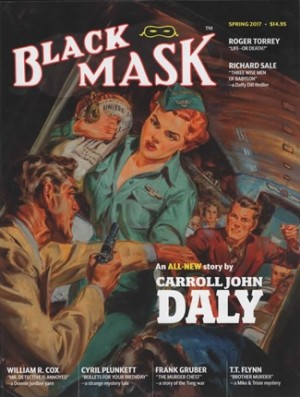
Today’s Back Deck Pulp is Norbert Davis’ “Red Goose,” the first of his two Black Mask stories featuring PI Ben Shaley.

When Raymond Chandler began writing for the pulps, he said that “Red Goose” impressed him more than any other tale he had read. Years later, he said he had not forgotten it.

Read More Read More

Gibralfaro Castle in Málaga, Spain

Gibralfaro Castle in Málaga, Spain

20180627_180346

Last week I wrote about the Alcazaba Castle in Málaga, Spain. As I mentioned, it’s only one of two castles protecting the Mediterranean harbor. Up the hill from the Alcazaba, on top of the Gibralfaro Mountain, is Gibralfaro Castle.

The summit was originally home to a Phoenician lighthouse, hence the name in both Arabic and Greek, gebel-faro meaning “rock of the lighthouse”.

In 929 AD, Abd-al-Rahman III, Caliph of Cordoba, built the first castle here. It was later expanded in the 14th century by Yusef I, Sultan of Granada. He also connected this fort to the Alcazaba by adding a double wall down the slope to make one continuous fortification. You have to buy a ticket for each, though. Poor old Yusuf is spinning in his grave.

Read More Read More

July Short Story Roundup

July Short Story Roundup

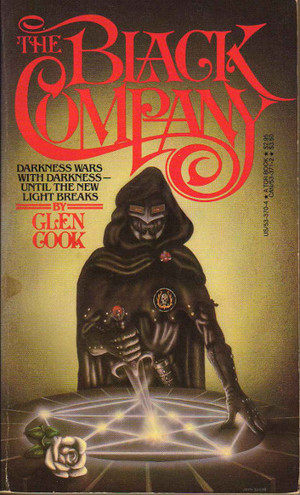
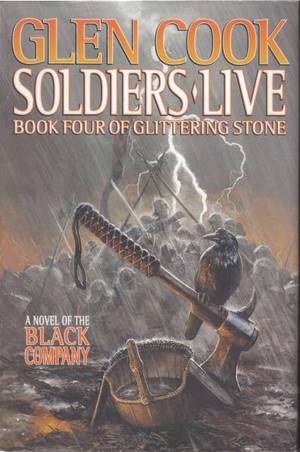
oie_1083736EA4SAq7NIt’s that time again, folks. I’m taking a break from my ongoing reread of Glen Cook’s Black Company (6 books down, 4 to go!) to give you an update on the latest heroic fantasy short fiction. First, as usual, there’re the monthly two stories from Curtis Ellett’s Swords and Sorcery Magazine. The other source of stories this July is a collection from Howie Bentley. Most of the stories are reprints I’ve reviewed before, but there are some new things I’ll tell you about.

Issue 77 of Swords and Sorcery Magazine kicks off with “Gina,” the fiery (and bloody) story of a deadly young woman with the ability to control elementals. It’s by Gustavo Bondoni, an author whose work I’ve reviewed in the past. The story kicks off just as Gina is about to be “sacrificed to the fire-demons of Hell’s Gate.” Unfortunately for her captors, just as she steps off the precipice into the volcano’s mouth, they realize she is not the naked and defenseless slave they believe her to be.

Gina looked down again and smiled. She said a few words under her breath. Out loud she said: “Haggan,” and took that final step forward.

She did not fall.

The guard’s footsteps rang out behind her as the man realized that something had gone wrong and rushed towards her to correct it. Not only was he much too late, but he was also running in the wrong direction. Any intelligent person living in a city as infested with magicians as Hell’s Gate would have taken one look at the floating woman and run the other way.

Sadly, dungeon-keepers were not selected for their intelligence. The man kept coming as Gina turned back the way she’d come. A contemptuous flick of her arm brought a tongue of fire from the depths. A gesture sent it towards the rushing defender, who could do nothing but look down at his chest in horror as a searing lance thicker than his arm penetrated his sternum and emerged from his back.

Bondoni packs a lot of back story into this short work, as well as some solid, if not altogether surprising, character development. It successfully walks the line between feeling like something ripped from a longer work and a standalone effort. It manages to feel like an important incident from the larger story of Gina’s life, yet still work as a completely discrete story; something that makes me, as a reader, very happy.

Read More Read More

I Saw It On TV – Didn’t I?

I Saw It On TV – Didn’t I?

Mash 1MASHjpgLast time I talked about film remakes, especially those revolving around an iconic character. Today I’d like to take a look at remakes of TV series. Off the top of my head I think these fall into two categories, a film remade as a TV series, or a TV series remade as a TV series.

The most successful series made from a movie has to be M*A*S*H (1972) remade from the movie of the same name that came out in 1970. If I remember correctly, the series – based on the exploits of a mobile army surgical hospital during the Korean war – ran for 10 seasons, or 8 years longer than the actual war. This series was so popular it’s still in reruns on regular network television. After the first couple of seasons it didn’t bear much more than a casual resemblance to the original film, but that’s not really the point. It was a successful transformation.

Read More Read More

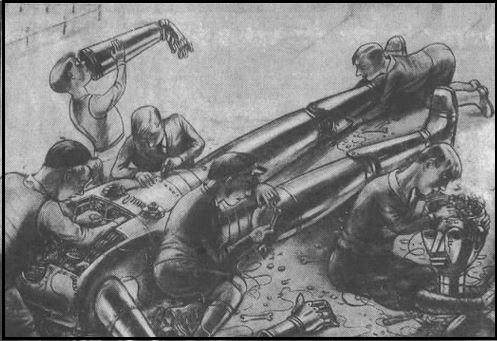
If – Intelligent Robots Are Achieved

If – Intelligent Robots Are Achieved

Astonishing Stories February 1940 cover Jack Binder artist

Yanos Binder was born in central Hungary in the days of the Austro-Hungarian empire. An older sister Terez was born in 1901, Yanos in 1902, Earl in 1904, and Milahy in 1905. Their father moved to the U.S. in 1906, earning enough money to send for the rest of family in 1910. A final child, Otto, was born in 1911.

Earl and Otto started collaborating as science fiction writers in 1932, disguising themselves only slightly as E and O – Eando – Binder. Earl soon dropped out, but Otto kept the pseudonym for almost all his sf work, including the seminal Adam Link, Robot series, whose first story is the should-be-better-known “I, Robot” from 1939. He went on to write thousands of comic book stories, including most of the Captain Marvel family stories in the 1940s.

Read More Read More

The Book of Lady: Dreams of Steel by Glen Cook

The Book of Lady: Dreams of Steel by Glen Cook

oie_321434XbY3j2z6

Many months have passed. Much has happened and much has slipped from my memory. Insignificant details have stuck with me while important things have gotten away. Some things I know only from third parties and more I can only guess. How often have my witnesses perjured themselves?

It did not occur to me, till this time of enforced inactivity befell me, that an important tradition was being overlooked, that no one was recording the deeds of the Company. I dithered then. It seemed a presumption for me to take up the pen. I have no training. I am no historian nor even much of a writer. Certainly I don’t have Croaker’s eye or ear or wit.

So I shall confine myself to reporting facts as I recall them. I hope the tale is not too much colored by my own presence within it, nor by what it has done to me.

With that apologia, herewith, this addition to the Annals of the Black Company, in the tradition of Annalists before me, the Book of Lady.

-Lady, Annalist, Captain

Dreams of Steel (1990) picks up right after the end of the previous book, Shadow Games — which means it picks up in the middle of utter disaster. Under the command of Captain Croaker, the invigorated Black Company had marched south to contend with the armies of the Shadowmasters. In a stunning series of victories they crushed the Shadowmasters’ forces and by coup de main took the fortified city, Dejagore. The unexpected arrival of massive reinforcements under the Shadowmaster Moonshadow proved too much. Both Lady and Croaker appeared to be killed in the battle that followed. Under Lieutenant Mogaba the survivors retreated into the city and were besieged.

In the last pages it was revealed Croaker wasn’t dead. He had been taken prisoner by Lady’s sister, Soulcatcher. This is very bad. She was Lady’s and the Company’s great nemesis and she had, or so everyone thought, been killed nearly twenty years before, at the end of the first book, The Black Company. And when I say killed I mean killed, complete with her head chopped off. Now she’s back with plans for vengeance against her sister, primarily by separating her from Croaker, the only man Lady’s ever loved.

Lady awakens on the battlefield outside Dejagore surrounded by the dead and the dying. Fortune seems to shine on her and she escapes being discovered by looters. Later she meets some more looters, a pair of men from two different religious groups, an unlikely alliance in the region around Taglios. The first is Ram, a huge young man; the second, a tattered, wizened little man called Narayan Singh. She overhears them speaking of “the Year of Skulls” and “the Daughter of Night.” When she asks them who they are, they claim to be only deserters from the Taglian army. Despite her suspicions, Lady takes them along with her as she sets off to find any survivors of the Black Company not besieged in Dejagore. With Croaker apparently dead, she is set to declare herself Captain.

Gradually, Lady discovers that her new companions are Deceivers, members of a cult dedicated to the worship and freeing of Kina, the goddess of death. By killing enough people, supposedly freeing them from the wheel of reincarnation, they will usher in the Year of Skulls and free their divine mistress. In Lady, they seem to see their prophesied messiah, the Daughter of Night. Lady, a firm unbeliever in any and all deities, sees a point of leverage with them. She begins to consolidate her power in the face of uncertain loyalty from her soldiers, uncertain motives from her employer, the Prahbrindrah Drah of Taglios, and the misogyny of the powerful priests of Taglios’ three major religions, using the Deceivers as a hidden and a not so hidden hand.

Read More Read More

A (Black) Gat in the Hand: D. L. Champion’s Rex Sackler

A (Black) Gat in the Hand: D. L. Champion’s Rex Sackler

Gat_SacklerDeath

“You’re the second guy I’ve met within hours who seems to think a gat in the hand means a world by the tail.” – Phillip Marlowe in Raymond Chandler’s The Big Sleep

(Gat — Prohibition Era term for a gun. Shortened version of Gatling Gun)

Only T.T. Flynn (80), Frederick C. Davis (73) and Carroll John Daly (53) appeared in Dime Detective more often than D’arcy Lyndon Champion, who was in 47 issues. Twenty-nine of those were Inspector Allhoff stories (behind only Frederick Nebel’s Cardigan and John Lawrence’s the Marquis of Broadway).

Allhoff was an unpleasant, kind of psychotic, legless former cop who still worked with the police. Bill Pronzini wrote that Champion “took the Nero Wolfe formula and gave it a perverse twist.” You can find a collection with several of the Allhoff stories from Altus Press. A second volume will be released at PulpFest this summer.

The Phantom Detective was the second pulp hero magazine star, after The Shadow, appearing one month before Lester Dent’s/Kenneth Robeson’s Doc Savage. Champion was the primary writer of the early stories under the name Jack D’arcy. He had many other series characters, including hypochondriac Mexican PI Mariano Mercado (another Altus collection) and penny-pinching detective Rex Sackler.

I’ve only found one Rex Sackler tale, “Death Stops Payment,” which is included in the Black Lizard Big Book of Black Mask Stories. Sackler appeared in three issues of Detective Fiction Weekly before moving to Black Mask for twenty-six more. There haven’t been any Sackler collections at all; even in electronic format. Which is a SHAME! Sackler brings to mind the humorous stories of the vastly under-appreciated Norbert Davis (who, of course, you read about here…).

Sackler is so cheap he makes Scrooge look like philanthropist (the pre-ghosts Scrooge). He hates paying Joey Graham, his street-smart assistant, his hard-earned wages. And knowing Graham’s weakness for gambling, he entices his employee into losing part of his pay right back to him. Graham knows what’s happening, but he can’t resist the lure.

Read More Read More

Peplum Populist: Goliath and the Vampires (1961)

Peplum Populist: Goliath and the Vampires (1961)

goliath-and-vampies-lobby-card

Okay, another Maciste film! Let’s do this!

When writing about Maciste’s history in silent movies, I promised that the next Peplum Populist article would hurtle ahead to Maciste’s first appearance in the sword-and-sandal boom of the 1960s, Son of Samson (Maciste nella valle dei Re). But I have a DVD of Goliath and the Vampires (Maciste contro il vampiro) lying here on the shelf, and it’s about time I completed the “dark fantasy” trio of peplum classics after writing about Hercules in the Haunted World (1961) and Maciste in Hell/The Witch’s Curse (1962). Although Goliath and the Vampires doesn’t have the same visual imagination, it’s in the 90th percentile as far as sword-and-sandal fun goes.

Goliath and the Vampires features more stock genre situations than those two other films. The fantastic elements don’t dictate the story as much as they’re pasted onto the pre-fabricated framework of what sword-and-sandal films were quickly solidifying into.

Read More Read More

The Wonderful Adventures of “Mr. Jones,” the Electric Man

The Wonderful Adventures of “Mr. Jones,” the Electric Man

1913-02 The Black Cat cover

A special treat this time: a lost robot story that nobody has seen for more than a century.

Supernatural tales, ghost stories, odd occurrences, mysterious disappearances, and bizarre inventions all found a home in The Black Cat, a magazine founded in 1895, a year before the first pulp magazine appeared. Mike Ashley calls it “a spiritual ancestor to Weird Tales.” The stories were proto-genre, a mixture of what then got called “unusual” stories, a term that must have had more currency in the 19th century. It was founded by 44-year-old Herman Daniel Umbstaetter, who went by the initials H. D. Not content with being editor and publisher, he seeded the magazine with his own stories, some under pseudonyms, until it took off on its own. Covers were illustrated by his much younger wife Nelly, usually with some variation of the stylized black cat staring spookily out at the reader that appeared from from the first issue.

Read More Read More

A (Black) Gat in the Hand: Norbert Davis’ Ben Shaley

A (Black) Gat in the Hand: Norbert Davis’ Ben Shaley

Gat_DavisDime

“You’re the second guy I’ve met within hours who seems to think a gat in the hand means a world by the tail.” – Phillip Marlowe in Raymond Chandlers’ The Big Sleep

(Gat — Prohibition Era term for a gun. Shortened version of Gatling Gun)

Like many pulpsters, Norbert Davis wrote for several different markets, such as westerns, romance and war stories. But he was at his best in the private eye and mystery field. Davis could write standard hardboiled fare, but he excelled at mixing humor into the genre, and many argue he did it better than anyone else.

Joe ‘Cap’ Shaw, legendary editor of Black Mask, didn’t feel that Davis’ hardboiled humor fit in to the magazine and the writer only managed to break into Black Mask five times between 1932 and 1937.  Davis had success in other markets, however, with eighteen stories seeing print in 1936, for example. And several stories appeared in Black Mask after Shaw departed.

Ben Shaley appeared in the February and April, 1934 issues of Black Mask and represent two of the five Davis stories that Shaw chose to print.

Shaley was a Los Angeles PI introduced in “Red Goose.” I like Davis’ description: ‘Shaley was bonily tall. He had a thin, tanned face with bitterly heavy lines in it. He looked calm; but he looked like he was being calm on purpose – as though he was consciously holding himself in. He had an air of hardboiled confidence.’

The humor that Davis is best known for is pretty much absent from this story, but that proves he could hold his own writing ‘straight’ hardboiled. Though Shaley’s exasperation with the nerdy museum curator, as the detective tries to lay the groundwork for the case is amusing.

Read More Read More