Browsed by
Category: Blog Entry

Next Year in Khatovar: She Is the Darkness by Glen Cook Part 1
Next Year in Khatovar: She Is the Darkness by Glen Cook Part 1

oie_2353716i3KOHmsdA skinny, mangy mongrel raced past and on the dead run clamped jaws on a startled crow. He got a wing.

All the crows in the world descended on him before he could enjoy his dinner.

“A parable,” One-Eye said. “Observe! Black crows. Black dog. The eternal struggle.”

“Black philosopher,” Croaker grumbled.

“Black Company.”

One-Eye and Croaker from She Is the Darkness

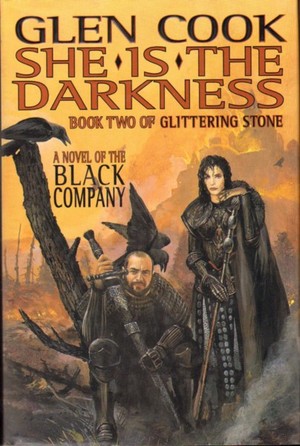
It’s summer, I’m busy living a summer life. As Glen Cook books go, She Is the Darkness (1997) is a long one. Um, something, something, something. All that’s to say I’m breaking my review into two parts. It’s not what I’d normally do, but I don’t want to lose the momentum of reading the books back to back. Remember: beyond here lie spoilers.

At the end of the previous book, Bleak Seasons, the Black Company under the restored leadership of Croaker, aka the Old Man, aka the Captain, was girding its loins for the final march on the last stronghold of Longshadow, the last Shadowmaster.

Overlook is pretty much Glen Cook’s version of Barad-dûr. Its walls rise to a hundred feet, and are covered in protective spells. Inside lurk untold numbers of soldiers backed by the terrible sorcery of the erstwhile Taken, Howler, and Longshadow himself.

In the field, ex-Black Company chief-of-staff Mogaba leads Longshadow’s last remaining army. Aided by another defector, Blade, Mogaba cannot imagine himself being beaten, and lies in wait for the Black Company and the soldiers of Taglios to attempt to force the pass over the Dhanda Presh Mountains.

Oh, and the wife of new Black Company Annalist Murgen was murdered by the Deceivers. During an assassination attempt on Croaker in the Palace of Taglios, a group of killers found their way into the living quarters of Murgen’s family and left his wife Sahra and her son dead. While not a completely broken man, Murgen is allowing himself to become addicted to traveling through time and space on the spirit of the comatose wizard, Smoke. Officially, Murgen’s doing this to spy on Longshadow and other things important to the health and welfare of the Black Company, but really it’s to avoid the depression brought on by the killing of Sahra. It continues to be a poorly explained and clunky device.

The death of Sahra is also not as simple as it seems. There’s a terrible secret surrounding it, and even though his late wife’s family, including the thoroughly kickass Uncle Doj, know what happened, Murgen doesn’t uncover it for many months. In a series flush with emotionally raw events, what really happened the night of Sahra’s death is one of the hardest in the whole series.

The entire first half of She Is the Darkness concerns the movement of Croaker’s forces towards the showdown with Mogaba’s and Blade’s. Meanwhile Murgen, flying on the wings of Smoke’s psyche, spies for his commander and fills in all the gaps for the reader, giving us an inside look at the doings of the Company’s enemies. There’s no getting around it, much of the first half of the book’s a slog. It might reflect some sort of logistical and strategic masterpiece if it occurred in real life, but on the page it moves like molasses on a winter day. Nonetheless, the book isn’t a disaster, just frustrating.
Read More Read More

TV At The Movies

TV At The Movies

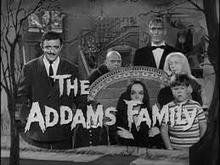
Addams originalIn my last couple of posts I’ve looked at TV to TV remakes, and film to TV remakes. It’s reasonably easy to judge the “success” of these endeavours by the number of seasons a TV series lasts. It’s not that easy when the remake is a film, and the original material is a TV program. Sometimes what we have is a true remake, in the sense that the movie stands alone, recreating the circumstances or premise of the TV series. However, we also have films which aren’t remakes as such, but rather continuations of story arcs that began on television.
In the true remake category, we often see a classic TV show that was either very popular in its day, or that developed a cult following film producers felt would generate a hefty audience for a remake as a movie. Cynics will say that these producers are usually motivated by financial considerations, not nostalgic ones, but surely that couldn’t always be the case?

Read More Read More

The Beloved Battling Robot Dinosaurs

The Beloved Battling Robot Dinosaurs

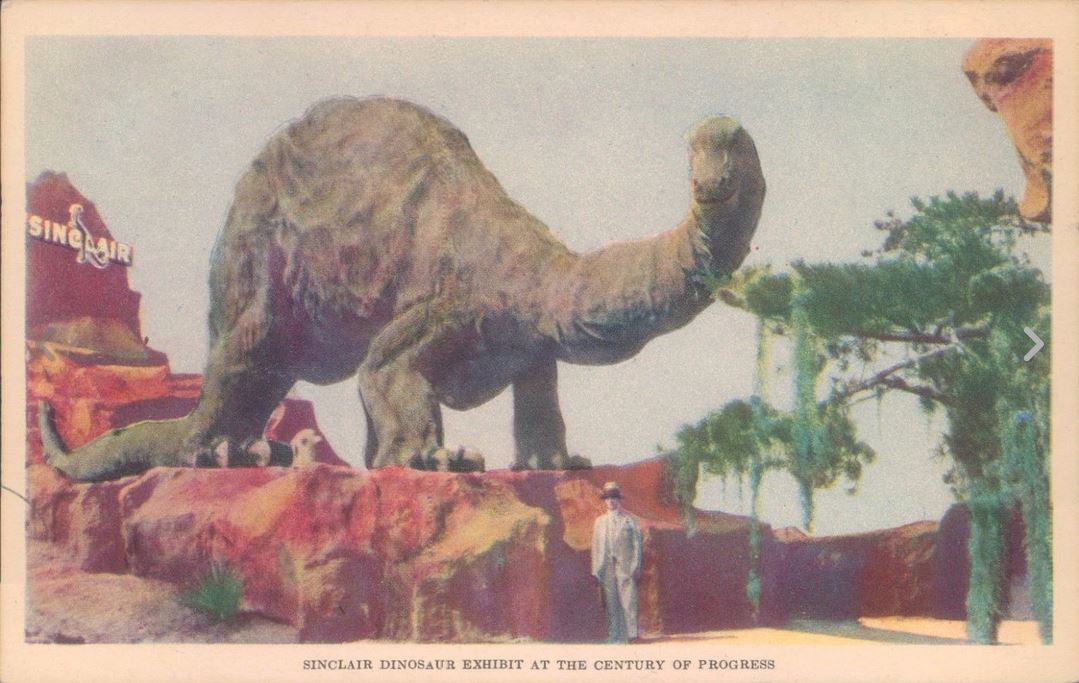
Sinclair Oil Dinosaur exhibit color postcard

Oil comes from dinosaurs. That’s not true, but millions of kids in the 20th century knew this as a fact. They were the victims of one of the most wildly successful marketing campaigns of all time. Or maybe the marketers were, because their modest claims were equally wildly misinterpreted by a wholly credulous audience of scientific illiterates. How do I segue from oil and dinosaurs to robots? Just like every other journey I’ve ever taken I do it by changing planes in Chicago.

Read More Read More

A Ball of Confusion: Bleak Seasons by Glen Cook

A Ball of Confusion: Bleak Seasons by Glen Cook

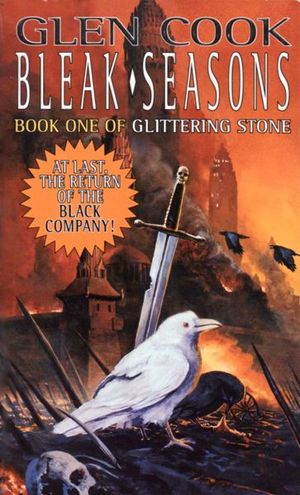
oie_16212649x4iuiFoAWith Bleak Seasons (1996), Glen Cook broke a six year hiatus from the series that had made his reputation as an important voice in epic fantasy. The previous book, Dreams of Steel (1990), had ended in chaos, with Lady and Croaker reunited, but their newborn daughter stolen by murderous Deceiver, Narayan Singh. The siege of Dejagore was finally lifted, but Soulcatcher remained at large and the Shadowmaster Longshadow continued to build his mega-fortress, Overlook, and field powerful armies. During that six very long years, I became increasingly doubtful I’d ever learn what happened next, or just what made the siege of Dejagore so horrible.

And then Bleak Seasons appeared — just showed up on a Barnes and Noble shelf one day. I bought and devoured it almost immediately. I couldn’t really say my questions had been answered since it had been so long since the last book I forgot some of them. On top of that, the book was a mess; its narrator literally jumping around in time with no clear rhyme or reason. That it was packed with tons of great stuff made it a frustrating read. All the good bits were enough to tilt it to the good side, and I trusted Cook enough to hope the next book would be a return to form.

My reread of the book over the last two days didn’t change my opinion one bit. Well, except that reading Bleak Seasons right up against Dreams of Steel does make all the cool stuff cooler. The jumping around in time, that remains frustrating and poorly explained and with little obvious justification.

Bleak Seasons opens with a short chapter that clearly tells us four years have passed and terrible things have happened. Based on the timelines in the previous book there would seem to be no way this could make sense unless something drastic had happened.

The second chapter introduces us to the book’s narrator, Murgen. The youngest member of the six Company survivors from the original trilogy, he was standard-bearer and, before the disaster under the walls of Dejagore, Annalist-in-training. He opens with a tour of the city of Dejagore during the siege and an introduction of the factions defending it against the army of the Shadowmaster Shadowspinner.

The Black Company and its Taglian auxiliaries have split into two camps. The first is composed of the Northerners and most of the men recruited on the road to Taglios, and is led by Murgen — because no one else wants to be in charge. The second, and stronger, is led by Mogaba and his fellow Gea-Xle warriors. Mogaba is not happy with the situation and soon it’s clear he has it in for Murgen and friends.

Mogaba, possessed of a will of steel and a willingness to do every single bloody act necessary, is the overall commander of the defense of Dejagore. As supplies dwindle, Mogaba routinely ejects members of the Jaicuri population to almost certain death. Later, it’s learned he has returned his fellow Gea-Xle to the darkest part of the Black Company’s origins as soldiers of Kina, the goddess of destruction.

The Nyueng Bao are a third party; a group of pilgrims from the distant Main River delta in the east who had the misfortune to be caught in Dejagore when the siege started. They are secretive, insular, and, it becomes clear quickly, dangerous. Finally, the native Jaicuri, peaceful by nature and beaten down by years of Shadowmaster rule, just try to stay on the good side of Mogaba’s and Murgen’s soldiers and hope for the best.

Read More Read More

A (Black) Gat in the Hand: Back Deck Pulp #1

A (Black) Gat in the Hand: Back Deck Pulp #1

Gat_GooseDavis

“You’re the second guy I’ve met within hours who seems to think a gat in the hand means a world by the tail.” – Phillip Marlowe in Raymond Chandlers’ The Big Sleep

(Gat — Prohibition Era term for a gun. Shortened version of Gatling Gun)

Of course, we’re all friends here at Black Gate. But if you’re my friend on Facebook, you have probably seen at least one of my Back Deck Pulp posts (I mean; how could you miss them?). I am reading a TON of pulp stories and also reading info on pulpsters for A (Black) Gat in the Hand. And when the weather permits, I’ve been sitting on my very nice back deck and taking a picture with the story of the moment. I include a bit of info on the picture’s story or author or magazine issue. Thus, ‘Back Deck Pulp.’

I think they’re neat, myself. And most of the topics I cover will end up being A (Black) Gat in the Hand posts. Friend me on FB and see what I’ve been writing about.

Well, I started collecting all those posts and discovered that I’ve already done enough for at least two Black Gate essays. So, here’s the first. It’s very informal, and it doesn’t read like a normal post: think of it like an anthology of short stories. There’s no continual narrative – But there’s some good pulp info! I made very minimal changes and most read exactly as the original FB post did.

NORBERT DAVIS/BEN SHALEY

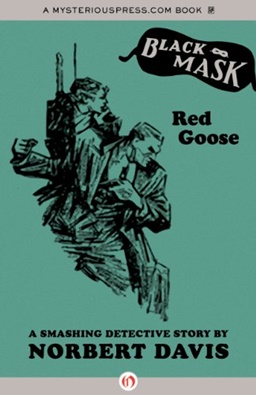
Today’s Back Deck Pulp is Norbert Davis’ “Red Goose,” the first of his two Black Mask stories featuring PI Ben Shaley.

When Raymond Chandler began writing for the pulps, he said that “Red Goose” impressed him more than any other tale he had read. Years later, he said he had not forgotten it.

Read More Read More

Gibralfaro Castle in Málaga, Spain

Gibralfaro Castle in Málaga, Spain

20180627_180346

Last week I wrote about the Alcazaba Castle in Málaga, Spain. As I mentioned, it’s only one of two castles protecting the Mediterranean harbor. Up the hill from the Alcazaba, on top of the Gibralfaro Mountain, is Gibralfaro Castle.

The summit was originally home to a Phoenician lighthouse, hence the name in both Arabic and Greek, gebel-faro meaning “rock of the lighthouse”.

In 929 AD, Abd-al-Rahman III, Caliph of Cordoba, built the first castle here. It was later expanded in the 14th century by Yusef I, Sultan of Granada. He also connected this fort to the Alcazaba by adding a double wall down the slope to make one continuous fortification. You have to buy a ticket for each, though. Poor old Yusuf is spinning in his grave.

Read More Read More

July Short Story Roundup

July Short Story Roundup

oie_1083736EA4SAq7NIt’s that time again, folks. I’m taking a break from my ongoing reread of Glen Cook’s Black Company (6 books down, 4 to go!) to give you an update on the latest heroic fantasy short fiction. First, as usual, there’re the monthly two stories from Curtis Ellett’s Swords and Sorcery Magazine. The other source of stories this July is a collection from Howie Bentley. Most of the stories are reprints I’ve reviewed before, but there are some new things I’ll tell you about.

Issue 77 of Swords and Sorcery Magazine kicks off with “Gina,” the fiery (and bloody) story of a deadly young woman with the ability to control elementals. It’s by Gustavo Bondoni, an author whose work I’ve reviewed in the past. The story kicks off just as Gina is about to be “sacrificed to the fire-demons of Hell’s Gate.” Unfortunately for her captors, just as she steps off the precipice into the volcano’s mouth, they realize she is not the naked and defenseless slave they believe her to be.

Gina looked down again and smiled. She said a few words under her breath. Out loud she said: “Haggan,” and took that final step forward.

She did not fall.

The guard’s footsteps rang out behind her as the man realized that something had gone wrong and rushed towards her to correct it. Not only was he much too late, but he was also running in the wrong direction. Any intelligent person living in a city as infested with magicians as Hell’s Gate would have taken one look at the floating woman and run the other way.

Sadly, dungeon-keepers were not selected for their intelligence. The man kept coming as Gina turned back the way she’d come. A contemptuous flick of her arm brought a tongue of fire from the depths. A gesture sent it towards the rushing defender, who could do nothing but look down at his chest in horror as a searing lance thicker than his arm penetrated his sternum and emerged from his back.

Bondoni packs a lot of back story into this short work, as well as some solid, if not altogether surprising, character development. It successfully walks the line between feeling like something ripped from a longer work and a standalone effort. It manages to feel like an important incident from the larger story of Gina’s life, yet still work as a completely discrete story; something that makes me, as a reader, very happy.

Read More Read More

I Saw It On TV – Didn’t I?

I Saw It On TV – Didn’t I?

Mash 1MASHjpgLast time I talked about film remakes, especially those revolving around an iconic character. Today I’d like to take a look at remakes of TV series. Off the top of my head I think these fall into two categories, a film remade as a TV series, or a TV series remade as a TV series.

The most successful series made from a movie has to be M*A*S*H (1972) remade from the movie of the same name that came out in 1970. If I remember correctly, the series – based on the exploits of a mobile army surgical hospital during the Korean war – ran for 10 seasons, or 8 years longer than the actual war. This series was so popular it’s still in reruns on regular network television. After the first couple of seasons it didn’t bear much more than a casual resemblance to the original film, but that’s not really the point. It was a successful transformation.

Read More Read More

If – Intelligent Robots Are Achieved

If – Intelligent Robots Are Achieved

Astonishing Stories February 1940 cover Jack Binder artist

Yanos Binder was born in central Hungary in the days of the Austro-Hungarian empire. An older sister Terez was born in 1901, Yanos in 1902, Earl in 1904, and Milahy in 1905. Their father moved to the U.S. in 1906, earning enough money to send for the rest of family in 1910. A final child, Otto, was born in 1911.

Earl and Otto started collaborating as science fiction writers in 1932, disguising themselves only slightly as E and O – Eando – Binder. Earl soon dropped out, but Otto kept the pseudonym for almost all his sf work, including the seminal Adam Link, Robot series, whose first story is the should-be-better-known “I, Robot” from 1939. He went on to write thousands of comic book stories, including most of the Captain Marvel family stories in the 1940s.

Read More Read More