Browsed by
Category: Blog Entry

A Brief History of Dr. Anton Phibes

A Brief History of Dr. Anton Phibes

abominable_dr_phibesDr. Anton Phibes is the mad genius played by Vincent Price in two cult classic films for American International Pictures in the early seventies. Director Robert Fuest imbued both The Abominable Dr. Phibes (1971) and Dr. Phibes Rises Again (1972) with a surprising degree of style and wit that set them apart from virtually all other genre films of their era.

The creation of screenwriters James Whiton and William Goldstein, Phibes was portrayed in their original screenplay, The Curses of Dr. Pibe (not a typo on my part, the character’s surname was subsequently altered) in a much more serious vein. Their intended film was both dramatic and horrific and much more in keeping with the tone of horror films of the early 1970s. It is a far cry from the blackly-humored, deliberately anachronistic 1920s period piece resplendent in Art Deco designs that Fuest delivered to AIP.

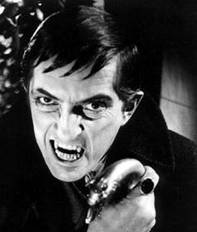
Dr. Phibes is said to hold doctorates in both music and bio-physics. Phibes is an acclaimed organist and composer and, in private, an eccentric and reclusive inventor. He is hopelessly devoted to his beautiful young wife, Victoria (played in both films by the lovely Caroline Munro) who dies on an operating table following a car crash that leaves her husband horribly disfigured with a literal death’s head in place of a face.phibes-2

Victoria’s death drives Phibes insane. He allows the world to think him dead and sets out to exact revenge on the surgical team he holds accountable for her death. He employs the G’tach, the Biblical ten curses of Egypt as his means of assassinating each member of the surgical team. The murders are investigated by a hapless Scotland Yard detective, Inspector Trout (wonderfully underplayed by Peter Jeffrey).

Vincent Price turns in an amazing performance as Phibes. His character’s vocal chords were damaged in the accident. He speaks only with the aid of one of his inventions. For much of the film, Phibes wears a face mask (Price’s own face), but his lips never move while talking. Remarkably, the performance never suffers as Price compensates by conveying so much with his expressions.

Read More Read More

Walking the Trail(er): Part One

Walking the Trail(er): Part One

hc2Did you know that there are awards for book trailers? They’re called “The Moby Awards” and you can check the most recent winners (and losers) here. (There doesn’t appear to be any listings for the years before 2010, probably because there aren’t any.)

In case you haven’t heard of them, a book trailer is like a movie trailer — a short video that’s supposed to promote a book. Many of them look like movie trailers, and most are done on a budget (maybe I should say “without a budget”).

But do they work? Do they entice readers to buy books?

It’s an important question for me, because I’m making one.

Read More Read More

Goth Chick News: Death Always Comes at the End

Goth Chick News: Death Always Comes at the End

image0061Okay, not a cheery thought, but you aren’t reading Martha Stewart’s Living as you well know.

Back when I was a fledgling Goth Chick, learning the joys of sitting cross-legged for hours on end in the aisle of my local bookstore, but not yet in love with a particular genre (just no romance novels, ever), a somewhat twisted piano teach handed me an Agatha Christie novel.

I say “twisted” because one could argue that such tales were in no way appropriate fare for a nine-year-old. Then again, when taken in the context of the other media available to this age group today, Agatha’s plot lines are probably fit for the Disney channel.

But I digress.

My piano teacher looked like she was fresh from an audition for the part of a matronly, widow piano teacher. She even had her lines memorized, scolding me exactly the same way every week while I banged on the keys through purgatorial scales and off-kilter renditions of Ode to Joy. But in keeping with my life-long theme which at that point was only a mere pattern, she was a bit left of center.

Read More Read More

Crossed Genres 25 Arrives

Crossed Genres 25 Arrives

crossed-genresCrossed Genres, the online magazine of Science Fiction and Fantasy with a twist, has just published its 25th issue.

Crossed Genres is edited by Jaym Gates and Natania Barron. This issue includes five complete works of fiction, including “We Shall Overcome,” by Nicole Givens Kurtz, and “The Gift” by Christie Yant, as well as stories by Jaymee Goh, Arthur Carey and Jacob Edwards.

The wonderful cover art (left), “Balloons,” is by Margaret Hardy.

Crossed Genres is published monthly; this is the first issue with the new editorial team. The magazine was previously edited by Bart R. Leig and K.T. Holt. The first issue appeared in September, 2008.

The genre (or theme) changes each issue. The genre for the current issue is “Celebration;” the genre for issue #27 (to be released January 1, 2010) is Tragedy. Submissions for Issue #27 will be accepted until midnight December 31. The next two genres are Superhero and Mystery.

Congratulations, Jaym and Natania! Here’s to many more.

Art Evolution 12: Larry Elmore

Art Evolution 12: Larry Elmore

As we enter week twelve of the Art Evolution project, I’m going to have to take a moment and digress. If you’re looking for the project’s beginning, you can find it here. Or you can click to see my ‘Groovy Lyssa‘ from last week.

dragonsofautumntwilight_1984original-254In 1984 I was thirteen years old, in junior high school, and had managed to maintain the appearance of being a ‘C’ student when I truly couldn’t read above the very rudiments of the written word. I absolutely hated the idea of reading, and I’d done everything in my power to prevent the school-driven establishment from making me do so.

I’d managed to slip through the cracks, a lost student, presumably one who would end up failing out of high school — or just getting the minimum scores needed for a base diploma, with no hope of a higher education. I was fine with that, and although my clever ruse of literary competence was eventually discovered by my mother (who spent a summer tutoring me to some semblance of reading ability between sixth and seventh grade), I still hated the prospect of books.

This continued until the middle of my seventh grade. One day while on a field trip to Indianapolis with my class, my malcontent view of books changed forever. I was in the big city, and big cities had bookstores, and this particular one had a Waldenbooks [R.I.P. Waldens, I miss you each time I’m forced to go to a mall] with a large fantasy book section.

I stood dumbstruck by what I saw there that day, and a friend of mine pulled down a copy of Dragons of Autumn Twilight and said, “This book was awesome.” Because unlike me, my friend Jason could read…

Read More Read More

“When things fall apart, they are going to fall apart in L.A. first”: LOSCON 37

“When things fall apart, they are going to fall apart in L.A. first”: LOSCON 37

loscon-banner-photoOnly a few months ago, I would never have believed that I would end up writing two convention reports within the space of a month. Yet here I am bringing you news of LOSCON 37, the 2010 installment of the long-running Los Angeles-based science-fiction, fantasy, and horror convention.

This year’s World Fantasy Convention was an almost overwhelming experience—not only was it my first convention and my first time meeting some of the core Black Gate mavens, but WFC is one of the most professional cons on the planet, bringing together top writers, publishers, and editors for a long weekend of uninterrupted speculative-fiction intensity. And nobody wears costumes. As I planned going to my next convention, I knew that I would be at something less lavish and more fan-centered, with a looser feel. And with costumes. Lots of costumes. But there would also be no Black Gate. Going to LOSCON was a test for me: could I have fun at an event where I wouldn’t be part of large contingent?

Oh yeah. LOSCON was a different kind of thrill than World Fantasy, but it was still a thrill.

Read More Read More

A review of War for the Oaks, by Emma Bull

A review of War for the Oaks, by Emma Bull

warfortheoaksWar for the Oaks, by Emma Bull
Ace Books (309 pages, $3.50, 1987)
Cover by Pamela Patrick

Thematically, War for the Oaks by Emma Bull has a lot in common with Charles de Lint’s Jack the Giant Killer, which also appeared in 1987 (and which I reviewed here.) If I’d known exactly how similar they were, I’m not sure I would have picked it to review for a few months yet. Still, it’s a good book, and I’m glad I got a chance to read it.

Eddi McCandry, guitarist and singer, is about to leave both her old band and her boyfriend, the lead singer. She’s ready, she thinks, for a normal life. It’s a plan that falls apart in only one chapter; the fey need a mortal presence to witness their upcoming war, and they’ve chosen her.

In short order, Eddi is stalked by a man and chased by a huge dog, insulted by a woman made of water, drafted by the Seelie Court, and saddled with a constant guardian: the man-dog shapeshifter who herded her into the encounter.

To make matters worse, Eddi finds out that she has to stay under surveillance for at least half a year so that the Unseelie Court can’t assassinate her. Her watchdog is a phouka who enjoys living up to his trickster roots, and keeping a regular job would be impossible with him following her everywhere even in the unlikely event that he decides to behave himself, so Eddi bows to the inevitable and decides to start a band.

Read More Read More

Supernatural Spotlight – Episode 6.9 “Clap Your Hands If You Believe”

Supernatural Spotlight – Episode 6.9 “Clap Your Hands If You Believe”


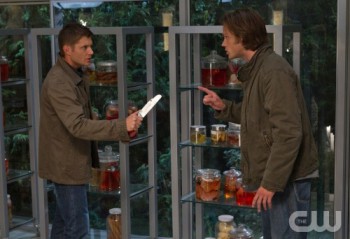
Dean Winchester detains a suspected fairy.
Dean Winchester detains a suspected fairy. Does this count as a hate crime?

If you’re an avid fan of my posts on this blog (and I assume that most of you are) you’ll notice that I didn’t post last week. I’m hoping that the intervening week has removed some of the trauma and heartache from the experience, not to mention given you the opportunity to seek some much needed counsel from your spiritual guru or therapist.

It was my DVR’s fault. A week ago, I re-arranged the living room so that we’d have room for the television. I moved the television, along with the accompanying bundles of wires and electronic gizmos. Everything was working fine, hours before Friday night prime time television. But, sadly, the DVR still decided (and make no mistake, it was a conscious choice, of this I’m sure) not to record Supernatural.

So I went to the CW website, in hopes of watching the episode in time to review it … but to no avail, because it takes a week for them to post the episode. And my internet television of choice, Hulu, does not offer Supernatural. Thus why you, dear readers, are getting this recap more than a week after the show aired.

On the plus side, though: Dean gets abducted by aliens … or maybe fairies!

Read More Read More

Novel Writing: Symbolic Thinking

Novel Writing: Symbolic Thinking

The Holy GrailHampered this past week by a bad cold, I’ve made only minimal progress in National Novel Writing Month (you can see my previous thoughts on this year’s NaNoWriMo here, here, here, and here). Still, a few things have become clear to me about the shape of my story; I seem to be writing, not a two-book story, but a four-book saga. Which is all right, since the idea of the story, Modred finding his way at the court of Arthur and beyond, was always meant to divide into four units; only now it seems those units are going to be longer than I’d expected.

But what’s surprising me so far is not how the material I expected to find in the story is arranging itself, but how unpredictable some of that material is. How symbols are choosing themselves, and manifesting in strange ways. And in ways of which I’m only vaguely conscious.

“Symbol” is in many ways a difficult word. What’s a symbol? The way I think of it, it’s an image in a story that means more than itself; specifically, an image that means more than can be explained. It’s an allusive image; a symbol typically seems to mean more than one thing, and usually gains resonance by being part of more than one symbol-system, whether the author was conscious of it or not. So a symbol can be defined as an image whose significance can be read many ways, but which can never be wholly captured by a non-narrative paraphrase.

Read More Read More

Life with Phil

Life with Phil

jp-philip-2-articleinlineOn the heels of Mark Twain’s best seller, we now also have this memoir from Anne Rubenstein Dick, third wife of five of the only science fiction writer so far to gain literary legitimacy for inclusion in the Library of America series.  Originally self-published, The Search for Philip K. Dick has been re-edited by Tachyon Press; it covers the five years of Rubenstein’s “courtship” and marriage to one very weird guy during what might be called his “mellow years” in the early 1960s, also the time when he wrote his Hugo award winning (and only award winning) novel,  Man in the High Castle. According to Anne, “I’m not saying he wasn’t a very nice person too; he was. He just had a very dark shadow.”