Browsed by
Category: Blog Entry

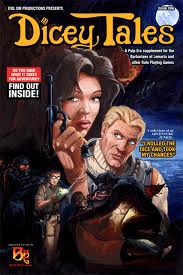
Pulp RPG Action with Dicey Tales
Pulp RPG Action with Dicey Tales

dicey-tales-1Anyone whose been reading the Black Gate game review column knows how much I loved Jeff Mejia’s Legends of Steel, in a large part due to his love for (and obvious knowledge of) the sword-and-sorcery genre. Jeff knew how to present the game material, provide atmospheric and plotting suggestions, and in general wrote a book so useful to sword-and-sorcery gaming that it should be picked up even by those GMs working with fantasy adventure who have no interest in the game system itself.

Now Jeff has turned to the pulps — two-fisted action featuring jungle men, rocket-pack heroes, roving archeologists, Nazis and gangsters, daredevil pilots, and more — and wrought the same kind of magic. Dicey Tales uses the acclaimed (and excellent) Barbarians of Lemuria role-playing system to provide the same kind of loving detail to one of the best eras for high-flying adventure. The e-magazine includes two action-packed scenarios, a character generation system, rules for bringing the pulp era to life, strange powers employed by pulp heroes, and more goodies. Apparently I’m not the only one who thinks Jeff has knocked another product out of the park, for Dicey Tales is already rocketing to the top of the RPGnow download list. Check it out!

Why John Clute Cracks Me Up…

Why John Clute Cracks Me Up…

sh_headThe June 20th edition of John Clute’s Scores column is a case study in vocabulary intensive prose that, albeit sometimes with a little bit of work on the reader’s part, is as evocative of strange worlds as the material he is reviewing. Here’s the set up for a piece ostensibly about the Jonathan Strahan edited Engineering Infinity anthology:

A few weeks ago I left London and entered the future again. I was about to fly in an oldish plane from one old airport in England to another old airport in Norway, in order to give a talk about the world city in the twenty-first century. I felt I was as entitled to talk about the world I lived in as any of the rest of us: that larger half of the world’s sum of homo sapiens who have become treeless in this century, veldtless, farmless, parkless, legless; but who have become, necessarily, just streetwise enough to know where the nearest just-in-time cloaca disgorges pellets of the fungibles we ingest like battery hens; and who breathe the poison gas of Pax Aeronautica when we travel. So I left London on the Gatwick Express and began the process of becoming “John Clute”: which is to say becoming a readable portion of the original entity indistinguishable (to all purposes) from the barcode that tracked its transit to come. And so the “John Clute” packet arrived at Oslo Airport, and began to breathe life into itself again. I felt repurposed. It crossed my mind that transiting the aeropolis worldnet was a bit like experiencing matter transmission in SF; and I had a quick flash memory of A J Budrys’s blackly proleptic Rogue Moon (1960), a book which in retrospect seemed like a description of the way we lose ourselves in travel in 2011. I walked with my fellow recovering barcodes to luggage reclaim, where the system had jammed, leaving most of our worldly gear stuck somewhere in the bowels. There was dead silence in the vast space. Two things came to mind. One: that when a zero-redundancy just-in-time system seizes up, the part of the world machine that has been affected by the dysfunction ages instantly, like an abandoned shopping mall, or some matrix-world when the electricity is turned off. Mourning becomes entropy. Two: that the emotion felt by passenger units, when their codings have been defaced by a failure of the world-machine, is shame.

It takes a few readings to figure out exactly what the hell he’s talking about, but eventually it occurs to you that there is something genuinely profound about this.  As to what he thinks about the Strahan book, well, that’s largely besides the point. And I still don’t get why missing luggage in the machine should evoke shame.  Anger or frustration or resignation, I get.  But shame?  What am I missing here?

Blogging Marvel’s The Tomb of Dracula, Part Seven

Blogging Marvel’s The Tomb of Dracula, Part Seven

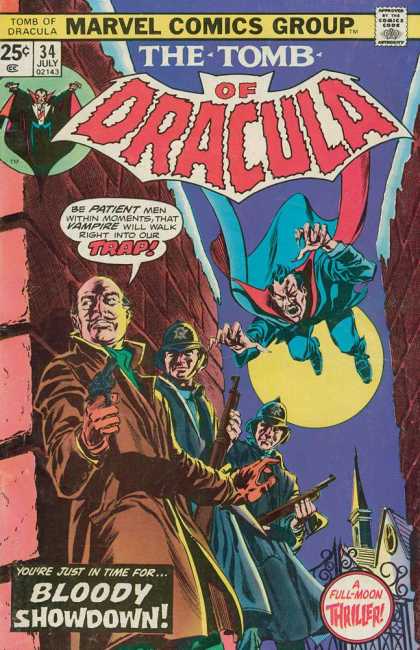
tod-33tod-34The Tomb of Dracula #33, “Blood On My Hands” starts off with aged, blind wheelchair-bound Quincy Harker facing his greatest dilemma: if he lets Dracula die as the vampire deserves, then he forfeits the life of Rachel Van Helsing, held captive across town by Dracula’s brides. Quincy is tormented by the memory of his daughter Edith. He thinks back thirty years to the night Dracula abducted his wife and flung Quincy from his balcony seat at the opera leaving him crippled by the fall. Quincy’s wife survived another decade after Dracula’s attack, but never fully recovered. Faced with the tragedy of his life, Quincy spares Dracula to save Rachel. In gratitude, Dracula grasps the urn containing Edith’s remains and scatters them across the room, literally throwing her ashes in her father’s face. Leaving the reader feeling nothing but contempt for Dracula at his cruelest, writer Marv Wolfman shifts the setting to India where Taj Nital and his wife stand by their son’s grave. The pain of two grieving parents has reunited them. The issue rapidly picks up speed again as Dracula realizes Dr. Sun is the person who must have poisoned him and sets out to find him. Meantime, Inspector Chelm is on Dracula’s tail while the reader learns that the mysterious white-haired vampire sought by both Blade and Hannibal King is also seeking Dracula. Gene Colan’s artwork maintains the high level readers had come to expect as he and Marv Wolfman deliver another excellent issue that keeps the suspense raised as the storylines appear to be headed toward another major development.

Issue #34, “Showdown of Blood” sees the action shift to Brazil where Guest Star Brother Voodoo saves Frank Drake from the zombies. While in London, Inspector Chelm and his men bungle their attempt to slay Dracula. The reader learns that the mysterious white-haired vampire has been stalking Dracula for some time. A final interlude in India sees Taj make a bittersweet departure from the series as he writes a letter to Rachel Van Helsing explaining he will not return to London. Rachel rejoins Quincy, eager to hunt Dracula down. Wolfman then introduces us to embittered fashion designer, Daphne Von Wilkinson who encounters a weakened Dracula and begins providing him with the fresh blood he needs in the form of her enemies.

Read More Read More

Kelly Link’s Some Zombie Contingency Plans

Kelly Link’s Some Zombie Contingency Plans

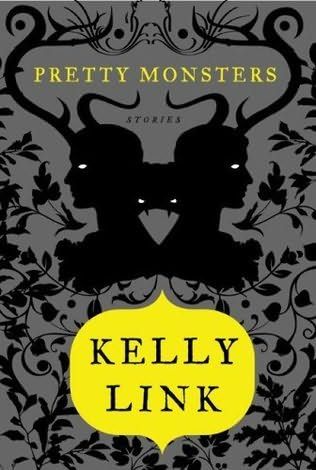
pretty-monstersSo I’ve been listening to Podcastle episodes while processing my usual insurmountable citadel of books here at Top Shelf.

Podcasts are cool. Especially Podcastle podcasts, because, hey, FANTASY!

They’re usually 30-50 minutes, entertaining, with experienced narrators and great introductions and afterwords by Dave Thompson or Anna Schwind. Since I don’t read as many short stories as I’d like to, when I listen in on these things, I feel like I’m also learning something from my fantasy writing peers (and superiors). Something about structure. Something about character. Something about plot and dialogue and pacing. Lots of somethings, in fact!

Today, I listened to Kelly Link’s Some Zombie Contingency Plans. Now, whatever you think when you read that title, I have to tell you, you can’t possible predict what this story is actually about. Whoa.

And since I’m still feeling shocked and queasy (and astonished at the craft that went into this story, although I don’t know why I should be astonished, because it’s not like I don’t know who Kelly Link is or how highly she’s thought of) after listening to this story, I thought I’d hop on over here and tell you, tell you…

Read More Read More

Goth Chick News: Colin Farrell Can Bite Me

Goth Chick News: Colin Farrell Can Bite Me

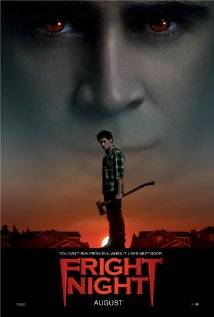
image0022If you’re looking for a sparkly vampire who marries humans rather than eats them, check back in around November when I can promise you there will be no mention of such atrocities here.

No way.

Here at Goth Chick News we do not condone the colorization of black and white movies, the censoring of controversial reading material or, blasphemy of blasphemies, the wussification of folklore monsters. Here, the Wolfman is not “misunderstood,” Frankenstein is the name of the doctor, not the monster and vampires are ruthless killers without the slightest bit of angst.

In other words; Colin Farrell.

If unlike me, you don’t have a widget countdown clock on your computer screen checking off the minutes until August 19th then let me remind you that is the release date for Fright Night.

Read More Read More

Pottermore Revealed: Unique “Online Reading Experience” says Rowling

Pottermore Revealed: Unique “Online Reading Experience” says Rowling

pottermorescreenHarry Potter author J.K. Rowling announced this morning (video here) that she will be releasing
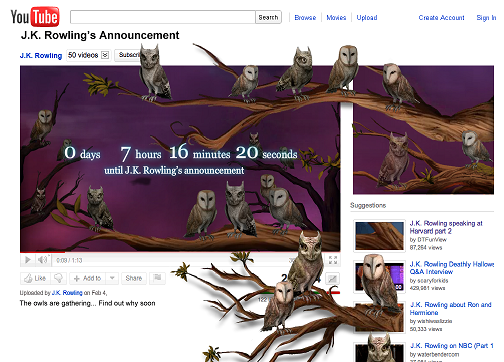
something unique: an online reading experience unlike any other. It’s called Pottermore. It’s the same story, with a few crucial additions. The most important one is you. Just as the experience of reading requires that the imaginations of the author and reader work together to create the story, so Pottermore will be built in part by you, the reader. The digital generation will be able to enjoy a safe, online reading experience built around the Harry Potter books.

She claims that this new website will include not only the ability to buy digital audiobook and e-book versions of the Potter series, but also that she will be directly involved with the community, revealing tidbits about the universe which she’s known for years but which never made it directly into the novels.

youtubepotterscreenFor about a week, rumors have been swirling across the internet about the exact nature of Pottermore, since Rowling established a website by that name and a mysterious countdown clock appeared on YouTube (shown below).
Speculations ran wild throughout the week, fueled by tantalizing clues, some of them intentional, such as an online Google Maps-based game, and some unintentional, like the discovery that Warner Bros. had registered the website for trademark as a “global information computer network.”

Rowling and her spokesmen have been quiet on the details, except to stay that it is definitely not a new novel set in the Harry Potter universe, but still some have wondered if it was the long-anticipated Harry Potter encyclopedia, which Rowling has hinted may someday be released for charity.

Read More Read More

A Lone Candle, Part 2

A Lone Candle, Part 2

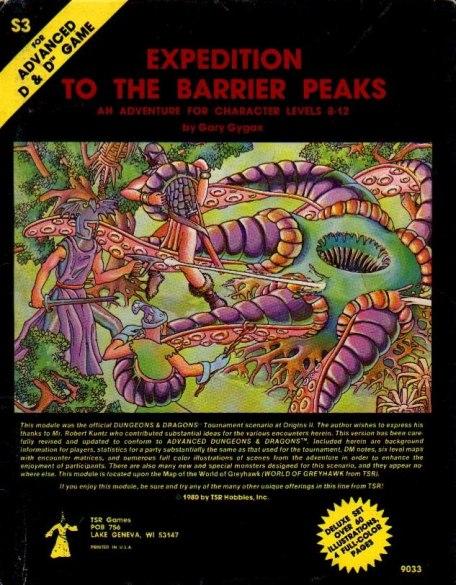
expedition
"Quick! Get the laser ri- I mean, get the thunder stick!"

If genre-shifting mid-tale is unwelcome in film and literature, where is it sometimes acceptable? I’ve found only one medium in which this sort of thing is easily done, and generally welcomed, if done right.

Role playing games.

Hear me out on this. Role playing games are a lot more fluid, since the storyline just keeps going after the genre-shifted adventure. The players know that, sooner or later the story will return to the main genre, and so they’re more willing to play along. That’s been my experience, anyway.

Read More Read More

Art Evolution 2011: Russ Nicholson

Art Evolution 2011: Russ Nicholson

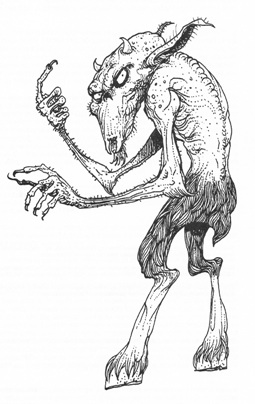
nicholson-invite-254Yes indeed, there’s yet another addition to Art Evolution! Now you didn’t think I’d sit idly by after the success of my 2010 Art Evolution Project wrapped up did you? No, certainly not, and although I’d managed to hit twenty artists in that mighty collaboration, I wasn’t satisfied because I knew there were many more artists still out there who deserved spots in what my project finally materialized into.

Still, I must admit I was pretty burned out after the initial run, so I took a couple of months off, focused on Art of the Genre, and retooled as I let brew the countless images of other great RPG artists still on my now venerable list.

By February I was convinced that Art Evolution needed further contributions in the modern era of role-playing, and I also thought that at least one more 90s talent and an old-school contribution would best serve the spectrum of what was already in print. To do this, I decided I’d include only five artists this year, five stalwarts who, like all those before, defined and inspired with work that was a step above their contemporaries.

So, without further diatribes into the ‘why’, let me take you to the ‘who’, but first, we strap into the time machine bound for the dawn of the big 80s…

Read More Read More

Murray Leinster’s “Runaway Skyscraper”

Murray Leinster’s “Runaway Skyscraper”

murray-leinster-runaway-skyscraperI’m a nut about the trivia of dates, so the moment I heard about the birth of my second nephew, A. Dean Martin (yes, really), I had to look up the famous people who share his birthday of June 16. The list includes philosopher Adam Smith, legendary film comedian Stan Laurel, and Apache leader Geronimo. Oh, and some fellow named Murray Leinster.
It was that last name that struck me the most. Murray Leinster is one of those science-fiction masters who has managed to find a place in general public obscurity. Despite a writing career lasting over half a century, Leinster’s name probably means nothing to most casual readers of contemporary science fiction, unless they pick up anthologies of Golden Age stories.

Murray Leinster (pen name of William Fitzgerald Jenkins, 1896–1975) is a rare case of a twentieth-century science-fiction author whose career started before the Campbell Revolution in Astounding but also continued through and beyond it, into the era when Astounding had become Analog and the field had broadened with The Magazine of Fantasy and Science Fiction and Galaxy. Like Jack Williamson, Leinster shifted easily into the stable of authors that John W. Campbell corralled for Astounding, which was otherwise made up of newly discovered writers. Leinster wrote some of his best work for Astounding, most notable among them “First Contact,” a story which the Science Fiction Writers of America voted into the classic 1970 anthology The Science Fiction Hall of Fame, Volume One, meant as a “Nebula Awards before there were Nebula Awards.” “First Contact” tied for fourth place in the list of stories with Theodore Sturgeon’s “Miscrocosmic God.” Its inclusion in the collection marked it as one of the greatest short stories in the field pre-1965.

Read More Read More

A review of Hellebore & Rue: Tales of Queer Women and Magic

A review of Hellebore & Rue: Tales of Queer Women and Magic

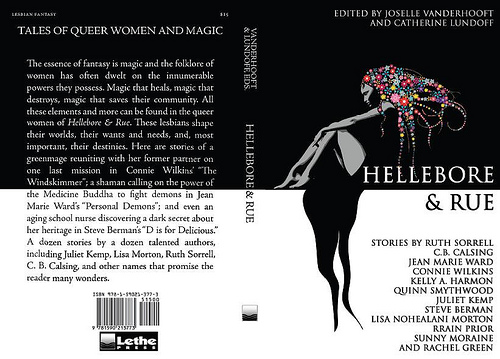
hellebore-and-rueHellebore & Rue: Tales of Queer Women and Magic
Edited by JoSelle Vanderhooft and Catherine Lundoff
Drollerie Press (Ebook [Kindle], 238 pp., $9.99, February 2011)
Lethe Press (Trade Paperback, 238 pp., $15.00, May 2011)

Fantasy allows us to see the world not as it is, but as it might be.

Worlds where mortals have powers and abilities we can only dream of; where women neither need nor expect to rely on a man; where genders and orientations are equal, or face inequities starker than our own.

You’ll find all these possibilities, and more, in the twelve worlds of Hellebore & Rue: Tales of Queer Women and Magic, the new anthology edited by JoSelle Vanderhooft and Catherine Lundoff.

In opening story “Counterbalance,” Ruth Sorrell’s impressive first fiction publication, the world isn’t too different from ours. It initially resembles a typical urban fantasy milieu: magic’s real; the setting’s a modern metropolis; there’s a vampire slayer; there’s a nightclub/bar/safe space for the supernatural set. But the protagonist, Riley, isn’t the vampire slayer–she’s the most powerful being in Toronto. And the safe space? It isn’t, leaving Riley facing a newcomer much too powerful to oppose alone.

Read More Read More