Browsed by
Category: Blog Entry

Once Upon a Time in Zang…
Once Upon a Time in Zang…

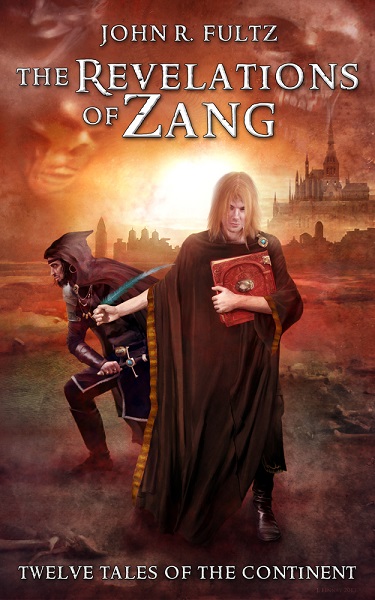
zangcover (1)…a fugitive author and a devious cutthroat began a revolt against the nine Sorcerer Kings whose power displaced the gods themselves. Like the revolt, which began in far-flung places, the Zang Cycle of stories would grow slowly and cover a lot of ground.

Now at last the entire story cycle is complete with the publication of The Revelations of Zang on Amazon Kindle. 

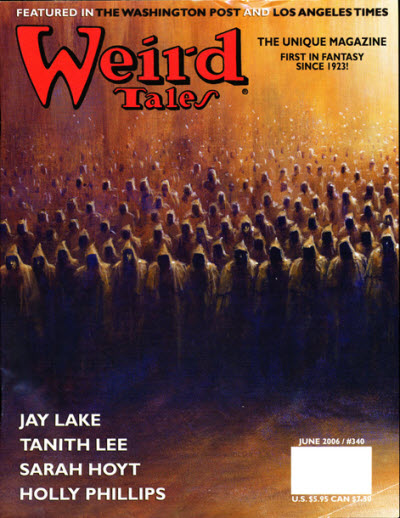
It all started with “The Persecution of Artifice the Quill,” in the pages of Weird Tales #340 (2006). The cover of that issue featured a horde of the faceless warlocks known as Vizarchs, who drag Artifice the Quill away in the story’s opening scene, a scene painted by the talented Les Edwards.
WT340
The Vizarchs are coming!

The story was a turning point for me: The fulfillment of a long-standing dream (getting published in Weird Tales) and the introduction of two characters I would return to many times: Artifice the Quill and Taizo the Thief.

I wrote eleven more Zang Tales and moved the series to the welcoming pages of Black Gate, where it flourished for many issues.

The first story to grab BG founder John O’Neill’s attention was “Oblivion Is the Sweetest Wine” — a tale of Taizo and his infamous heist in spider-haunted Ghoth. It ran in BG #12 (2008). I wrote one Zang story after another over a 3- to 4-year period, building toward a single climactic tale.

The cycle’s penultimate story, “Return of the Quill,” wherein Artifice finally returns to Narr and sparks a revolution, was featured in BG #13 (2009). By this time, Artifice has embraced the sorcery that he once loathed and learned to alter reality with his Great Art. He is the leader of the mystical troupe known as The Glimmer Faire.

Meanwhile, Taizo has taken his own dark journey through tragedy, sorcery, and suffering toward vengeance. These two main characters only meet twice during the cycle: Once in the first story, and once again in the last.
Read More Read More

Vintage Treasures: The Radio Planet by Ralph Milne Farley

Vintage Treasures: The Radio Planet by Ralph Milne Farley

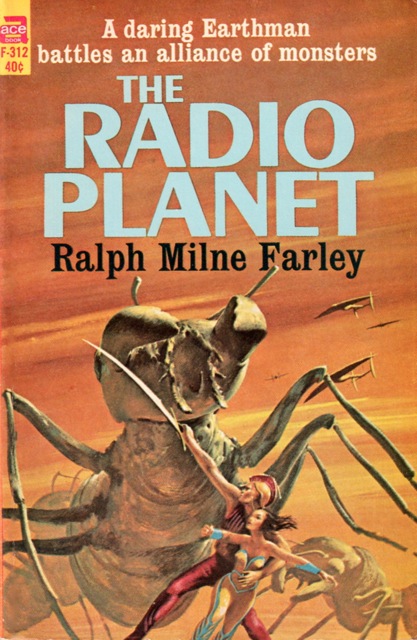
The Radio Planet AceAnd so we come to the third volume of Ralph Milne Farley’s Radio Men series, The Radio Planet.

Like the first two, The Radio Man (aka An Earth Man on Venus, which I discussed here) and The Radio Beasts (here), The Radio Planet was originally published in Argosy All-Story Weekly, in six installments starting in June 26, 1926, following the previous novel by some fifteen months.

Farley wrote several more Radio novels, including The Radio Menace, The Radio War, The Radio Pirates, and The Radio Flyers, between 1930 and 1955. Only a few were even loosely connected to the first three; most of them were futuristic pulp adventures set on Earth, and Ace didn’t bother to reprint them.

Yes, that’s right. After three popular Radio Men novels, Ralph Milne Farley continued to merrily put Radio in every one of his titles, even though most had nothing to do with Myles Cabot, Venus, or Mars. Apparently, the man had only a rudimentary concept of brand marketing. And liked radio.

In any event, The Radio Planet was the last novel to feature Myles Cabot. Two other short adventures followed: “The Radio Man Returns,” a short story from Amazing Stories (June 1939), and “The Radio Minds of Mars,” originally published in the January 1955 issue of Spaceway magazine.

Fortunately for young teenage fans in the 1970s, such as yours truly, there were two inexpensive paperback editions of The Radio Planet, which kept it in print for roughly a decade. Both were from Ace Books.

Read More Read More

Our Comics, Ourselves

Our Comics, Ourselves

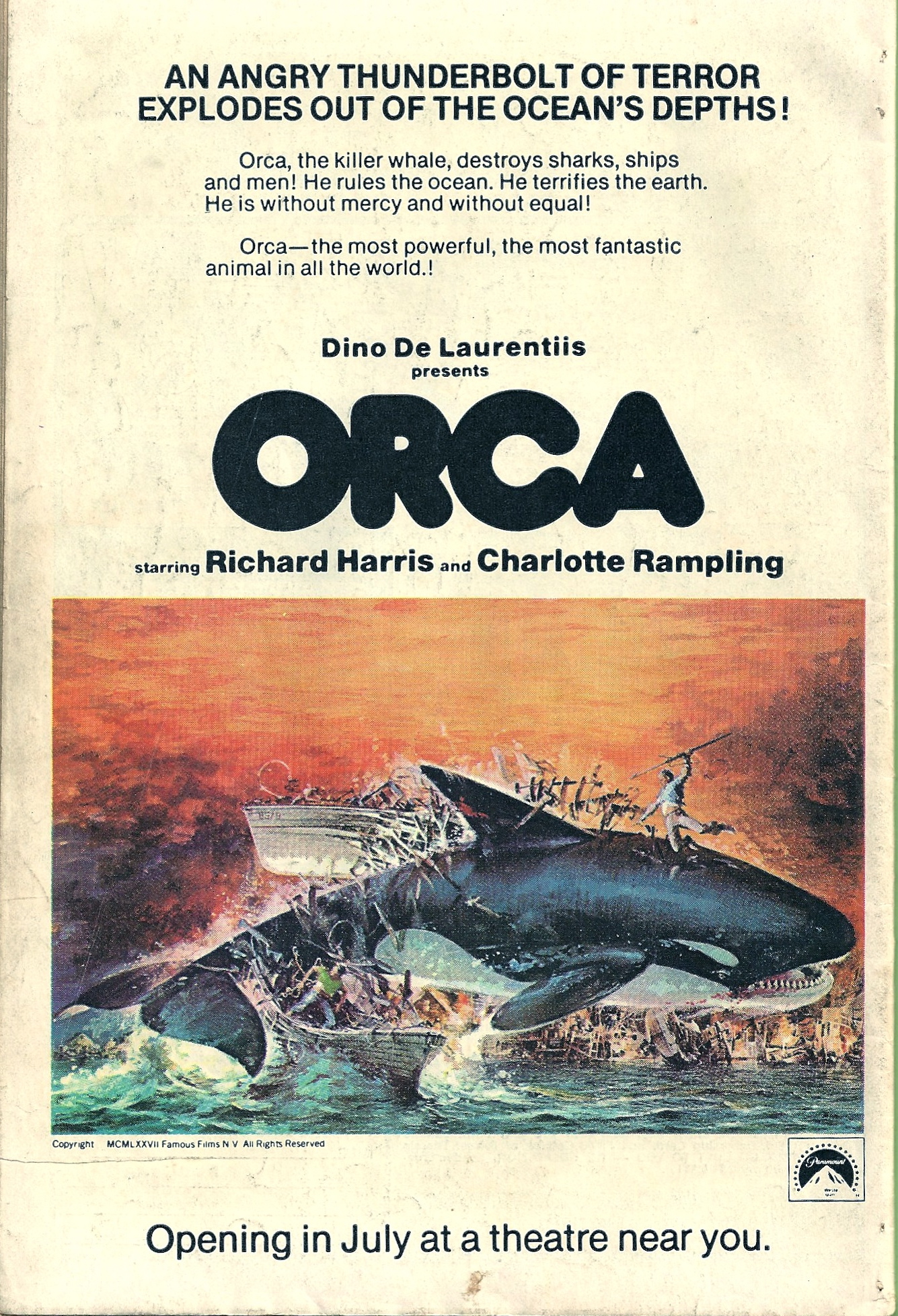
OrcaSeveral years ago, I handed my older son my pile of Avengers comics, a sequential trove dating from about 1976 until about 1985.

He read them eagerly, then threw them all over his room. I provided a storage bin and said, “If you want the privilege of reading these, treat them well.”

Message received. The comics, when not in use, lived happily in their bin.

He’s now re-reading them, out of order. He left a couple of them on his bed the other night, and rather than flip out –– “You’re grounded for life, plus I’m confiscating your cell phone! Oh, wait. You don’t have a cell phone. Hmm. Maybe I should confiscate my own cell phone?” –– I elected to simply remind him that my yesteryear treasures need to be treated well.

Then I forgot all about the reminder. I found myself hooked by the back cover of Avengers #164. It was an ad, of course –– what else would grace the back cover of a Marvel Comic? But what an ad, a movie poster extravaganza for (hold me back) Orca (1977).

With Richard Harris and Charlotte Rampling, no less.

Read More Read More

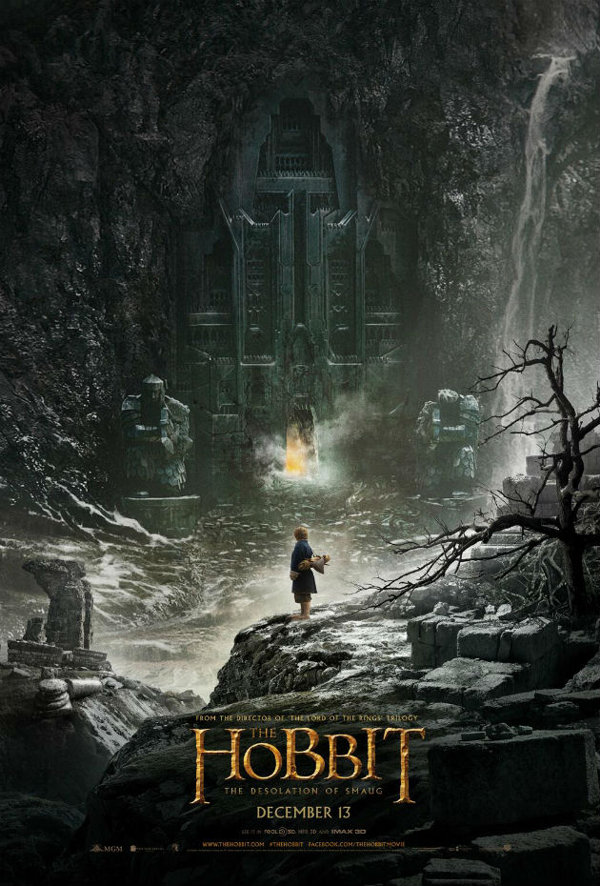
First Full-length Trailer Released for The Hobbit: The Desolation of Smaug

First Full-length Trailer Released for The Hobbit: The Desolation of Smaug

the-hobbit-the-desolation-of-smaug-posterCurse teaser trailers and their teasing ways! I was teased as a kid, teased all through high school, and now I have to put up with teaser trailers. The universe, it is a cruel place.

Fortunately, teaser trailers are followed by full-length trailers. Eventually. As has now happened with The Hobbit: The Desolation of Smaug, the second installment in the three-part Hobbit epic from New Line Cinema and WingNut films. The story picks up where last year’s billion-dollar blockbuster The Hobbit: An Unexpected Journey left off, following Bilbo, Gandalf, Thorin and their dwarven companions into the Kingdom of Erebor, the dark heart of Mirkwood and the Necromancer’s lair, Esgaroth, and finally the human town of Dale to confront the dragon Smaug.

The trailer has some nice surprises, including plenty of scenes of Orlando Bloom as Legolas and Lost alum Evangeline Lilly as the elf Tauriel. If you watch closely, you can see the spiders of Mirkwood, the barrel escape down the river, and our first look at the terrifying Smaug himself.

The trilogy will conclude next year with The Hobbit: There and Back Again. All three films are based on J.R.R. Tolkien’s novel The Hobbit, originally published in 1937.

The Hobbit: The Desolation of Smaug was directed by Peter Jackson and written by Fran Walsh, Philippa Boyens, and Peter Jackson. It stars Martin Freeman, Richard Armitage, Ian McKellen, Cate Blanchett, Hugo Weaving, Elijah Wood, Christopher Lee, and A-lister villain Benedict Cumberbatch as both Smaug and The Necromancer Sauron. Check out the complete trailer below.

New Treasures: Reviver by Seth Patrick

New Treasures: Reviver by Seth Patrick

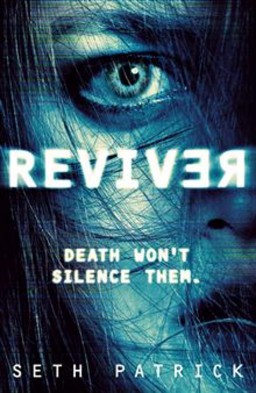
Reviver by Seth PatrickI really haven’t been very good to fans of supernatural thrillers in my New Treasures columns recently. Honestly, I don’t hate you guys, there’s just been a lot of top-flight fantasy to gawk at lately.

But look, here I am with a peace offering: a peek at a great-looking debut horror/thriller novel just optioned by the producers of The Dark Knight Returns.

Jonah Miller is a Reviver, able to temporarily revive the dead so they can say goodbye to their loved ones—or tell the police who killed them.

Jonah works in a department of forensics created specifically for Revivers, and he’s the best in the business. For every high-profile corpse pushing daisies, it’s Jonah’s job to find justice for them. But while reviving the victim of a brutal murder, he encounters a terrifying presence. Something is on the other side watching. Waiting. His superiors tell him it’s only in his mind, a product of stress. Jonah isn’t so certain.

Then Daniel Harker, the first journalist to bring revival to public attention, is murdered. Jonah finds himself getting dragged into the hunt for answers. Working with Harker’s daughter Annabel, he becomes determined to find those responsible and bring them to justice. Soon they uncover long-hidden truths that call into doubt everything Jonah stands for, and reveal a sinister force that threatens us all.

Am I keeping you hip, or what?

The first novel in a projected trilogy, Reviver looks like the real thing. And if it’s made into a movie, now you can spoil the ending for all your friends in the popcorn line.

Reviver goes on sale next Tuesday, June 18th. It is published by Thomas Dunne Books. It is 416 pages, priced at $25.99 in hardcover, and $11.99 for the digital edition.

See all of our recent New Treasures articles here.

SF Signal Interviews Scott Taylor on A Knight In The Silk Purse

SF Signal Interviews Scott Taylor on A Knight In The Silk Purse

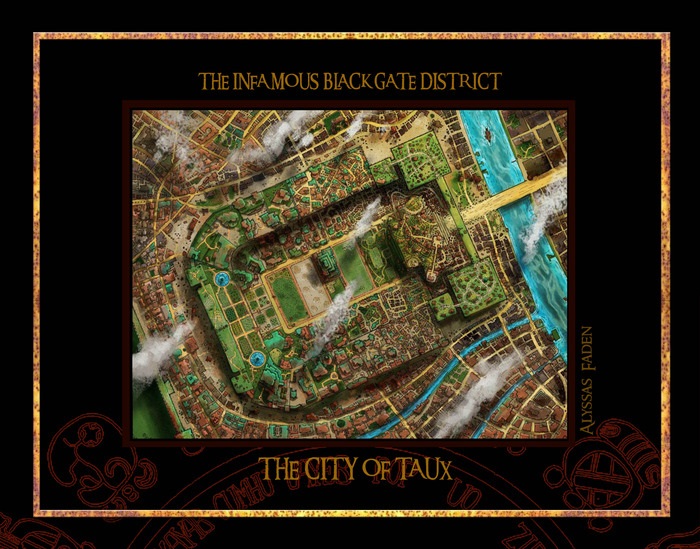
The Black Gate district of the city of TauxSF Signal interviews editor and Black Gate blogger Scott Taylor on the occasion of his sixth Kickstarter project: A Knight in the Silk Purse, the follow-up to his enormously successful shared world anthology, Tales Of The Emerald Serpent.

Nick Sharps: What lesson did you learn from the first anthologies campaign that has carried on to Volume II? Are there plans for future anthologies?

ST: Well, we learned that selling fiction is hard, and selling a anthology is even harder. Still, we were happy to get the backing for our first endeavor, and we knew that if we could just produce that work, people would get what we were doing and that would carry over to further volumes. So far, we’ve been right, and this new Kickstarter has built-in stretch goals that could see to the production of up to six full volumes of this series that would take us to the culmination of the story we all set out to tell.

A Knight In The Silk Purse returns to the Free City of Taux, a fantasy port of cursed stones, dark plots, and a cast of characters who have made a name for themselves in the infamous Black Gate District. It is edited by R. Scott Taylor and includes contributions from Martha Wells, Julie Czerneda, Elaine Cunningham, Todd Lockwood, Lynn Flewelling, Dave Gross, Juliet McKenna, and others. With 23 days to go, it is already more than halfway to its target goal of $10,000 (with stretch goals that go all the way up to $300,000).

Read more about the launch of Tales Of The Emerald Serpent here and read the complete interview with Scott here. You can also read his recent article The Joy and Pain of Kickstarter [and How Backed Projects Still Fail].

You can pledge to support A Knight In The Silk Purse at Kickstarter here.

Law vs. Chaos replaces Good vs. Evil?

Law vs. Chaos replaces Good vs. Evil?

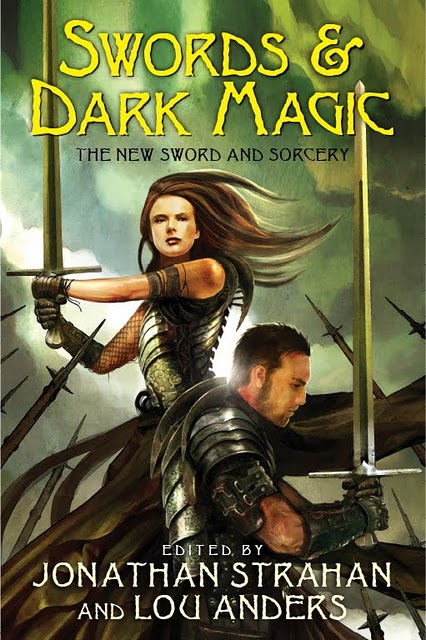
swords-dark-magic-256Jonathan Strahan and Lou Anders dedicate their sword and sorcery anthology Swords and Dark Magic to Robert E. Howard, Fritz Leiber, and Michael Moorcock as “the great literary swordsmen who made it possible.”  Creating one of the most memorable characters in the genre — the “anti-hero” of Elric of Melniboné — would be enough to earn Moorcock this acknowledgment.  But Strahan and Anders suggest that:

It might be his alteration of the battle of Good versus Evil into that of Law versus Chaos (with disastrous consequences implied if either side ultimately triumphed over the other) that made the most significant contribution to fantasy literature (p. xv).

For those who may be unfamiliar with this distinction, Moorcock’s fantasy universe (or multi-verse) is populated, and seemingly controlled to some extent, by the Lords of Law and the Lords of Chaos. These god-like beings seemingly have mysterious and unfathomable intentions.

But they often appear to desire to exert their Lawful or Chaotic control over mortals and their worlds. As Strahan and Anders note, results are calamitous for any such world and its inhabitants when the scale tips too far towards either Law or Chaos.

No doubt this “alteration” has been significant. Outside the realm of fantasy literature, Moorcock’s Law versus Chaos contrast is most notably seen in the early Dungeons and Dragons rules. Its famous notion of alignment spawned a whole cosmological picture upon which this historically important game was built.  (See Appendix 1 “The Known Planes of Existence” in Deities and Demigods.)

Nevertheless, I disagree with Strahan and Anders’s wording of this LC contrast. They seem to suggest — and they are not the first to do so — that Moorcock’s LC is a replacement of the traditional Good versus Evil dynamic within his famous sword and sorcery tales.

I want to suggest that it is rather an added facet. I’ll look at just one of Moorcock’s famous Elric stories to make this case.

Read More Read More

Iain M. Banks, February 16, 1954 – June 9, 2013

Iain M. Banks, February 16, 1954 – June 9, 2013

Iain M BanksIain M. Banks, the Scottish novelist who — almost uniquely — created parallel careers as both a bestselling literary author and a top science fiction author, died yesterday at the age of 59, two months after announcing he had terminal gall bladder cancer.

Iain Banks burst onto the literary scene in 1984 with his first novel, The Wasp Factory. It was both a critical and commercial success, listed in 1997 as one of the top 100 books of the 20th century, and it allowed Banks to become a full-time writer.

I heard a great deal about The Wasp Factory when it was first published, but it was his first science fiction novel, Consider Phlebas (1987) that really brought him to my attention. It was the first volume of his popular The Culture series, a sequence of ten books set in a far future civilization run by intelligent machines. Consider Phlebas and the volumes that immediately followed — The Player of Games, The State of the Art, and Use of Weapons — were much read and discussed among my small circle of friends in Ottawa.

Banks published science fiction as “Iain M. Banks,” and literary fiction as “Iain Banks.” All told, he wrote a total of 26 novels; his most recent were The Hydrogen Sonata by Iain M. Banks (Oct 9, 2012) and Stonemouth by Iain Banks, published one day later on Oct 10, 2012.

He won the British Science Fiction Association Award twice, in 1994 for Feersum Endjinn and 1996 for Excession. He was nominated for the Hugo Award in 2005 for The Algebraist.

His last novel, The Quarry by Iain Banks, is scheduled for publication later this month, on June 20.

Oz Reviews The Book of Skulls by Robert Silverberg

Oz Reviews The Book of Skulls by Robert Silverberg

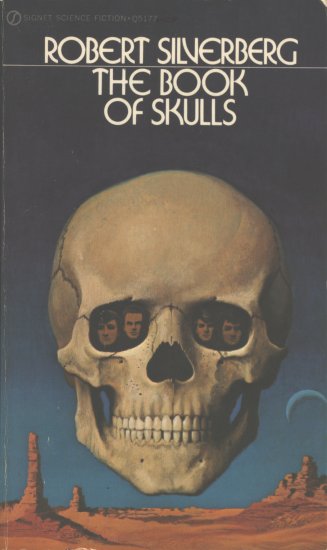
book of skullsThis novel came out in 1972 under the Signet Science Fiction imprint, which is quite misleading. There is nary a hint of sci-fi in its pages. Rather, The Book of Skulls is a deeply compelling psychological study, a book full of mystery and existential dread.

The story is told by four narrators: Eli, Ned, Oliver, and Timothy, Harvard college students who are the book’s protagonists. Each of the forty-two chapters is prefaced by the name of one of the four, the narrator of that chapter, so we are constantly shifting among the four minds. We get four strongly delineated perspectives as the story unfolds through their cross-country road trip to their ultimate goal: an ancient mystery cult in the Arizona desert that may possess the secret to physical immortality.

Eli, we learn, came across The Book of Skulls during one of his forays into the rare and uncatalogued manuscripts section of the university library. Translating it, he discovered the bizarre claim of the Brotherhood of Skulls, that they can forestall death. Further translation revealed that to become an initiate into their secrets of immortality, four candidates must come, a four-sided Receptacle. But part of the demand of the initiation is that two of the four must die: “The Ninth Mystery is this: that the price of a life must always be a life. Know, O Nobly-Born, that eternities must be balanced by extinctions. As by living we daily die, so then by dying we shall forever live.”

Eli has talked his three roommates into going with him in search of the cult over spring break, and each has his own motives for going along, which are gradually revealed as we get into their heads.

Read More Read More

Art of the Genre: The Top 10 Role-Playing Games of All-Time

Art of the Genre: The Top 10 Role-Playing Games of All-Time

SFAD Cover-1In my continuing series of ‘Top 10s’, I’m very happy to be doing a subject that incorporates two things I would simply have a hard time living without: fantasy gaming art and the games themselves.  So, considering I’m currently in the middle of running a Kickstarter that not only is looking to produce an absolute load of original fantasy fiction, but also an RPG and art book,  what better time to compose a list of The Top Ten Role-Playing Games of All Time.

Now, I suppose I should mention that I’ve been playing RPGs since I was 10, and without revealing just how old I am, it must be understood there is a measurable amount of time involved there.  Certainly, I’m not the foremost expert on role-playing games, but I’m going to put myself in the upper 10% of gamers and that should give me enough perspective to comprise this list.

Having established that I can’t help but say that going back in time, weighing the impact, reach, and longevity of so many games was an absolute thrill, and so many memories came flooding back with each one.  I was also surprised at how many I’d played (all of them), even if just once during a random gaming session in some long forgotten era of my life.

These games, you see, are like time capsules of memory, and when they come up in conversation with gamers, I think every one of those in the discussion is ripped back through time to the point where they sat at a table, rolled dice, and laughed with friends most likely long out of their lives.  Only games that take place on a table-top make such an intimate miracle happen, their power unmistakable and their reach deeper than most non-gamers would ever understand.

So, without further ado, let’s get into the meat of this list and find out just what games made it in, which ones were snubbed, and how many people can disagree with my choices!

Read More Read More