Browsed by
Category: Blog Entry

Self-published Book Review: Woman of the Woods by Milton Davis
Self-published Book Review: Woman of the Woods by Milton Davis

Woman of the Woods - small

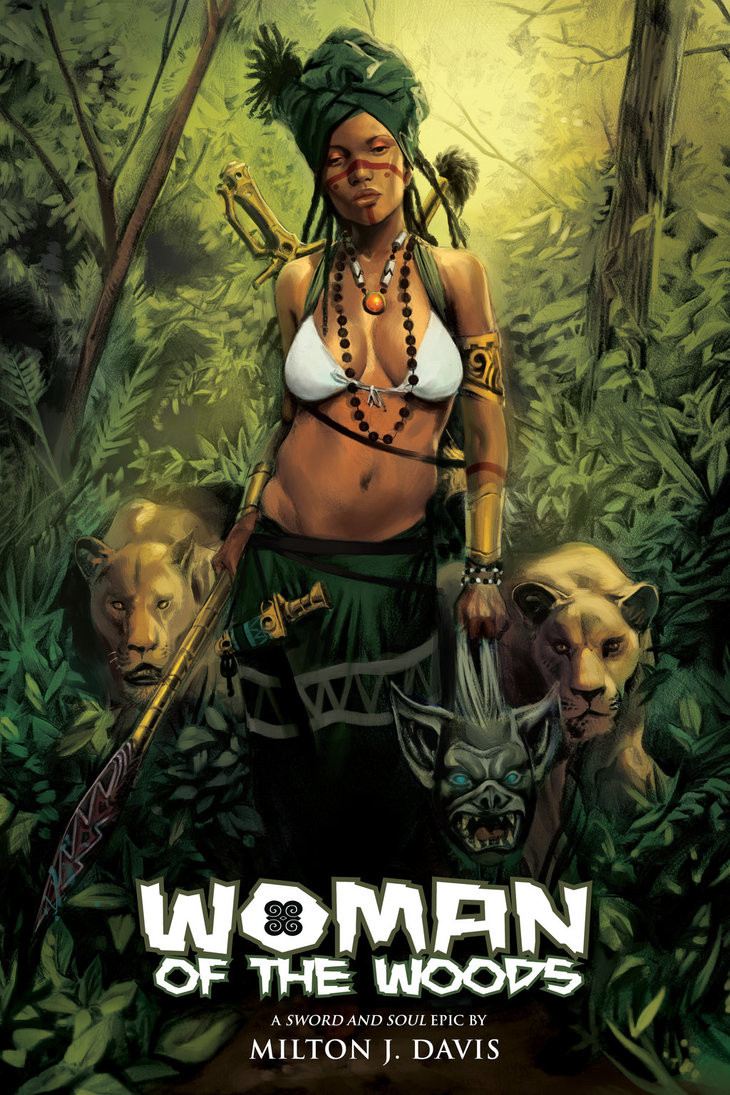
This month’s self-published novel is Woman of the Woods by Milton Davis. Set in the land of Meji, a mythical land based on ancient Africa, Woman of the Woods is the story of Sadatina, a young woman of the Adamu. For centuries, the Adamu have been under attack by the nyoka, dark ape-like servants of the god Karan. Their only protection has been the Shosa, warrior-women blessed by their god, Cha, to fight the nyoka. Even as a young girl, Sadatina is stronger and faster than her older brother, better at hunting and fighting than any of the young men in her village. She eventually learns that this is because she is the forbidden daughter of a Shosa, and even untrained, she is blessed with their fighting ability. She needs those abilities when the nyoka come, slaughtering her adoptive family, leaving her to fend for herself, and eventually her village, with only the aid of two shumbas–jungle cats whom she has raised from cubs. It is as the village’s protector that she earns the name Woman of the Woods, since she protects the village while living apart from it. The Shosa find her there, and invite her to join them. At first she refuses, and returns home. At this point, the story skips forward twenty years, to where she has not only become a Shosa, but their military and spiritual leader.

The latter half of the book, where Sadatina is a mature warrior rather than an awkward girl, is a different story than the beginning. In a longer work, where the second half was a separate novel in its own right, the change would have been less jarring. As it is, it takes some getting used to for the reader to see Sadatina giving orders rather than rebelling against them. The latter half’s story is also larger, more epic story than the coming of age story which filled the first half of the novel. Rashadu, a nyoka who long ago turned against his master, has returned, and it is up to Sadatina to decide whether he is an enemy or an ally against Karan.
Read More Read More

Vintage Treasures: The Best of Hal Clement

Vintage Treasures: The Best of Hal Clement

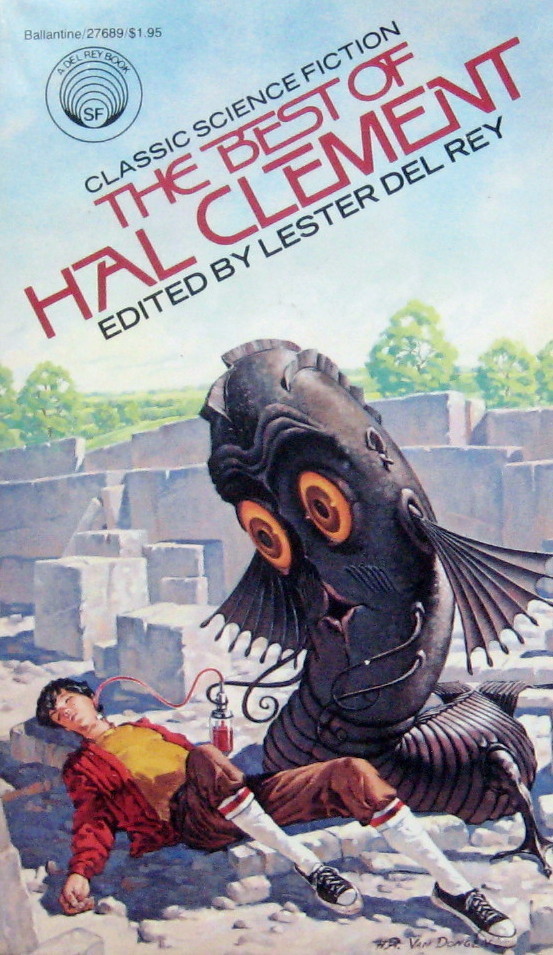
The Best of Hal Clement-smallHal Clement was perhaps the least well-known subject in the Classics of Science Ficiton series, even in 1979, when The Best of Hal Clement appeared. He’s virtually forgotten today, 10 years after he died.

Ironically, he was probably the author I was personally most familiar with. Not because I read much of his fiction (not a lot was in print by the late 70s), but because of Maplecon.

Maplecon was the small local science fiction convention in Ottawa, Canada. I started attending in 1978, riding the bus downtown to the Chateau Laurier, a pretty daring solo outing at the age of fourteen. Hal Clement lived just a few hours away from Ottawa, in upstate New York, and he’d been a Guest of Honor at one of the earliest Maplecons; after that, he became a regular attendee. The convention staff referred to him warmly as “our good luck charm.”

I remember Clement — whose real name was Harry Clement Stubbs — as a friendly, highly articulate, and good-humored man. He was in his early 50s when I first saw him, so of course I considered him infinitely old. He was also soft-spoken and not prone to talking up his own work, which probably explains why all those times I heard him speak didn’t result in a lingering interest in his novels.

Clement wrote in a category that is nearly extinct today: true hard science fiction, in which The Problem — the scientific mystery or engineering puzzle at the heart of the tale — is the central character, and the flesh-and-blood characters that inhabit the story are there chiefly to solve The Problem. When Clement talked about writing, he mostly talked about the requirement to keep his stories as scientifically accurate as possible; he described the essential role of science fiction readers as “finding as many as possible of the author’s statements or implications which conflict with the facts as science currently understands them.”

Okay, that ain’t how I view my role as a reader — and I read a fair amount of hard SF. But your mileage may vary.

Read More Read More

A.C. Crispin, April 5, 1950 – September 6, 2013

A.C. Crispin, April 5, 1950 – September 6, 2013

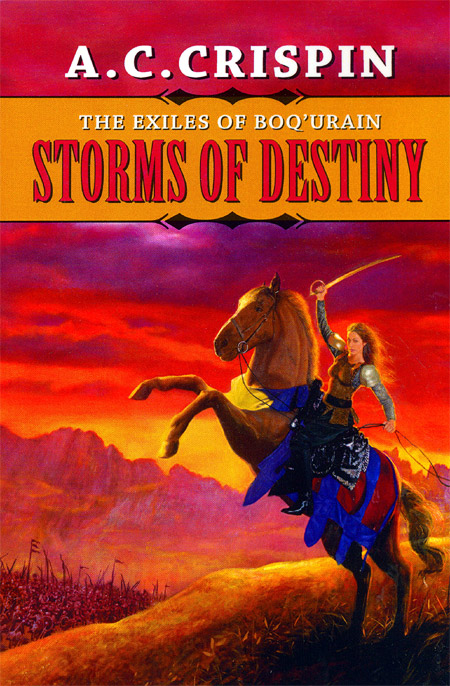
Storms of Destiny-smallAnn C. Crispin, who wrote 23 novels under the name A.C. Crispin — including the Starbridge series and two collaborations with Andre Norton — died yesterday.

Crispin began her career in 1983 with the Star Trek novel, Yesterday’s Son, in which Spock discovers that his brief dalliance with Zarabeth in an ancient ice cave in “All Our Yesterdays” resulted in a child. Accompanied by Kirk and McCoy, he uses the Guardian of Forever (from “The City on the Edge of Forever”) to journey back in time to rescue his son. It was the first Star Trek novel other than a movie novelization to hit The New York Times Bestseller List, and she followed her success with a sequel, Time for Yesterday.

Crispin produced six Star Trek novels and quickly branched out to other media properties. She wrote a novelization of the TV series V in 1984 and Alien: Resurrection in 1997. All three novels in her popular Han Solo Trilogy (The Paradise Snare, The Hutt Gambit, and Rebel Dawn) appeared in 1997.

She wrote two novels in the Witch World series with Andre Norton: Gryphon’s Eyrie (1984) and Songsmith (1992). The first novel in her Starbridge science fiction series appeared in 1989; it was followed by six more, the last five written in collaboration with a number of authors, including Kathleen O’Malley, T. Jackson King, and Ru Emerson.

Her last novel, Storms Of Destiny, the first installment in what was intended to be The Exiles of Boq’urain trilogy, was published in 2005.

Read More Read More

“It’s Your Job to Make it Interesting. Just Do Your Job”

“It’s Your Job to Make it Interesting. Just Do Your Job”

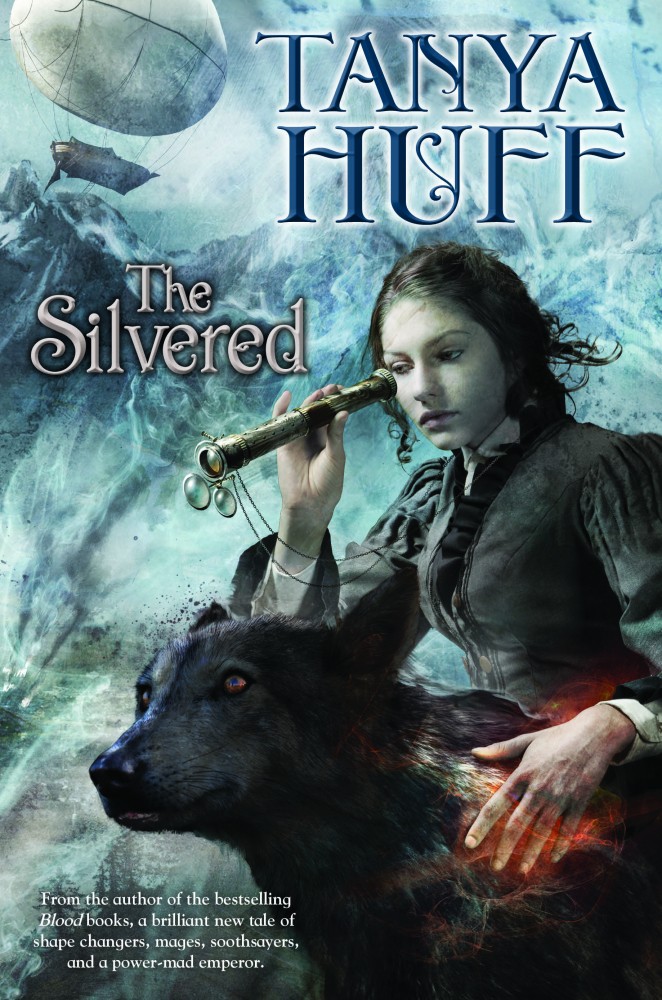
The Silvered-smallThat’s what Tanya Huff said when Michelle Sagara suggested there was quite a bit of paranoia surrounding the idea of writing exposition – you know, all that explaining and informing stuff that I started talking about a couple of weeks ago?

As luck would have it, there was a panel on this very subject at World Con, featuring Jack McDevitt, Tanya Huff, Karl Schroeder, Walter Jon Williams, and Michelle Sagara (aka Michelle West), so rather than go on with my own prepared remarks, I’ll take this opportunity to relay their wisdom on the subject. They touched on many of the points I raised last time – notably the use of first person and the stranger-in-a-strange-land trope – and I’ll no doubt be referring to remarks made at this panel over the next couple of posts, where relevant to the specific subject at hand, but I’ll give you a short summary here.

What could be truer than the quote I use above – which, by the way, you should imagine being said in the most reassuring tone, the tone that says, “You can do it.” As writers, we hope never to write anything the readers find uninteresting. As readers, we know that there are parts we skip, don’t we? Just keep in mind that we don’t all skip the same parts. Setting aside how easy it might be to just do your job, think about what is being said here. It’s not your job to educate the readers. It’s your job to make whatever you do decide to tell them interesting.

Read More Read More

Blogging Dan Barry’s Flash Gordon, Part Seven

Blogging Dan Barry’s Flash Gordon, Part Seven

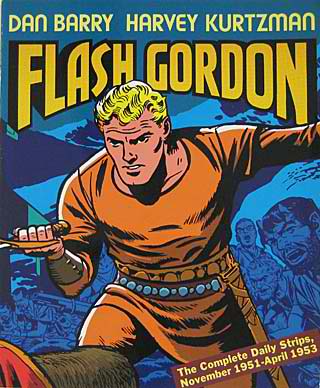
kurtzman_flash_gordon_cvr1089218651297“Circea” by Dan Barry was serialized by King Features Syndicate from March 22 to May 29, 1954. This lighthearted story begins with Zarkov encouraging Flash to propose to Dale. Just as he starts to ask her to marry him, the gravity of the area around them is thrown off and Flash and Dale find themselves hurtling past the clouds while the oxygen grows rapidly thinner.

They recover consciousness to find themselves in a rocketship hurtling through space. They leave our galaxy and pass through a comet unscathed before entering the atmosphere of an unknown planetoid in a far distant galaxy. They are brought to rest through the skylight of a large installation perched high on a cliff. They find themselves facing a beautiful woman named Circea who has observed Flash from afar and become infatuated with him.

Read More Read More

New Treasures: The Revelations of Zang by John R. Fultz

New Treasures: The Revelations of Zang by John R. Fultz

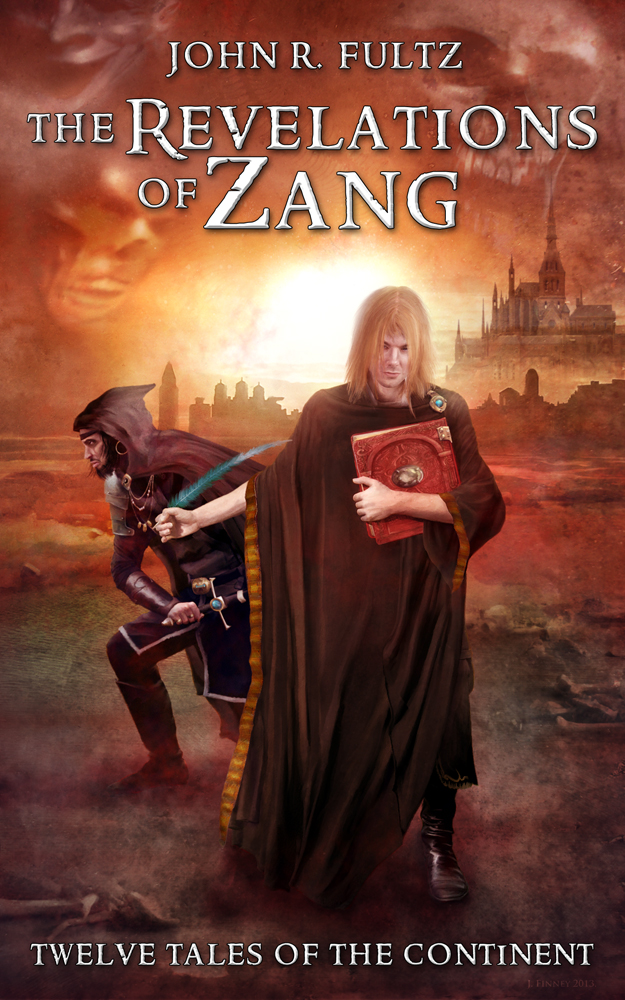
The Revelations of Zang-smallWe published three stories from John R. Fultz’s baroque and fascinating sword & sorcery Zang Cycle in the print version of Black Gate: “Oblivion Is the Sweetest Wine,” featuring the famous thief Taizo and his daring heist in spider-haunted Ghoth (BG 12); “Return of the Quill,” in which Artifice’s long-simmering plan to bring revolution to the city of Narr finally unfolds (BG 13); and the prequel story “The Vintages of Dream” (BG 15). Next, John took us back in time to Artifice’s first year as a member of the travelling Glimmer Faire in “When the Glimmer Faire Came to the City of the Lonely Eye,” which appeared as part of the Black Gate Online Fiction line here in January.

Those four tales triggered an intense interest among our readers, and over the years John returned to Zang many times. He elaborated on the evolution of the saga in a recent post here on the BG blog:

Once Upon a Time in Zang… a fugitive author and a devious cutthroat began a revolt against the nine Sorcerer Kings whose power displaced the gods themselves. Like the revolt, which began in far-flung places, the Zang Cycle of stories would grow slowly and cover a lot of ground…

It all started with “The Persecution of Artifice the Quill,” in the pages of Weird Tales #340 (2006). The cover of that issue featured a horde of the faceless warlocks known as Vizarchs, who drag Artifice the Quill away in the story’s opening scene, a scene painted by the talented Les Edwards.

The story was a turning point for me: The fulfillment of a long-standing dream (getting published in Weird Tales) and the introduction of two characters I would return to many times: Artifice the Quill and Taizo the Thief.

I wrote eleven more Zang Tales and moved the series to the welcoming pages of Black Gate, where it flourished for many issues.

Now, seven years after the first story appeared in Weird Tales, the complete Zang Cycle has been collected in a new volume, The Revelations of Zang: Twelve Tales of the Continent, released by 01Publishing this summer.

Read More Read More

An Introduction to King of Chaos

An Introduction to King of Chaos

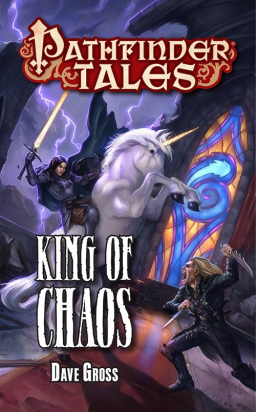
Pathfinder Tales King of Chaos-smallWhen I began writing Queen of Thorns, my favorite secondary characters were the bleachling gnome Fimbulthicket and the elven Calistrian inquisitor Kemeili. Before long, however, the elven paladin Oparal grew closest to my heart.

That proved problematic because I was revealing her character through the eyes of my flawed protagonists, Radovan and Varian, each of whom has his own tilted worldview when it comes to elves, paladins, women, or all three. Thus, by the end of the novel I feared Oparal had earned less sympathy from the readers, who had seen her only from the outside, than she had from me, who knew the secrets of her heart.

Thus, as I was finishing revisions on the novel and editor James Sutter and I discussed where the boys might travel next, I added a scene showing that Oparal would leave Kyonin to join the Silver Crusade against the demons of the Worldwound, knowing full well the boys would soon join her. It was time, I decided, to tell part of the story from her point of view.

Elsewhere, you can read about how hard it was to find Varian’s voice after establishing Radovan’s first, in the novella “Hell’s Pawns.” It was slightly less difficult to come up with the “voice” of Arnisant the Ustalavic wolf hound in “Master of Devils.” Finding Oparal’s voice took me several tries, and I probably rewrote this first chapter four or five times before feeling I’d found it and having the courage to move on to the rest of her chapters.

I hope you will find it a voice equal to those of “the boys,” and by the end of the novel, I like to think we’ve seen Oparal from the inside as well as from the outside.

Read the first chapter of King of Chaos right here at Black Gate, and try an exclusive excerpt of Queen of Thorns here.

To order the novels, visit paizo.com.

Cosmic Horror and Gritty Noir: A Review of The Beautiful Thing That Awaits Us All by Laird Barron

Cosmic Horror and Gritty Noir: A Review of The Beautiful Thing That Awaits Us All by Laird Barron

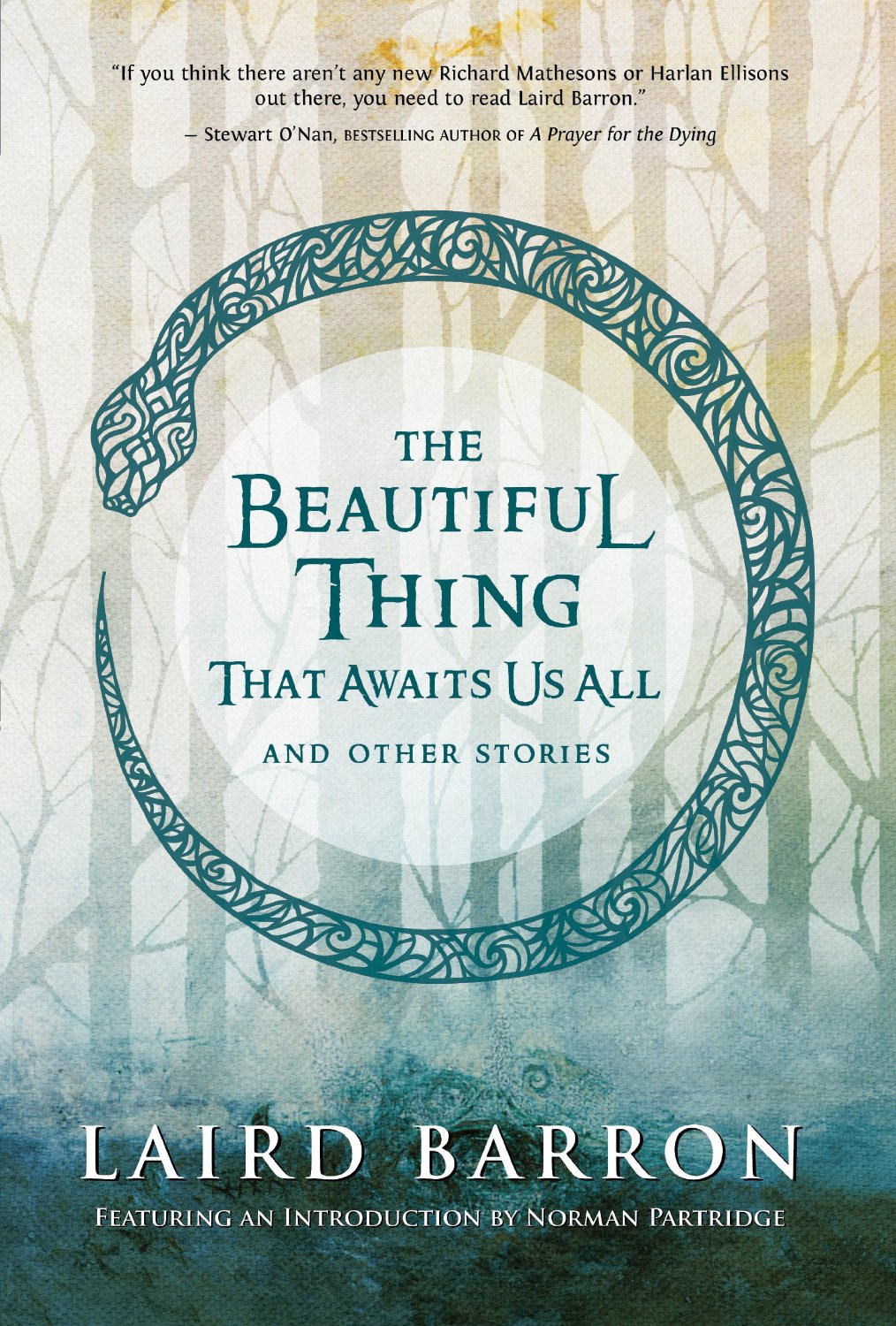
The Beautiful Thing That Awaits Us All-smallThe Beautiful Thing That Awaits Us All
By Laird Barron
Night Shade Books (280 pages, $26.99, September 3, 2013)

After having its delivery date pushed back multiple times, Laird Barron’s The Beautiful Thing That Awaits Us All has finally arrived.

This highly anticipated book marks Barron’s third collection of short stories (and fourth book), following both of his Shirley Jackson Award-winning collections The Imago Sequence and Occultation, as well as his 2012 debut novel, The Croning. As with his prior volumes, this one continues to meet, and exceed, the bar of contemporary horror stories, showing that Barron is still one of the leading horror voices of today.

Let me emphasize that this collection is in keeping with what I, and many others, have come to love and expect from Barron: a great combination of cosmic horror feel — which many associate with the early pulp writer H. P. Lovecraft — as well as Barron’s own gritty noir-like style. I’ll not retread this well-known ground. Rather, in this review I want to emphasize some other merits of this book, which I believe are represented in Barron’s other works as well.

First, I don’t know if this is new, or perhaps I just missed it in his earlier stories, but I noticed some great humor, especially in character dialogue.

Read More Read More

Fall 2013 Subterranean Magazine now Available

Fall 2013 Subterranean Magazine now Available

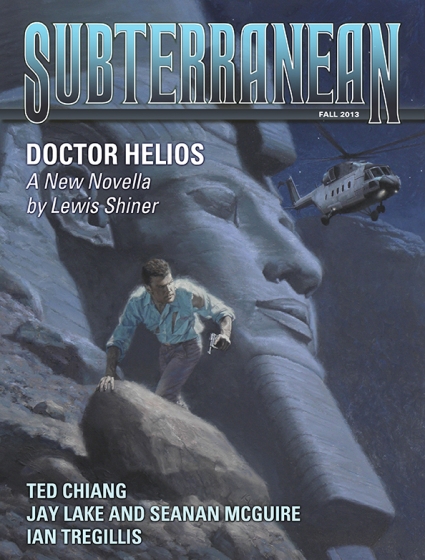
Subterranean Magazine Fall 2013-smallThe tireless Bill Schafer has released another issue of the excellent Subterranean Magazine, right on time, continuing to make those of us who struggled with publishing deadlines look bad. Jerk.

The Fall Issue is packed with big names, too. Just check out this table of contents:

“Doctor Helios,” by Lewis Shiner
“The Truth of Fact, the Truth of Feeling,” by Ted Chiang
“Hook Agonistes,” by Jay Lake and Seanan McGuire
“What Doctor Ivanovich Saw,” by Ian Tregillis

Lewis Shiner is the author of Deserted Cities of the Heart, Frontera, Slam, and many other novels. “Doctor Helios” is a whopping 30,000 words, practically a novel in itself.

The brilliant Ted Chiang has won four Nebula awards and four Hugo awards for his short fiction — pretty good considering he’s written only 14 stories in the past 23 years. A new Chiang story is a major event, and it’s not often you’re offered one for free.

Jay Lake has been published twice in Black Gate magazine (“Fat Jack and the Spider Clown,” in BG 8 and “Devil on the Wind,” in collaboration with Michael Jasper, in BG 14); his collaborator here, Seanan McGuire, has never been published in Black Gate, but we don’t hold that against her. She has written 10 novels in the October Daye series, and (as Mira Grant) the Newsflesh trilogy and the upcoming Parasite.

I saw Ian Tregillis give a reading at the World Science Fiction Convention last year — and that man knows how to pack a room. His most recent novels are Bitter Seeds, The Coldest War, and Necessary Evil, the final book in the The Milkweed Triptych.

Subterranean is edited by William Schafer and published quarterly. The Fall 2013 issue is completely free and available here; see their complete back issue catalog here. We last covered Subterranean magazine with their previous issue, Summer 2013.

Vintage Treasures: The Lords of Underearth

Vintage Treasures: The Lords of Underearth

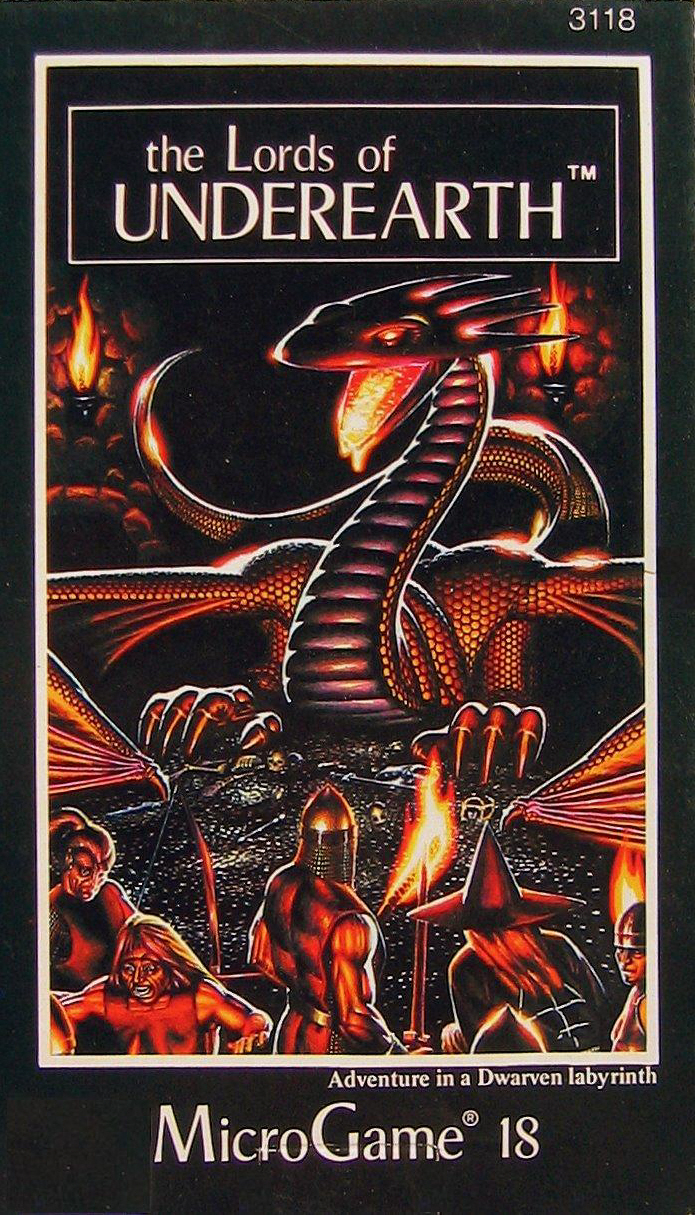
Lords of Underearth-smallI’ve written before about the marvelously compact games from Metagaming that first introduced me to role playing, both in my editorial in Black Gate 12 and here on the blog.

It was the ubiquitous Metagaming ads on the inside cover of Analog and Isaac Asimov’s Science Fiction Magazine in the late 70s that first caught my eye. I carefully clipped out the order form (I bet you kids have never clipped an order form out of a magazine in your life. Bah! You don’t know what you’re missing. A gaping hole in the cover of your magazine, that’s what you’re missing) and mailed off my $2.95 for copy of Melee and $3.95 for the fabulously deluxe Wizard.

Both games were written by Steve Jackson — yes, the same genius designer behind Ogre, GURPS, Car Wars, Munchkin, and numerous others. For my money (all $6.90), those two early games still rank as perhaps his finest creations.

Steve Jackson left Metagaming in the 1980 to found Steve Jackson Games and his loss was keenly felt. But the rights to Melee and Wizard remained with Metagaming and its owner, Howard M. Thompson. Thompson supported the system with a series of excellent releases, including some of the best solitaire products this industry has ever seen, including Death Test, Death Test 2, Orb Quest, and Grail Quest.

I’ve been playing Grail Quest since 1980 — the last few years with my son Drew at my side — fruitlessly searching the treacherous woods and castles outside Camelot for the Holy Grail. It’s got to be in that damn game somewhere. I’m going to find it some day, I swear.

Anyway, Metagaming produced a total of 22 microgames before the company folded in 1983. Virtually all of them were science fiction and fantasy in theme, and they exhibited an imaginative range of settings and themes, from Rivets — the game of two dueling robot colonies — to Sticks & Stones, the first (and only) stone age RPG. I’ve gradually collected all of them over the years, and it was with some satisfaction that I finally completed my collection this year with the one that was the most difficult to track down: the fantasy game of subterranean warfare in an ancient Dwarven Stronghold, The Lords of Underearth.

Read More Read More