Browsed by
Category: Blog Entry

The Top 20 Black Gate Fiction Posts in May
The Top 20 Black Gate Fiction Posts in May

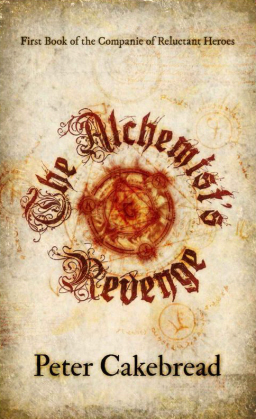
The Alchemist's Revenge-smallThe most-read piece of fiction on the Black Gate blog last month was our exclusive excerpt from The Alchemist’s Revenge by Peter Cakebread, the first novel from the co-author of the role playing games Airship Pirates and Clockwork & Chivalry. The first volume in the Companie of Reluctant Heroes takes place in a 17th century that didn’t quite happen, in a nation torn apart by civil war.

When an embittered mercenary agrees to escort a grieving widow to visit her husband’s grave, little does he realize the dangers they will face. This is the story of their struggle through a country divided. As they journey through tainted lands, ravaged by alchemical magic and giant clockwork war machines, they are reunited with old friends and stalked by sinister foes. The reluctant heroes band together in this tale of loss and despair, of redemption and friendship, and ultimately, of retribution and revenge!

“Stand at Dubun-Geb,” Ryan Harvey’s second tale of Ahn-Tarqa, returned to the setting of “The Sorrowless Thief,” for another heroic fantasy packed with adventure, swordplay, and weird magic. It took second place this month.

Steven H Silver’s tale of the strange astral adventures of Hoggar the Cremator, “The Cremator’s Tale,” continued its run at the top of the charts, taking third place.

Also making the list were exciting stories by Janet Morris and Chris Morris, Mark Rigney, C.S.E. Cooney, Michael Shea, David Evan Harris, Aaron Bradford Starr, Joe Bonadonna, John C. Hocking, E.E. Knight, David C. Smith and Joe Bonadonna, Jason E. Thummel, Jon Sprunk, John R. Fultz, Dave Gross, and Harry Connolly.

If you haven’t sampled the free adventure fantasy stories offered through our Black Gate Online Fiction line, you’re missing out. Here are the Top Twenty most-read stories in May.

Read More Read More

New Treasures: Robert A. Heinlein: In Dialogue With His Century Volume 2: 1948 – 1988: The Man Who Learned Better, by William H. Patterson

New Treasures: Robert A. Heinlein: In Dialogue With His Century Volume 2: 1948 – 1988: The Man Who Learned Better, by William H. Patterson

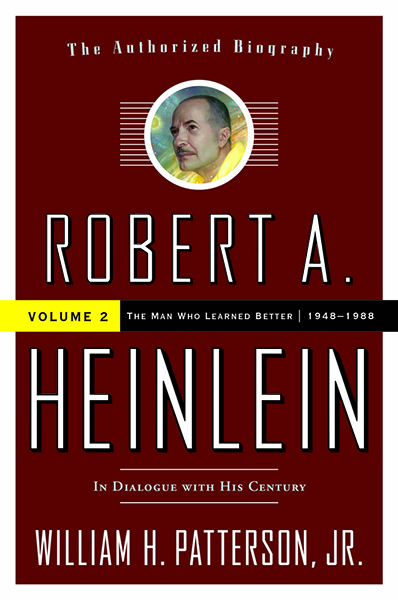
Robert A Heinlein In Dialogue With His Century Volume 2-smallIn 2003, I was on a panel on classic SF and fantasy with Charles N. Brown, the esteemed editor of Locus, when the conversation turned to Robert A. Heinlein (as it does).

I don’t know much about Heinlein, really. I read a small handful of his books when I was younger, but I was never really a fan. I was more an Asimov guy. Brown however, was a dedicated Heinlein reader, and when Heinlein died in 1988, Brown famously wrote that there had never really been “the Big Three SF writers,” (meaning Asimov, Clarke, and Heinlein.) There had only ever been Heinlein, towering over the field.

Heinlein’s first novel, For Us, The Living, written in 1939 but unpublished until 2003, would appear later that year. I had received an advance proof, but I hadn’t read it. Brown had, however, and the book was major news. The rest of us on the panel deferred to Charles as he smoothly warmed to his topic, lecturing the assembled crowd on the importance of the novel in Heinlein scholarship, and indeed, to literature itself.

“The thing to remember,” Charles said, “is that Heinlein never intended the novel to be published –”

“Yes he did,” I said.

Charles looked startled. He seemed to have forgotten that there was anyone else on the panel. He looked around, obviously annoyed at the interruption.

Read More Read More

Weird of Oz Travels Ahead Three Weeks in Time, Finds Himself in New House

Weird of Oz Travels Ahead Three Weeks in Time, Finds Himself in New House

photo-4My wife and I just bought a house, so for the next couple weeks we will be moving and unpacking. Hopefully, it’s a haunted house! (But if it is, please let it be only in a benevolent way — not one of those houses where the haunt tries to turn the husband into an ax murderer or anything, or goes sucking the children into television sets. I just don’t have time for that.) The Weird of Oz — yours truly — will be taking a brief hiatus, returning with a new column on July 14.

In the meantime, I thought I’d tell you — here in my 70th post for BLACK GATE — what a pleasure it is to be a part of this team and to share, discuss, and debate with this fantastic (in all senses of the word) community. With the phenomenal growth of BG’s visitors, it is also gratifying to know that so many readers are seeing one’s output! I will continue to do my best to inform and entertain.

As for what I have in the works for future posts, I’ll be resuming my blogging of the ‘80s DC comic book Arak at some point, I promise. But there will also be book and film reviews in the mix, as well as new installments of “Collector the Barbarian”, highlighting vintage toys from our childhood that I’ve been hunting down — toys and games of the fantasy, sci-fi, and horror variety that have become collectible.

Finally, here’s a little peek into the column-writing process: these are a few “leads” I’ve typed up for potential posts, with commentary from the internal editor included…

Read More Read More

The Public Life of Sherlock Holmes: Meet Nero Wolfe

The Public Life of Sherlock Holmes: Meet Nero Wolfe

Wolfe_Drawing1In 1926, Sir Arthur Conan Doyle penned his last Holmes tale, The Adventure of the Retired Colourman. Rex Stout, a fan of those tales, would shortly create a detective who would not only evoke memories of Holmes, but who would cast his own (gargantuan) shadow: Nero Wolfe. The seventy-four stories, written over forty-one years, would be collectively known as the Corpus, akin to the Sherlockian Canon.

Nero Wolfe lives in a New York City brownstone with Archie Goodwin, Fritz Brenner, and Theodore Horstmann. This boys’ club (Wolfe makes Holmes look like a romantic) is a self-contained unit, with Wolfe and Archie solving crimes, Fritz cooking and taking care of the household chores, and Horstmann assisting Wolfe with his hobby, the cultivation of orchids in a rooftop greenhouse.

Archie often comments on the beauty of the orchids, which is a far cry from the thoughts of General Sternwood in Raymond Chandler’s The Big Sleep: “Nasty things. Their flesh is too much like the flesh of men, and their perfume has the rotten sweetness of corruption.” Po-tay-toe, po-tah-toe, I guess.

Because the characters do not age, the stories all have a comfortable familiarity about them. Also, they are set contemporary to their writing, so while in a Holmes tale, it is ‘always 1895’, the Wolfe stories feel much more like modern mysteries, even though some are over seventy-five years old.

Read More Read More

How I Lost My Soul and Learned to Love Hell

How I Lost My Soul and Learned to Love Hell

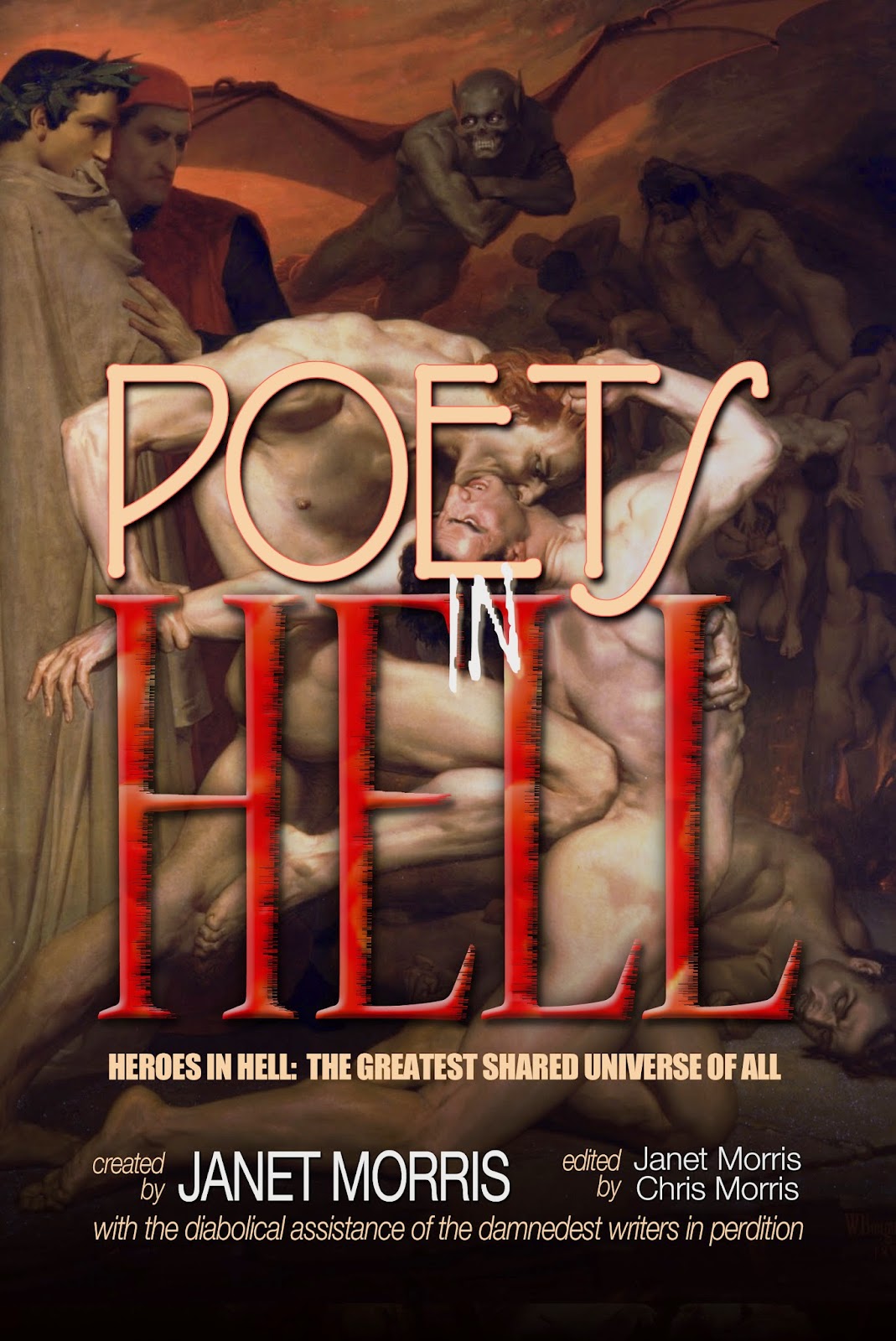
Poets in Hell-smallAs many readers of Black Gate no doubt know by now, I have previously reviewed the shared-universe anthologies Lawyers in HellRogues in Hell, and Dreamers in Hell, all edited by Janet Morris and Chris Morris.

Well, this time out, with Janet’s help, I am going to do something a little different for Poets in Hell, the 17th volume in the highly-acclaimed, award-winning, and very successful Heroes in Hell (HIH) series, what I like to call The Eternal Infernal Saga. Let me first give you a little back story, a little history as to how I, unplanned and undreamed, found myself wandering through the circles and levels of Hell.

A couple years ago, I was asked by my friend and fellow author, Bruce Durham, if I would write a review for the then-newest volume in the Heroes in Hell series, Rogues in Hell. I said sure, I’d be happy to, even though I was in the middle of writing my second novel.

I remembered the original Baen Books Heroes in Hell series, having enjoyed a number of those, and I was familiar with Janet Morris from her work in Thieves World™ and many of her own novels. But it had been years since I read those; and I’d been so long away from the fantasy genre that I had no idea that Heroes in Hell had continued on past the 4 or 5 volumes I had read in the 1980s and early 90s.

So I read Rogues in Hell, loved every word of it, wrote my review, and then bought the previous and first volume in the new 21st century series now published by Perseid Press, Lawyers in Hell. Now, while lost somewhere deep in the nether regions, I get contacted one fine day by none other than Janet Morris herself, who read my review, was very pleased with it, and liked the way I wrote it.

Read More Read More

Vintage Treasures: Master of Hawks by Linda E. Bushyager

Vintage Treasures: Master of Hawks by Linda E. Bushyager

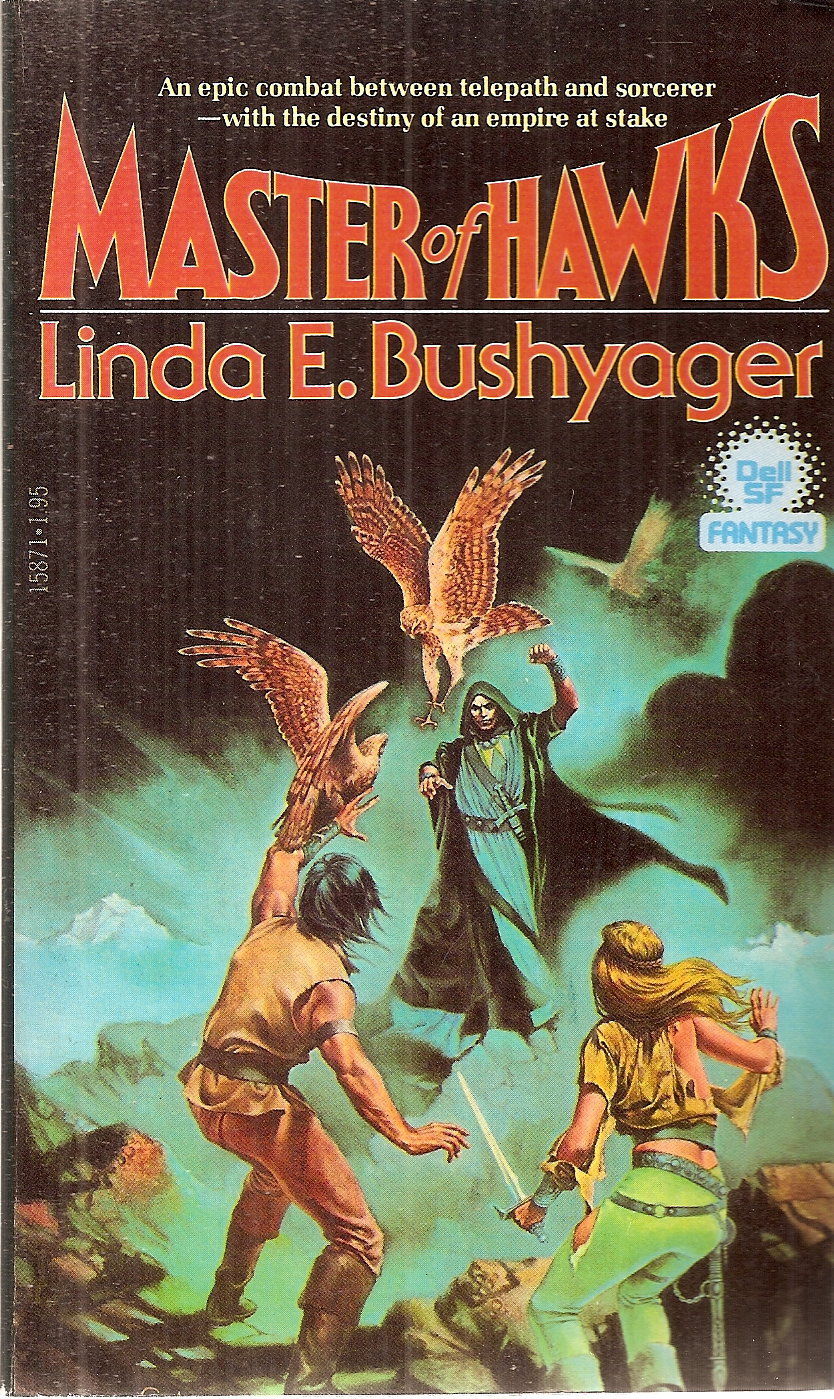
Master of Hawks Linda Bushyager-smallThursday’s article on Theodore Sturgeon’s The Stars Are the Styx reminded me of other Dell paperbacks we used to read, collect, and pass around enthusiastically in 1979. Perhaps the most popular was Linda E. Bushyager’s Master of Hawks.

Linda Bushyager is forgotten today. She wrote only two novels, Master of Hawks and its loose sequel, The Spellstone of Shaltus (May 1980), before vanishing, like J.D. Salinger. But she was far from forgotten among fantasy fans in the early 80s, who found her pair of novels set in the magical Eastern Kingdoms original and a lot of fun. Here’s the back cover blurb for Master of Hawks.

War of the Wizards

Backed by the power of the world’s mightiest sorcerers, the forces of the Empire marched on the Kingdom of York. But York had its own wizardry… including the telepathic gift of young Hawk, who could control every kind of bird — and more, see through their eyes.

The key to York’s survival was an alliance with the Sylvan — mysterious forest dwellers who mistrusted all humans — and to win their friendship, Hawk embarked on a quest deep into Empire territory, where only his mastery of his winged comrades could bring him through alive.

Linda E. Bushyager reappeared briefly in 2002, co-authoring the SF novel Pacifica with John Gregory Betancourt. She’s published nothing since.

Master of Hawks was published in July 1979 by Dell Publishing Co. It is 256 pages, originally priced at $1.95. The cover is by Maelo Cintron. It remained out of print for nearly 30 years, before being reprinted by Fantastic Books in trade paperback in April 2010. There is no digital edition.

Future Treasures: The Very Best of Fantasy & Science Fiction, Volume Two edited by Gordon Van Gelder

Future Treasures: The Very Best of Fantasy & Science Fiction, Volume Two edited by Gordon Van Gelder

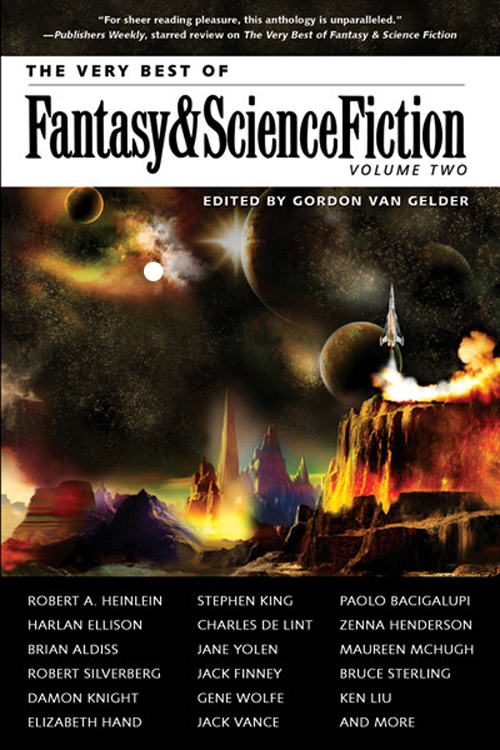
The Very Best of Fantasy & Science Fiction Volume 2-smallOne of my favorite anthologies of the last half decade (and considering how many I’ve purchased, that’s saying a lot) was The Very Best of Fantasy & Science Fiction, Volume  One edited by Gordon Van Gelder. Considering it was an absolutely gorgeous 470-page package sampling five decades of the finest fantasy magazine in the genre, how could it not be?

So I was delighted to hear that Gordon and his publisher, Tachyon Publications, are hard at work on a second volume. It will be released next month, and is nearly as large as the first. Here’s the description:

A mutant baby goes on a rampage through Central Park. An immigrant reveals secrets in the folds of a perfect gift. Lucky Cats extend their virtual paws to salute a generous revolution. The Internet invades a third-world village.

The premier speculative-fiction magazine Fantasy & Science Fiction continues to discover and showcase many of the most inventive authors writing in any genre. Now drawing even more deeply upon F&SF’s impressive history, this extraordinary companion anthology expands upon sixty-five years’ worth of top-notch storytelling. The Very Best of Fantasy & Science Fiction, Volume Two is a star-studded tribute to the continuing vision of F&SF.

This volume collects classic short fiction from Alfred Bester, Stephen King, Zenna Henderson, Robert Sheckley, Robert A. Heinlein,  Jack Vance, Roger Zelazny,  R. A. Lafferty, Lucius Shepard, Gene Wolfe, and many others. It even includes two of my all-time favorite stories: Harlan Ellison’s “Jeffty Is Five,” and “The Aliens Who Knew, I mean, Everything” by George Alec Effinger.

Here’s the complete Table of Contents.

Read More Read More

Robert Hood’s Fragments of a Broken Land: Valarl Undead Wins the Ditmar Award

Robert Hood’s Fragments of a Broken Land: Valarl Undead Wins the Ditmar Award

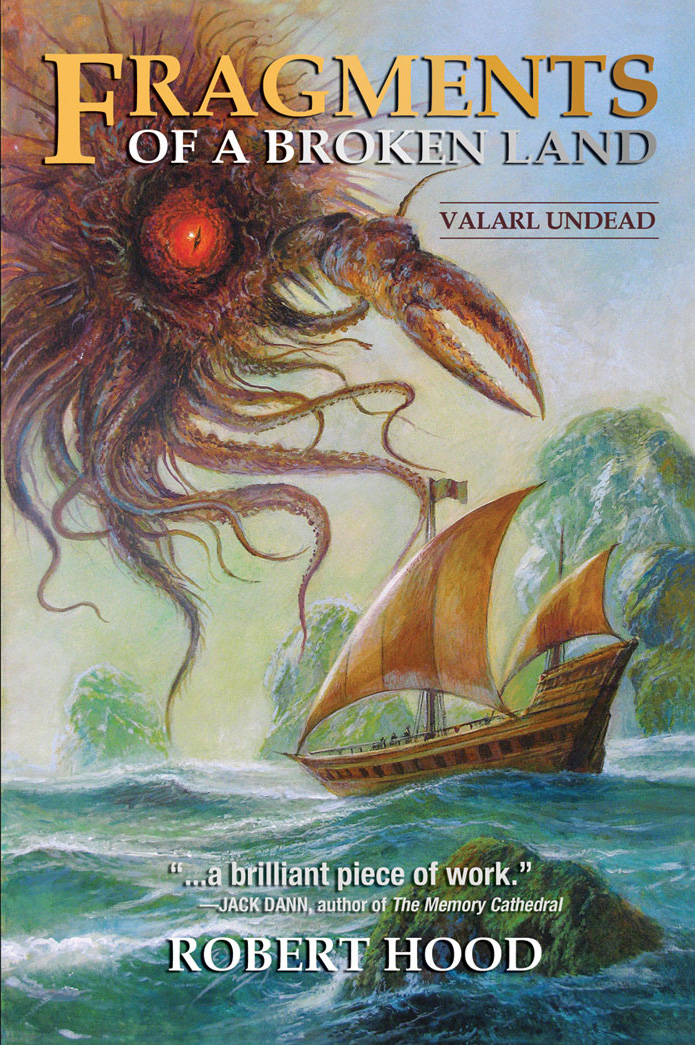
fragments of a broken land-smallWhat the heck is the Ditmar Award?

The Ditmar Awarda are the Australian Hugo Awards, recognizing superior achievement in Australian science fiction, fantasy, and horror. They’ve been awarded every year since 1969. They’re named after Martin James Ditmar “Dick” Jenssen, an Australian fan who footed the bill for the awards way back when they were just getting off the ground. Awards are given for best novel, short story, fan writing, and other more boring categories.

All very interesting. But what’s more interesting is that a major international award just went to a fantasy novel with GIANT TENTACLES ON THE COVER. And a floating red eyeball.

This is watershed moment, people. Thousands of years from now, future civilizations will point to this moment and say, “Yep, right there, that was it.” There will be no need to explain further, because future people are cool and will understand immediately.

I do not have a copy of Fragments of a Broken Land: Valarl Undead. But I really, really want one. I want to know what all the cool future people are talking about, and those Australians with their funky awards. Plus. Giant tentacles.

Read More Read More

Strange Chemistry Shuts Down

Strange Chemistry Shuts Down

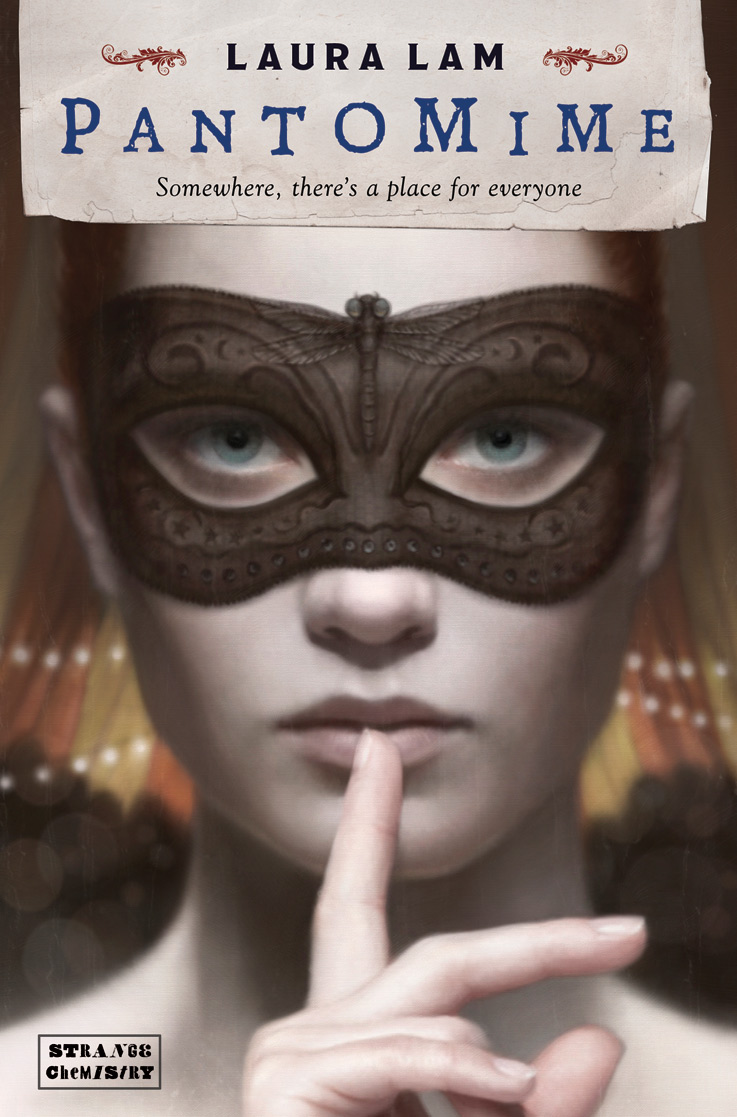
Pantomime by Laura Lam-smallStrange Chemistry, the innovative YA imprint of Angry Robot Books, has closed its doors. Here’s the announcement made earlier today by Caroline Lambe, Publicity Manager at Angry Robot:

Angry Robot Books has a history of innovation and we continue to go from strength to strength. We’re constantly trying out new concepts and new ideas, and we continue to publish popular and award-winning books. Our YA imprint Strange Chemistry and our crime/mystery imprint Exhibit A have – due mainly to market saturation – unfortunately been unable to carve out their own niches with as much success.

We have therefore made the difficult decision to discontinue Strange Chemistry and Exhibit A, effective immediately, and no further titles will be published from these two imprints.

Strange Chemistry launched in September 2012 with editor Amanda Rutter at the helm, and released 17 books in its first year. Last summer, they produced this splendid montage displaying all of their book covers, and we helped them celebrate their first birthday just last August.

Over the last two years, Strange Chemistry has published a marvelously diverse range of titles, including Martha Wells’s Emilie and the Hollow World, Jonathan L. Howard’s Katya’s World and its sequel Katya’s War, Broken by A. E. Rought, Black Dog by Rachel Neumeier, Pantomime by Laura Lam, and many others. The sudden shut down leaves nearly half a dozen previously announced titles in limbo, including Eliza Crewe’s Crushed, Rabble by Rosie Best, and A Curse of Ash and Iron by Christine Norris.

As disappointing as the news is, Angry Robot reports that their core SF and fantasy imprint is still very robust, and in fact they plan to increase output from two books a month to three. Read the complete announcement here.

New Treasures: Planets of Adventure by Murray Leinster

New Treasures: Planets of Adventure by Murray Leinster

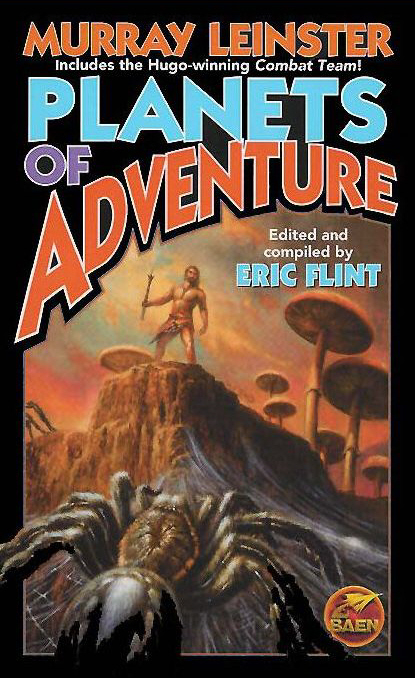
Planets of Adventure-smallThere’s lot of great new arrivals to tell you about this week. I’ve got them all stacked up beside my green chair, unread. Because the book I’m really excited about is Planets of Adventure by Murray Leinster, published by Baen Books over a decade ago.

That’s when I first bought it, too — over a decade ago. I went hunting for a copy as a birthday gift for my son last week, and was thrilled to find it was still in print. A fat omnibus of pulp science fiction from one of my favorite science fiction writers, still in print in mass market after nearly eleven years!

Just like that, my faith in humanity is restored. Here’s the back cover blurb, ’cause it’s awesome.

Breathtaking space adventure by a master of interplanetary science fiction. Including two complete novels, one of them a Hugo Award-winner.

The Planet Explorer: As humans spread throughout the galaxy, thousands of planets have been colonized. Often, the colonists discover too late that an apparently hospitable planet conceals a danger to their survival. The fate of these colonies scattered across the galaxy rests with one man, whose own fate is to race forever against looming interstellar disaster.

The Forgotten Planet: A ship is marooned on a planet whose existence has been mislaid by the galactic bureaucracy. And the planet’s ecology has gone wild, breeding deadly giant insects. The ship’s crew and passengers have no hope of rescue. Can they and their descendants survive? Tune in next millennium.

Plus more exciting adventures of men and women against the hostile stars.

Read More Read More