Browsed by
Category: Blog Entry

The Public Life of Sherlock Holmes: Those Sweet Silver Blues: Garrett, PI
The Public Life of Sherlock Holmes: Those Sweet Silver Blues: Garrett, PI

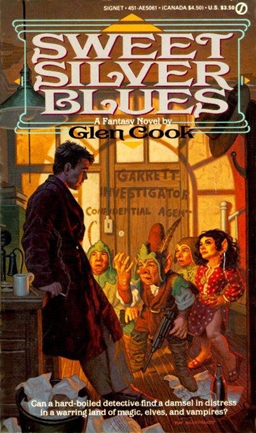
Garrett_BluesLast year, John O’Neill wrote a post about the Garrett PI collections by Glen Cook. The talented Cook is best known for his excellent dark fantasy series about a mercenary group, The Black Company.

The Garrett books are light years away in tone and style from those of The Black Company. However, they are identical in regards to quality of writing. Garrett is the pre-eminent fantasy PI (private investigator).

Cook has written a series of books that appeals to fans of the hardboiled PI, notably practiced by Raymond Chandler, fans of the humorous fantasy world best typified by Terry Pratchett’s Discworld and to those who have read Rex Stout’s Nero Wolfe mysteries. The fact that Cook has masterfully combined all three of these elements is admirable in the extreme.

Garrett is a former Marine who spent five inglorious years serving in the seemingly endless war between his nation of Karenta, and Venagata. They battle over a region called The Cantard, home to most of the world’s silver mines. And silver is the resource that fuels sorcery. And since Karenta is ruled by the magic-using Stormwardens, no cost in human capital is too great to rule The Cantard.


Read More Read More

Writer’s Workshops: Under the Black Flag

Writer’s Workshops: Under the Black Flag

Clarion 85 shirtI actually once said to a fellow writer, “The best thing you could do for art is cut off your hands and bury your typewriter.”

Beyond the words themselves, it’s hard to know what’s worse about this: that I said it to someone I’m sure I liked or that I can’t remember to whom I said it.

I know it was at the Clarion Writer’s Workshop in the summer of 1985, then held at Michigan State University in East Lansing. I knew it was someone I liked, because I liked every one of my fellow workshoppers. As I got to know the 16 other participants, I felt these are my people!

The context for the remark was a workshop session. For those unfamiliar with the format, everyone in the workshop delivers an oral critique of a manuscript handed out — and one hopes, read — in advance, then the author responds. Clarion workshops are machines for producing pithy one-liners — often put downs — the best (worst?) of which are memorialized on tee-shirts printed in the last week or two of the workshop.

So how was my comment received? With laughter, unbelievably. It was even graphically depicted in our year’s tee-shirt. (Image courtesy of Bill Shunn.)

I should say that my class was, according to our instructors, famously cohesive and collegial. Either they lied to make us feel good or other Clarion classes went at each other with lawn darts.

Read More Read More

A Wizard is a Wizard is a Wizard — Except When He’s Harry Dresden

A Wizard is a Wizard is a Wizard — Except When He’s Harry Dresden

Skin Game Jim Butcher.-smallSkin Game, A Novel of the Dresden Files
By Jim Butcher
Roc Books (464 pages, May 27th 2014, $27.95 in hardcover)
Cover by Chris McGrath

Skin Game is the newest novel in the  Harry Dresden series, #15 in the series. I enjoyed it so much, I re-read it.

I’m a real Harry Dresden fan. He reminds me a little of Erle Stanley Gardner’s [aka A. A. Fair] detective, Donald Lam, a “brainy little bastard” who is always getting beat up, according to his boss Bertha Cool. Sounds like Dresden, but Harry has one up on Donald. Not only is Harry a detective, he is Chicago’s only professional wizard.

As if that’s not enough, he is also the Winter Knight to the Queen of Air and Darkness, Mab, who, in this book, loans him out to pay off one of her debts. Trouble is the group of supernatural villains he must help is led by one of his “most dreaded and despised enemies.”

Their target? They plan to rob the personal vault of the Greek god, Hades, and they need Harry’s help.

It’s action filled and lots of fun.

Read More Read More

Fantastic Science Fiction Stories, April 1960: A Retro-Review

Fantastic Science Fiction Stories, April 1960: A Retro-Review

Fantastic Science Fiction Stories April 1960-smallI’d rank this as a determinedly minor issue of this magazine, from fairly early in Cele Goldsmith’s tenure. It has a bland cover by an artist I’ve never heard of, Jack Faragasso. The feature list is slim. Norman Lobsenz’s editorial, very brief, is about an idea to put a ring of dust around the Earth so that it is always light. (What a dreadful idea!)

There is also the lettercol, with no contributors I recognized – the names are Miles McAlpin, James W. Ayers, Wesley Sharp, Billy Joe Plott, Frank P. Pretto (perhaps a typo for Prieto), and Michael W. Elm – and their usual small “Coming Next Month.” Interior illustrations are by [Leo] Summers, Varga, and Grayam.

So, what about the stories?

The cover story is “Doomsday Army,” by Jack Sharkey, an entirely too long story about a National Guard captain who ends up being the main intermediary to a bunch of (as it turns out) very small alien invaders. He’s portrayed as a fairly ordinary suburban husband, prone to taking shortcuts in solving problems his wife brings to his attention: so of course his solution to the alien problem will be a dangerous shortcut. And so it is, with an implausible solution.

There’s joke enough here for maybe 3,000 words at the outside, and this drags terribly at some 13,000 words. (I wonder if it was written to the cover, which does portray a scene from the story but in a very generic fashion.)

Read More Read More

Future Treasures: The Midnight Queen by Sylvia Izzo Hunter

Future Treasures: The Midnight Queen by Sylvia Izzo Hunter

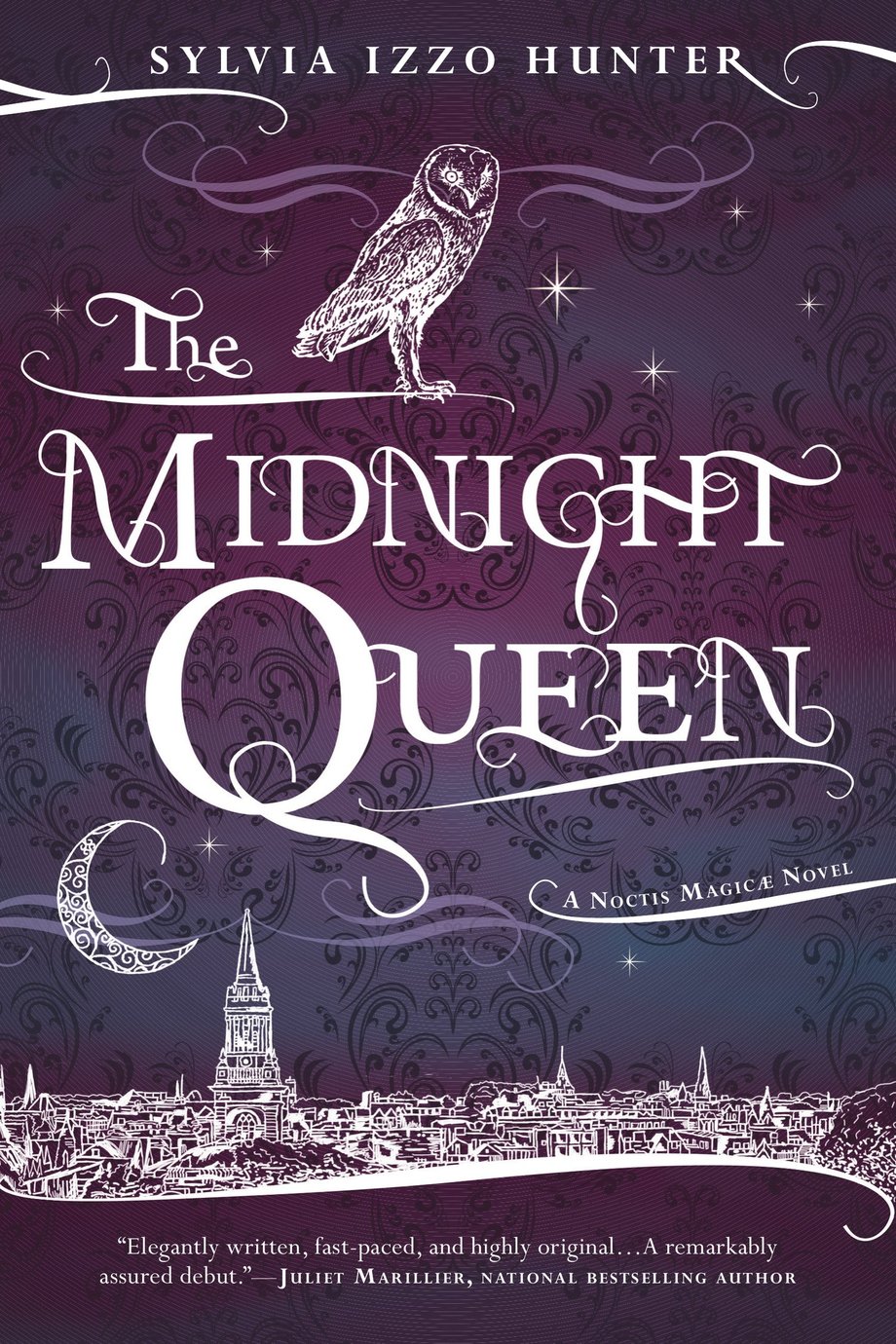
The Midnight Queen-smallIn these post Harry Potter days, it takes a certain authorial courage to set a fantasy novel in a wizarding school. Sylvia Izzo Hunter has done exactly that with her first novel The Midnight Queen, the opening book in the Noctis Magicae series, released next month. I’m intrigued by the book blurb, which hints at an older target audience than Rowling’s series, as well as a hint of romance.

In the hallowed halls of Oxford’s Merlin College, the most talented — and highest born — sons of the Kingdom of Britain are taught the intricacies of magickal theory. But what dazzles can also destroy, as Gray Marshall is about to discover…

Gray’s deep talent for magick has won him a place at Merlin College. But when he accompanies four fellow students on a mysterious midnight errand that ends in disaster and death, he is sent away in disgrace — and without a trace of his power. He must spend the summer under the watchful eye of his domineering professor, Appius Callender, working in the gardens of Callender’s country estate and hoping to recover his abilities. And it is there, toiling away on a summer afternoon, that he meets the professor’s daughter.

Read More Read More

What Would it Look Like to Pull a Watchmen on Planetary Romance? Part I

What Would it Look Like to Pull a Watchmen on Planetary Romance? Part I

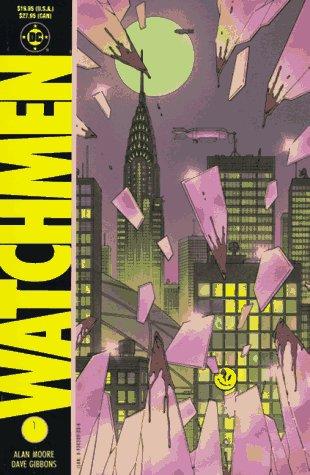
watchmencoverI’ve been musing lately about the conventions of the comic book form we’ve inherited from the past and how they match to the sensibilities of the present. They don’t easily fit without suppressing either the core superhero conceits or the realities of the modern world.

Perhaps the most famous crashing of the two was Alan Moore’s Watchmen, which slammed the conventions of the superhero genre into the hard, hard wall of modern, adult sensibilities. It made a pretty mess of the superhero genre.

Most of the traditions of the superhero genre were born in a very brief period between 1938 and 1945, a time which birthed Superman, Batman, the Justice Society, Captain America, the Submariner, and the Human Torch, as well as many other less memorable characters.

The idea of the secret identity, of defending truth, justice and the American way, of the repeated conflict with the nemesis villain, and of just relentlessly defeating crime, were all in those first seven years. The only idea I can think of that seems to me essential to the superhero genre that was not formed in those times is the idea that the characters never really die (except for Uncle Ben, Gwen Stacy, and Bucky, as the famous rule inaccurately goes).

Read More Read More

New Treasures: Neil Gaiman’s The Graveyard Book, Volume One, Adapted by P. Craig Russell

New Treasures: Neil Gaiman’s The Graveyard Book, Volume One, Adapted by P. Craig Russell

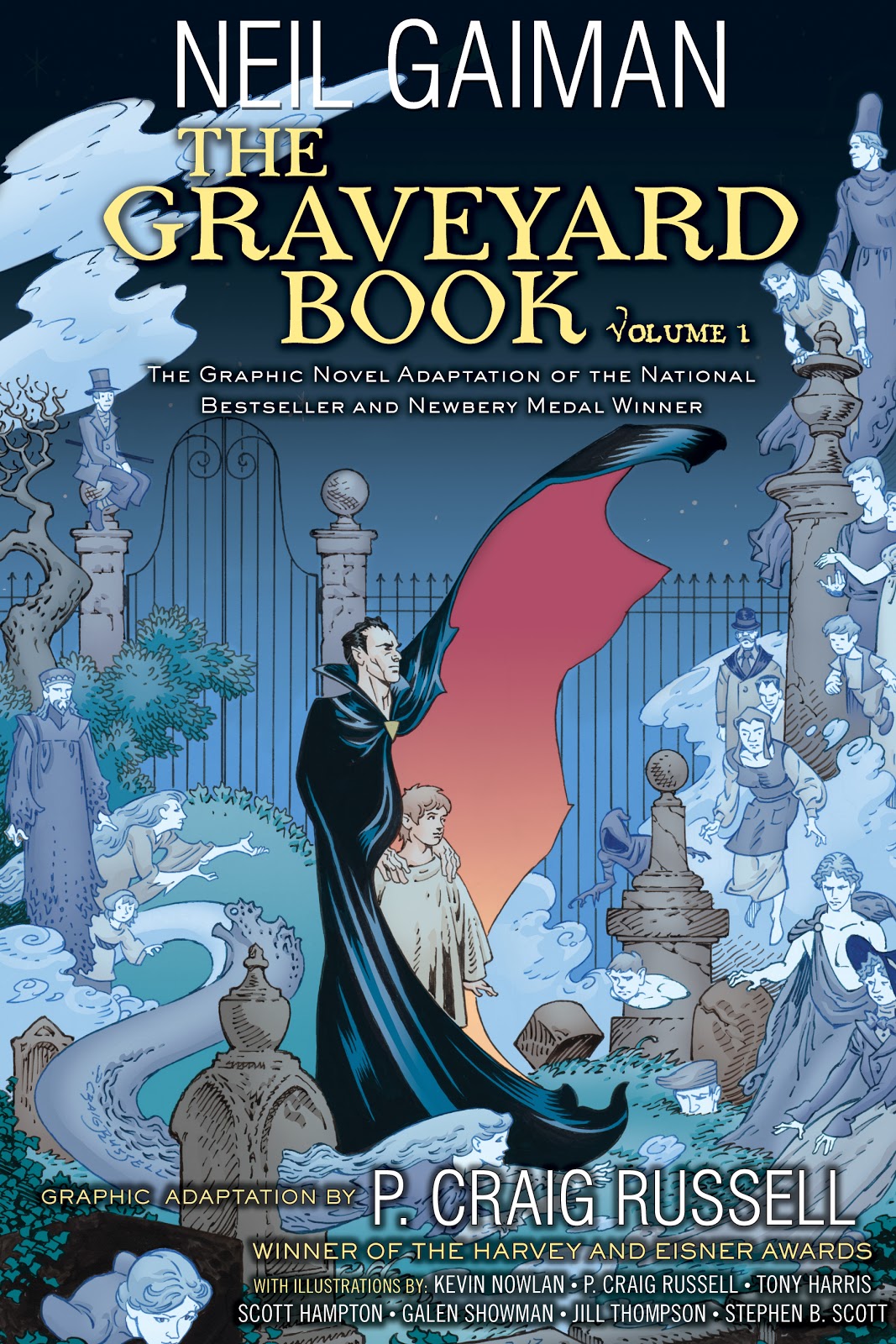
The Graveyard Book Volume One-smallI’ve been a fan of P. Craig Russell’s comic work since his adaptation of Michael Morcock’s Elric: The Dreaming City first appeared in Epic magazine way back in 1979.

Russell did a lot of attention-getting work for Marvel, including Doctor Strange Annual #1 (1976) and a lengthy run on Killraven (1974–1976), before branching out as an independent artist. He returned to Elric several times, first with While the Gods Laugh (Epic, 1981), and Elric of Melniboné (1982–84), a limited series scripted by Roy Thomas from Pacific Comics.

He brought the character to First Comics with Elric: Weird of the White Wolf, and in 1993-95 he worked directly with scripter Michael Moorcock on Elric: Stormbringer (Dark Horse Comics). He also worked with my friend Mark Shainblum on The Chronicles of Corum, an ongoing series from First Comics, in the late 80s.

Russell’s first collaborations with Neil Gaiman were the famous “Ramadan” issue of Sandman (issue #50, 1992), which helped inspire Howard Andrew Jones to create Dabir & Asim, and a story in the Sandman graphic novel Endless Nights. That led to Russell’s first graphic adaptation for Gaiman, his novel Coraline (2008).

Now he’s produced his most ambitious collaboration with Gaiman yet: a two-volume graphic adaptation of The Graveyard Book, the tale of a boy who’s raised by ghosts in a graveyard. The first volume, just released, contains Chapter One through the Interlude, while the upcoming Volume Two contains Chapter Six through to the end.

Here’s the book description.

Read More Read More

Vintage Treasures: City Under the Sea by Kenneth Bulmer

Vintage Treasures: City Under the Sea by Kenneth Bulmer

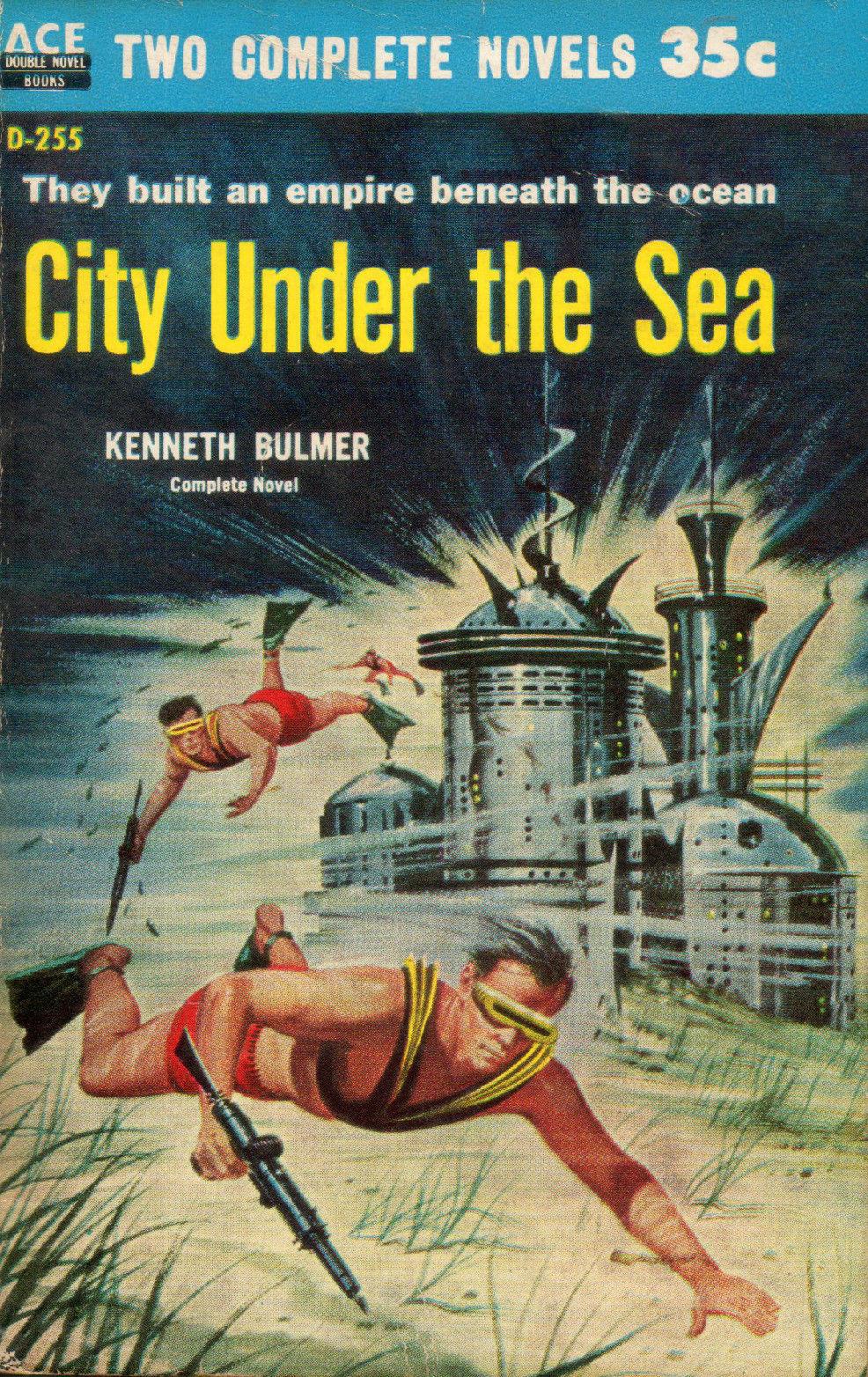
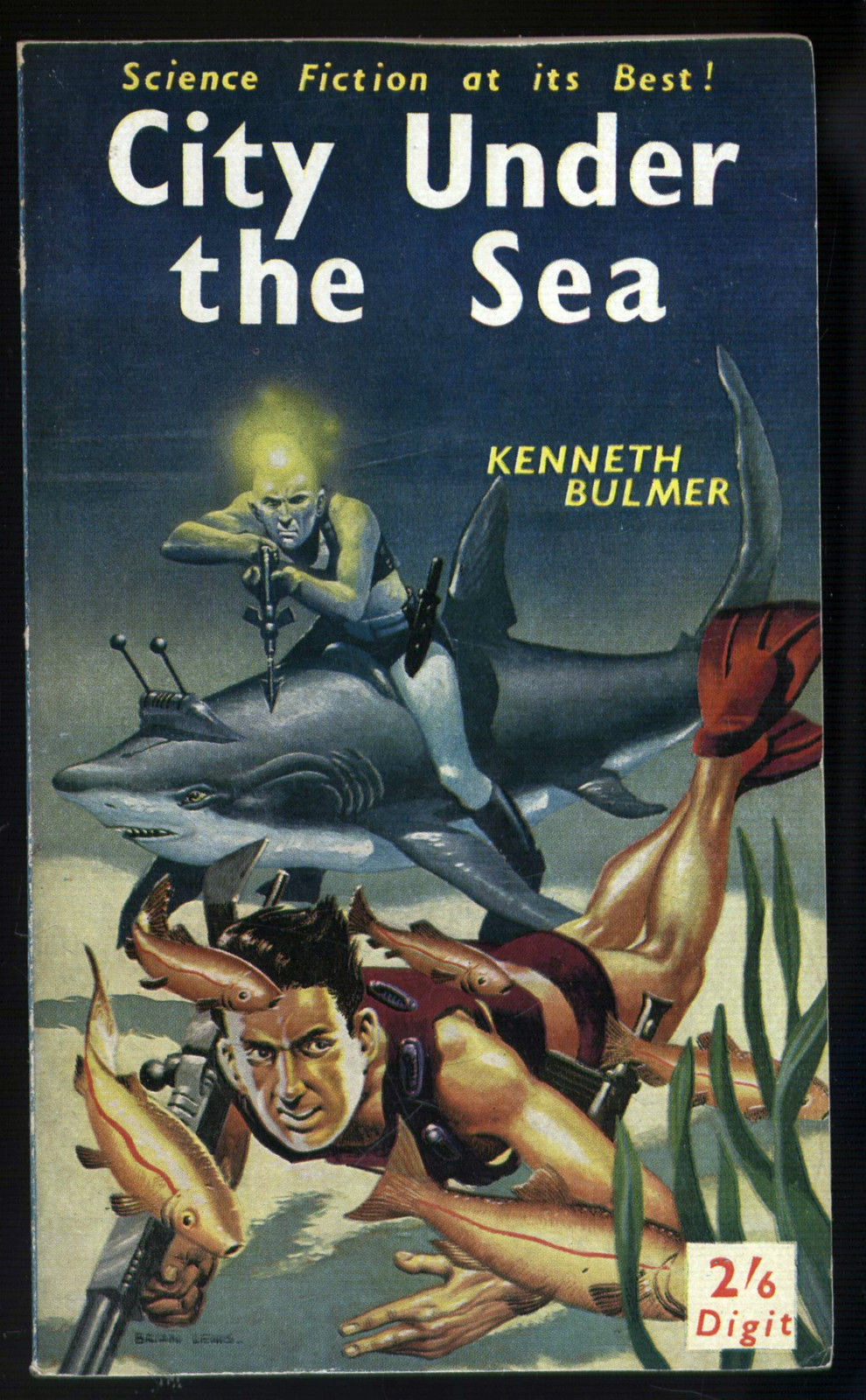
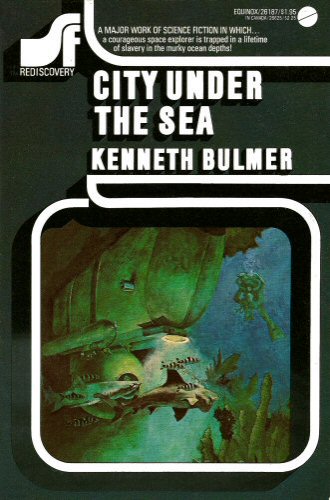
City Under the Sea Kenneth Bulmer Ace-small City Under the Sea Kenneth Bulmer UK-small City Under the Sea Kenneth Bulmer Avon

As you may have noticed if you’ve been following my Vintage Treasures posts since I returned from the Windy City Pulp & Paper show, I’ve been time-traveling back to the early 1980s in my big green chair, courtesy of some newly acquired vintage magazines, paperbacks, and fanzines.

Al those ads, editorials, and reviews have rekindled an interest in the forgotten books of the era. I find myself browsing my library, shopping for titles from the early 80s. Last night, I picked up a handsome Avon paperback from January 1980, the very threshold of the decade, and settled back into my chair to try it out.

Of course, when I finally bothered to look at the copyright, I discovered that City Under the Sea wasn’t written in the 80s. It first appeared three decades earlier in 1957 as an Ace Double, back-to-back with Poul Anderson’s Star Ways, and it was reprinted multiple times in the intervening years.

Above is a sample of some of the various editions over the years (click for bigger versions). If I owned these editions, I wouldn’t be the clueless reader you see before you. This is why a huge paperback collection is so essential.

Read More Read More

Lord Dunsany and the Billiards Club

Lord Dunsany and the Billiards Club

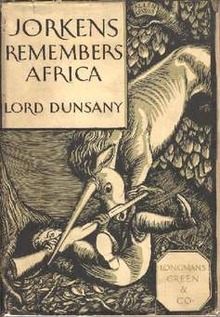
Jorkins1I’ve always thought that “Lord Dunsany” has to be one of the more perfect names for a fantasy author. You might argue that this isn’t his name, merely his title, and that Edward Plunkett might not sound quite so perfect, fantasy-wise. But on the other hand, it’s really Edward John Moreton Drax Plunkett, and growing up I always believed that the “Drax” must somehow derive from “draco.” While I’ve never been able to confirm that, I still feel that it should be so, and that in a perfect world, someone in his lordship’s family was named for a dragon – which really would make it the perfect name for a fantasy author.

All of which would work out quite well, not just for his lordship, but for us, since Dunsany is one of the leading figures in 20th-century fantasy, whose work predates that of Lewis and Tolkien. The quality that I’ve always associated with Dunsany’s writing is an air of sublimity. There’s always the feeling in his work of great immensity, of something just outside of our reach, that we’re only being shown a part of a much greater whole. A couple of posts ago, I was talking about types of magic, and in those terms, Dunsany’s falls into the category of the mysterious, rather than the quantifiable.

Read More Read More

A Must for Sax Rohmer Fans – A Rohmer Miscellany

A Must for Sax Rohmer Fans – A Rohmer Miscellany

Rohmer Miscellanysumuru-cover-final+flapsJohn Robert Colombo is a Canadian author and poet with over 200 titles to his credit. Apart from the acclaim his creative work has brought him, he is also a lifelong Sax Rohmer fan and collector, who has distinguished himself in this rarefied circle. A charter member of the now-defunct Sax Rohmer Society and early contributor to the society’s official publication, The Rohmer Review, Colombo never lost his passion for the weird fiction of this former bestselling thriller author. Rather late in his prestigious literary career, Colombo decided to contribute to Rohmerania by expanding the author’s catalogue in conjunction with Dr. George Vanderburgh’s Battered Silicon Dispatch Box imprint.

Colombo edited the definitive collection of Rohmer’s female variation on Fu Manchu with The Sumuru Omnibus, a massive tome which brought together all five Sumuru novels, penned during the author’s last decade, and preserved them in their original unexpurgated text. Colombo also compiled a monograph of Sumuru’s aphorisms direct from Rohmer’s original text with Tears of Our Lady. The unique feature of the monograph being that this same title exists within the fictional universe of the books and is referred to and quoted from frequently. Now, thanks to Colombo’s efforts, Sumuru’s fictional monograph exists as a real world collectible. Colombo and Vanderburgh also competed (unknowingly at first) with Will Murray and Altus Press in publishing the first book to collect all of Rohmer’s tales of The Crime Magnet. Still later, they teamed to produce the first anthology of Rohmer’s non-fiction articles and autobiographical essays, Pipe Dreams, spanning the author’s entire career.

Read More Read More