Browsed by
Category: Blog Entry

Fantasia Diary 2015, Day 6: The Arti: The Adventure Begins, Director’s Commentary: Terror of Frankenstein, (T)ERROR, and I Am Thor
Fantasia Diary 2015, Day 6: The Arti: The Adventure Begins, Director’s Commentary: Terror of Frankenstein, (T)ERROR, and I Am Thor

The Arti Some days at the Fantasia Festival I find a common theme among the movies I see. And some days I don’t. Sometimes the day’s movies are simply a wonderfully strange mix of things each wonderfully strange in themselves. Bearing that in mind, let’s jump into what I saw on Sunday, July 19.

I started at the Hall Theatre with the Chinese puppet wuxia film The Arti. After that, I had lunch and went to the De Sève Theatre to watch Director’s Commentary: Terror of Frankenstein, which took a real movie from the 1970s and gave it a new audio track in the form of a fictional “director’s commentary” that slowly revealed the “truth” of what had happened behind the scenes of the film. After that I stuck around to watch (T)ERROR, a documentary about FBI informants in the United States. Then went back to the Hall to watch a completely different documentary, I Am Thor, about Canadian bodybuilder and veteran rock’n’roller Jon Mikl Thor. It made for a full but wildly varied day.

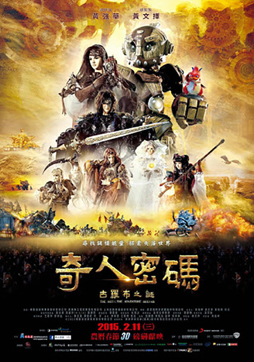
The Arti: The Adventure Begins is a fantasy adventure set in the time of the Han dynasty (I can’t find voice credits, or a version of the original title transliterated into Roman; this source gives it as 奇人密碼, or “eccentric person secret.” Here’s the film’s web site, if you’re interested). Years ago, an inventor created a wooden robot, Arti-C, powered by a mysterious force called The Origin. As the film opens, he’s dead and Arti-C’s energy’s running down — but the inventor’s son and daughter, Mo and Tong, are trying to fix him. They travel to a legendary city on the Silk Road, where they sign Arti-C up for a martial arts tournament, join forces with a thief and an idealistic prince, and find themselves involved with a war against the mysterious desert-dwelling Lop people and their strange magic.
Read More Read More

The Great Serialization Experiment: The Lay of the Land

The Great Serialization Experiment: The Lay of the Land

Nigh Marie Bilodeau-smallSerializing stories is an old art form, from the penny dreadfuls to Charles Dickens. Even Robert E. Howard serialized a few stories in Weird Tales. I recently decided to serialize a novel and, over the next few posts, I’ll share lessons learned. As I tend to leap without looking and landing on thistles, I typically learn a lot of lessons (woo?)

My first serialization, composed of one storyline over five short releases (15-20,000 words each), did well. Released from January to June 2015, it hit bestselling status in Canada, U.S.A., and a few other spots like Italy. It grew my fan base dramatically, which I assume is good for future sales (either that, or they’re waiting to warn people off my next book. Well played, Internet. Well played.) Am I living off this book? Um, no. But I’ve bought many a fine meal with it. And I still have plans to continue growing the series.

But first, the beginning.

Basic Economics (or, Eating is Fun and Good)

A year ago, when I left my full time job to focus on my storytelling (think bard) and writing careers, I wanted to look at different ways of maximizing sales. Because, dear friends, money buys food and every time I try to organize a raid on the supermarket or on my neighbor’s vegetable garden, I’m rather quickly reminded that those activities are not only illegal, they are even frowned upon. Since that societal penchant spoiled my plans for eating, an activity I’ve grown quite fond of, I had to come up with alternative methods. I’m lucky because storytelling offers me a scalable means of making money (tell story, make money. Tell more stories, make more money. Tell no story, get arrested for raiding neighbor’s garden). But writing has a longer term potential of continuous revenue, which is extremely appealing to those of us who eat every day.

Read More Read More

The Public Life of Sherlock Holmes: Ramblings on REH

The Public Life of Sherlock Holmes: Ramblings on REH

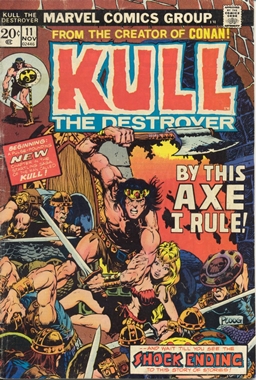
Ramblings_KullAxeIn a way, Robert E. Howard’s career is similar to that of Dashiell Hammett. Both men had huge impacts on their genres (Howard wrote many styles, but he’s best known for his sword and sorcery tales). Both were early practitioners in said genres. Both men wrote excellent stories for about a decade. And both men ended their careers on their own.

Hammett, who seemed more interested in a dissolute lifestyle than in writing, effectively walked away from his typewriter. He wrote his last novel in 1934 (The Thin Man) but produced literally nothing for the remaining twenty-five years of his life. He could have gone back to writing the hard-boiled stories that made his career, but he voluntarily ended his writing life.

In 1936, Howard’s mother was failing in a coma. He walked outside to his car, pulled out a gun and killed himself. His writing career was more effectively finished than Hammett’s would be.

Both were supremely skilled writers who chose to deprive the world of their talent and left decades of stories unwritten. But there was a key difference between the two. From the beginning, Hammett was acclaimed and recognized as the leader in his field. Though Carroll John Daly came first (barely), there is no comparison between the two in critical view.

Howard was not critically lauded. His first Conan tale, “The Phoenix on the Sword” (a rewriting of the Kull story, “By This Axe I Rule!”), appeared in Weird Tales in December of 1932. The next two Conan tales were outright rejected!

Read More Read More

Victor Milan Talks Planet Paradise, His Many Pen Names, and a Plastic Dinosaur with Metallic Paint on It

Victor Milan Talks Planet Paradise, His Many Pen Names, and a Plastic Dinosaur with Metallic Paint on It

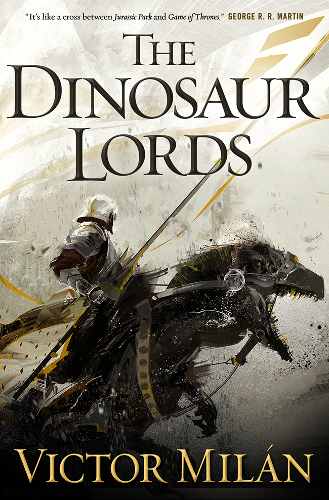
DinoLordsCoverSmall 74250_126262914098950_3697860_nI had the opportunity to sit down with Victor Milan last month to discuss his current release, The Dinosaur Lords. As a member of his writers group, I’ve read the early drafts of this novel and am very excited to see it in print. George RR Martin refers to it as “Game of Thrones meets Jurassic Park,” and that’s a pretty good synopsis.

Set on the lost Earth colony of Paradise, feudal society humans live among dinosaurs of all epochs – wild dinosaurs, tame dinosaurs, and even war-mount dinosaurs. Hence the awesome knight on dino-back image that graces the cover of the book. Combine this with the sudden manifestation of a mythical angel of doom, and you’ve got the kickoff event of the story.

While Victor Milan is a well-known, prolific author, many people don’t know how prolific. On top of the dozen novels out under his own name, he’s also written many, many more under pen names. His career so far spans thirty-one years of publishing history, including the infamous midlist apocalypse of the 1980’s. Together, he and I discuss the ups and downs of the business and his journey so far.

Read More Read More

Discovering Robert E. Howard: Jeffrey Shanks on The Worldbuilding of REH

Discovering Robert E. Howard: Jeffrey Shanks on The Worldbuilding of REH

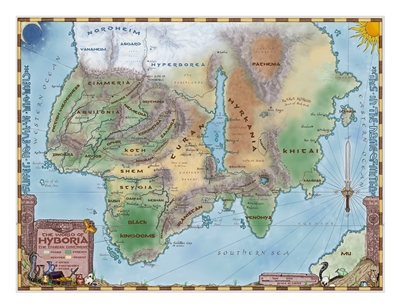
Conan_WBHyboriaWe are trying to look at as broad a range of topics related to Robert E. Howard as we can in this series. Characters, genres, events, themes: Black Gate really wants to showcase the many facets of the man and his works.

Today’s guest post is such an example. Jeff Shanks wrote the introduction to the just published facsimile edition of Howard’s essay, The Hyborian Age and is the REH consultant on Modiphius’ upcoming Conan RPG  (we’re gonna have a post for that, too!). I can’t think of anyone better to write about one of my favorite subjects,  world-building.


While Robert E. Howard is known as the creator of a number of memorable heroic protagonists, such as Kull of Atlantis, Solomon Kane, Bran Mak Morn, and, of course, Conan the Cimmerian, his efforts as a pioneer in fantasy world-building are often overlooked. When it is remarked upon at all, Howard’s creation of the Hyborian Age of Conan is generally described as a fairly impromptu effort — a hodge-podge of fictitious kingdoms based on thinly-disguised real world historical analogues, thrown together hastily in early 1932 after the first Conan story was accepted by Weird Tales.

Read More Read More

The Petrie Museum, London’s Overlooked Egyptology Treasure Trove

The Petrie Museum, London’s Overlooked Egyptology Treasure Trove

DSC_1924
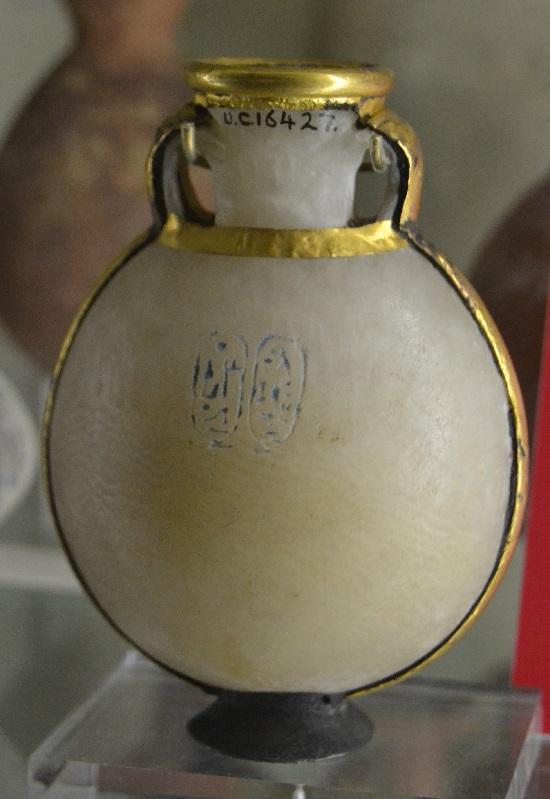
Stone bottle with the names of Rameses II and Queen Neferari, Dynasty XIX, 1295-1186 BC.

London is full of museums. While visitors swarm to the Big Three of the British Museum, the Tate Modern, and the National Gallery, there are dozens more that are worth visiting. One that’s of interest to anyone with a taste for history is the Petrie Museum of Egyptian Archaeology at University College London.

Most international visitors have never heard of this place and head on over to the British Museum to see its stunning collection of mummies and statues. While that experience is hard to beat, I actually prefer the Petrie Museum. The British Museum is a bit of a victim of its own success, and it’s difficult to stand and enjoy the artwork without being trampled by hordes of visitors.

The two museums also have different purposes. The British Museum focuses on Egypt’s Greatest Hits, with lots of gold, fine artwork and, of course, the ever-popular preserved people. The Petrie Museum is a study museum, where Egyptology students come to compare large numbers of objects packed into the cases and see how they changed over time. Cases have drawers underneath that can be pulled out to view more examples. The collection includes some 80,000 items from both Egypt and Nubia, two of Africa’s greatest ancient civilizations.

Read More Read More

Ancient Worlds: The First Fantasy World

Ancient Worlds: The First Fantasy World

aristo2When we talk about great dates in literary history, 414 BCE doesn’t really make the cut. But if you’re a sci-fi or fantasy reader (and if you’re reading this page, you probably are) it should probably be one of the foremost you know of. Why?

Because prior to the fifth century BCE, we had never seen a fantasy setting in Western literature. People may have doubted whether Humbaba really existed or if Odysseus ever visited the Island of the Lotus Eaters. But the idea of pure poetic invention hadn’t come to full realization. This is partly because in the Ancient World, the idea of a strict delineation between fact and fiction was a bit strange. Myths didn’t have a strict canonical version, and people were comfortable with a lot of variations on the truth flying around. It wasn’t relativism, not as we understand it, it was… well, a sense that the truth should never get in the way of a good story, or that whether or not something was true wasn’t necessarily tied to whether all the facts happened just that way.

So you could play with storytelling, and storytellers played a lot. But Aristophanes’ The Birds is the first time that we are aware of that we see a fully fleshed out, completely invented country.

It is even peopled by talking animals.

Read More Read More

The Public Life of Sherlock Holmes: The Moriarty Chronicles

The Public Life of Sherlock Holmes: The Moriarty Chronicles

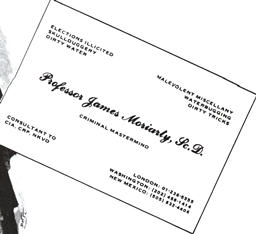
Moriarty_CardPerhaps my favorite Sherlock Holmes pastiche is 1974’s The Return of Moriarty by John Gardner. In it, Professor Moriarty (who did not perish at the Reichenbach Falls) is a Victorian Era godfather, with a criminal organization the envy of the American mob in the Roaring Twenties. A sequel followed it the next year, The Revenge of Moriarty. The trilogy was completed with Moriarty, just a few weeks before Gardner passed away in 2008.

Having completed one muddle of a screenplay about a Civil War naval battle, I took it upon myself to contact John and tell him I was writing a pilot for a proposed TV series about The Return. Extremely polite and friendly, he told me to send it to him when I was done. I did. He and his agent, less than impressed with this amateur effort from a self-taught screenwriter, understandably, passed.

I stayed in email contact with John (who was always nice) up until his death, taking one serious stab at revising the pilot and expanding it to two-hours. I never did resubmit it to his agent (John having passed away by then).

So, read on about The Moriarty Chronicles, a British TV series you, alas, will never see.

Read More Read More

Magneto, the Comic Series

Magneto, the Comic Series

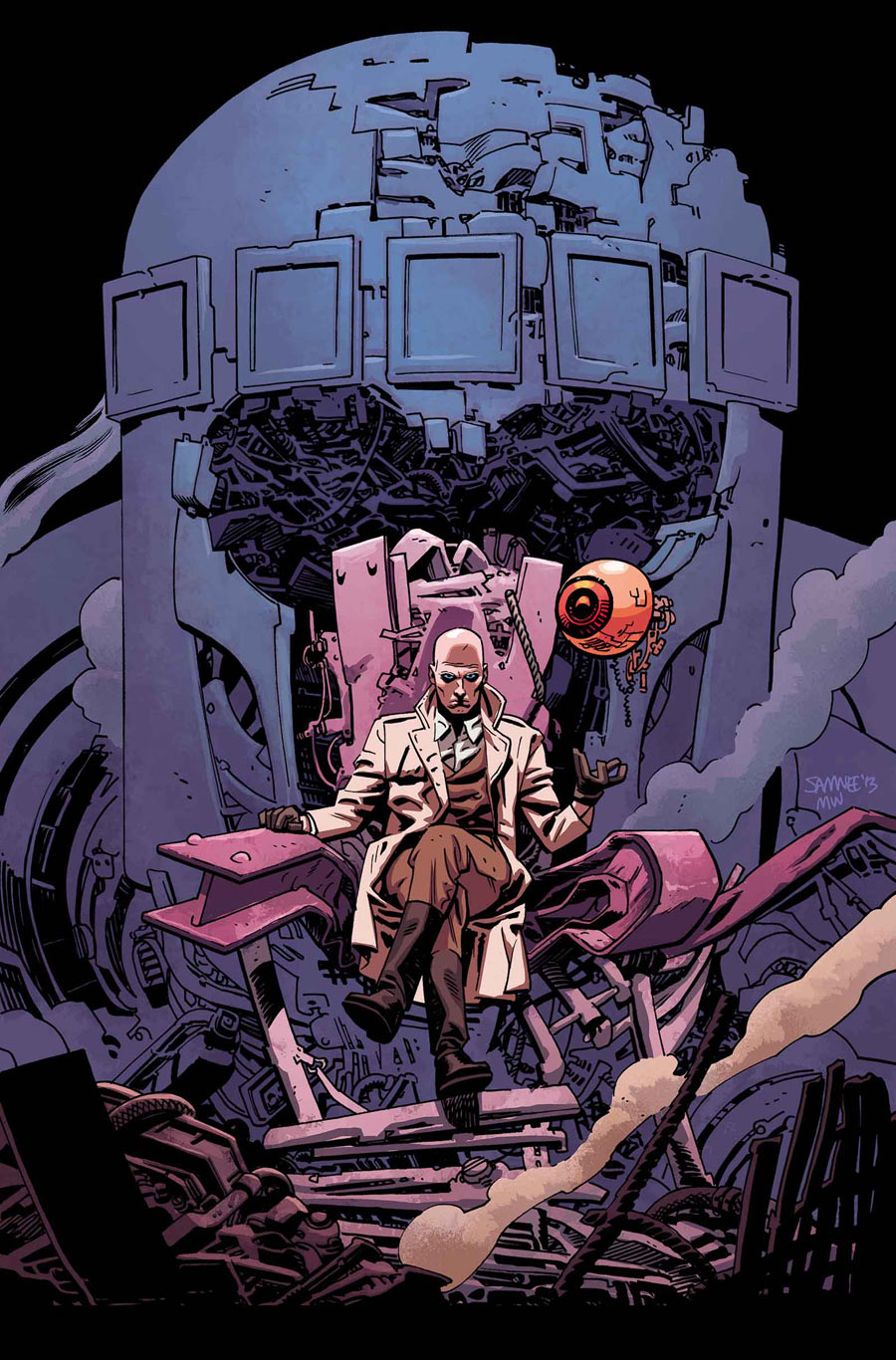
Magneto002COV-102bd-ab93eFor my my interview with Marvel Comics Assistant Editor Xander Jarowey, one of the covers I enjoyed including in the post was Magneto #1. Magneto is one of Marvel’s most iconic super-villains, having influenced the Marvel Universe in various ways since his appearance in X-Men #1 in 1963.

He started off as an older villain who, from the beginning, served as moral foil to Charles Xavier in the debate about the place of mutants. His arguments in the early days were never deep, and his power faded with various defeats, until by the excellent Savage Land story arc of X-Men #59-63, he was using mechanical devices to simulate his powers, and then in Defenders #16, he was reduced to infancy by one of his creations.

Then, Chris Claremont got a hold of him. In X-Men #104, the new X-Men faced a young, rejuvenated and more powerful Magneto, and he’s downright terrifying in Uncanny #112 (one of my favorites). Claremont revealed Magneto’s full literary power in Uncanny X-Men #150, when he put Magneto’s past squarely in the Nazi concentration camps of World War II as a victim of racism and persecution.

Read More Read More

Limestone Genre Expo, Kingston Ontario

Limestone Genre Expo, Kingston Ontario

Limestone1Last weekend I took part in the first ever Limestone Genre Expo in Kingston, Ontario (which is known as the Limestone City, hence the name). I had a wonderful time, reconnecting with old friends and making new ones. There’s nothing like an event like this to remind you how many people among your friends and acquaintance are people you’ve never actually met face-to-face.

As I said, this was the first year for this event, and Liz Strange, Barry King and their minions did an excellent job of organization. For one, the event lived up to its billing, in that it was a genre expo. Most of the time there were three tracks, with full panels on Fantasy, SF, Mystery, Horror and Romance, along with readings and workshops

I’ve run small conferences myself, and people always find it strange when I tell them that often the most popular individual events are the workshops. Yes, they are primarily attended by people at one stage or another of a writing career, but a small percentage of attendees are people who are curious about some of the nuts and bolts of writing, and who are looking for insights into literary analysis. There was a wide variety in subject matter from “First Page Critiques” where people came prepared to share their first 250 words with editor and author Caro Soles, to “Building Tension” with Matt Moore, to “How to Market and Sell Short Fiction” with Douglas Smith, a man who knows. Author and editor Nancy Kilpatrick’s workshop was titled “Novel Idea Pitch” in the program, but she herself describes it as “a workshop on brain storming.” I like her version better.

Read More Read More