Browsed by
Category: Blog Entry

Books and Craft: The Power of Point of View
Books and Craft: The Power of Point of View

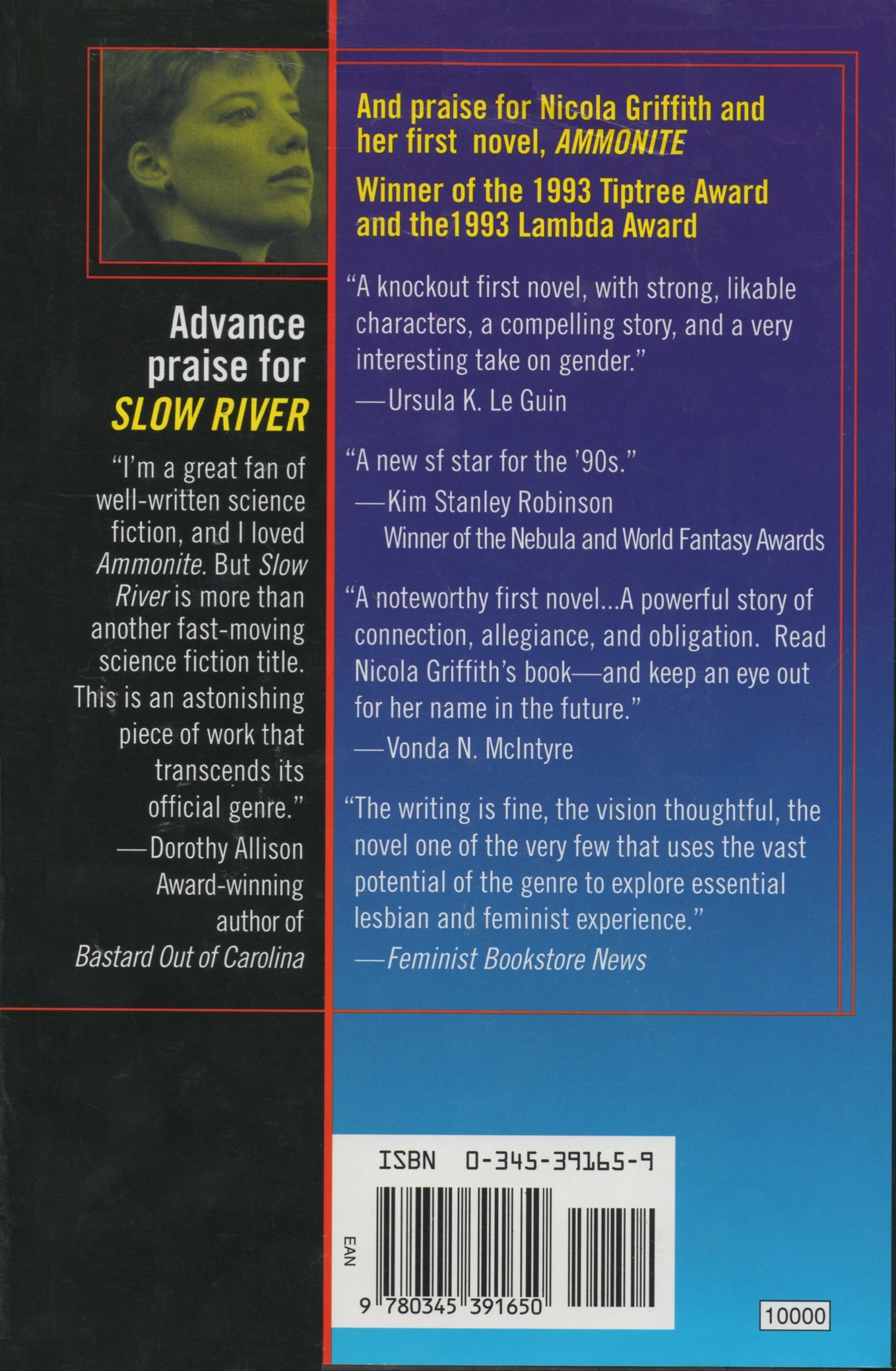
Slow River Del Rey-small Slow River Del Rey-back-small

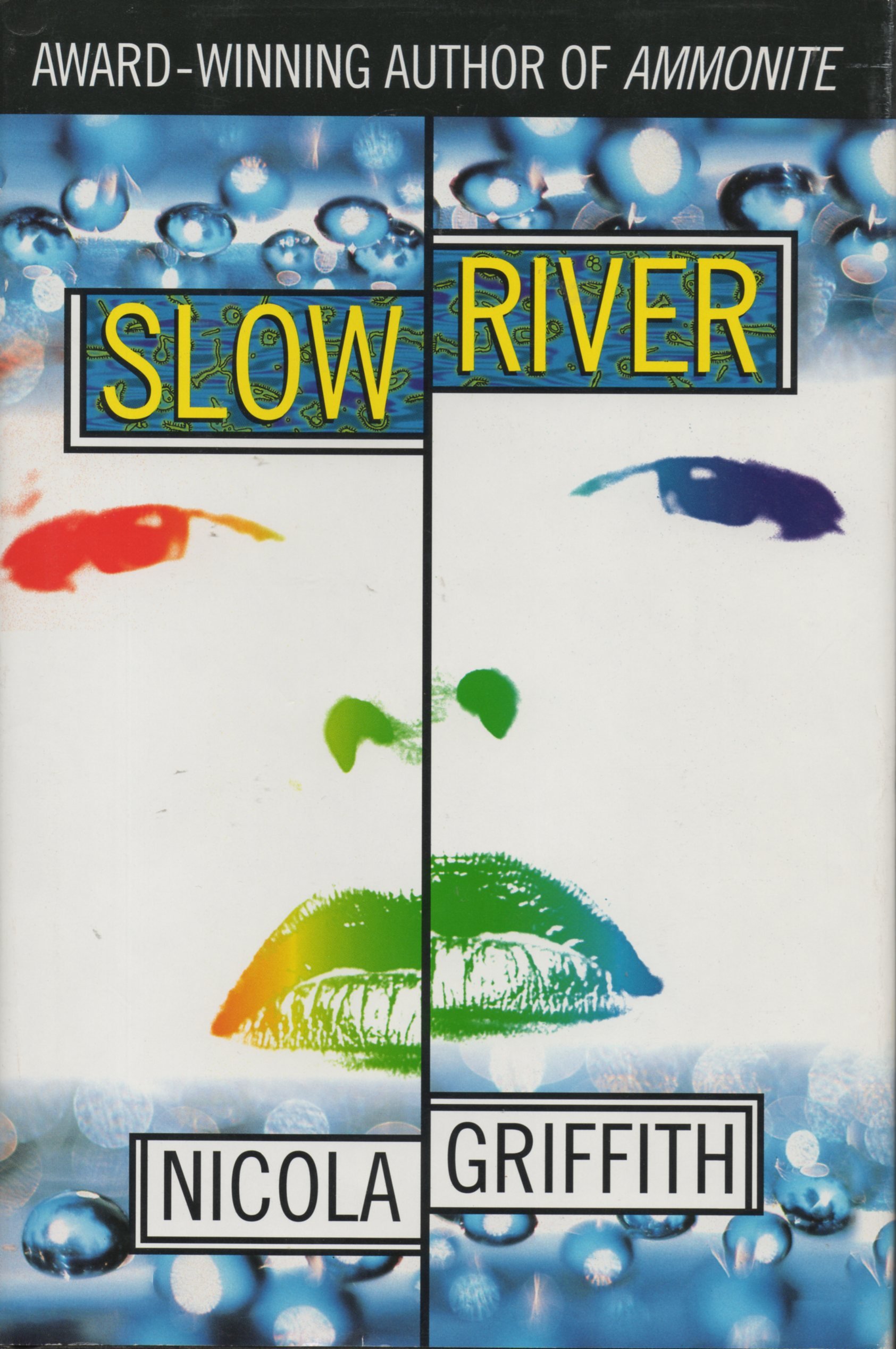
Today, I begin a new column here at Black Gate. I’ve been toying with the idea for “Books and Craft” for some time now. As an avid reader, a professional author, a writing mentor and instructor, and a lifelong student of craft, I have long been interested in what it is about certain books that capture our imaginations and elicit our passions. Why do we return again and again to certain stories? What qualities define “classic” novels and “must-read” new ones?

In this column, I hope to address those questions. I plan to look at a variety of fantasy novels, and science fiction as well, with an eye toward identifying an element of craft that contributes to their success. Sometimes the books will be familiar — those classics of the genre we know so well. Sometimes they’ll be more obscure titles — hidden gems that you might not know, but ought to. And sometimes they’ll be new works that demand our attention.

Let me be clear: I am not so presumptuous as to suggest that the specific craft element I identify is necessarily THE single factor in a given book’s success. Just because I might focus on, say, world building in Guy Gavriel Kay’s Tigana, that doesn’t mean his character work (or his prose, or his pacing) isn’t spectacular as well. My articles are intended to be illustrative and even instructive, but certainly not definitive. Whether as readers or as writers, we have something to learn from the work of successful artists. My hope is that these articles will help you see aspects of storytelling that you might not have noticed previously.

And so…
Read More Read More

Modular: The New Mongoose Traveller RPG #0: Transported by Free Trader Beowulf!

Modular: The New Mongoose Traveller RPG #0: Transported by Free Trader Beowulf!

Traveller First Edition-small
Like a ray of grit into my comfortable early teenage existence

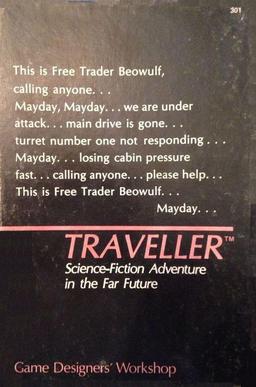
This is Free Trader Beowulf, calling anyone… Mayday, Mayday… we are under attack… main drive is gone… turret number one not responding… Mayday… losing cabin pressure fast… calling anyone… please help… This is Free Trader Beowulf… Mayday….

35 years and those words still send a chill run down my spine.

I can even see the shelf in the now defunct gaming shop on Edinburgh’s Forest Road. I was there to pick up Chivalry and Sorcery. Even at thirteen, I was a howling medievalist and that game seemed like it would be my game.

However it was a box of little black books — Traveller RPG! — that I came away with that day.

Sure, I’d played it before… briefly… with a kid in the year above and I’d liked firing pulse lasers and negotiating the mean streets of human space.

However, I hadn’t seen the possibilities.

Read More Read More

The Poison Apple: The Paintbrush is as Mighty as the Sword — An Interview With Lissanne Lake

The Poison Apple: The Paintbrush is as Mighty as the Sword — An Interview With Lissanne Lake

Lissanne Lake-small

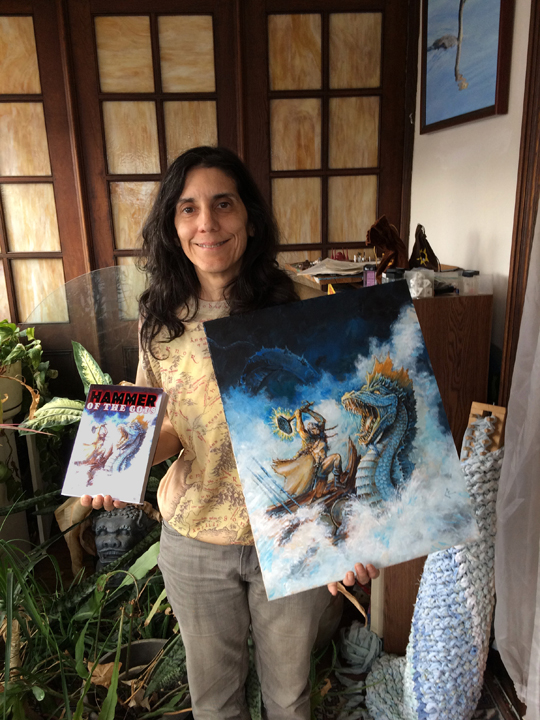
Cover for Hammer of the Gods, photo by E. Crowens

Lissanne Lake is a Sword and Sorcery fantasy illustrator with an artistic career spanning over thirty years. A New Jersey resident, she’s designed everything from book jacket and magazine covers to tarot cards, games and wall murals for public art projects and has also worked with famous authors such as Sir Terry Pratchett. On the side, she’s a fencing instructor, a re-enactor, and is learning to speak Japanese.

Crowens: Were there any particular artists from whom you drew your inspiration?

LL: Western art paintings and illustrations by contemporaries Charlie Russell and Frederic Remington. Comic book art most likely had its genesis from Russell, and certainly he was (Hall of Fame action-style Sword and Sorcery and comic book illustrator) Frank Frazetta’s hero.  Russell’s work always captured motion — the horses are charging, the bears attacking, and hats are flying off cowboys’ heads.

Were these strictly fine art paintings?

They were illustrations for newspapers. I believe he wrote the articles, as well.

Read More Read More

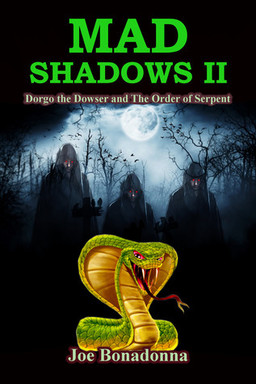
Mad Shadows II: Dorgo the Dowser and The Order of the Serpent by Joe Bonadonna

Mad Shadows II: Dorgo the Dowser and The Order of the Serpent by Joe Bonadonna

oie_2452510XuzP2C1Joe Bonadonna’s a friend of Black Gate and, I’m proud to say, a friend of mine. He’s also a heck of a teller of hardboiled action and adventure tales. After too many years out of the toilsome fields of swords & sorcery, he returned in 2010 with a top-flight collection of short stories about one Dorgo Mikawber, dowser of magic and handy with a saber. I discovered Joe and that book, Mad Shadows (2010) here on the virtual pages of Black Gate, and reviewed it over on my site about four years ago.

After another significant hiatus he’s returned with a second collection of Dorgo’s adventures: Mad Shadows II: Dorgo the Dowser and The Order of the Serpent (2017). That’s a lot of title for a book that just crosses the two-hundred page mark, but it gives a nice sense of the pulpy goodness that lies betwixt its covers.

Dorgo Mikawber was raised in an orphanage, served in the army, and now makes his living as a magical investigator and finder of lost people. Last time out Dorgo’s adventures took him all over the continent of Aerlothia on the world of Tanyime. This time around his wanderings are more limited, starting in the countryside just beyond his home city, Valdar.

MS II is a fix-up. It’s made up of three separate tales, each linked to the other, weaving a larger story of Dorgo’s fight against the mysterious Order of the Serpent and its leader, Ophidious Garloo.

Read More Read More

Coming Soon: The Jurassic Chronicles

Coming Soon: The Jurassic Chronicles

The Jurassic Chronicles-smallThe next installment of Samuel Peralta’s Chronicles series is set to launch on January 29th — the theme of this one is dinosaurs.

Edited by Crystal Watanabe and featuring stories from: Piers Beckley, Zen DiPietro, Ed Gosney, Laxmi Hariharan, Phillip Harris, M.J. Kelley, Stant Litore, Terry Maggert, Emily Mah (yes, that’s me), Harry Manners, Anthony J Melchiorri, Seanan McGuire, and Dinosaur Knights author Victor Milan, it offers a broad range of stories from both established veterans and new up-and-comers.

If you haven’t taken note of these anthologies, you are missing out. They feature an impressive mix of indie, hybrid, and trad pubbed authors who write science fiction and fantasy.

And this one has dinosaurs. Need I say more???


Emily Mah is a writer and the owner of E.M. Tippetts Book Designs, a company that provides formatting, cover design, and editing services for independent authors and publishers. Her last post for Black Gate was an interview with German author Emily Bold.

Vintage and New Treasures: Oz’s Bag of Holding: John Sandford’s Prey Series; Stephen King’s Bill Hodges Trilogy

Vintage and New Treasures: Oz’s Bag of Holding: John Sandford’s Prey Series; Stephen King’s Bill Hodges Trilogy

rules of prey king-audio-small

I have here a bag of holding. I am now going to pull some things out of it…

This past fall, since I do a lot of commuting to work and had become too depressed to follow my daily routine of news radio, I began listening to books on CD.

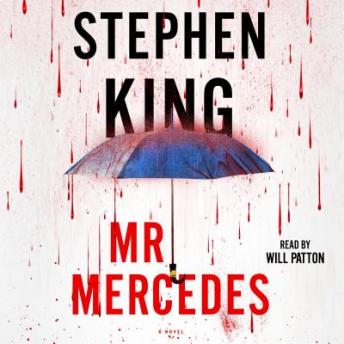
I’ve now digested 5 books in John Sandford’s popular Prey series (following detective Lucas Davenport), read by Richard Ferrone, and the first two of Stephen King’s Bill Hodges trilogy (following retired detective Bill Hodges and his friends Jerome Robinson and Holly Gibney), read by Will Patton.

Sandford, a retired Minneapolis journalist, began writing the Prey books back in the ‘80s. The series now has 27 installments, with an additional 13 spin-off books! Looks like I’ll be spending time with Lucas Davenport in my minivan for a long time to come.

Having brought these out of the bag, I’d like to discuss two specific areas of appeal of a series like Prey. First is place. Second is chronological progression (following characters as they age). Then I have an afterthought about genre “classification.” I’ll also  address “audio” vs. “printed page.” And I’ll have a few things to say about King’s foray into hardboiled detective fiction along the way.

Read More Read More

The Public Life of Sherlock Holmes – A New Solar Pons Omnibus

The Public Life of Sherlock Holmes – A New Solar Pons Omnibus

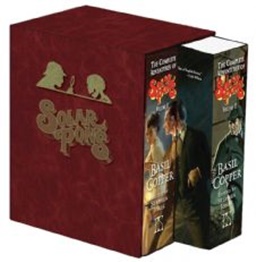
Copper_OmnibusIf you want to read my thoughts on the season four (and hopefully series) finale of BBC’s Sherlock, click on over and read it at my blog. Because today The Public Life of Sherlock Holmes is going to talk about Solar Pons.

August Derleth, the creator of Solar Pons, passed away in 1971. Derleth’s final collection, The Chronicles of Solar Pons, a mix of previously released stories and ones never published, came out in 1973. Surprisingly, Pons would be back within a decade! In 1979, Basil Copper would release three collections of tales: The Dossier of Solar Pons, The Further Adventures of Solar Pons and The Secret Files of Solar Pons. There would be three more collections, as well as a novella. Copper had written horror books for Derleth’s Arkham House imprint and he seemed like a good choice for continuing the stories.

Unfortunately, Copper’s Pons connection did not have a happy ending. He helped Arkham House editor Don Turner compile an omnibus edition of all of Derleth’s released Pons stories. However, Copper chose to do some ‘corrective editing’ of the originals, which caused a furor among the Pontine faithful. You can read Jon Lellenberg’s essay on this topic in The Solar Pons Gazette (page 45). Peter Ruber also wrote an excellent account, but I don’t have permission to reprint that.

Read More Read More

Modular: Oz’s Bag of Holding: Breaking Out Basic D&D for the Next Generation

Modular: Oz’s Bag of Holding: Breaking Out Basic D&D for the Next Generation

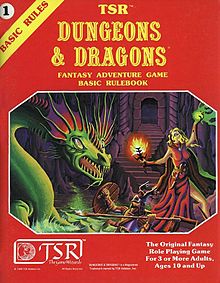
D&D_Basic_Rules_1981I have here a bag of holding. I am going to pull some things out of it now…

Well, I’ve gone and done it. I’ve broken open the floodgates and moved my children on from Dungeon! The Board Game to the real deal.

This is fortuitous timing, as M Harold Page has launched a new series of posts (READ HERE) on Black Gate about introducing kids to tabletop role playing (which I have been reading with newly-relevant interest).

My daughter and son will soon be turning 8 and 6 respectively. Bringing the son in on things might have been a bit premature — he’s more apt to grab the miniatures and fight with them like action figures than to sit and patiently listen to a Dungeon Master try to paint a scenario in his mind’s eye.

To introduce these acolytes, I dug out my 1981 D&D Basic set (1981 edition). After decades of d20, revisiting this chestnut three decades later is kinda hilarious. D20 is so elegantly simple in concept: Hit a monster with AC 18? Roll a d20, add modifiers, and get an 18 or better. But with old-school D&D, no! You look at the monster’s AC and then have to consult a chart (I confess I’d forgotten what THAC0 even stood for). Cross-reference monster’s AC with character’s level to see what you have to roll. Basic? No, not really. Pretty damn cumbersome!

Read More Read More

Jack Kirby’s Fourth World: 45 Years Later

Jack Kirby’s Fourth World: 45 Years Later

Jack Kirby New Gods-small

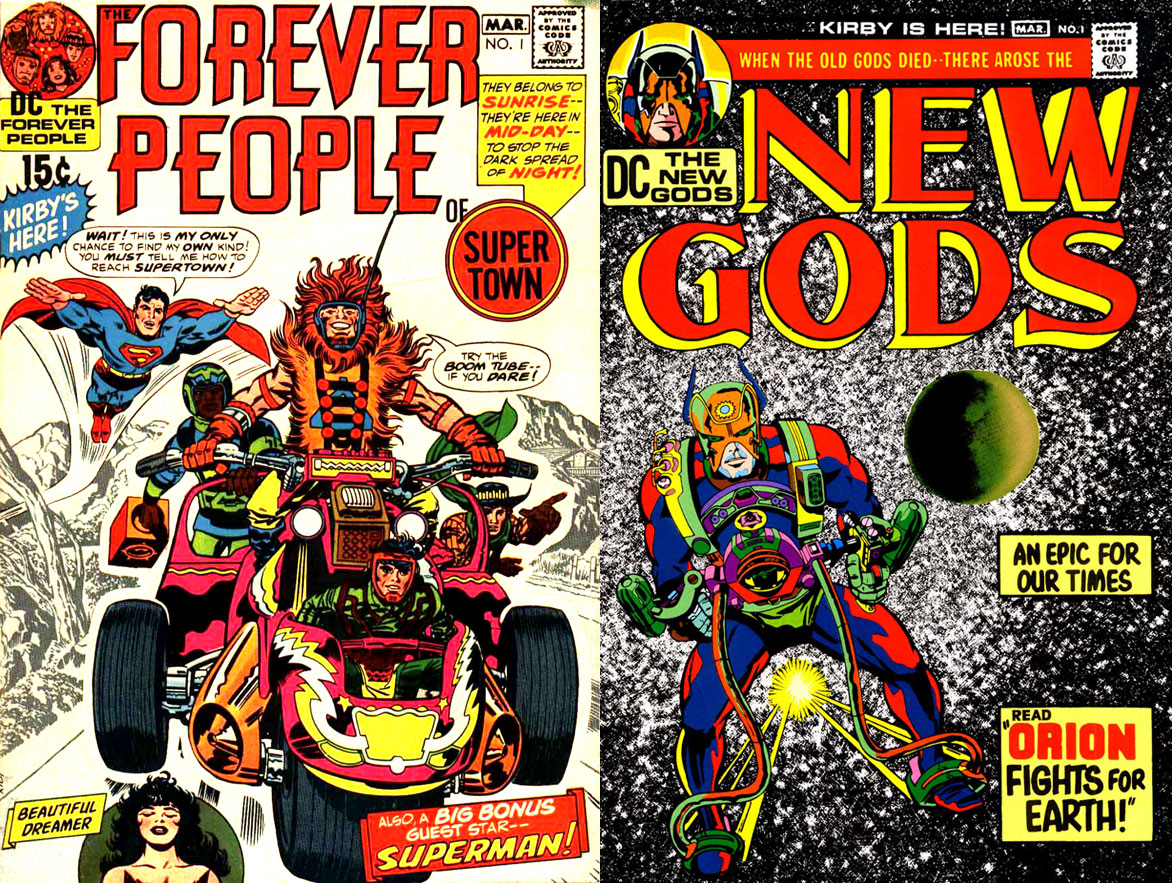
I’ve been discussing comic books with a friend of mine who moved to Ottawa. Based on a stray comment of his, I committed to tracking down and reading Jack Kirby’s 4th World comics.

I obviously know about Darkseid and the New Gods, but from later works at DC, like the classic Great Darkness Saga in The Legion of Super-Heroes (check it out!).

And I’d read lots of 1960s Marvel Kirby as well as Machine Man and The Eternals at Marvel in the 1970s (I even blogged about The Eternals here).

Kirby was *huge* in the 1960s, having been a major creator of the current Marvel Universe. But by 1970, he was looking for a change and DC signed him to a 5-year exclusive deal.

Read More Read More

Retrofitting, And When It Doesn’t Work

Retrofitting, And When It Doesn’t Work

starwarsI don’t know if I’ve mentioned it before, but I’m married to a builder. Over the years I’ve observed (judging by the level of bitching) that it’s easier to start from scratch than it is to retrofit. Still, there’s a way to do it well, and a way to screw it up.

I think that’s true of writing as well. I’ve already talked about sequels, and how genre writers in particular have to be careful to remember the details of the worlds they’ve created previously. However, when an author who’s twenty years into a series gets the colour of someone’s eyes wrong, or forgets that they’ve once said their protagonist was an only child, you have to figure that’s an honest mistake, and cut the writer some slack.

But what about conscious, deliberate changes? I’m not talking about reboots, or spin offs. They have their own problems. And I’m not talking about the changes that naturally occur when you’re adapting one media to another. No, I’m talking about sequels where the writer/creator seems to think that no one will remember what’s already been established. You know, where the writer/creator says “Oh yeah, I know I said she was an only child, but now I need her to have a brother, so she does.”

Yes, I’m talking to you, George Lucas.

Read More Read More