Browsed by
Category: Art

Adventure on Film: The Horseman On the Roof

Adventure on Film: The Horseman On the Roof

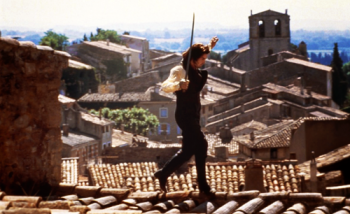
tumblr_lu78az8s9c1qlll6ko1_500I didn’t know it at the time, but back when I was ten and surfing through horrendous Tarzan movies on rainy Saturday afternoons, The Horseman On the Roof (Le Hussard Sure le Toit, 1995) was the film I was actually hoping to see. Not that I would have understood much of what was going on, but the kinetic energy of it –– the film’s unswerving certainty that these events matter –– would have transported me right out of my seat.
Better yet, it still does. Horseman opens with a kidnapping and an execution, then tears off on a cross-country pursuit. Nor does the pace slacken. Director Jean-Paul Rappeneau fills even potentially tranquil moments –– a patriot hurriedly donning his overcoat, a restless horse being chosen by torchlight –– with kinetic punch. Horseman is a period piece, make no mistake, but it is also an action movie, and a great one.

True, there’s no overt fantasy element –– beyond the ready fictionalization of history necessary to the telling –– but Horseman is a six-course meal with all the trimmings: call it sword and sorcery without the sorcery.

Read More Read More

Wake Up to a New World With Awakening: The Art of Halo 4

Wake Up to a New World With Awakening: The Art of Halo 4

awakening-the-art-of-halo-4-smallI took the family to Best Buy yesterday to buy a new phone for my wife. They didn’t have anything below $250, so we trooped back to the car to return to the Verizon store. My teenage boys, flush with dog-sitting money, were the only happy shoppers, chortling excitedly in the back seat over a copy of 343 Industries’ Halo 4.

I got some scattered details over breakfast this morning. Master Chief, hot-babe AI Cortana, abruptly awakened from deep sleep, a Covenant fleet, a giant Forerunner planet, alien mysteries, and a lot of shooting. Sounds like Halo to me.

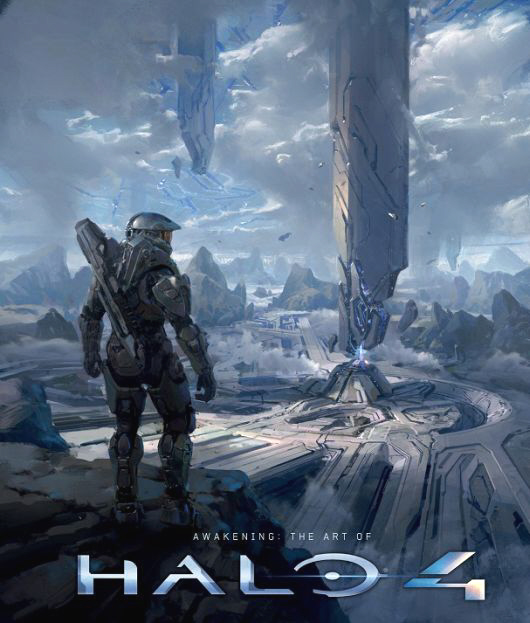
So when I sat down to sort through the week’s stack of review copies, my hand naturally gravitated towards the copy of Awakening: The Art of Halo 4, a thick oversize hardcover sent our way by Titan Books. It turned out to be an excellent choice, and  it thoroughly captivated my interest for the next 90 minutes.

Awakening is probably not a good choice if you’re not a fan of art, cutting edge computer games, or far-future science fiction. But if you’re interested in any of those things, you’ll find it very interesting and if, like me, you have more than a passing interest in all three, you’ll find it fascinating.

Awakening is packed with nearly 200 pages of full-color art, concept designs, and sketches from some of the top artists in the field, including Sparth, Robogabo, John Liberto, Glenn Israel, Jhoon Kim, and Thomas Scholes. The descriptive text, by “incurable Halo fanatic” Paul Davies, is brief and to-the-point, rarely more than a slender paragraph on each page. Davies wisely lets the artists do most of the talking, quoting Senior Art Director Kenneth Scott and concept artist Sparth at length.

And the art is indeed spectacular. The design breakdowns — for Master Chief, his mostly naked AI companion Cortana, numerous weapons, the truly splendid vehicle fleet, and the gun-toting alien Covenant and mysterious Forerunners — are detailed and a lot of fun, but it’s the gorgeous alien landscapes and breathtaking unexplored vistas that really fire the imagination. I guarantee there are sights here that you’ve never seen before, from the nebula-like clouds trapped between two vast constructs to the massive Didact ship, so large it can only be explored using a UNSC Broadsword fighter.  More proof that it’s computer entertainment pushing the sense-of-wonder envelope for SF and fantasy fans today.

Awakening: The Art of Halo 4 was published in hardcover by Titan Books on November 6. It is $34.95 for 192 pages. Get more info, including reproductions of some of the artwork, at the Titan website.

Adventure On Film: The Color of Magic

Adventure On Film: The Color of Magic

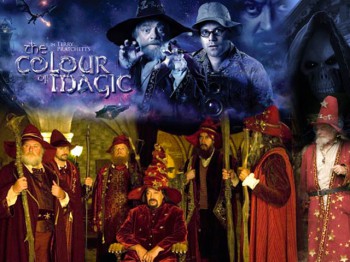
posterOnce upon a very suspect time, a human being by the name of Terry Pratchett conjured up a space-traveling sea turtle by the name of A’tuin, and proceeded to make a sizable fortune from the disc-shaped world he emplaced upon her. In Pratchett’s Discworld novels, magic of the most unpredictable kind is the norm, and so it should come as no surprise that, eventually, somebody had to commit his unique brand of literary lunacy to celluloid.
And so they did. The Color of Magic appeared in 2008, destined for British TV and comprised of two longish episodes.

Now, having admittedly come rather late to the Discworld table –– I read a short called “Troll Bridge” years ago, but didn’t realize it was part of a larger cycle –– my somewhat limited exposure was nonetheless sufficient to convince me that Pratchett’s novels were congenitally unfilmable.

Despite that dire opinion, I am happy to report that Sean Astin is delightfully droll as Twoflower, the Discworld’s first tourist, and David Jason is about as Rincewind as anyone could possibly be. As a murderous and ambitious wizard, Tim Curry simpers and smirks as only Tim Curry can, (although he doesn’t appear to be having nearly as much fun as he did as “Arthur King” in Spamalot). On an ankle-biting budget, the cinematography is generally first rate, as are most, though not quite all, of the props. Death –– a nuisance, and constantly in pursuit of Rincewind –– is lovingly voiced by Christopher Lee, but disappoints the eye. Bearing a cheap-looking sickle, Death appears to have just wandered in from a middling haul of Trick-or-Treats.

Physically, then, in real-world terms, The Color of Magic is of course filmable –– as is just about everything these days, including massive sand worms and infinitesimal specks of pollen. I even recall seeing, on Nova, an attempt to demonstrate string theory’s ten dimensions on the two-dimensional plane of a television screen –– an abject failure, yes, but I blame myself. My limited powers of imagination and whatnot. Me and my four-dimensional mindset.

So let me amend my question: can The Color of Magic be adapted to film successfully?

Read More Read More

Vintage Treasures: Al Williamson Adventures

Vintage Treasures: Al Williamson Adventures

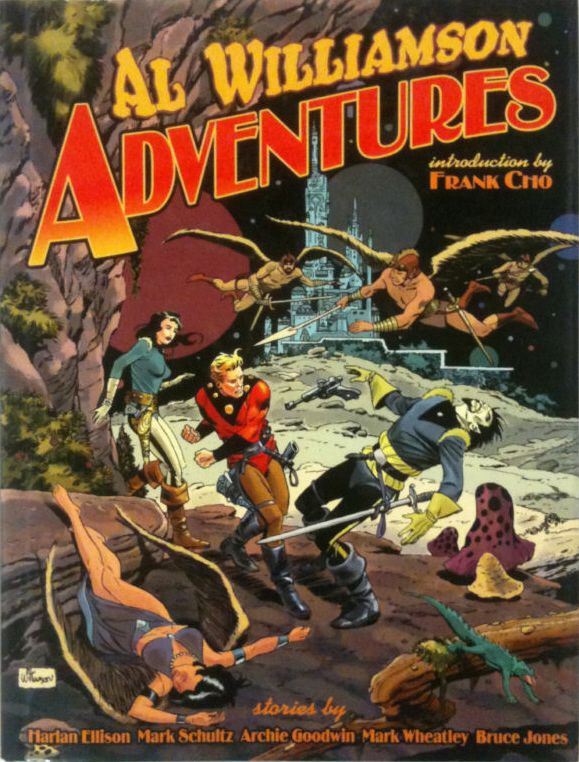
al-williamson-adventures-smallAl Williamson is one of my all-time favorite comic artists. His meticulously-detailed alien landscapes, boundless imagination and kinetic style combined to make him the perfect artist for SF adventure comics.

He started working for E.C. Comics in 1952, illustrating stories by Harlan Ellison, Ray Bradbury, and others, in titles including Valor, Weird Science, Weird Fantasy, and Incredible Science Fiction. I remember him chiefly for his later work, especially his famed Star Wars comic adaptations, and his 80’s art in Alien Worlds and Marvel’s Epic Illustrated. He passed away in 2010 (see the BG obit here).

Fortunately, you don’t have to hunt through expensive old comics to see his very best work. Over the years, a number of excellent retrospectives have appeared, including The Art of Al Williamson (1983), Al Williamson: Hidden Lands (2004), The Al Williamson Reader (2008), Al Williamson’s Flash Gordon (2009), and Al Williamson Archives (2010). One of my favorites is Al Williamson Adventures, a beautifully-produced collection of seven stories spanning his entire career, written by some of the best writers in the business:

“Along the Scenic Route” — Harlan Ellison
“Cliff Hanger” — Bruce Jones
“Relic” — Archie Goodwin
“The Few and the Far” — Bruce Jones
“One Last Job” — Mark Schultz
“Out of Phase” — Archie Goodwin
“Tracker” — Mark Wheatley

Al Williamson Adventures was published by Insight Studios Group in September, 2003. It is 96 pages in oversize hardcover, with an 8-page color section.

Adventure on Film: The Thief of Baghdad

Adventure on Film: The Thief of Baghdad

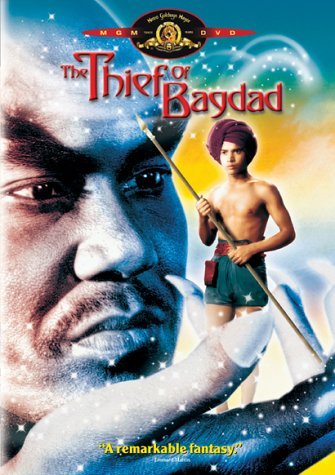
the-thief-of-baghdad-smallOn a recent Friday night, I sat down with my wife to watch The Thief of Baghdad (the definitive Korda/Powell version, from 1940). Thirty minutes later, my wife was fast asleep. When she woke up, she said, knowing I planned to mention the film to Black Gate’s readership, “What are you going to write about this?” Her notable lack of enthusiasm could, of course, be due to any number of factors, but only three reasonable alternatives present themselves: A) my wife is entirely lacking in taste; B) my wife has been replaced by a cantankerous alien entirely lacking in taste; C) this particular movie might well cause many a discerning viewer to harbor similar sentiments.

Let’s be clear: The Thief of Baghdad is one of the most universally acclaimed fantasy films ever made. Even my old (well-loved) copy of The Movie Guide gushes. “Perhaps the most splendid fantasy film ever made,” writes James Monaco and his various contributors, ending the review with “Film fantasy just doesn’t get much better than this.” Halliwell’s is equally enthusiastic, and they don’t like anything. Time Out raves. Coppola and Lucas cite it as a significant influence.

The story is crackerjack from start to finish. (Spoilers here: if you don’t want the plot, skip to the next paragraph.) Ahmed, the king deposed by Jaffar, his own Grand Vizier, falls in love with a princess whom no man can see, and of course vows to see her repeatedly. Ahmed is aided by Abu the thief, but of course Jaffar has designs on the very same princess. When Jaffar kidnaps her, Ahmed and Abu follow, but Jaffar conjures up a storm that separates our two heroes. In order to find Ahmed again, Abu must gain the reluctant help of a fifty-foot genie (the exceptional Rex Ingram), then steal the Eye of the World from a temple guarded by, among other things, a giant spider and giant octopi. Finally, with Ahmed captured and about to be beheaded, Abu swoops in on a flying carpet to save the day.

Given all this, how on earth did my wife (or some random alien) pass out?

The Thief of Baghdad has not aged gracefully. It’s essential viewing, yes, but only for buffs of either fantasy films or Old Guard Hollywood. The inconsistent special effects are the least of its problems; worse by far is what one might call presentational acting, but is in fact mostly just plain bad. Even Sabu, the Indian star who first made it big with Elephant Boy, is revealed to be a truly wooden performer. Conrad Veidt, as the cruel-as-an-adder Jaffar, comes off as a well-oiled villain, but he’s horribly miscast; he’s German through and through.

Read More Read More

New Treasures: Cult Magazines: A to Z

New Treasures: Cult Magazines: A to Z

cult-magazine-atozYou get to meet a lot of great people at science fiction conventions. For some, the draw is the Featured Guests, and it’s certainly cool to meet Neil Gaimen, Pat Rothfuss, John Scalzi, Connie Willis, and other top-selling authors.

For me though, the true delights are in meeting exciting writers and artists I’m not always familiar with. A few years ago, as we were setting up our booth at Dragon*Con, author Rob Thurman, who had the booth next to us, wandered over and introduced herself. She turned out to be extremely cool and delightfully entertaining, and when I finally staggered home, bone weary from five days in Atlanta, I dropped into my big green chair with one of her Cal Leandros novels. If it hadn’t been for lucky booth placement, I might never have discovered what an entertaining writer she was.

The same thing happened at Worldcon in Chicago two weeks ago. During the rare slow moments in the Dealers’ Room, I was able to wander a bit and check out the nearby booths. I discovered to my surprise that we were next to Nonstop Press — publishers of Science Fiction: The 101 Best Novels 1985-2010, The Collected Stories of Carol Emshwiller, and Cult Magazines: A to Z.

Nonstop’s Emshwiller: Infinity x Two: The Art & Life of Ed & Carol Emshwiller, by Luis Ortiz, is one of my favorite art books. The distinguished Mr. Ortiz was in the booth, and I was able to introduce myself. He had several intriguing new titles on display and — keeping a wary eye on the empty Black Gate booth — I was able to peek at them.

My eye was drawn immediately to Outermost: Life + Art of Jack Gaughan, a beautiful 176-page hardcover packed with over 500 images, many familiar from countless Ace and DAW paperback covers of the 60s and 70s. Over lunch, Rich Horton had talked about Robert Silverberg’s captivating memoir of writing SF in the 50s, Other Spaces, Other Times: A Life Spent in the Future, and there it was. I couldn’t resist Damien Broderick & Paul Di Filippo’s entertaining Science Fiction: The 101 Best Novels – 1985-2010 either.

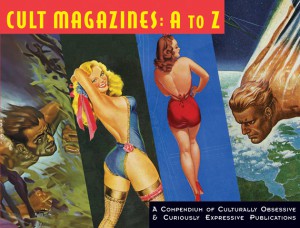
But the most fascinating book on the table, by a considerable margin, was Cult Magazines: A to Z, edited by Earl Kemp and Luis Ortiz, a gorgeous oversized softcover jam packed with articles and full-color pictures of hundreds of pulp, horror, science fiction, fantasy, comic, monster mags and men’s magazines published between 1925 and 1990.

Read More Read More

Happy Birthday, H.P. Lovecraft

Happy Birthday, H.P. Lovecraft

the-call-of-cthulhu-for-beginning-readers122 years ago today, Howard Phillips Lovecraft, the father of modern horror, was born in Providence, Rhode Island.

Here at Black Gate we’ve celebrated Lovecraft’s works in numerous ways over the years. In 2010, John R. Fultz interviewed the authors behind the landmark anthology Cthulhu’s Reign in “Cthulhu Has Risen…”, perhaps the single most popular blog post we’ve ever published, and last year he examined a brand new magazine celebrating Cthulhu’s creator, Lovecraft eZine. Matthew David Surridge took a detailed look at the master’s prose style in H.P. Lovecraft: The Style Adjectival, and Bill Ward told us about the silent movie version of The Call of Cthulhu.

We’ve covered numerous games, books, and audio adaptations, from Andrew Zimmerman Jones’s 2011 article on Age of Cthulhu: Death in Luxor to my review of Dark Adventure Radio Theatre’s superb audio play The Shadow Over Innsmouth. In the last week alone we told you about Ross E. Lockhart’s excellent anthology The Book of Cthulhu and the new RPG setting Clockwork and Cthulhu from Cakebread & Walton.

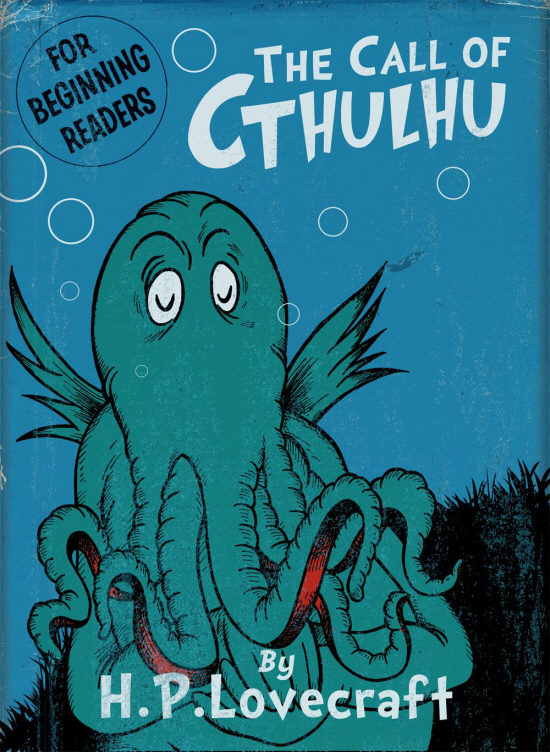
But there’s always more. So today, in honor of H.P. Lovecraft’s 122nd birthday, we’d like to present to you The Call of Cthulhu (For Beginning Readers), a faithful retelling of the classic horror tale… in the style of Dr. Seuss.

Created by artist Richard John Ivankovic, The Call of Cthulhu (For Beginning Readers) is a full-color illustrated version of the perhaps Lovercraft’s most famous story, originally published in the February 1928 issue of Weird Tales. The complete version can be browsed online here.

We think H.P. Lovecraft would have enjoyed it.

Art of the Genre: Joe Kubert [1926-2012]

Art of the Genre: Joe Kubert [1926-2012]

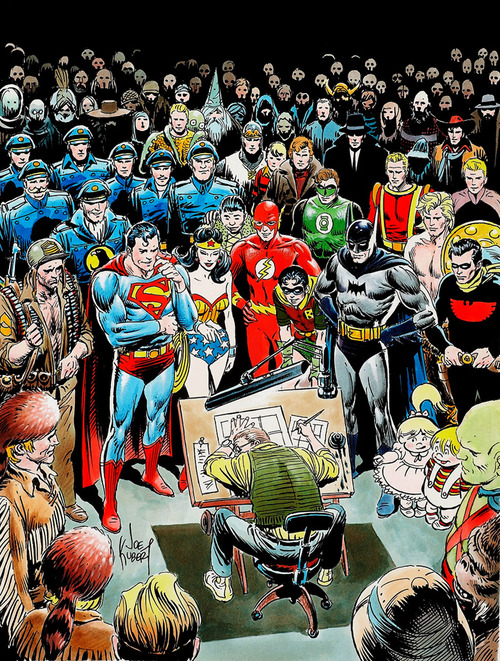
Joe Kubert, comic icon and teacher, passed away August 12th 2012
When I think of Joe Kubert, I think of Sgt. Rock, of comic books and of incredible pencils, but first and foremost I think of an inspirational teacher. Most of the time, artists influence the marketplace and world with their art alone, students of their style learning from observing images, but now and again a great artist also becomes a teacher, and for this their lives, and our world, will be forever changed.

So it was for Joe Kurbert, comic icon, and master of his art. Joe’s school, and all the ‘Kubies,’ as his graduates were called, helped define nearly two generations of art since its inception in 1976. Notable names such as Dave Dorman, Tim Truman, and countless others have studied under this master, and because of that, his rank among the all time greats increases tenfold.

Two of his children, sons Adam and Andy, have gone on to follow in their father’s footsteps as well, now respected comic artists in their own right.

His art, so inspiring to all fans, had a subtle quality that somehow managed to be both hard and soft. Emotion was etched into each line, and the movement found in his figures always had a realism I found astonishing when reading gritty war stories from his formative, post WWII, years in the industry.

He was another outstanding member of ‘The Greatest Generation,’ and the principles for which he lived his life, and the kindness and generosity for which he was known, are a shining example to others who I hope will eventually follow in his footsteps.

To this, beyond talented and incredible father, artist, husband, and teacher, I raise a glass. He will be sorely missed, but his legacy, as well as his teachings, will continue. And for that, the world of art will be forever enriched.

The Retro Pulp Art of Tim Anderson

The Retro Pulp Art of Tim Anderson

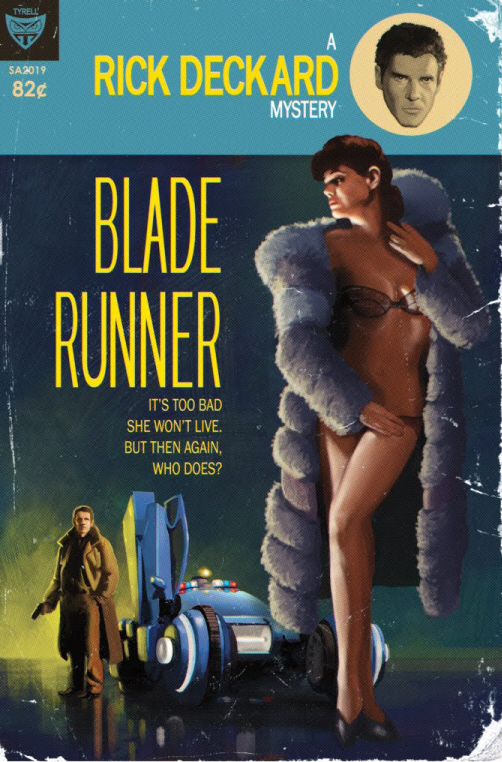
blade-runner-pulpWe love pulp fiction. And we love classic SF & fantasy movies.

So what’s not to love about Tim Anderson’s re-imaginings of classic SF films as pulp paperbacks?

Anderson is a concept designer for Electronic Arts in Salt Lake City. He’s also worked as a concept designer for Paramount Licensing, Inc., Radical Comics, and various independent filmmakers.

He’s started working on a personal side project that he hoped would motivate him “into thinking more graphically,” a series of highly detailed period paperback covers for some of the most famous SF films of the 20th Century.

Here’s what he says about his Blade Runner piece at right (click for a bigger version):

If you haven’t guessed by now, I’m a huge sci-fi fan, and a huge fan of Ridley Scott. Here’s a pulp cover I have had in the works off and on for a while now. I was inspired by the detective pulp covers of Robert McGinnis. If ever there was a sci-fi movie that lent itself well to a detective pulp cover, it’s Blade Runner.

Anyone who’s a fan of the great Robert McGinnis is okay by us.

Check out Tim Anderson’s versions of Alien, The Matrix and others here.

Art of the Genre: Top 10 Literary Sci-Fi/Fantasy Covers of the 1970s

Art of the Genre: Top 10 Literary Sci-Fi/Fantasy Covers of the 1970s

John Berkey WILL appear on this list... but where and when?

I was born in 1971, which makes me old, but not too old, at least in my mind. Although I was indeed a living creature on this planet during the bulk of the 1970s I didn’t really have much conscious thought that was dedicated to anything resembling fiction.

Sure, I saw Star Wars at the local cinema, I had the action figures, but that was about as close to anything literary as I got, the bulk of my time sucked up with Hot Wheels and green-plastic army men. However, while I was learning to walk, potty on a toilet, ride a bike, and crushing on my first girlfriend, the forces of American fantasy art were going into overdrive around me.

Truly, the 1970s was a creative bloom in fantasy and science fiction art, and although I do enjoy both the 60s and even the 50s, I think it is best I start with the decade where this genre moved from the minds of a chosen few to the big time of the greater American consciousness.

As I grew along up, my appreciation for art in general started to move me into the realm of fantasy books and their unreal covers. That’s not to say that 1970s art played directly into this progression, as I was really a child of the 1980s, but the greater knowledge I gained of the industry as a whole, the more I appreciated the groundbreaking art from the decade of my birth.

So, today, having spent nearly twenty years studying the fantasy art industry, and ten of that working directly in it, I’ve grown to love the literary art of the 1970s and wanted to share with you my thoughts concerning some of the very best it had to offer.

Read More Read More