Browsed by
Author: John ONeill

New Treasures: Once Upon a Time in Hell by Guy Adams

New Treasures: Once Upon a Time in Hell by Guy Adams

Once Upon a Time in Hell Guy Adams-smallYou know, I try not to play favorites with these New Treasures posts. The whole point is to present a diverse sampling of the most intriguing fantasy crossing my desk every week. It defeats the purpose if I keep talking about the same writers week after week, so I don’t do it.

Unless your name is Guy Adams, apparently. I wrote up his novel of hidden laboratories, genetic engineering, and Sherlock Holmes, The Army of Dr. Moreau, back in August 2012, and his noir jazz club mystery Deadbeat: Makes You Stronger last October. But it was his gonzo fantasy-western, The Good The Bad and the Infernal, released last March, that really grabbed my attention and I’ve anxiously been awaiting the sequel. Now that it’s arrived, here I am talking about Guy Adams again. It’s not my fault, I swear.

A weird western, a gun-toting, cigarrillo-chewing fantasy built from hangman’s rope and spent bullets. The west has never been wilder.

Wormwood has appeared, and with it a doorway to the afterlife. But what use is a door if you can’t step through it?

Hundreds have battled unimaginable odds to reach this place, including the blind shooter Henry Jones; the drunk and liar Roderick Quartershaft; that most holy, yet enigmatic of orders, the Brotherhood of Ruth; the inventor Lord Forset and his daughter Elisabeth; the fragile messiah Soldier Joe and his nurse Hope Lane. Of them all, Elwyn Wallace, a young man who only wanted to travel west for a job, would have happily forgone the experience. But he finds himself abroad in Hell, a nameless, aged gunslinger by his side. He had thought nothing could match the terror of his journey thus far, but time will prove him wrong.

On the road to Hell, good intentions don’t mean a damn.

Once Upon a Time in Hell is Book two of The Heaven’s Gate Trilogy. It was published on December 31, 2013 by Solaris. It is 283 pages, priced at $7.99 in paperback and $6.99 for the digital edition.
The Top 50 Black Gate Posts in February

The Top 50 Black Gate Posts in February

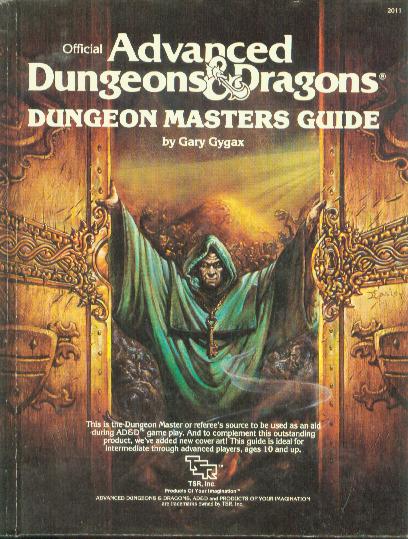
AD&D DMGScott Taylor’s massive survey of the top artists working in the role playing industry since its birth — the latest in his popular Art of the Genre series — was our most popular article last month.

In second and third place were our reports on the latest fan turmoil inside the Science Fiction Writers of America (SFWA), including a series of ugly personal attacks on ex-SFWA Vice President Mary Robinette Kowal.

Fourth was the first installment of Jon Sprunk’s Firefly retrospective, now up to seven chapters.

For fifth place it was back to the People-Behaving-Badly part of our program, with a report on Macmillan Associate Director of Contracts Sean P. Fodera’s threat to sue everyone who linked to the Daily Dot report on his attack on Mary Robinette Kowal (including Black Gate, presumably). We’re still waiting for that thick Fed Ex envelope from a legal firm.

The complete Top 50 Black Gate posts in February were:

  1. Art of the Genre: The Top 10 RPG Artists of the Past 40 Years
  2. Robert Silverberg, Gregory Benford, Dave Truesdale call for Changes to SFWA
  3. SFWA Ugliness Spreads to Personal Attacks on Mary Robinette Kowal
  4. Firefly, a Retrospective – Part 1
  5. Sean P. Fodera Threatens to sue 1,200 Writers
  6. Read More Read More

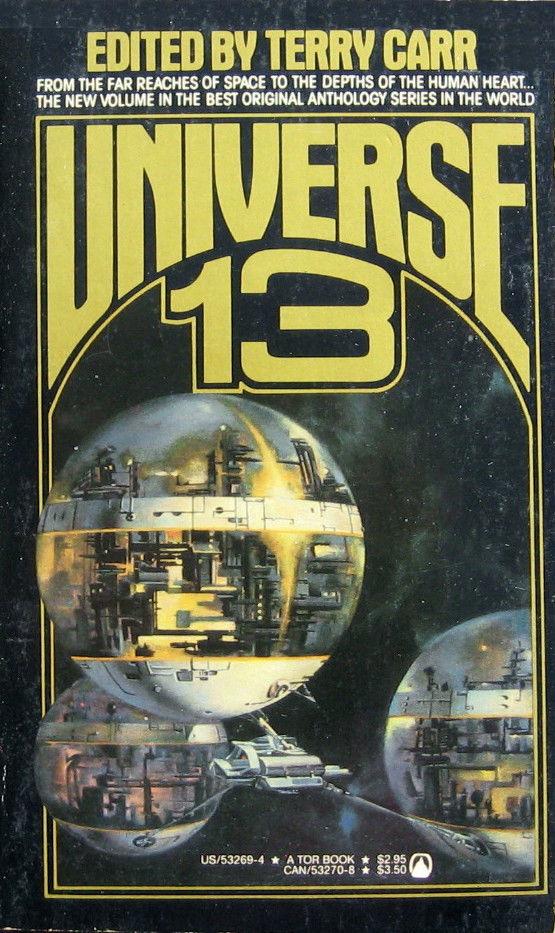
Vintage Treasures: Universe 13 edited by Terry Carr

Vintage Treasures: Universe 13 edited by Terry Carr

Universe 13 Terry Carr-smallLast Sunday, I was busy complaining about the apparent death of the original SF and fantasy paperback anthology series (as one does), when it occurred to me that I should probably read a few of the books I was talking about.

Nothing like waxing nostalgic and working up a good frothy indignation at the death of a vital part of American culture to remind you that your memories on the subject are actually kinda vague and unspecific. It’s a crime that Universe is no longer being published! It was a source of some of the most brilliant SF of the 70s! I think. Wait, which one was Universe again?

So I decided to start by reading Universe 13. Partly because Terry Carr really was a terrific editor and he knew how to put together a splendid anthology. But mostly because I found a copy in easy reach in a stack of vintage paperbacks and I didn’t have to get up out of my big green chair.

I’ve talked about Universe before, especially about Carr’s insight into the field. One of the most famous quotes about science fiction comes from his introduction to Universe 3, which I printed in 2012 and I’d like to reprint here:

When aficionados of this field get together, that’s a standard topic of discussion. When was science fiction’s golden age? Some say the early forties, when John W. Campbell and a host of new writers like Heinlein, Sturgeon and van Vogt were transforming the entire field; others point to the early fifties, to [editors] H.L. Gold and Anthony Boucher and to such writers as Damon Knight, Alfred Bester and Ray Bradbury. Some will lay claims for the late sixties, when the new wave passed and names like Ballard, Disch and Aldiss came forward. There are still people around, too, who’ll tell you about 1929 and David H. Keller, E.E. Smith and Ray Cummings.

The clue in most cases is when the person talking first began to read science fiction. When it was all new, all of it was exciting. Years ago a friend of mine, Pete Graham, tersely answered the question “When was the golden age of science fiction?” by saying “Twelve.” He didn’t have to explain further; we knew what he meant.

Read More Read More

The Novels of Michael Shea: A Quest for Simbilis

The Novels of Michael Shea: A Quest for Simbilis

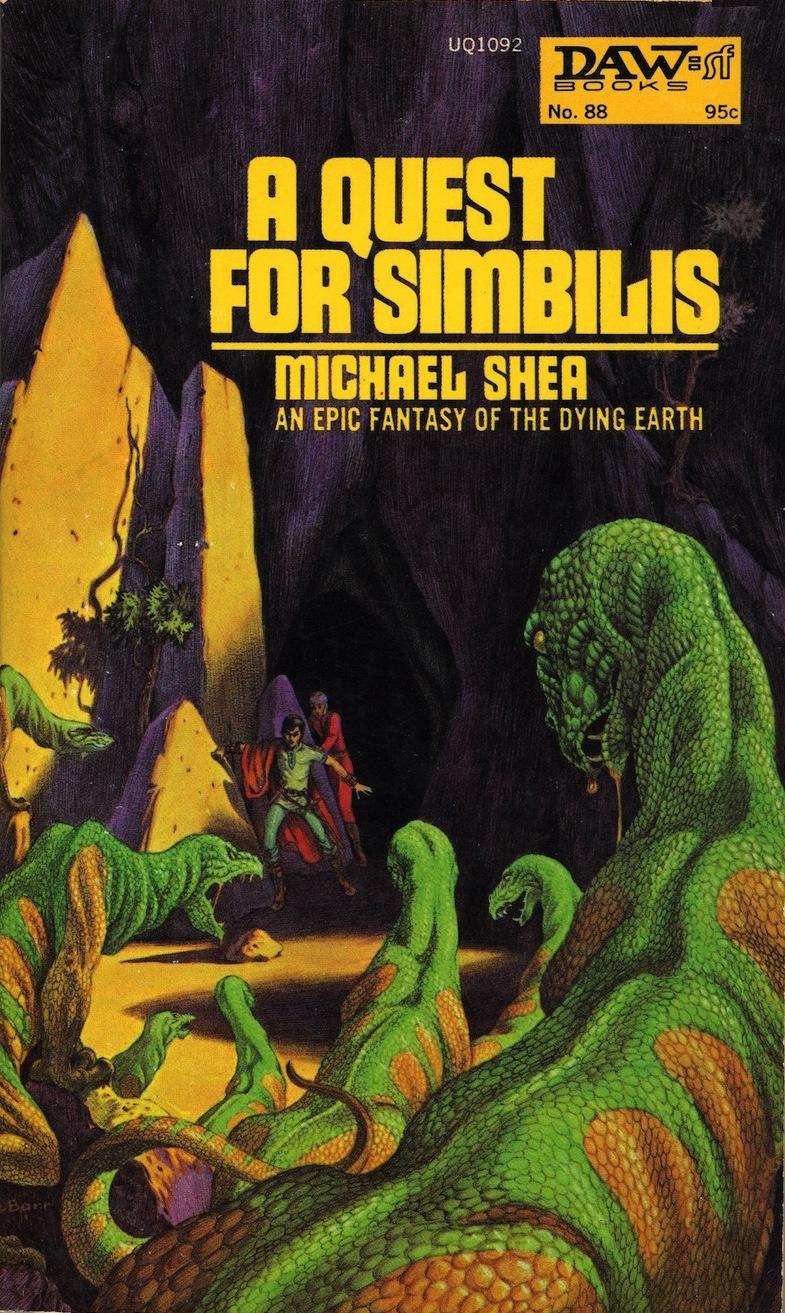
A Quest for Simbilis-smallThe stories that surround Michael Shea’s first novel, A Quest for Simbilis, have the stuff of legend.

In the early 70s, Michael found a copy of Jack Vance’s Dying Earth novel The Eyes of the Overworld in the lobby of a hotel in Juneau, Alaska. The book stayed with him for four years, through a brief first marriage and extensive travels, hitch-hiking through France and Spain, until he sat down to write an homage to Vance and a sequel to his novel. It was published in paperback by DAW Books in 1974 and was a finalist for the British Fantasy Award.

There are dangers to playing in someone else’s playground, and some at the time saw Michael as a dabbler, not really serious about writing. But nothing could have been further from the truth, as his wife Lynn noted in the announcement of his death at Michael Shea’s website on March 7th.

Michael published his first novel, A Quest for Simbilis, in 1974, and for all the years that I knew him, he wrote almost every day. Novels, short stories, and, his first love, poetry poured out of him up through the very last day of his life. Some thought of Michael as reclusive, when in fact he was just old-fashioned, a writer’s writer. Once a piece was perfect, he wanted to set it aside, forget it, and begin the next project. Even so, we, his family, feel that, along with our memories, his written works are what we still have of him.

Michael’s family have now turned his website into a forum where his friends and fans can “share their experiences, both literary and personal, as well as find access to new releases and formats of his work.” Visit the site here.

Jack Vance graciously declined to share the advance offered by DAW Books for A Quest for Simbilis, but allowed the book to be released as an authorized sequel to his Dying Earth novels. Eventually, Vance took the series in a different direction when he published a third book, Cugel’s Saga, in 1983.

Read More Read More

New Treasures: The Dark Eidolon and Other Fantasies by Clark Ashton Smith

New Treasures: The Dark Eidolon and Other Fantasies by Clark Ashton Smith

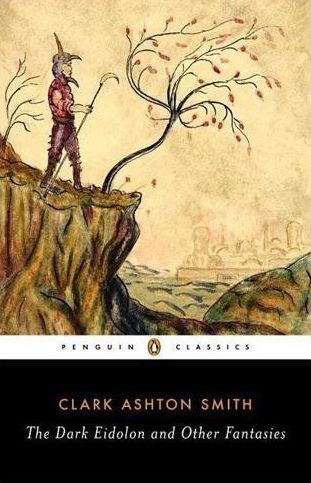
The Dark Eidolon and Other FantasiesAt long last, Clark Ashton Smith gets a little respect.

The highly regarded Penguin Classics line — which scholars and teachers love to rely on when drawing up things like course reading lists — has been slow to embrace pulp writers, and especially pulp fantasy writers. But in the last decade or so they’ve been correcting that oversight, starting with Lovecraft (The Call of Cthulhu and Other Weird Stories, Oct. 1999, The Thing on the Doorstep and Other Weird Stories, Oct. 2001, and more.) They’ve done a little better with other fantasy writers, including Lord Dunsany (In the Land of Time: And Other Fantasy Tales, February 2004), Arthur Machen, Shirley Jackson, M. R. James, and others.

Much of this has been the result of the efforts of editor S.T. Joshi, who now brings Penguin Classics their very first pulp sword & sorcery collection, gathering together the best work of the great Clark Ashton Smith.

Called “unexcelled by any other writer, dead or living” by H.P. Lovecraft, Clark Ashton Smith, a prolific poet, amateur philosopher, bizarre sculptor, and unmatched storyteller, simply wrote like no one else. Now, The Dark Eidolon and Other Fantasies, the much-awaited collection of poetry and prose from Clark Ashton Smith, introduces him into the Classics as a cosmic master artist who saw horror and wonder in all things, and in whose pen note a single sentence was safe.

This collection of his very best tales and poems, selected and introduced by supernatural literature scholar S.T. Joshi, allows readers to encounter Smith’s visionary brand of fantastical, phtantasmagorical worlds, each one filled with invention, terror, and a superlative sense of metaphysical wonder. The volume’s title story — a revenge tale that ends with macrocosmic stallions returning to trample a house they had formerly spared — is set in Smith’s Zothique story circle, in which the last inhabited continent on Earth watches humanity at the end-time regress to a pre-modern state.

The Dark Eidolon and Other Fantasies was published by Penguin Books on March 25. It is 370 pages — including 32 pages of Explanatory Notes on the stories by Joshi — and priced at $16 in trade paperback and $9.99 for the digital edition.

Read More Read More

Explore the Echoes of a Vanished Product Line in Lost Empires of Faerûn

Explore the Echoes of a Vanished Product Line in Lost Empires of Faerûn

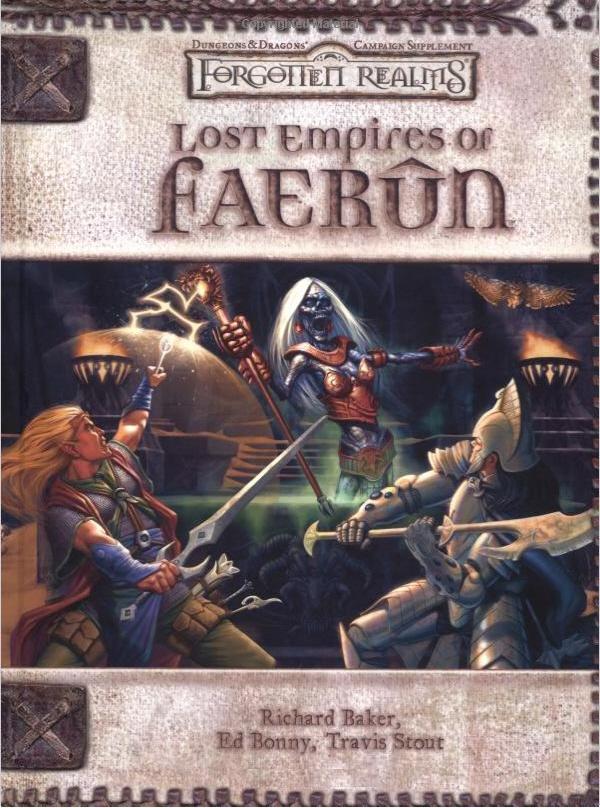
Lost-Empires-of-Faerun-smallI’m still processing the boxes of gaming loot I brought home from the Spring Games Plus Auction. Honestly, this could take a while. You may want to get a coffee or something.

I find it fascinating to watch the items that set off a bidding frenzy. The Descent games I talked about last time, for example. Or absolutely any expansion sets for Wizard of the Coast’s out-of-print Heroscape — lordy, yes. I wish I had a closet filled with those babies. I’d retire to Bermuda.

But it’s no fun to bid on stuff that far out of my price range. Gape while everyone else bids like crazy? Sure. But bid yourself? No. It’s like asking the Homecoming Queen to Prom. Sure, everybody’s doing it, but it ain’t easy on your self-esteem.

But you know what is fun to bid on? Cheap stuff, and especially cheap stuff that was once very expensive. Like premium D&D products that are now one or two editions out of date and selling at rock bottom prices. Items like a brand new copy of Lost Empires of Faerûn, which originally retailed for $29.95 and which I snapped up for 6 lousy bucks.

Let me paraphrase from the back of the book. Something, something, secrets of past empires of the Forgotten Realms, comprehensive sourcebook, new feats, stuff, prestige classes, magic stuff, equipment stuff. Can I use this to put together an adventure in 10 minutes when I manage to forget game night switched to Friday? Yes? I’m sold.

Apparently, the book also contains gaming advice on ruins, including rules for how to build and sustain a ruin-based campaign, a bunch of detailed adventure sites with maps, artifacts, and some new monsters. You had me at “ruin-based campaign.” Take my money already.

Read More Read More

New Treasures: The Iron Jackal by Chris Wooding

New Treasures: The Iron Jackal by Chris Wooding

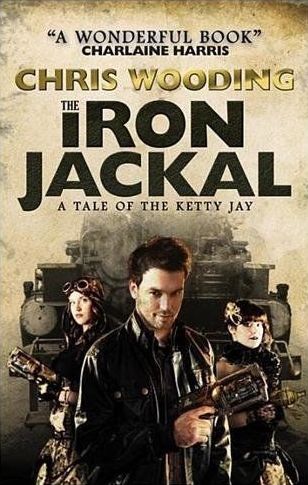
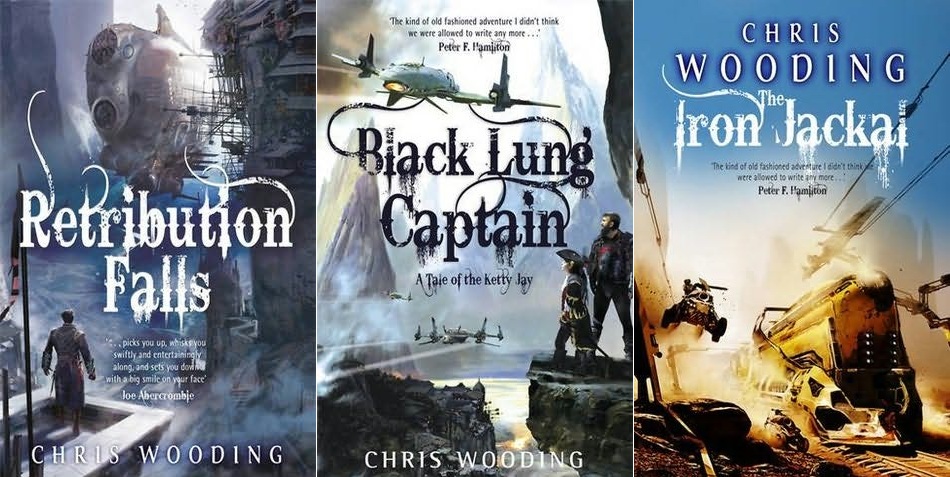
The Iron Jackal-smallChris Wooding’s Ketty Jay novels come packed with witty dialog, high-flying adventure, and a hearty dose of steampunk fantasy — not to mention some great covers (see the British editions of the first three here). The previous volumes, Retribution Falls and The Black Lung Captain, were published in the US by Bantam Spectra; with the third Wooding switches publishers to Titan, bringing a new look to a series that has been compared to Firefly. If you’re on the hunt for a new series that includes sky pirates, quirky characters, and swashbuckling fantasy, this might be exactly what you’re looking for.

Things are looking good for Captain Frey, roguish captain of the Ketty Jay and her dysfunctional crew of layabouts. Accustomed to living on the wrong side of the law, running contraband, robbing airships and generally making a nuisance of themselves, Frey’s rag-tag bunch of no-hopers is finally on the rise from bottom-feeding freebooters to bar-room celebrities. And, just for once, nobody is trying to kill them.

Even Trinci Dracken, Frey’s one-time fiancée and long-time nemesis, has given up her quest for revenge. In fact, she’s offered him a job — one that will take his crew deep into the desert heart of Samarla, land of their ancient enemies, where the secrets of the past lie in wait for the unwary. Secrets that might very well cost Frey everything.

Join the crew of the Ketty Jay on their greatest adventure yet: a story of mayhem and mischief, roof-top chases and death-defying races, murderous daemons, psychopathic golems and a particularly cranky cat.

Chris Wooding is also the author of Malice, Storm Thief, and over a dozen other books. He has announced that the fourth volume in the series, the upcoming The Ace of Skulls, scheduled for release in August, is also the last.

The Iron Jackal was published by Titan Books on March 11, 2014. It is 480 pages, priced at $14.95 for the trade paperback and $9.99 for the digital edition.

The Fantasy Novels of Lucius Shepard: The Golden

The Fantasy Novels of Lucius Shepard: The Golden

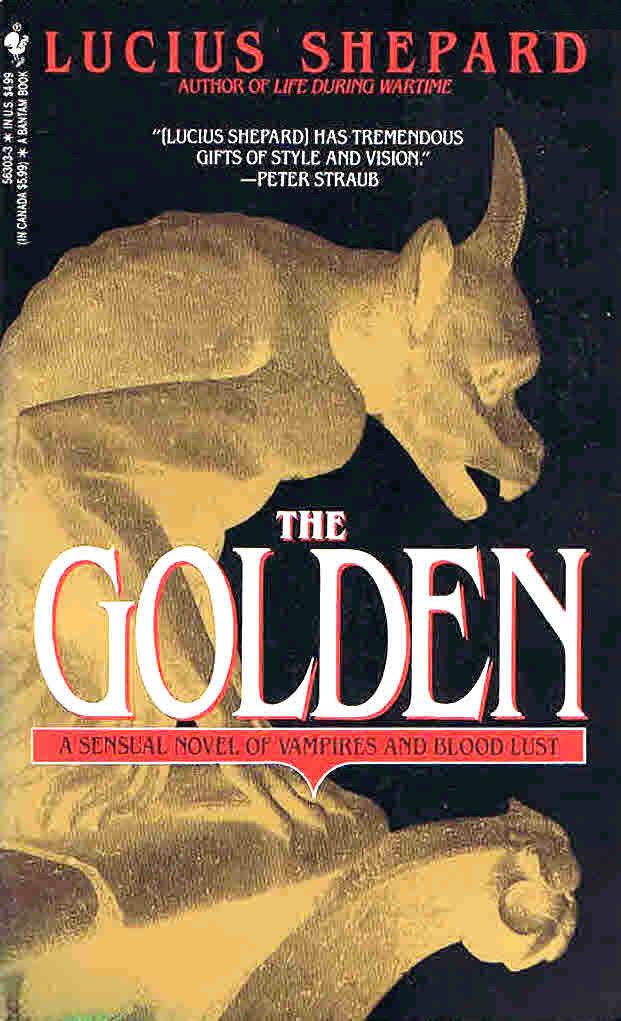
The Golden Lucius Shepard-smallLucius Shepard was known chiefly as a science fiction writer, and for good reason. His most popular books, including Green Eyes and Life During Wartime, were science fiction and so was much of his most acclaimed short fiction.

But to disregard his fantasy contributions would be a major oversight. Shepard died earlier this month and to commemorate his profound contributions to the genre, we will survey his fantasy books, beginning with his third novel, 1993’s The Golden, a tantalizing mix of mystery and horror subtitled A Sensual Novel of Vampires and Blood Lust.

In the mid nineteenth century, vampires gather at Castle Banat, one of their most sprawling and ancient warrens. Their five-hundred-year breeding project has produced the Golden, a mortal of perfect blood, and they’ve come to drink from her in a ceremony that will incidentally make her one of the Family. When the girl is found murdered, the clan’s shadowy patriarch calls on the detective Michel Beheim to solve the crime. But Michel has been a vampire for only a short while, and though he was a talented investigator among mortals, he is ill-prepared for the task. Soon he is fighting to survive the bizarre terrors of the labyrinthine castle and the schemes of vampires who guard a secret that may forever alter the world of the undead.

The Golden won the Locus Award for Best Horror Novel in 1994.

The Golden was published in a limited edition hardcover by Mark V. Ziesing books in April 1993 and in a mass market paperback by Bantam Books in August 1993. It was 291 pages in paperback, priced at $4.99. It is currently out of print, but a digital version is available for $6.99.

John W. Campbell on Tolkien, Conan, and Sword & Sorcery

John W. Campbell on Tolkien, Conan, and Sword & Sorcery

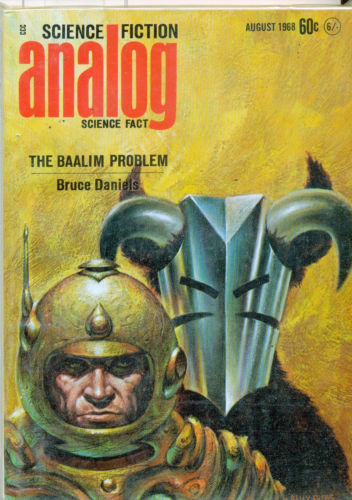
The August 1968 issue of Analog Science Fiction, with Sword & Sorcery creeping up on Science Fiction
The August 1968 issue of Analog Science Fiction, showing Sword & Sorcery creeping up on Science Fiction

Gordon van Gelder, the editor of The Magazine of Fantasy and Science Fiction, has posted a fascinating excerpt from The John W. Campbell Letters, Volume 1. The excerpt is from a September 7, 1967 letter to Analog author and Hugo Award winning writer Gordon R. Dickson, author of Dorsai! and Soldier, Ask Not, and it captures the frustrations of the top SF editor in the country as he senses his audience being lured away by the growing popularity of J.R.R. Tolkien.

The swords-and-sorcery and Tolkien have displaced science fiction almost completely. Why? Well, partly — but I think a small part — is the current leaning to escape-from-reality, LSD etc. to the undisciplined world of my opinion is as good as any other, and don’t tell me there’s a Universe’s Opinion I’ve got to accept, willy nilly.

But the larger item, I suspect, is *human beings want heroes.* Real heroes. Not common-men-who-proved-under-stress-they-could-struggle-through. The swords-and-sorcery yarns are all based on superhuman heroes — and it’s clearly obvious the readers love ’em.

Now in as much as it’s the readers who pay for the magazines, it damn well behooves us to give ’em what they want — and they obviously want super-heroes on the Conan order. They want for Frank Herbert’s Dune, with his super-hero. They used to go with all-out enthusiasm for Jack Williamson’s really-not-very-good “Legion” stories.

Now if the fans want — and they evidently do! — swords-and-sorcery type yarns, then we had damn well better give ’em the type of thing they want, or get out of the way for someone who will.

Campbell never published much fantasy in Analog, but he did champion adventure-oriented science fantasy in the late 60s, like Anne McCaffrey’s Dragonriders of Pern stories (the first of which, the Hugo Award-winning “Weyr Search,” appeared in Analog in October 1967). It would be interesting to take a closer look to see if there was any noticeable editorial shift in this period.

Read the complete excerpt in Gordon’s Facebook post.

Hurry Up With That Doctor Strange Movie, Marvel

Hurry Up With That Doctor Strange Movie, Marvel

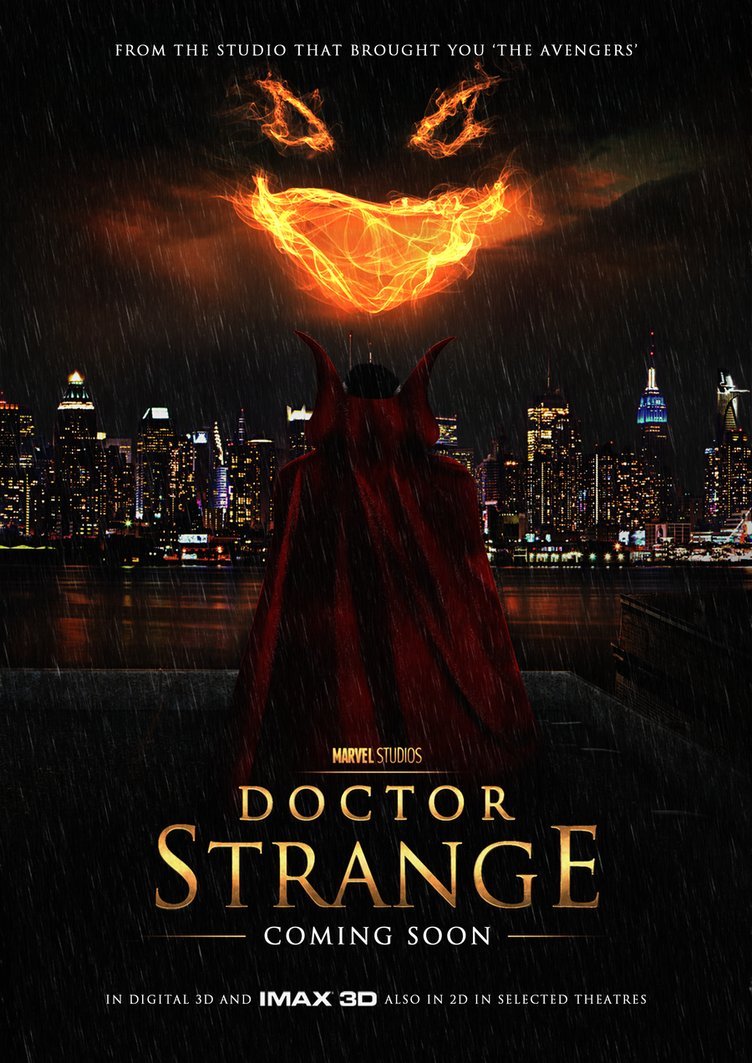
Mesmeretics Doctor Strange poster-smallMarvel Studios has certainly been dragging its feet with the long-delayed Doctor Strange feature film. It still doesn’t have a release date. (Or a star. Or a director.)

That hasn’t stopped enthusiastic fans from trying to nudge the project along with fake trailers and posters, like the fan-made effort from Mesmeretics at left. C’mom, Marvel. If fans can make something that looks that sharp, so can you.

I consider Doctor Strange to be the last major untapped Marvel property and I’m a little cranky that C-listers like Ant Man and Rocket Raccoon are making it to the silver screen before he is. It wouldn’t surprise me if Baron Mordo was behind it all, somehow.

Doctor Strange was created by Stan Lee and Steve Ditko (the same team that created Spider-man) in 1963. He has flirted with live action versions before… there was a 1978 TV movie starring Peter Hooten, which I watched after school and thought perhaps was the coolest thing in the history of ever. In 2005 Paramount acquired the rights to Doctor Strange from Miramax and in 2008 reports surfaced that Guillermo del Toro was attached to direct and that he’d approached Neil Gaiman to do the script. Never happened.

More recently, in June 2010, Marvel Studios hired Thomas Dean Donnelly and Joshua Oppenheimer, the team behind the underrated Sahara and the 2011 reboot of Conan the Barbarian, to produce a script, and in January of last year Marvel Studios president Kevin Feige confirmed that Doctor Strange would be part of “Phase Three” of the so-called Marvel Cinematic Universe. In November, he confirmed that a Doctor Strange feature is in development, but so far no additional details have emerged. And so we wait.

Read More Read More