Browsed by
Author: John ONeill

Amal El-Mohtar reviews “Witch, Beast, Saint” by C.S.E. Cooney

Amal El-Mohtar reviews “Witch, Beast, Saint” by C.S.E. Cooney

C.S.E. Cooney
C.S.E. Cooney

Erotic fiction makes me blush. You know how some people have to cover their eyes when watching horror movies? I’m like that with erotic fiction. When C.S.E. Cooney submitted short stories to Black Gate, I had to peek between my fingers to read them. We published two, “Godmother Lizard” and “Life on the Sun,” (which Tangent Online called “bold and powerful… on a scale of 1 to 10, I rank this one as a twelve”), and I had to look the other way while editing them.

Fortuantely, there are readers braver than I. Over at Tor.com, Amal El-Mohtar has reviewed C.S.E’s new story, “Witch, Beast, Saint: an Erotic Fairy Tale,” saying in part:

Absolutely no one writes fairy tales like Cooney…what Cooney does is make you feel as if you’re a citizen of fairy tale space, inhabiting the lands and experiencing the stories adjacent to those better-known: Cinderella might be a few towns over, but she doesn’t matter here. Cooney writes new fairy tales with a vigour and velocity that make me remember how I felt on first discovering The Snow Queen in a book too big for my lap…

A witch discovers a beast dying in a forest, and takes him home to keep. She can tell right away that he was once a man; she washes and revives him, feeds him, takes care of him, and they become companionable. Soon they become rather more than that; not long afterwards, the arrival of an itinerant saint troubles their romance…

It was shockingly delightful to me to see such a beautiful depiction of enthusiastic consent, kink, and polyamory in a fairy tale setting — no technical terms, no rhetoric, just the cheerful twining of compatible desires in a magical world.

C.S.E. Cooney is a past website editor of Black Gate, and the author of How to Flirt in Faerieland and Other Wild Rhymes and Jack o’ the Hills. “Witch, Beast, Saint” was published at Strange Horizons; read the complete story here. And read Mark’s recent interview with C.S.E. Cooney here.
New Treasures: We Are Not Good People by Jeff Somers

New Treasures: We Are Not Good People by Jeff Somers

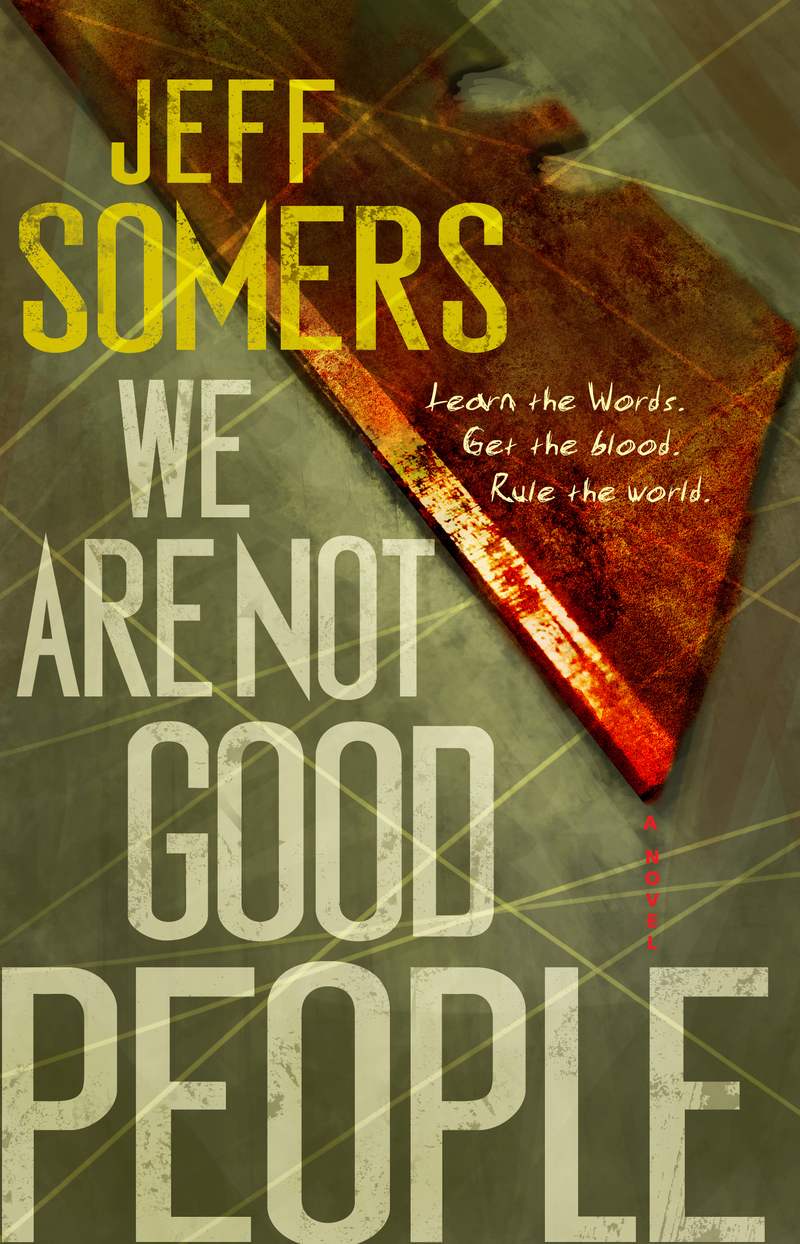
We are not Good People-smallJeff Somers has made quite a name for himself as an SF writer. His first novel, The Electric Church (2007), launched what eventually became know as the Avery Cates series (five volumes, including the most recent, The Final Evolution in 2011.) He’s less well known as a fantasy writer. His first fantasy novel, Trickster, published by Pocket Books last year, introduced Lem and Mags, two unlikely heroes in an underground world of blood magic. But Trickster was only the first half of the tale, and now it has been re-packaged with the second half and re-released by a new publisher as We Are Not Good People.

Ethics in the world of blood magic is gray at best. Unbeknownst to most, powerful mages have orchestrated disasters — plane crashes, floods, wars — for centuries to fuel their spells with blood. Lesser practitioners, Tricksters like Lem Vonnegan, work smaller magical grifts to eke out a living using only their own gas. For refusing to bleed innocents for his spells, Lem has pretty much condemned himself and his massive, dumb sidekick, Mags, to a life of transient poverty. So when the pair finds Claire Mannice, marked with runes of deep magic and stuffed inside the trunk of a car, Lem knows the rescuing her may be noble or may be infatuation disguised as redemption. Either way, it is most definitely fatal.

For the world’s most powerful mage, Mika Renar, has earth-shattering plans for Claire — and the old woman has noticed their interference. Hopelessly outclassed, and both intrigued by the mysterious girl and devoted to protecting the pet-like Mags, Lem engages his Trickster knack for misdirection and survival to follow the trail of ling cons that Renar and the other archmages have going.

But even if Lem and Mags win, they can still lose. Dealing with the kind of power that doesn’t heed mercy — or death — the duo is fighting for nothing less than reality itself. For magic is nothing but cons all the way down.

We last covered Jeff Somers when we linked to his Huffington Post article, Fantasy Series Better Than Harry Potter. We Are Not Good People was published by Gallery Books on October 7, 2014. It is 514 pages, priced at $16.99 in trade paperback and $12.99 for the digital edition.

Vintage Treasures: Sea Tales of Terror, edited by J.J. Strating

Vintage Treasures: Sea Tales of Terror, edited by J.J. Strating

Sea Tales of Terror-smallWhen you’ve been collecting paperbacks as long as I have, there aren’t a lot of discoveries left that really get you excited. Sure, there are still the occasional finds in a good used bookstore, or that opportunity to replace a lost book at a great price. But nothing like those unexpected discoveries you made when you first started collecting. The ones that made your pupils go big, and made you think, “I need this book right now.”

Of course, there are exceptions.

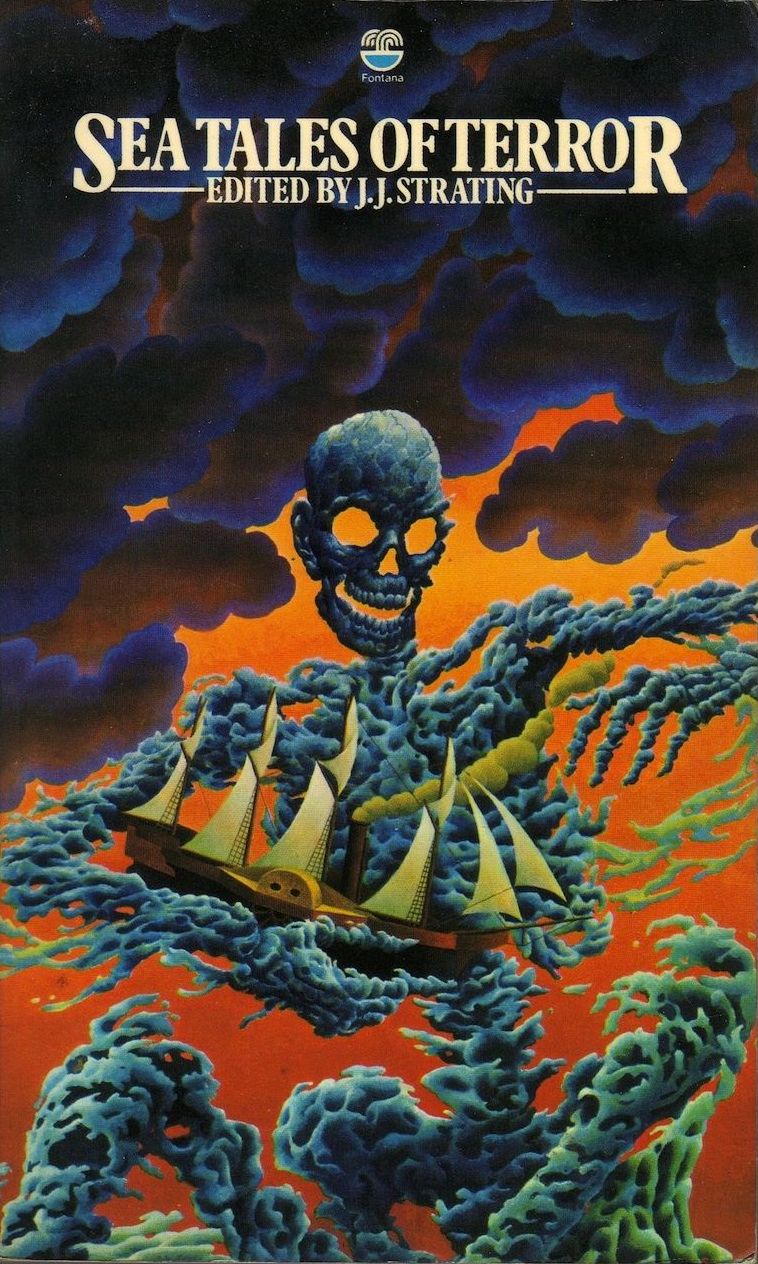
A few weeks ago, I spotted Sea Tales of Terror, a 1974 paperback from British publisher Fontana, on eBay. It was the first copy I’d ever laid eyes on. And my eyeballs got big, and I thought “I need this book right now.”

Mostly it was the cover, I think. Painted by Justin Todd, it shows a skeletal figure, made entirely of salt water and sea foam, clutching a full-masted schooner, against an angry red sky. That cover promised adventure and nights of delightful reading curled up in my big green chair.

With a little determination, I won the auction. (Truthfully, it wasn’t hard. The bidding fizzled above five bucks and I got it for less than seven. Vintage paperbacks — there just aren’t that many that cost as much as a new paperback.)

We’ve mentioned Fontana’s Tales of Terror anthologies before, but I really had no idea there were so many. I count a total of ten, although that’s not a firm number. Earlier this year, I wrote about Gaslight Tales of Terror, edited by R. Chetwynd-Hayes, who edited several others, including Welsh Tales of Terror (1973), and Tales of Terror from Outer Space (1975). J.J. Strating, editor of this volume, also produced European Tales of Terror (1968) and Oriental Tales Of Terror (1971). Clearly, I need to do some homework and report back on what I find.

Read More Read More

New Treasures: Radiant by Karina Sumner-Smith

New Treasures: Radiant by Karina Sumner-Smith

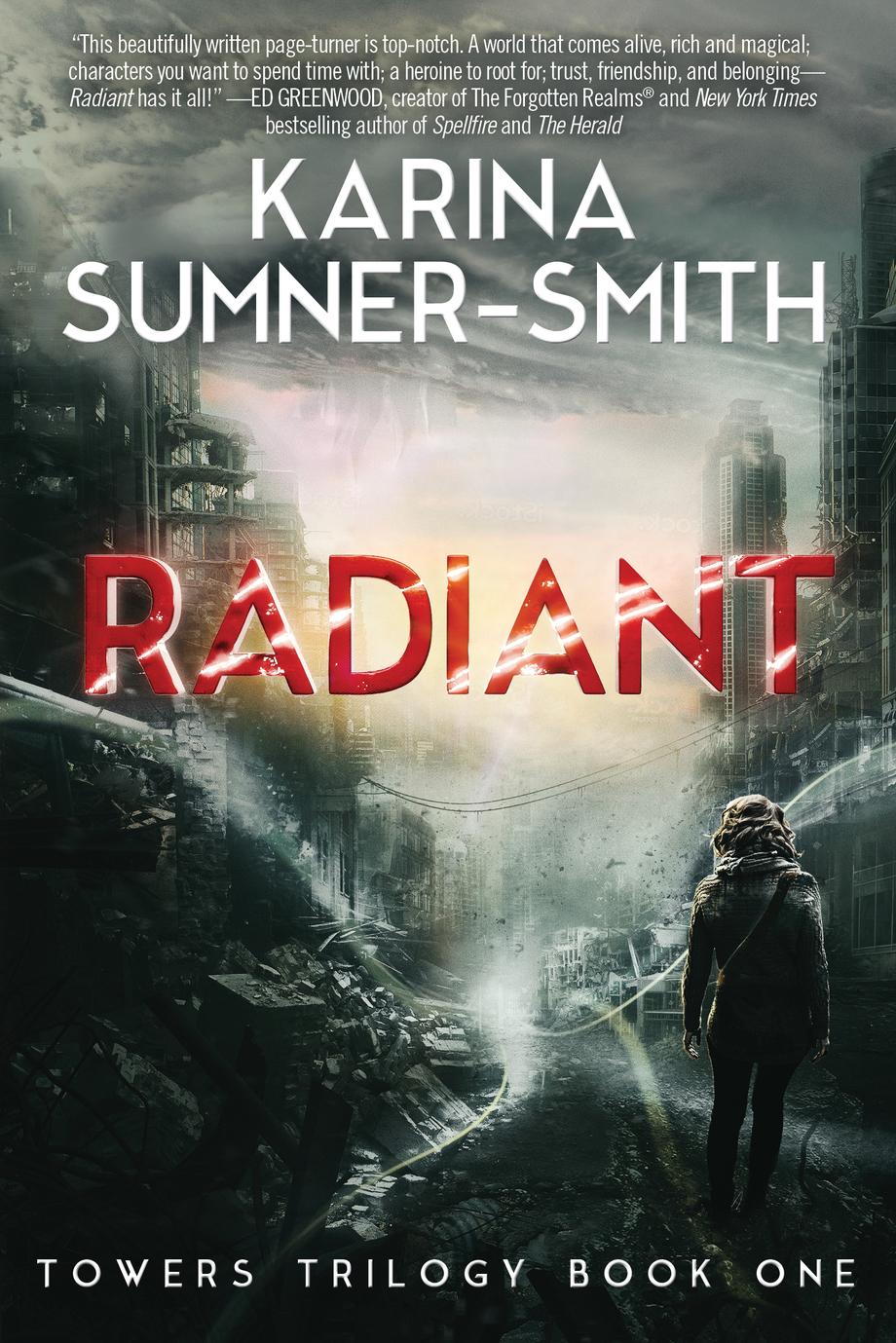
Radiant Karina Sumner-Smith-smallThe surest way to get my attention these days is with an original setting. And I was struck by the darkly imaginative setting of Karina Sumner-Smith’s debut novel Radiant immediately.

Sumner-Smith is a Canadian author of fantasy, science fiction, and young adult fiction. Her short fiction has been nominated for the Nebula award and has appeared in The Living Dead 2, The Best Horror of the Year Volume Three, and other places. Radiant is the first book of the Towers Trilogy.

Xhea has no magic. Born without the power that everyone else takes for granted, Xhea is an outcast—no way to earn a living, buy food, or change the life that fate has dealt her. Yet she has a unique talent: the ability to see ghosts and the tethers that bind them to the living world, which she uses to scratch out a bare existence in the ruins beneath the City’s floating Towers.

When a rich City man comes to her with a young woman’s ghost tethered to his chest, Xhea has no idea that this ghost will change everything. The ghost, Shai, is a Radiant, a rare person who generates so much power that the Towers use it to fuel their magic, heedless of the pain such use causes. Shai’s home Tower is desperate to get the ghost back and force her into a body — any body — so that it can regain its position, while the Tower’s rivals seek the ghost to use her magic for their own ends. Caught between a multitude of enemies and desperate to save Shai, Xhea thinks herself powerless — until a strange magic wakes within her. Magic dark and slow, like rising smoke, like seeping oil. A magic whose very touch brings death.

Radiant was published by Talos Press on October 7, 2014. It is 400 pages, priced at $15.99 in trade paperback and $9.99 for the digital version.

Nab the Trafficking in Magic, Magicking in Traffic Anthology for Just $4.35 at Amazon.com

Nab the Trafficking in Magic, Magicking in Traffic Anthology for Just $4.35 at Amazon.com

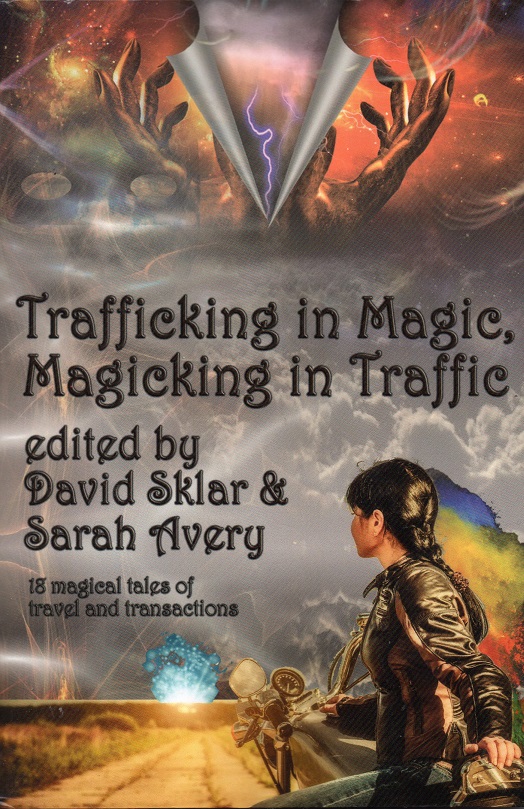
Trafficking in Magic Magicking in Traffic-smallBlack Gate author, blogger, and roving correspondent Sarah Avery reports in with some unexpected news: Amazon.com has discounted her acclaimed new anthology Trafficking in Magic, Magicking in Traffic to just $4.35, a steep 73% savings off the $15 cover price.

Sarah and her publisher are not sure how long the sale will last, however, so act fast. Of special interest to Black Gate fans, it contains a brand new story from James Enge — as well as fiction from Elizabeth Bear, Darrell Schweitzer, Pauline J. Alama, and many others. Here’s the complete description.

What do you seek at the end of this road? What have you brought to pay your way? The road is full of hazards, and the marketplace can cost more than you expect.

In Trafficking in Magic, Magicking in Traffic, editors David Sklar and Sarah Avery bring you 18 magical tales of travel and transactions, ranging from busking in a train station to walking between the worlds, from doppelgangers for hire to capturing the remnants of the dead.

Ideal to read on your vacation, commute, or flight from vengeful ghosts, this collection features classic stories by Elizabeth Bear, Daniel Braum, George R. Galuschak and Darrell Schweitzer, as well as new work by Pauline J. Alama, Megan Arkenberg, D.W. Carlson, Joyce Chng, M.C. DeMarco, E. Grace Diehl, James Enge, Manny Frishberg, Sara M. Harvey, Scott Hungerford, Deborah Grabien, Deirdre M. Murphy, Rhonda Parrish, Richard Rider, and Heather Stearns.

Trafficking in Magic, Magicking in Traffic was edited by David Sklar and Sarah Avery, and published by Fantastic Books on May 23, 2014. It is 264 pages, regularly priced at $15.99 in paperback. There is no digital edition. Order online from Amazon.com.

See Westeros the Way George R.R. Martin Intended in The World of Ice & Fire

See Westeros the Way George R.R. Martin Intended in The World of Ice & Fire

Dragonstone
Dragonstone

If you’ve been watching HBO’s Game of Thrones, then you’ve already been treated to some spectacular sights.

It seems George R.R. Martin is not content to let HBO be the final word on the visual splendor of Westeros, however. His new book The World of Ice & Fire: The Untold History of Westeros and the Game of Thrones, released this week, gives Game of Thrones fans the chance to see visions of Martin’s world that are much closer to what he intended.

In an interview at The Huffington Post, Martin explains why there are so many pictures of castles:

I wanted accurate versions of these castles. We’ve had a number of different artists draw them on covers and on the fantasy like cards and games, and some of them have been beautiful images but not necessarily accurate to what I described.

The World of Ice & Fire, co-authored with Elio M. García, Jr. and Linda Antonsson, who run the site Westeros.org, isn’t just an art book, however. It’s a comprehensive history of the Seven Kingdoms — all the battles, betrayals, and back-room deals that lead to the events of Martin’s novels. It includes full family trees for Houses Stark, Lannister, and Targaryen; detailed histories of the cultures of Westeros; and more than 170 pieces of original art and maps, many in full-color.

See five high-resolution images from the book at The Huffington Post article here. The World of Ice & Fire was published on October 28 by Bantam Books. It is 336 pages, priced at $50 in hardcover and $19.99 for the digital edition.

Get a Dozen E-books for Just $1.99 Each from Harper Voyager

Get a Dozen E-books for Just $1.99 Each from Harper Voyager

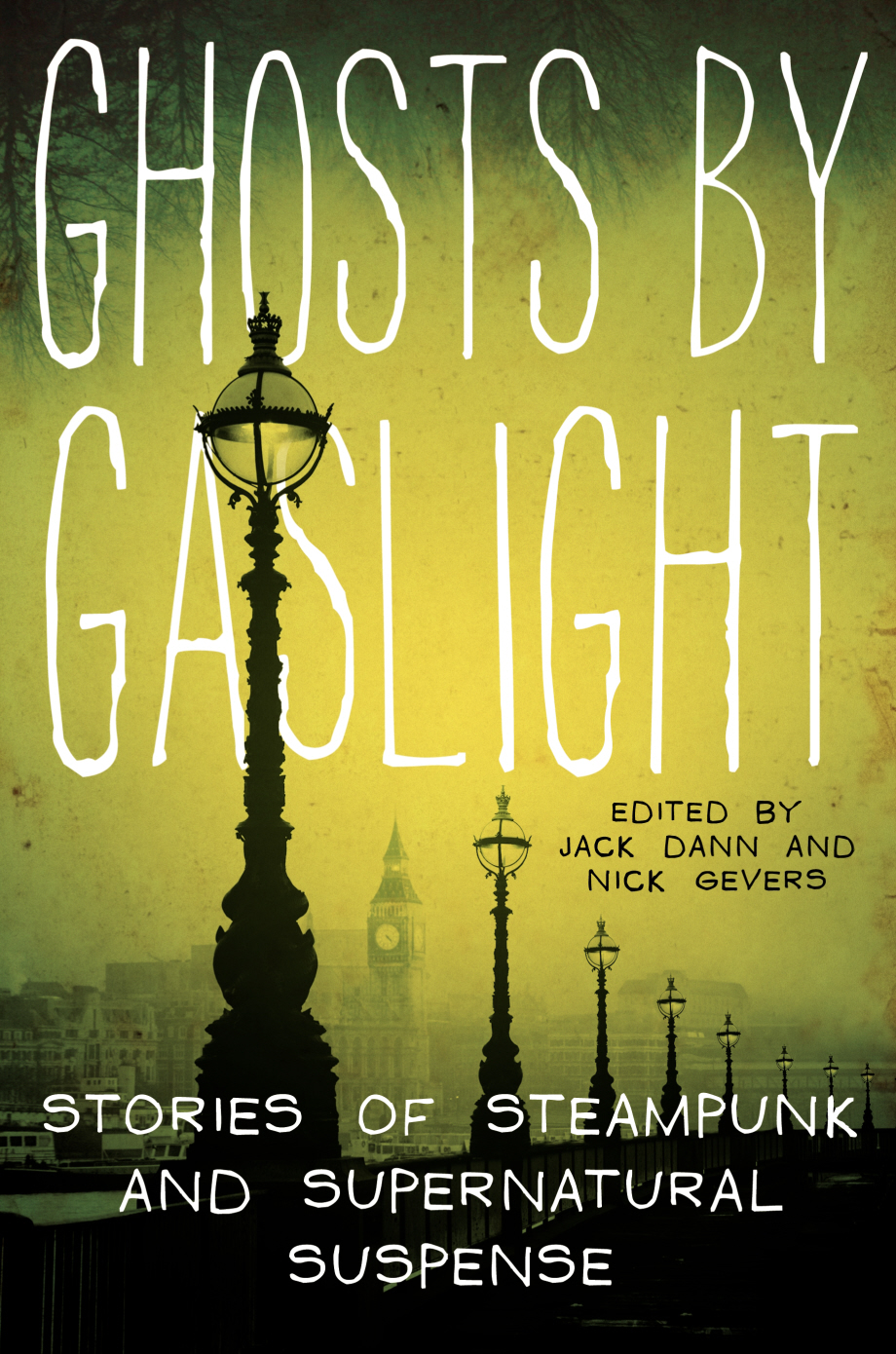
Ghosts By Gaslight-smallHarper Voyager has announced a special Halloween sale: a dozen urban fantasy, science fiction, and horror ebooks are on sale for $1.99 or less.

Titles on the list include novels from Vicki Pettersson, Nick Cole’s Soda Pop Soldier, The Stolen by Bishop O’Connell, Katherine Harbor’s Thorn Jack, Jack Heckel’s Once Upon a Rhyme, and additional suitable Halloween fare.

Also included is the excellent anthology Ghosts By Gaslight: Stories of Steampunk and Supernatural Suspense, edited by Jack Dann and Nick Gevers, containing seventeen all-new stories from Peter Beagle, James Morrow, Sean Williams, Gene Wolfe, Garth Nix, Jeffery Ford, Robert Silverberg, and others. This one’s well worth your attention, and at $1.99 you can’t go wrong.

The sale is for a limited time only — presumably until at least Halloween — so be sure to move quickly.

See the complete list of available titles here.

Robert Silverberg on Cannon Propulsion in Space

Robert Silverberg on Cannon Propulsion in Space

The Original Science Fiction Stories February 1959-smallIn my Sunday article on The Art of The Original Science Fiction Stories magazine, I called out the bizarrely goofy February 1959 cover (right), illustrating “Delivery Guaranteed” by Calvin M. Knox (Robert Silverberg). It’s the kind of gonzo image that only could have fit on a 1950s science fiction digest; but I was dying to know if Bob’s story actually had an intrepid couple piloting a cannon-powered wooden raft in space, and how the cover came about. Bob was gracious enough to answer; here’s what he said:

I often worked with Ed Emsh to produce cover/cover story combos for [editor Robert] Lowndes. Ed would come into the office with an idea, I would wrap a plot around it, Ed would go home and paint a picture, and I would write the story. It was Ed who thought a cannon might be sufficiently Newtonian to provide reaction mass in space; I agreed in delight, and that was how “Delivery Guaranteed” happened. (Randall Garrett sometimes wrote cover stories too, and one time Ed turned in a painting showing the drive room of a spaceship, with his signature, EMSH, on the base of the biggest gizmo. Randy promptly dubbed the gizmo “the Remshaw Drive” and made it clear that the four visible letters were part of the manufacturer’s label.)

I also asked about the cover of the November 1955 issue, illustrating Clifford D. Simak’s “Full Cycle,” which was re-used on the March 1959 issue of Double-Action Detective and Mystery Stories. (See the full article for details.)

In the case of the Simak/Silverberg story, Bob Lowndes was just being thrifty toward the end of the life of his magazine group, and recycled that Simak painting to use with my story in his crime mag a couple of years later.

Read the complete article here. And thanks to Robert Silverberg for being gracious enough to solve those mysteries for us!

Ray Guns and Savage Planets: The Amazing Adventures of Flash Gordon

Ray Guns and Savage Planets: The Amazing Adventures of Flash Gordon

The Amazing Adventues of Flash Gordon 4-small The Amazing Adventues of Flash Gordon 5-small The Amazing Adventues of Flash Gordon 6-small

I know this is going to seem strange to some of you, but not that long ago, newspapers used to run adventure serials on the comics page. Like Calvin and Hobbes and Dilbert, but with a plot (and not funny). See, I told you it would sound strange.

It was a uniquely American art form, and it was popular through most of the last century. Dick Tracy, Spider-Man, Prince Valiant, Brenda Starr… you shared their fabulous adventures over breakfast every morning, parceled out in compact three panel segments. The most popular strips were collected in paperback, and these were treasures indeed — they included complete adventures (sometimes two). If it sounds strange to read comic strips in a paperback book… well, you’re right, it is. Fantasy is a strange genre; best you come to grips with it.

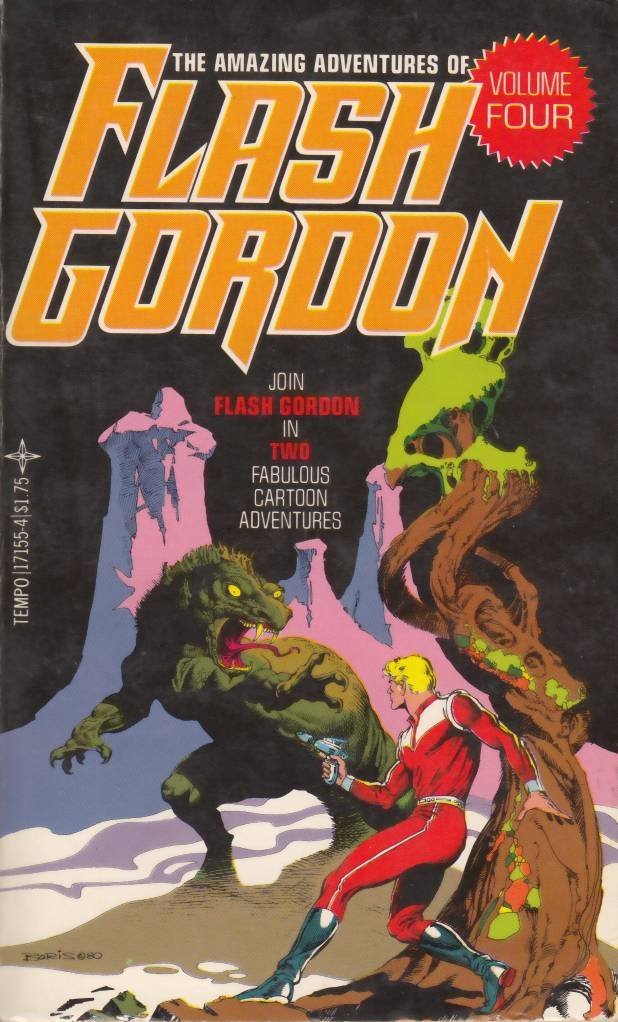
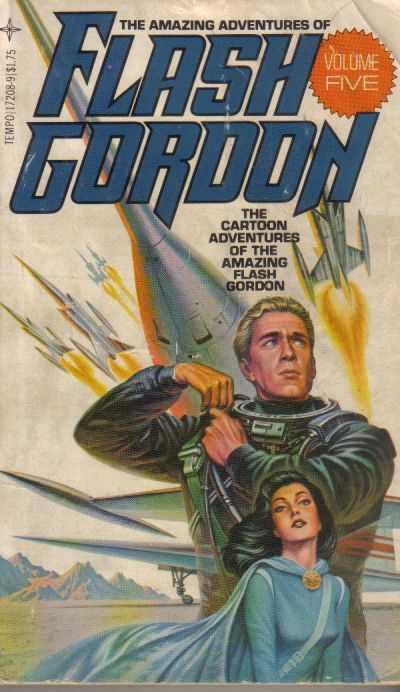
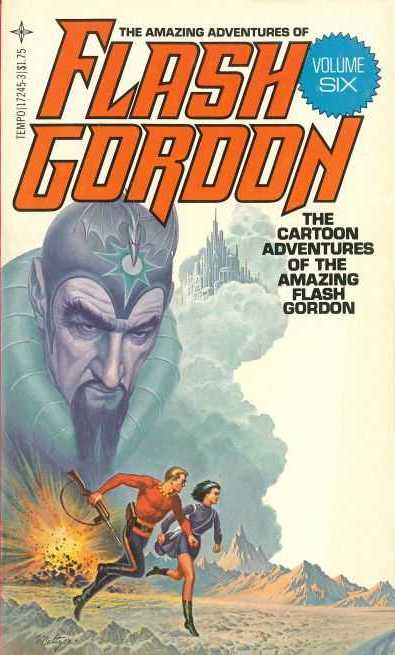
Flash Gordon, which ran from January 7, 1934 until March 16, 2003, was one of the most popular adventure strips on the market. It was collected in six paperback volumes from Tempo Books as The Amazing Adventures of Flash Gordon, written by Dan Barry and drawn by the incredible Bob Fujitani. All six were published in 1979-1980, and they collected storylines from the mid-70s. They’re still fun today — the dialog (and characters) are simplistic, sure, but the artwork is a marvel, and the stories move at a rocket’s pace. I bought the books above for less than four dollars each on eBay; copies are generally available for $5-10 each when purchased individually.

Loot The Tomb of Horrors in Style in Conquest of Nerath

Loot The Tomb of Horrors in Style in Conquest of Nerath

Conquest of Nerath-smallWhen I lived in the dorms at the University of Illinois in the early 90s, it wasn’t unusual to see students clustered around tables in the lobby, playing Axis & Allies. The game took up an entire table and there were always a few spectators. Axis & Allies was a massive game, with a truly epic feel, and in the decades since its release, it has seen many versions — 19 last time I counted.

I’ve often wondered why there was no fantasy equivalent to Axis & Allies: a fast-playing game on a massive scale, pitting nations against each other across an imposing map. Sure, there have been a few ambitious attempts from small companies, but most fell down on the production side of things. Axis and Allies wasn’t just huge in scope — the whole game was huge, with hundreds of sturdy components, a beautifully detailed 40-inch folding map, and simple yet elegant rules. Even the box was humongous.

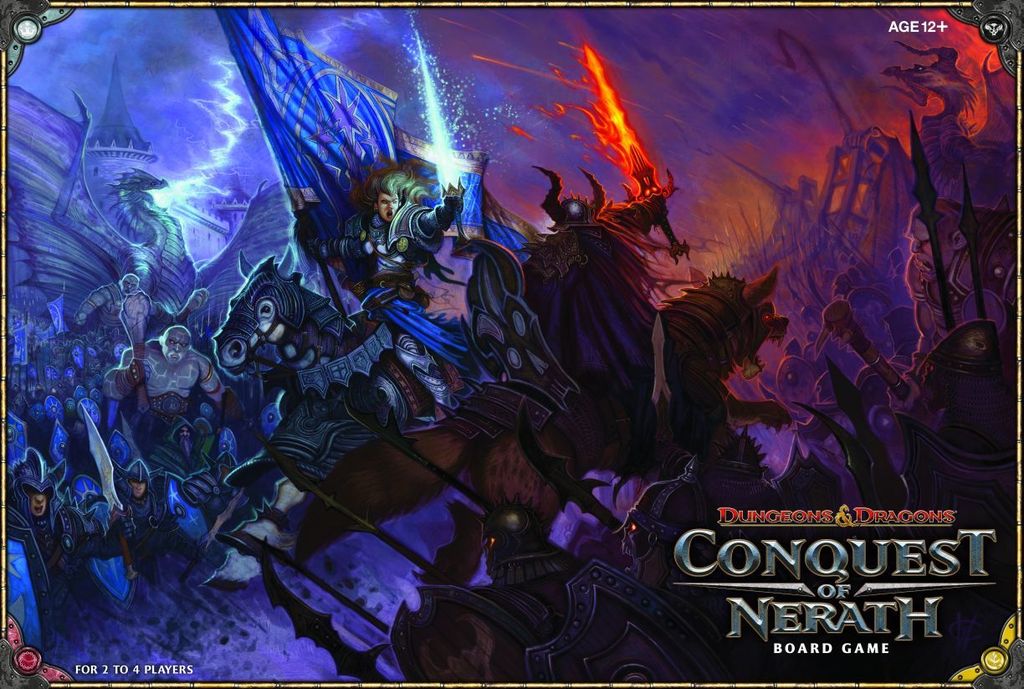
In 2011, Wizards of the Coast released Conquest of Nerath, a Dungeons & Dragons board game that pits four nations against each other in a desperate struggle for total supremacy. I probably would have overlooked it, if it hadn’t been for this rave review by Scott Taylor in July of that year:

In all my years of gaming, and all the games I’ve played, I’d yet to find something in the same realm of awesome as [Axis & Allies] until I sat down to play Conquest. Simply put, this game is an instant classic, a pure gamers paradise that mixes the very best of thirty years of game development into a single cohesive unit. What A&A was as a Risk upgrade, so too is Conquest to everything before it.

I was very excited by Scott’s review, and promised myself I’d buy a copy as soon I could. I finally acted on that promise earlier this month and, after spending some time with the game, I’m very pleased to be able to say that Scott was not off in his assessment.

Read More Read More