Future Treasures: Skin Game by Jim Butcher
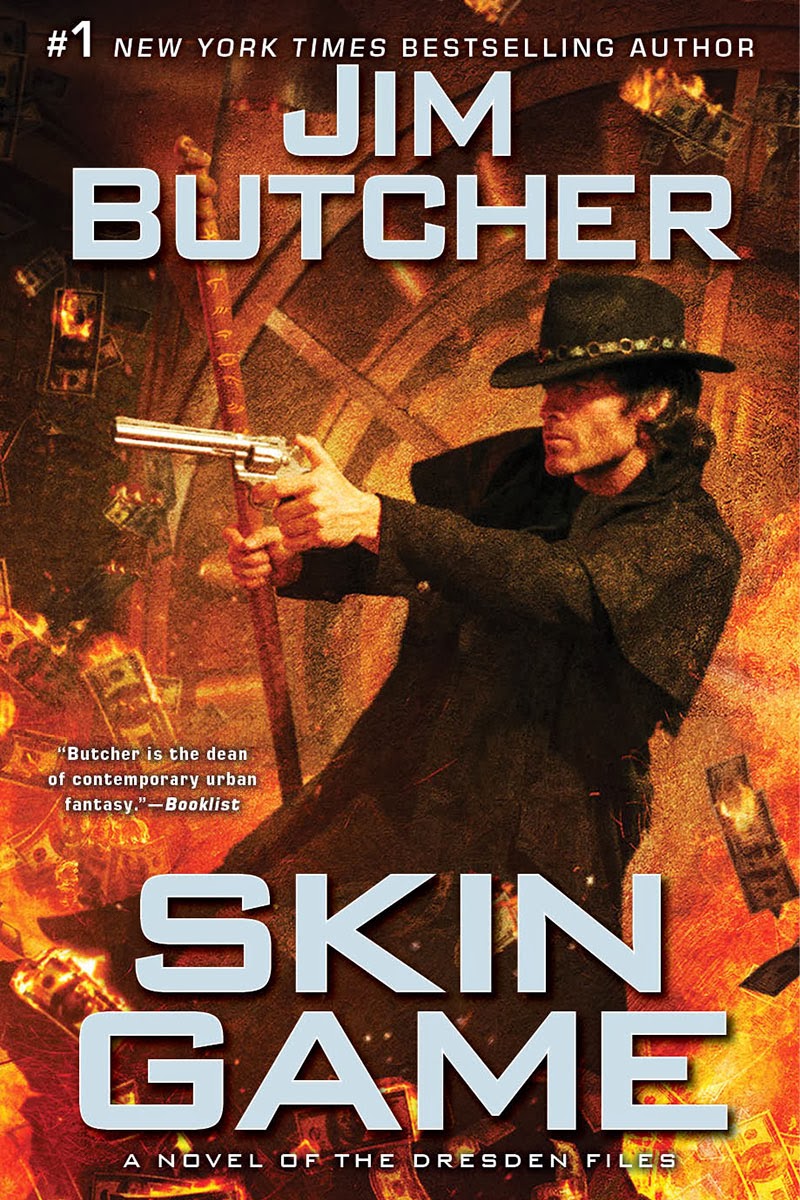 Jim Butcher is something of an inspiration to modern fantasy writers.
Harry Dresden was not a hit when he first appeared, way back in the paperback original Storm Front (2000). Roc sent me a copy and I remember I couldn’t find anyone interested in reviewing it. Ditto with the next few, Fool Moon (2001) and Grave Peril (2001). Thomas Cunningham was the first to start reviewing them for us and he quickly became an unabashed fan.
Things happened fast after that. All my review copies were snapped up (except for my first edition of Summer Knight, which accidently ended up in a dollar bin at my booth at the 2010 World Fantasy Convention, where it was found by a lucky fan). I bought a complete set of the hardcover omnibus editions from the Science Fiction Book Club — and they were loaned out and never returned. I bought a second copy and it suffered the same fate.
Jim Butcher began to hit bestseller lists. I clearly remember the moment when I realized he’d crossed over to literary megastardom — it was at Dragon*Con 2010, when I glimpsed the size of the mob that showed up to get his autograph. The line wound around the room, out the door, and down several blocks.
Jim Butcher is proof positive that it’s still possible to achieve bestseller status starting with a midlist paperback series. That’s the dream of virtually every midlist fantasy writer, and for the greater part of the last decade, as publishing suffered one upheaval after another — the rise of Amazon, the collapse of Borders, and the shift to e-books, just to name a few — it was beginning to look like that dream may have suffered a hard death.
So there’s a lot of reasons to celebrate Jim Butcher’s success. But for most of us, it’s enough to know that the fifteenth volume of one of the most popular fantasy series on the market has finally arrived, breaking an 18-month drought since the last volume, Cold Days (November 2012).
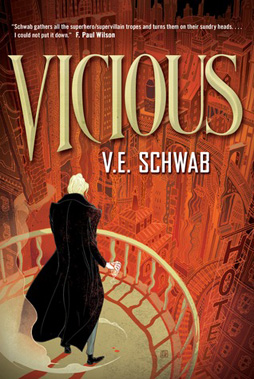 V.E. Schwab had written a number of YA novels when, in 2013, Tor published her book Vicious. Billed by some as a super-hero story, it had elements of that genre while also, to some extent, questioning its assumptions. Reading it, I found that the book seemed interested in questions of morality, heroism, and villainy, but that the super-hero aspects were so attenuated I doubt it would have occurred to me to consider it as a super-hero story without the claims of the book jacket. Its handling of ideas of heroism felt like a reiteration of themes comics (Marvel, DC, and independent) have been interrogating relentlessly (if not neurotically) for at least thirty years. In some ways, it’s best to simply ignore the ‘super-hero’ tag. If you do, you’re left with a well-paced and sharply-structured novel. And on its own terms, it’s an enjoyable tale.