Gothic Urban Fantasy: Yangsze Choo’s The Ghost Bride
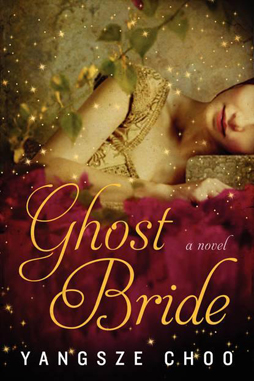 Yangsze Choo’s 2013 book The Ghost Bride starts out very much like a gothic novel. Li Lan, the beautiful young daughter of an impoverished scholar in the Chinese community of Malacca in the year 1893, draws a sinister marriage proposal from the rich and powerful Lim family: a ceremonial spirit marriage to Lim Tian Ching, the recently-deceased heir to the Lim wealth. But Li Lan finds herself drawn to Tian Ching’s cousin, Lim Tian Bai — and then Tian Ching begins to appear in her dreams, eager for their upcoming nuptials. She tries to exorcise him, and then what started as a gothic becomes broader and stranger. Li Lan enters a world of ghosts where she uncovers hints of corruption among the judges of hell, and then must undertake a quest into a further and yet more fantastical world, a Campbellian hero(ine)’s journey of dangers and guardian allies and magic items.
The Ghost Bride is a highly entertaining book, wonderful in the most literal sense. It’s the first novel by Choo, a Malaysian writer of Chinese descent living — at least as of 2013 — in California. She builds a remarkable setting, selecting the right details to create a sense of Malacca as a place without (at least to me, who knows nothing of Malaysia) over-exoticising her subject. It’s a tricky balance for a fantasy story. Choo’s highly conscious of the multiple cultures and overlapping histories of her city, and the way religions and magical beliefs accrete. But there’s always a sense of human reality behind the magic, a complex and living reality.
Choo adroitly describes the beliefs and ghosts at play without slowing her story down. Just as everyday things like food and clothing are described as needed, so holidays and folk practices are explained swiftly, naturally, and evocatively. Plot’s thus foreshadowed without being obvious, and the fantasy aspects of the book are set up, but in such a way that character’s deepened at the same time: the vivid setting informs the people in the book, and their choices, and their desires. And we see how different beliefs interact and come to inform each other.