Wandering the Worlds of C.S. Lewis, Part II: Spirits in Bondage

Wandering the Worlds of C.S. Lewis, Part II: Spirits in Bondage

Spirits in BondageYesterday I began a series of posts looking at the fiction of C.S. Lewis. Lewis has an unusually varied body of work, and I intend to wander through it chronologically and see what leaps out at me. I started with Lewis’ childhood tales of Boxen. Tomorrow I’ll take a look at his long poem Dymer. Today, I want to go through Lewis’ first book, a collection of lyric poems called Spirits in Bondage, published in 1919 when Lewis was still an atheist.

Yesterday I quoted Lewis’ judgement in his 1955 autobiography Surprised by Joy that the Boxen tales are novelistic and not poetic. If that’s so, what did the older Lewis think about the poetry he wrote in his youth? Did he find wonder and romance in the verse of Spirits in Bondage and Dymer? Hard to judge. Lewis doesn’t mention either volume in Surprised by Joy. Which strikes me as a little odd.

That book — again, published almost thirty years after Dymer, and twenty-five years after his conversion — describes his attempt to recapture a specific sense of imaginative joy. Lewis concludes that the emotion he felt was a kind of signpost directing him to God — that the ‘joy’ he felt and later sought came from feeling a specific kind of desire, of which God was the object. He also says that “I do not think the resemblance between the Christian and the merely imaginative experience is accidental,” and associates his experience of joy with myth and poetry as well as nature. Though Lewis states that his Boxen stories had nothing to do with that kind of inner experience, one might think his poetry at least would have a direct bearing on the subject. In fact, though, he mentions going through a kind of reaction against myth and the fantastic at about the time Spirits in Bondage was published and in the years after — “a retreat, almost a panic-stricken flight, from all that sort of romanticism which had hitherto been the chief concern of my life.” Given that, what does Spirits look like?

Read More Read More

Five Tactics to Survive the Zombie Apocalypse… And Why They Wouldn’t Work

Five Tactics to Survive the Zombie Apocalypse… And Why They Wouldn’t Work

When the Heavens Fall cover-smallMy epic fantasy debut, When the Heavens Fall, came out in May this year, and it can best be summed up as “The Lord of the Rings meets World War Z.” It’s not a zombie apocalypse novel, but that’s going to come as scant consolation to the characters who find themselves having to wade through an army of undead.

In a recent interview I was asked if I had a plan to survive a zombie apocalypse. Unsurprisingly, it’s not something I spend too much time thinking about. With Christmas approaching, though, what better way to get into the festive spirit than contemplating the end of the world, and all the reasons why we wouldn’t stand a chance of surviving it?

Here, then, are five (futile) tactics for surviving the zombie apocalypse.

Run

If you live in a city, the first thing you’re going to want to do is leave. No matter what the cause of “zombieism” is, the infection is always transmissible, which means the friend standing beside you could soon be wondering how you taste with ketchup. There’s no such thing as safety in numbers when the numbers can so easily turn against you.

But how do you leave? By car? Only if your vehicle can fly over all the other cars clogging the streets. By train? If you think public transport is unreliable now, how do you imagine the apocalypse is going to improve punctuality?

Read More Read More

January 2016 Asimov’s Science Fiction Now on Sale

January 2016 Asimov’s Science Fiction Now on Sale

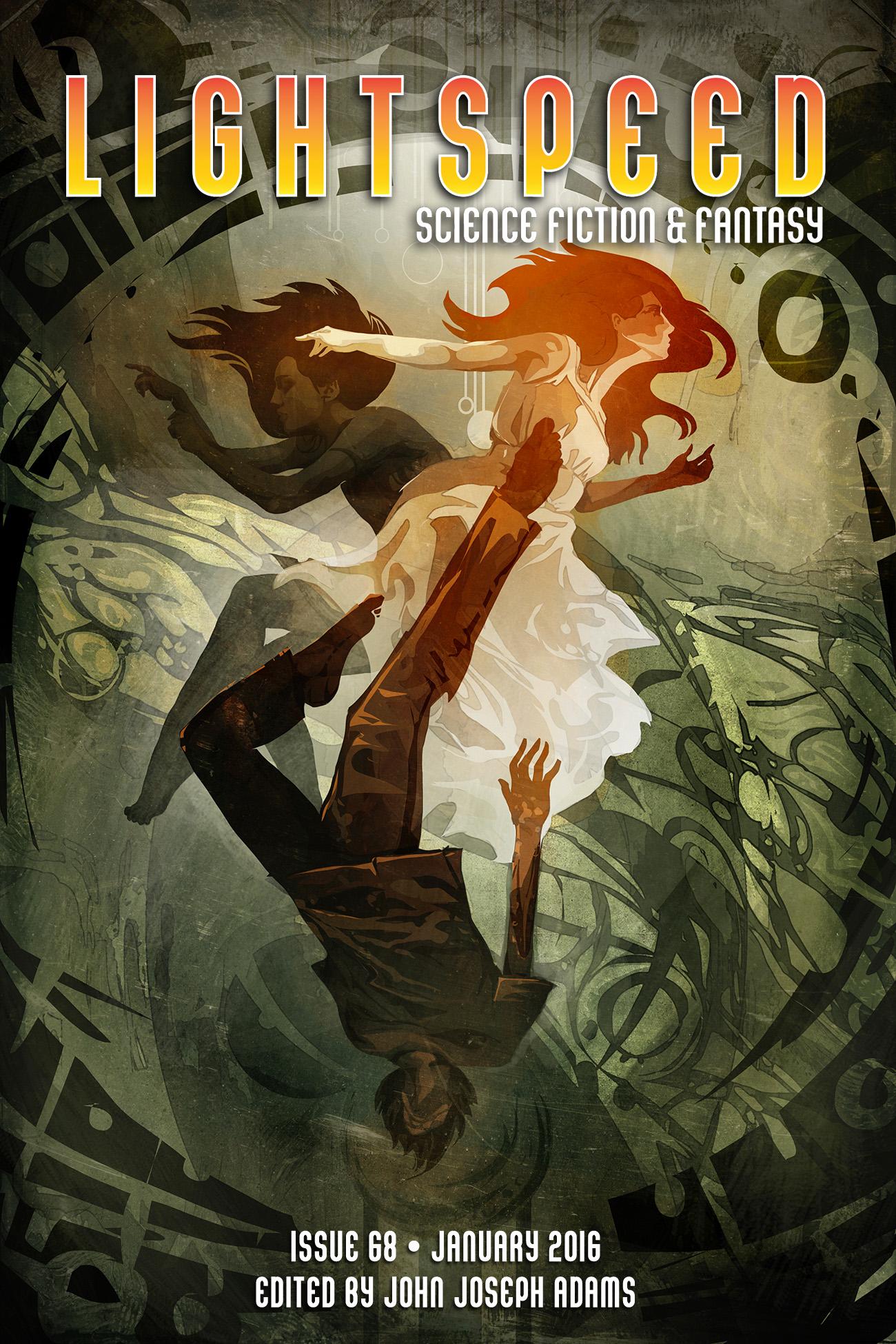
Asimov's Science Fiction January 2016-smallThe January issue of Asimov’s Science Fiction contains a big new novella from Allen M. Steele, “Einstein’s Shadow,” plus stories by Ian McHugh, Ted Kosmatka, Nathan Hillstrom, and others — all under a gorgeous cover by Donato Giancola, who painted the cover for Black Gate 15. Here’s the description from the website:

Our January 2016 issue features a tense alternate history novella by Allen M. Steele. Danger, intrigue, and suspense are all aboard a Bel Geddes airliner as it makes an unforgettable transatlantic journey in “Einstein’s Shadow.”

Genevieve Williams ponders the haunting and unknowable alien in “The Singing Bowl”; Ian McHugh takes on a different set of provocative and nearly unfathomable aliens in “The Baby Eaters”; while Robert R. Chase offers us human and inhuman perspectives on “Conscience.” Brand-new author Nathan Hillstrom debuts in Asimov’s with a terrifying tale of “White Dust”; Dominica Phetteplace speculates about the mystery of “Atheism and Flight”; and Ted Kosmatka investigates the startling consequences of “Chasing Ivory.”

Non-fiction this month includes Robert Silverberg’s Reflections column, which invokes ancient Norse myth and the Twilight of the Gods in his reminiscence about “Fimbulwinter 2015”; James Patrick Kelly’s On the Net looks at “The World of Series”; Paul Di Filippo’s On Books reviews a Mike Ashley anthology of tales by early women SF writers, as well as works by Alan Smale, Ken Liu, and the Strugatsky brothers; Alvaro Zinos-Amaro & Paul Di Filippo offer a Thought Experiment about “Pushing the World in a Certain Direction and other Acts of Submission”; plus the annual Readers’ Awards’ ballot and Index, poetry, and other features.

Read More Read More

The Public Life of Sherlock Holmes: Don’t Piss Off Sherlock Holmes

The Public Life of Sherlock Holmes: Don’t Piss Off Sherlock Holmes

Holmes_GrunerA few weeks ago, I speculated a bit on what might have really happened in “The Problem of Thor Bridge.” I had already offered you, good reader, a few alternatives to Watson’s recorded accounts, such as this one for “The Abbey Grange.” I believe that “The Illustrious Client” is one of Doyle’s better tales. Granada also made a fine version for their Jeremy Brett series. This week, I again veer from Watson’s (dare I say, ‘fawning’) view of matters.

SPOILERS SPOILERS SPOILERS

I feel silly putting spoiler alerts before discussing stories that were often written a century or more before. But if you haven’t read the story yet, click here before continuing on. Okay, back? Pretty good story, eh? Now, let’s have an alternate take:

The vile Baron Gruner had illy used and cast aside many women, including Kitty Winter. She says to Holmes, “Let me see this man in the mud, and I’ve got all I worked for – in the mud with my foot on his cursed face. That’s my price. I’m with you tomorrow or any other day so long as you are on his track.”

Clearly, Winter is willing to help Holmes bring down Baron Gruner. She certainly seems dedicated to the task. When it is time to sneak into Gruner’s house and steal a book that will expose his vile ways, Holmes brings Winter with him. Presumably, this was so she could show him where it was. He tells Watson that he couldn’t know “what the little packet was that she carried so carefully under her cloak.”

Read More Read More

New Treasures: Nebula Awards Showcase 2015, edited by Greg Bear

New Treasures: Nebula Awards Showcase 2015, edited by Greg Bear

Nebula Awards Showcase 2015-smallThere are a lot of new anthologies released every year, including around a dozen Year’s Best volumes. I frequently get asked which is the best single-volume collection showcasing the finest science fiction and fantasy of the year. And year after year, I always suggest the same book: the annual Nebula Awards Showcase, which contains the stories selected by the Science Fiction Writers of America for the prestigious Nebula Awards. It also includes many of the runners-up, author appreciations, yearly wrap-ups, novel excerpts, and other fascinating articles.

The annual Nebula Awards Showcase volumes have been published every year since 1966. The 2015 volume contains some of the most talked-about fiction of the past several years, including Rachel Swirsky’s “If You Were a Dinosaur, My Love,” Sophia Samatar’s “Selkie Stories Are For Losers,” Aliette de Bodard’s “The Waiting Stars,” and many others. Here’s the description.

The Nebula Awards Showcase volumes have been published annually since 1966, reprinting the winning and nominated stories of the Nebula Awards, voted on by the members of the Science Fiction and Fantasy Writers of America (SFWA). The editor, selected by SFWA’s anthology Committee (chaired by Mike Resnick), is American science fiction and fantasy writer Greg Bear, author of over thirty novels, including the Nebula Award-winning Darwin’s Radio and Moving Mars. This year’s volume includes the winners of the Andre Norton, Damon Knight Memorial Grand Master, Rhysling, and Dwarf Stars Awards, as well as the Nebula Award winners, and features Ann Leckie, Nalo Hopkinson, Rachel Swirsky, Aliette de Bodard, and Vylar Kaftan, with additional articles and poems by authors such as Robin Wayne Bailey, Samuel R. Delany, Terry A. Garey, Deborah P Kolodji, and Andrew Robert Sutton.

We covered the previous volume, Nebula Awards Showcase 2014, edited by Kij Johnson, last May (and the TOCs for the now-classic first three volumes are here). Read all about this year’s Nebula winners here.

Nebula Awards Showcase 2015 was published by Pyr Books on December 8, 2015. It is 347 pages, priced at $18 in trade paperback and $11.99 for the digital edition. The cover is by John Harris.

Things Your Writing Teacher Never Told You: Season’s Greetings: Some Recommendations To Warm Your Cold Cockles

Things Your Writing Teacher Never Told You: Season’s Greetings: Some Recommendations To Warm Your Cold Cockles

xmas carol 1-small

Regardless of whether you’re more a Scrooge or a Tiny Tim, I’ve got two recommendations that make perfect reading for the season (and a viewing and listening recommendation, if you haven’t got time to read both books).

The first is Hogfather, by Terry Pratchett (available in HC, ppb & ebook), set in the popular Discworld series. If there are still F/SF readers who haven’t encountered this quirky world before, it is a place much like our own. Magic may be real, but the wizards and witches and guards on the City Watch are as human, and eccentric, as any neighbor you’d want to meet. Pratchett’s novels defy fantasy conventions and rise above any preconceptions you might have about that sort of novel. They’re funny, and filled with wry social commentary and compassion for human weakness.

Read More Read More

Wandering the Worlds of C.S. Lewis, Part I: Boxen

Wandering the Worlds of C.S. Lewis, Part I: Boxen

BoxenC.S. Lewis loved walking, and in one letter to his friend Arthur Greaves he wrote of a fifty-mile three-day expedition he undertook alongside other friends: walking by day through woods and river valleys, at evenings stopping at local houses where the company might discuss the nature of the Good. Bearing this image in mind I’ve decided to begin wandering through the terrain of Lewis’ fiction. It is well-trodden ground, as many others have done this before me. But there’s a certain charm in seeing things for oneself. It is also just possible that another pair of eyes may spot something new in even the most familiar landscape, if the terrain is varied enough. And Lewis’ writing, as a whole, stands out as heterogeneous indeed.

I have read some, though far from all, of Lewis’ non-fiction; I intend to talk about it only insofar as I see a bearing on his fiction. I’m interested in seeing what images, tones, ideas, and approaches unite a fairly disparate corpus of writing. I want to see how Lewis’ approach to storytelling developed over his life, and how motifs and themes recurred in his work. I hope that by doing this I’ll better understand his individual books. At any rate, I’ll begin here with a look at Lewis’ published juvenilia. Tomorrow I’ll have a look at his early collection of poetry, Spirits in Bondage, then the day after that his long poem Dymer. Next Sunday I’ll move on to his first long prose work, The Pilgrim’s Regress, and see what sort of schedule I can manage from there until I reach Lewis’ last novel, Till We Have Faces.

Note that these posts will be merely my own impression of Lewis’ work, rather than, say, an attempt to read Lewis by his own lights. So while Lewis believed that a writer’s biographical details were by and large irrelevant to their literary accomplishments, I’m a little more interested in how the story of a writer’s life maps onto the stories they choose to tell. Some chronological landmarks therefore follow by which to survey Lewis’ early writings.

Read More Read More

Future Treasures: City of Light by Keri Arthur

Future Treasures: City of Light by Keri Arthur

City of Light Keri Arthur-smallKeri Arthur is the New York Times bestselling author of the Souls of Fire and Dark Angels novels. Next month she introduces a brand new futuristic fantasy with City of Light, Book 1 in the Outcast Series, the tale of an invasion of wraiths, demons, and death spirits, and the super-soldiers who form Earth’s last defense.

When the bombs that stopped the species war tore holes in the veil between this world and the next, they allowed entry to the Others — demons, wraiths, and death spirits who turned the shadows into their hunting grounds. Now, a hundred years later, humans and shifters alike live in artificially lit cities designed to keep the darkness at bay….

As a déchet — a breed of humanoid super-soldiers almost eradicated by the war — Tiger has spent her life in hiding. But when she risks her life to save a little girl on the outskirts of Central City, she discovers that the child is one of many abducted in broad daylight by a wraith-like being — an impossibility with dangerous implications for everyone on earth.

Because if the light is no longer enough to protect them, nowhere is safe…

The second novel, Winter Halo, is scheduled to arrive November 2016.

City of Light will be published by Signet on January 5, 2016. It is 368 pages, priced at $7.99 for both the paperback and digital versions. Learn more at Keri Arthur’s website.

Barnes and Noble Picks the Best SF and Fantasy of 2015

Barnes and Noble Picks the Best SF and Fantasy of 2015

Twelve Kings in Sharakhai-small2The closer we get to the end of the year, the more Best of the Year lists start popping up. Some are more reliable than others, however.

I’ve had good luck with Barnes & Noble’s lists, which have steered me towards some excellent fiction in years past. This year their Best Science-Fiction & Fantasy of 2015 is authored by Joel Cunningham, and it includes the acclaimed first volume in Bradley P. Beaulieu’s ambitious new fantasy series, Twelve Kings in Sharakhai.

Beaulieu launches his second epic fantasy trilogy (following The Lays of Anuskaya) with the story of 19-year-old Çeda, a gladiator in the fighting pits of Sharakhai, a desert kingdom ruled over by 12 immortal lords who live in luxury while their subjects must scrape to survive. Determined to avenge her mother, who was executed by the Twelve Kings, Çeda schemes and searches for a way to upset their ironclad rule — and comes to uncover hidden truths about the source of their power, and her own destiny, that could upset the balance of the entire world. Beaulieu’s intricate world-building and complex characters are quickly becoming the hallmarks of his writing, and if this opening volume is any indication, The Song of the Shattered Sands will be one of the next great fantasy epics. Read our review.

The list also includes Radiance by Catherynne M. Valente, The Cinder Spires: The Aeronaut’s Windlass by Jim Butcher, Karen Memory by Elizabeth Bear, Sorcerer of the Wildeeps, by Kai Ashante Wilson, Dark Orbit by Carolyn Ives Gilman, Half-Resurrection Blues by Daniel José Older, and many others.

See the complete list here.

Vintage Treasures: The Etched City by K.J. Bishop

Vintage Treasures: The Etched City by K.J. Bishop

The Etched City-smallThe Etched City, the debut novel by Australian writer K. J. Bishop, was published in a small print run by Prime Books in 2003. It rapidly accumulated a lot of attention — not to mention stellar reviews — and was nominated for both the World Fantasy Award and the British Fantasy Award. Publishers Weekly said it combines “equal parts of Stephen King’s Dark Tower series and China Mille’s Perdido Street Station,” and James Sallis, in The Magazine of Fantasy & Science Fiction, called it:

An ambitious and casually brilliant debut, erudite, lavishly written… Though it borrows from both, this is neither heroic fantasy nor romance-fantasy chockfull of magic swords, witches, and wizards unaware. It’s fantasy as high literature, our world skewed to a hard right angle…

Here’s the book description:

Gwynn and Raule are rebels on the run, with little in common except being on the losing side of a hard-fought war. Gwynn is a gunslinger from the north, a loner, a survivor… a killer. Raule is a wandering surgeon, a healer who still believes in just — and lost — causes. Bound by a desire to escape the ghosts of the past, together they flee to the teeming city of Ashamoil, where Raule plies her trade among the desperate and destitute, and Gwynn becomes bodyguard and assassin for the household of a corrupt magnate. There, in the saving and taking of lives, they find themselves immersed in a world where art infects life, dream and waking fuse, and splendid and frightening miracles begin to bloom…

The Etched City was first published by Prime Books in 2003, and reprinted by Bantam Spectra in December 2004. It is 382 pages, priced at $14 in trade paperback. The cover is by Paul Youll. It is still in print, and there is also an $11.99 digital edition.