Review: Elizabeth Gilbert’s Big Magic: Creative Living Beyond Fear — Actually Rather Wise

Review: Elizabeth Gilbert’s Big Magic: Creative Living Beyond Fear — Actually Rather Wise

BigMagic
I wanted — expected — to hate this book.

I wanted — expected — to hate this book.

I only know the work of Elizabeth Gilbert from the movie Eat, Love, Pray: Men Are Kind of Expendable (And Arranged Marriages Are Cute as Long as You Are a Bystander) which I believe may not quite have caught the depth of the original book.

So Big Magic… Creative Living…

OMG this is where those damned writer memes come from! (See my ranty guest post on Charles Stross’s blog.)

But actually, behind the willful whimsy Elizabeth Gilbert speaks wisdom that applies to we Black Gate folk, and SF&F fans in general. It also reminds me of a long lost essay by Ryan Harvey entitled something like, “What if the Fifteen-Year-Olds were right?”

It has six parts, with inspiring titles. However, the structure is more literary than… well structural, and really she’s taking us on a tour of her mental map of the creative life, so I’ll just tell you why I was impressed (or in one case, unimpressed).
Read More Read More

New Treasures: Graft by Matt Hill

New Treasures: Graft by Matt Hill

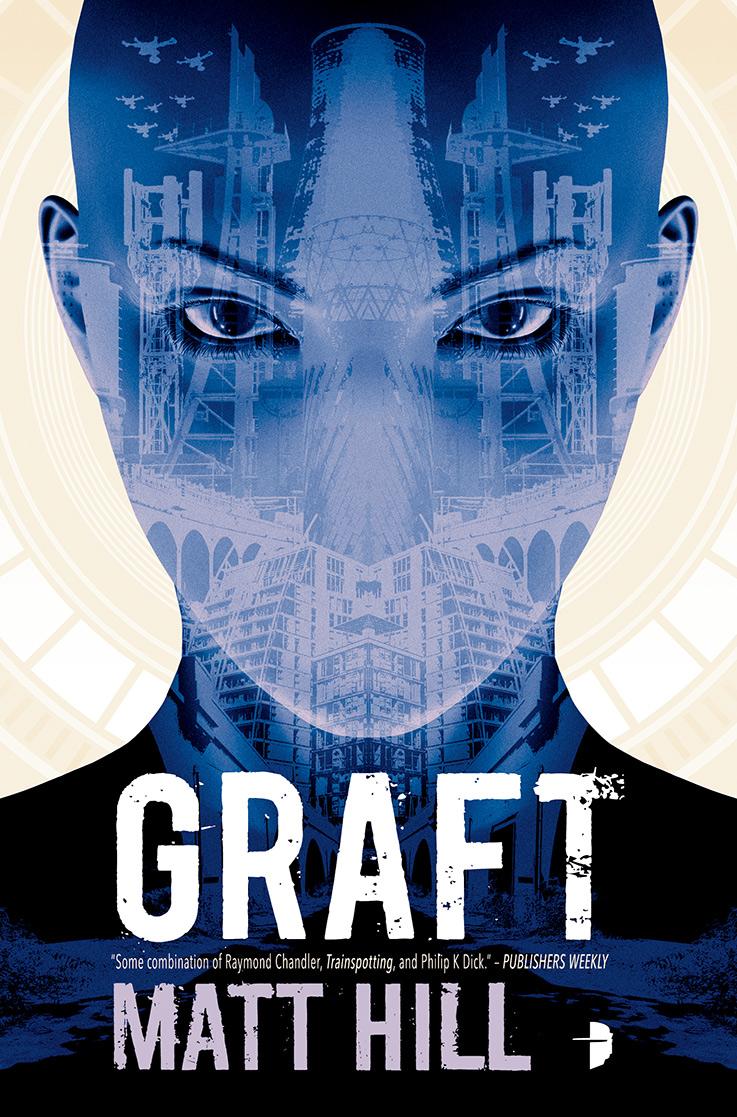
Graft Matt Hill-smallI don’t know much about British writer Matt Hill. He lives in London and has written one previous novel, The Folded Man (2013). But I like the sound of his second book, Graft. Author James Smythe says “Graft is exactly what science fiction should be right now: it’s brutally dark, twisted at its heart, with an incredible sense of foreboding… one of the best books I’ve read in a long time.” I’m putting this one near the top of my to-be-read pile.

Manchester, 2025. Local mechanic Sol steals old vehicles to meet the demand for spares. But when Sol’s partner impulsively jacks a luxury model, Sol finds himself caught up in a nightmarish trans-dimensional human trafficking conspiracy.

Hidden in the stolen car is a voiceless, three-armed woman called Y. She’s had her memory removed and undertaken a harrowing journey into a world she only vaguely recognises. And someone waiting in the UK expects her delivery at all costs.

Now Sol and Y are on the run from both Y’s traffickers and the organisation’s faithful products. With the help of a dangerous triggerman and Sol’s ex, they must uncover the true, terrifying extent of the trafficking operation, or it’s all over.

Not that there was much hope to start with.

A novel about the horror of exploitation and the weight of love, Graft imagines a country in which too many people are only worth what’s on their price tag.

Graft was published by Angry Robot on February 2, 2016. It is 444 pages, priced at $7.99 in paperback and $6.99 for the digital edition. The cover is by John Coulthart.

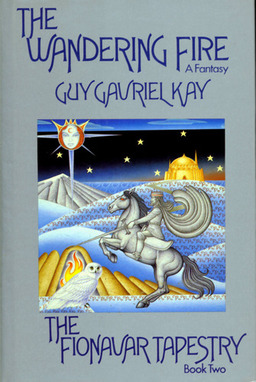
The Fionavar Tapestry Book 2: The Wandering Fire by Guy Gavriel Kay

The Fionavar Tapestry Book 2: The Wandering Fire by Guy Gavriel Kay

oie_2251331IZpxRuY1When I set out to delve into epic high fantasy late last year, I deliberately chose some stories I’d read already and remember liking. Rereading The Summer Tree, first volume of Guy Gavriel Kay’s The Fionavar Tapestry, justified my fond memories of it. I ended my review stating: “This is how epic high fantasy can look if it doesn’t want to merely ape LotR or regurgitate the same bits and pieces over and over again.” Those words do not apply to the second book, The Wandering Fire (1986).

Upon finishing the second volume I remembered that, when I read it the first time, I didn’t rush to read the concluding book, The Darkest Road. In fact, it was several years before I picked it up. It won’t be so long this time, but I sure don’t feel like reading it tomorrow.

In The Summer Tree, five Canadian grad students were magically transported from Toronto to Fionavar, the primary universe. Over the course of the novel, they were transformed spiritually and, some of them, even physically. Dave Martyniuk became Davor, adopted member of the nomadic Dalrei, and keeper of the horn that unleashes the Wild Hunt. Kimberly Ford became the Seer, able to manipulate certain magics and see the future. More drastically, Paul Schaefer, distraught over the death of his girlfriend a year earlier, sacrificed himself on the Summer Tree to summon, and become a conduit for, the god Mornir. Jennifer Lowell was kidnapped and raped by Rakoth Maugrim, Fionavar’s dark lord. Only happy-go-lucky Kevin Laine seemed to escape unchanged, yet Fionavar was stimulating his natural mournful romantic tendencies to some unseen end.

While The Wandering Fire purports to move the group deeper into the heart of the growing fight against Maugrim, what was once exciting and focused now feels hurried and slapdash. Momentous events come and go in the space of a few paragraphs. In one case a major secret is discovered but so little time was invested in it beforehand, it seems tossed off and rather inconsequential instead of horrifying, as intended.

Read More Read More

January Issue of Swords and Sorcery Magazine Now Available

January Issue of Swords and Sorcery Magazine Now Available

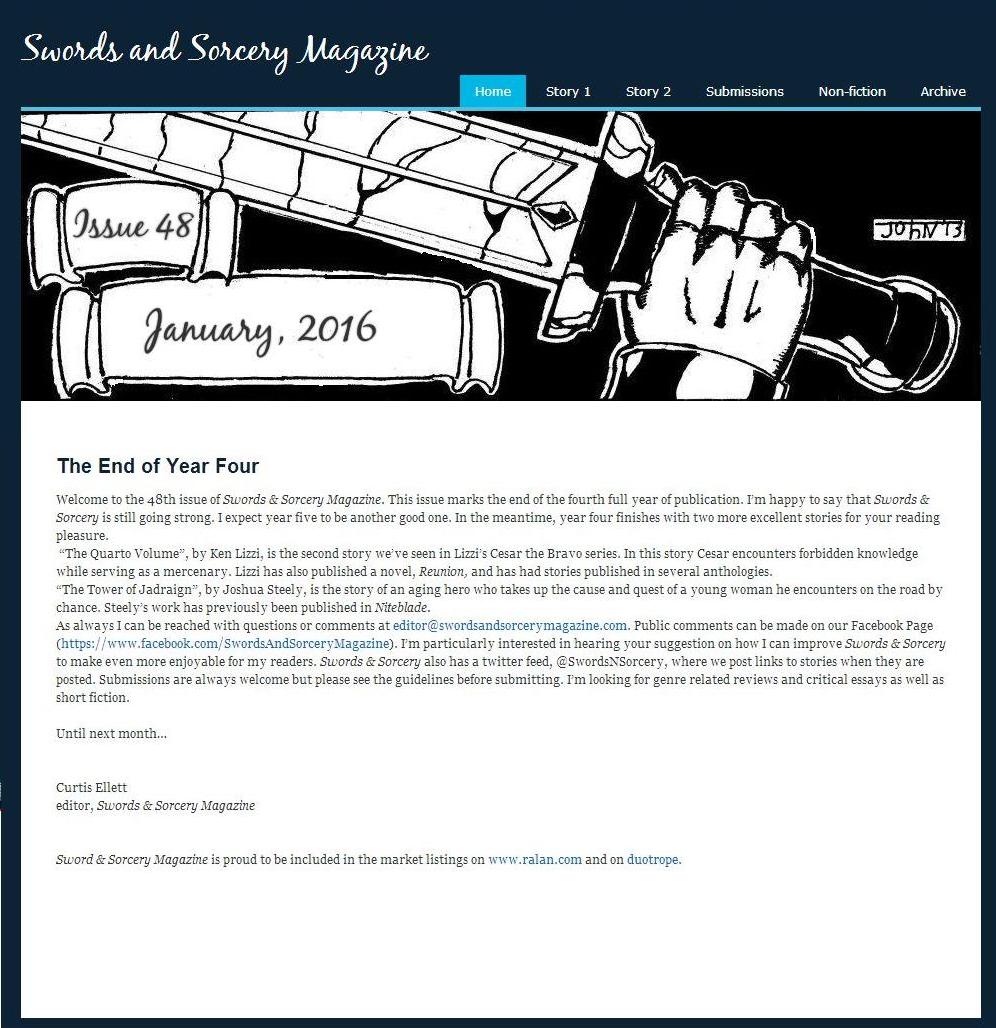
Swords and Sorcery Magazine January 2016-smallIssue 48 of Curtis Ellett’s Swords and Sorcery Magazine, cover-dated January 2016, is now available. Each issue contains two short stories, and is available free online. Here’s the issue summary:

The Quarto Volume,” by Ken Lizzi, is the second story we’ve seen in Lizzi’s Cesar the Bravo series. In this story Cesar encounters forbidden knowledge while serving as a mercenary. Lizzi has also published a novel, Reunion, and has had stories published in several anthologies.

The Tower of Jadraign,” by Joshua Steely, is the story of an aging hero who takes up the cause and quest of a young woman he encounters on the road by chance. Steely’s work has previously been published in Niteblade.

Fletcher Vredenburgh reviewed this issue in his January Short Story Roundup, saying:

The issue kicks off with the impressive (and impressively titled) “The Quarto Volume, or Knowledge, Good & Evil” by Ken Lizzi. Cesar is a member of a mercenary company in a land similar to Renaissance Italy but with demons and wizards. Those who control those spirits control the world, and that’s a small number of people. Now, Cesar learns, there’s the possibility of power escaping into the hands of the many. Cesar is cut from the same cloth as any number of roguish heroes, but Lizzi’s prose lends him a clear voice and the setting has great potential…

The second story, “The Tower of Jadraign,” by Joshua Steely, opens with Eth, a grizzled soldier, rescuing a woman from the hands of a barbarian she has fallen in with. She promptly tries to get him to accompany her to the legendary Tower of Jadraign… I like this one. While not amazing or anything, I found the ending very satisfying.

Read the current issue here. We last covered Swords and Sorcery Magazine with Issue #47.

See our February Fantasy Magazine Rack here, and all of our recent magazine coverage here.

In the Wake Of Sister Blue: Chapter Eleven

In the Wake Of Sister Blue: Chapter Eleven

In The Wake of Sister Blue Mark Rigney-medium

Linked below, you’ll find the eleventh installment of a brand-new serialized novel, In the Wake Of Sister Blue. These pages keep the focus on Maer, with plenty of violence and unexpected encounters to leaven the story-telling. Chapter Twelve will follow in two weeks’ time, so stay tuned –– and for those who fear I’m writing a doorstop, be reassured. This will be Book One of a pair (but no, not an ongoing, endless cycle) and the Great Divide between the two is rapidly approaching.

A number of you will already be familiar with my Tales Of Gemen (“The Trade,” “The Find,” and “The Keystone“), and if you enjoyed those titles (or perhaps my unexpectedly popular D&D-related post, “Youth In a Box,”) I think you’ll also find much to like in this latest venture. Oh, and if you’re only now discovering this portal, may I suggest you begin at the beginning? The Spur awaits…

Read the first installment of In the Wake Of Sister Blue here.

Read the eleventh and latest installment of In the Wake Of Sister Blue here.

Read More Read More

Future Treasures: The Paper Menagerie and Other Stories by Ken Liu

Future Treasures: The Paper Menagerie and Other Stories by Ken Liu

The Paper Menagerie and Other Stories-smallKen Liu has been one of the breakout fantasy stars this decade. His first novel, The Grace of Kings, was nominated for a Nebula Award last week, and Amal El-Mohtar called it “a magnificent fantasy epic.” As a translator he’s brought some of the most important Chinese-language SF to America, including last year’s Hugo winner, The Three Body Problem, by Cixin Liu.

But much of Ken Liu’s reputation was built on a stellar series of short stories published in places like Clarkesworld, F&SF, Asimov’s, Analog, Strange Horizons, and Lightspeed. He’s received virtually every award our field has to offer for his short fiction, including the Nebula, Hugo, and World Fantasy Awards — and he was the first person ever to win all three awards for a single story, “The Paper Menagerie,” originally published in the March-April 2011 issue of The Magazine of Fantasy & Science Fiction (read the complete story at io9).

Next month Saga Press will publish Ken’s first short story collection, The Paper Menagerie and Other Stories, collecting all of his award-winning and nominated fiction, including “The Man Who Ended History: A Documentary” (Finalist for the Hugo, Nebula, and Theodore Sturgeon Awards), “Mono No Aware” (Hugo Award winner), “The Waves” (Nebula Award finalist), “The Bookmaking Habits of Select Species” (Nebula and Sturgeon award finalists), “All the Flavors” (Nebula award finalist), “The Litigation Master and the Monkey King” (Nebula Award finalist), and the title story, “The Paper Menagerie.”

The Paper Menagerie and Other Stories also includes a brand-new story exclusive to this volume, “An Advanced Reader’s Picture Book of Comparative Cognition.”

Here’s the complete Table of Contents.

Read More Read More

Retro Reviews: Amazing Science Fiction, June 1960 and July 1960

Retro Reviews: Amazing Science Fiction, June 1960 and July 1960

Amazing Science Fiction June 1960-small Amazing Science Fiction July 1960-small

Two more issues from 1960, which more and more seems to me to be the year Cele Goldsmith really began to hit her stride. I’m covering these two because they contain both parts of a serial, James Blish’s …And All the Stars a Stage.

The June cover is by Leo Summers, illustrating Robert Bloch’s “The Bald-Headed Mirage.” Interiors are by Finlay and Varga. For July the cover is by Harrel Gray, not illustrating any story. Interiors are by Finlay, Varga, and Grayam.

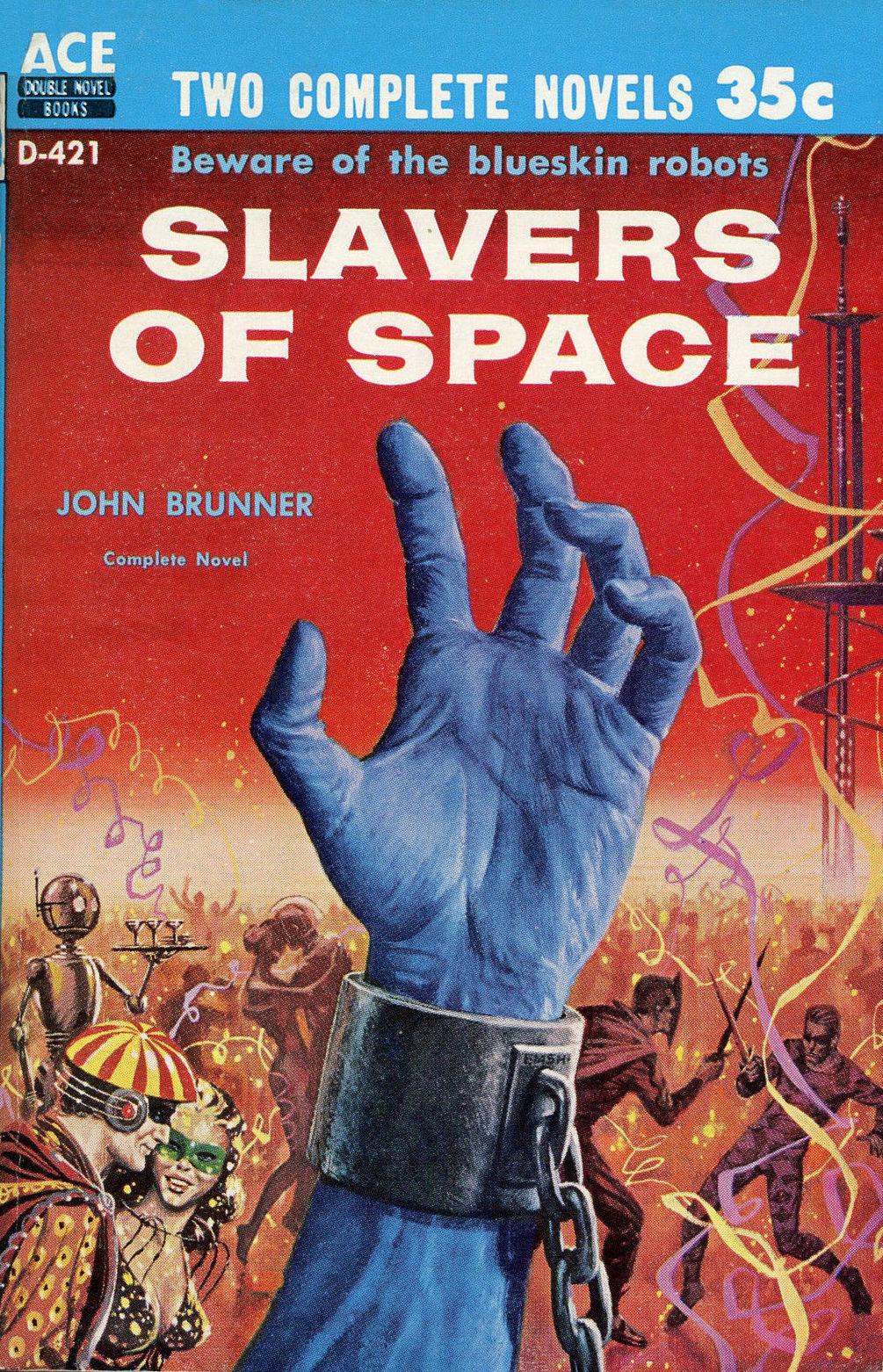
Norman Lobsenz’ June editorial is about death rays, and sterilization schemes. The book review column, The Spectroscope, by S. E. Cotts, covers Chad Oliver’s Unearthly Neighbors and John Brunner’s Slavers of Space, both favorably. The letter column features Mike Deckinger; B. Joseph Fekete, Jr.; Paul Shingleton, Jr.; Paul Zimmer, Scott Neilson; Bob Adolfsen, N. C., Lenny Kaye; and A. D. Scofield. The only names I recognized were Zimmer (Marion Zimmer Bradley’s brother) and Kaye, whose letter is his first, wherein he calls himself “the loneliest fan in the state of New Jersey.” Kaye’s second letter appeared the next issue … I’ll discuss him in the next paragraph. Mike Deckinger was also a pretty prominent fan, and folks who were around back them remembered Fekete and Shingleton as well.

Read More Read More

Check out the For a Few Gold Pieces More Kickstarter

Check out the For a Few Gold Pieces More Kickstarter

For a Few Gold Pieces More-small

Q: Would you introduce yourself?

A: Hi, I’m Richard C. White, a science fiction/fantasy author and occasional blog contributor here at Black Gate. I’m also the sponsor of the For a Few Gold Pieces More Kickstarter. Along with my writing, I’m a member of the Writer Beware committee for the Science Fiction and Fantasy Writers of America.

What is this project about?

For a Few Gold Pieces More is a collection of ten short stories I originally did for an e-publisher a few years ago. After having the rights to these stories returned, I decided it was time to release them as a collection, both e-book and in print. It’s tough to promote an e-only series at conventions, because as soon as you get people interested, they want the book now — not when they go home and try to remember what the book was or who wrote it.

The idea for the stories was to take folktales, fairy tales, and legends and given them a decidedly dark twist. And speaking of dark twists, my protagonist isn’t exactly a hero, but he’s not as hard and cynical as he like to think he is. Suffice to say he does what it takes to get the job done.

Read More Read More

The Public Life of Sherlock Holmes: A Pair of Holmeses Named Alan

The Public Life of Sherlock Holmes: A Pair of Holmeses Named Alan

Napier_Napier2In 1937, Holmes made his first appearance on American television in The National Broadcasting Corps’ rendition of The Three Garridebs, starring Louis Hector. Regular television service from NBC hadn’t even begun yet when this test show was transmitted and it’s likely few people saw it. Sadly, I’m only aware of one picture taken from a television screen, though I believe someone in the industry once told me there are other stills in the archives. There’s certainly no belief an actual recording of the broadcast exists!

In 1949, CBS aired a series of 30-minute literary adaptations in the Your Show Time program. The tenth episode was The Speckled Band, starring Alan Napier as Holmes. Napier was certainly a stuffy, stiff detective, with a bit of Raymond Massey (Holmes in a 1931 film of the same story) and Leonard Nimoy in his look.

Read More Read More

Things Your Writing Teacher Never Told You: The Skeleton Matters (Or, Why It’s Not OK to Skip Scenes in Your Third Act)

Things Your Writing Teacher Never Told You: The Skeleton Matters (Or, Why It’s Not OK to Skip Scenes in Your Third Act)

Seriously, [novelist’s name redacted],

I get that you were writing a romance with a post-apocalyptic setting and plot, and not a post-apocalyptic novel with romantic elements. I get that the pacing and structure is significantly different between those two categories.

gas mask lovers-small

BUT, I don’t care which one you’re writing: you don’t get to leave out the middle of the third act! It would only have been a couple scenes; they could have been done in as little as 4 or 5 pages (though 8-10 would have been better), but they were important scenes. You can’t just toss the events off in a couple of graphs of narrative summary in the scene you jump to.

You had built that villain into a bad mo-fo: you can’t cheat us out of the meat of their encounter!

Read More Read More