Andre Norton: Are Her Men Really Women?
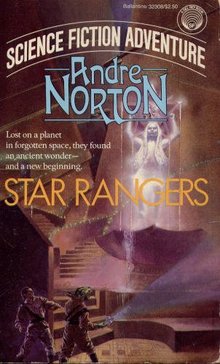 It’s been my experience that Andre Norton is extremely popular among women of my generation, those who grew up reading SF when there were few women writing, and even fewer female protagonists. When I was looking at Norton’s Witch World last time, I found myself wondering whether this popularity was due to how Norton feminized her male protagonists, making them easier for female readers to relate to.
By feminizing, I mean that Norton gives her male protagonists the same kind of “otherness” that is normally associated with the female. Women have long been defined by how they aren’t men, and similarly Norton’s male protagonists are almost always defined by how they’re not the standard socially/politically accepted norm.
Even the positive qualities they may have are somehow the very things that set them apart, and define them as “other.” These are invariably qualities that the standard norm don’t wish to have, even though they’re demonstrably useful.
In Star Rangers Kartr, although a member of the Patrol, is a second class citizen, as are all of the Ranger class of combatants. In fact, he’s excluded from the class of regular Patrol in a number of ways. Even though he’s human, he’s from a frontier world, and is therefore a “barbarian”; he’s a “sensitive” in that he has certain mental abilities which can include telepathy – and it’s significant that this valuable ability is either distrusted by those who believe in its existence, or simply denied by those who don’t. Lastly, he’s a “bemmy lover”* in that he doesn’t join in excluding his nonhuman comrades from social or political status.

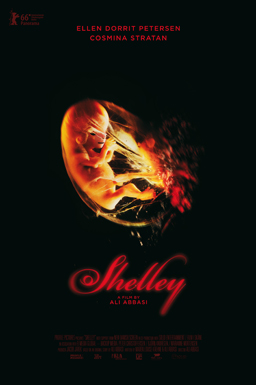 Weekends are busy at the Fantasia International Film Festival, and Friday, July 22, saw things beginning to ramp up for me after a slow few days. After much internal debate, I decided to see three movies, all of them horror films of different kinds. First came the Danish film Shelley, at the Hall theatre, about sinister events around a surrogate mother in an isolated household. Then would come a Japanese film, The Inerasable (Zange —Sunde wa Ikanai Heya), about two women investigating a ghost manifesting in an urban apartment. Finally would come an animated Korean zombie movie, Seoul Station (Seoulyeok). They promised three very different tones. And, as it turned out, delivered nicely.
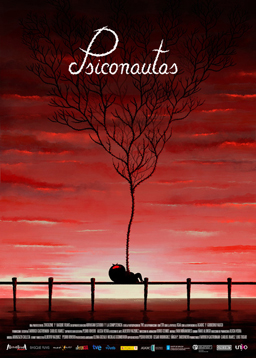 There was one movie scheduled at Fantasia on Thursday, July 21 that I was determined to see: a science-fiction anime called Harmony (Hamoni). Since I had time free beforehand, I decided I’d first head to the festival’s screening room to watch something I’d missed or would be unable to see later. There, I looked over the selection available and settled on Psychonauts, the Forgotten Children (Psiconautas, los niños olvidados), an animated film from Spain. I liked the idea of a double feature of two very different cartoons.