Review Grab Bag
 Now that I’m earning my living as a writer rather than fitting writing on the edges of my life, I’ve had time to catch up on some reading for fun; I’ve also been playing some more Heroscape with my kids. I’ve only been at this since the new year, but I’ve leapt into the saddle and spurred forward.
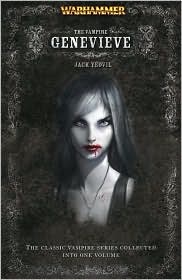
First up were two Warhammer omnibuses, Genevieve, by Jack Yeovil (pseudonym of Kim Newman), and Blackhearts, by Nathan Long. I’d started them over the last few years and gotten distracted and very busy. I recently picked up both and pretty much devoured them.
Being omnibuses, each is a compilation of several books and related short stories or novellas. And being Warhammer fantasy, they’re both set in a sort of fantastic imperial Austria, where magic works, albeit darkly, and there are elves, dwarves, and other supernatural creatures — most especially the powers of chaos — both on the fringes of civilization and working against it from within. Each is somehow available and in print for around $10.00, and each weighs in at around 760 pages. Considering how good both books are, the price point for the value within is almost criminal.
 McSweeney’s is a quirky quarterly that breaks conventional publishing boundaries with each issue devoted to a unique theme, both in terms of editorial content and physical packaging. For
  In the age of fat fantasy series, doorstop thrillers, and historical epics it’s often impossible to find a short, satisfying read. Gone are the days of the 60,000 word science fiction novel, or even the novella doubles series Ace once put out. Long a standard of genre fiction — both the worlds of SF and of fantasy having a host of renowned novellas and short novels considered classics in their respective fields — these short, sharp stories are increasingly ignored for multi-book works of massive length. But, sometimes, it’s nice to get a book done in a day or two, it’s nice to explore an idea, premise, or setting without committing to dozens or hundreds of hours with it.
 I don’t think I’ve gone to see a children’s play since my youngest brother was in a community church production of Grease. I’ve certainly never attended one with an eye out for analysis.
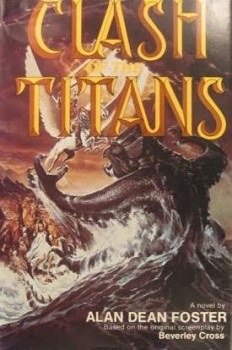 Update: Alan Dean Foster has generously provided some comments of his own about the novelization. Please see the comments section.
 Well, entering the year (both in terms of typing the title and having lived to see
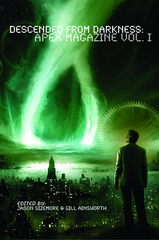 it) was a little weird to write. The first chapter of The Martian Chronicles is January 1999, which from the vantage point of the middle of the 20th century, when the German V-rockets had landed not on another planet, but London, that seemed about right for when humanity might be “reaching for the stars” as it was called. The book ends in April 2026 which, with luck, proper diet and exercise, and health care reform I might actually still be alive to see. And which more than likely humankind, assuming it hasn’t blown itself up, will remain earthbound.
 As some of you may know, I’ve been talking and thinking and blogging (not necessarily in that order) about reading more, and reading better over the course of the last year. Today being New Year’s Day, the day of resolutions and goal-setting, I thought I’d link to some of the posts I’ve written on the subject for those interested in focusing on ratcheting up their reading in the coming year.