Dracula’s Daughter: From Script to Screen
The success of Universal’s Dracula (1931) starring Bela Lugosi made not only a cycle of similar horror films inevitable, it virtually demanded the studio turn their attention to a direct sequel.
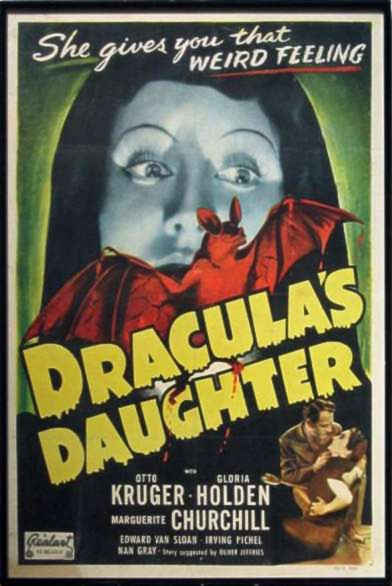 As had happened with Lon Chaney in the silent era, MGM was quick to top Universal at its own game. They secured the services of Lugosi and director Tod Browning for a remake of Chaney’s silent classic, London After Midnight (1927). Browning had directed that notorious lost classic and having Lugosi fill Chaney’s shoes as the faux vampire seemed an inspired choice.
Browning’s remake, Mark of the Vampire would wing its way to theaters in 1935. Joining Lugosi’s Count Mora was Carroll Borland as his incestuous daughter, Luna. Borland was heavily featured in publicity photos with Lugosi despite not having much of an acting career (the following year she was reduced to a bit part in the first of Buster Crabbe’s Flash Gordon serials for Universal), but her portrayal of Luna was enormously influential on the cinematic female vampires who followed.
Borland contributed more than just the definitive screen depiction of a female vampire, however. Several years before Mark of the Vampire was born, she began a longstanding (and allegedly unconsummated) relationship with Bela Lugosi. She remained obsessed with the actor long after his death and had written a lengthy treatment for a Dracula sequel to star both of them entitled Countess Dracula.
 Warning: This essay contains some spoilers.
 Has anyone ever asked what you would grab out of your house if it was on fire and you could only make one trip? Or maybe the question was, if you knew you were going to be stranded on a deserted island, what would you take with you?
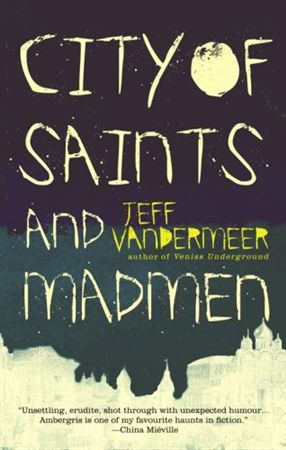
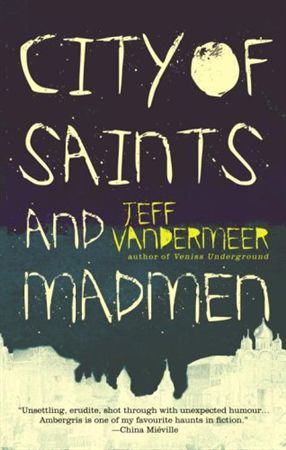 There sat a book that drew my hand toward its spine, and before I realized what I was doing, I was looking at the cover to CITY OF SAINTS AND MADMEN. Something in the back of my mind rose (squid-like) to the surface. I read the comments on the back of the book, and on the first few pages. There was something here…something I’d been looking for. To my amusement, the book itself validated my thought seconds later as I read the quote from Mr. Moorcock: “It’s what you’ve been looking for.”
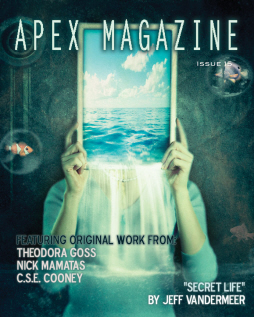 Apex Magazine #15 was published on August 2, featuring fiction from Theodora Goss, Nick Mamatas, a reprint by Jeff VanderMeer — and “Dogstar Men,” a short poem by Black Gate blogger C.S.E. Cooney.
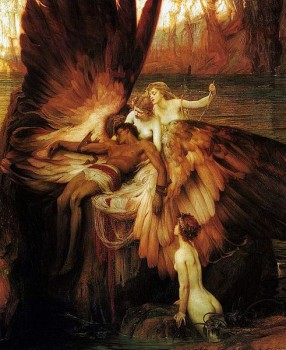 . . . And the boy thought,
 Bitch Slap the (unrated) film relates to fantasy fiction how, you may ask?
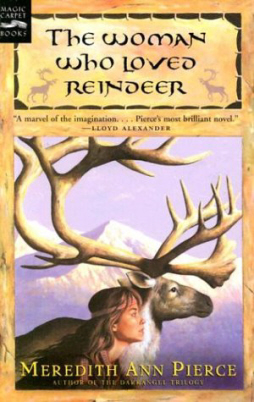 The Woman Who Loved Reindeer, by Meredith Ann Pierce
 I don’t know what makes a novel great. Maybe every great book is great in its own way. I suspect, though, that a novel’s greatness resides most often either in its structure (not just its plot, but its balancing of themes and elements, its division into units like chapters, and its decision of what to describe and when) or its prose (its ability to make every word count, not only in depicting character and setting, not only in moving forward story, but in advancing the theme of the book, what it’s about, the idea that prompted the telling of the tale in the first place).
 We’ve just re-vamped our