“And the Score at the Text Break Is…” My Favorite Soundtracks for Writing
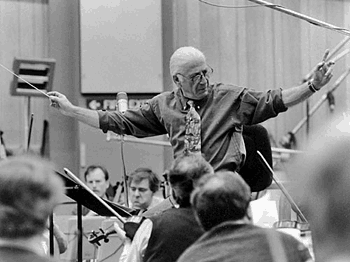 I always write with music playing. That’s not much of an admission. A few writers prefer to work in silence, but most that I have talked to say that they need to have music in the background while they work at their keyboards or notebooks. Some writers like to listen with headphones on as an extra seal against the rest of the world, but I only do that if I’m working in a public environment. Otherwise, I let my massively stuffed iPod play through the huge speakers in my apartment to surround me with music as I work.
Just as every writer has a different method of writing, so does every writer have difference musical preferences for underscoring his or her work. But “underscore” is the key word, since I have discovered that film music is perhaps the number one choice for music to write by. One reason for this is that film scores usually lack lyrics (at least in English; Latin chanting is a standby, Ave Satani!) that can distract from the author’s own words. Film music, regardless of its style, also inherently has a dramatic feel that parallels how writers often think.
The situation is a bit different for me. I do listen to film scores while writing, but that’s because film music is my favorite form of music. I have listened to film scores more than any other type of music since high school, when I turned into an avid collector of soundtrack albums. My collection is now somewhere in the thousands, and ranges in obscurity from John Williams’s Star Wars scores to films nobody remembers except film score collectors (The Cassandra Crossing). The chronological scope of my collection is just as wide, from silent movie scores to films released a few weeks ago. Film music is one of my deep passions.


 Pulp Winds
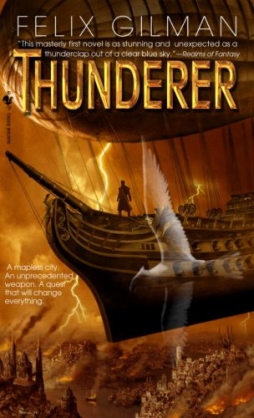 I want to write about the novels of Felix Gilman, who I believe is one of the strongest new novelists in fantasy fiction today. He’s written three books, Thunderer, Gears of the City, and The Half-Made World, all of them accomplished and powerful, fusing imaginative range with a compelling style and real insight into character and voice. I’ve written about Thunderer
 A Magic of Nightfall
 Selling novel-length fiction is tough. Really tough. Anyone who’s been in it for any length of time can tell you how competitive it is, how quickly the rejections can stack up, how frustrating it can be to get someone to even look at your manuscript. If you’re like me, you’ve tried submitting dozens of query letters in hopes that someone will at least ask for a few pages of the work itself. I mean, that’s fair, right — to at least look at the stuff before you reject it?