William Blake and the Nature of Fantasy
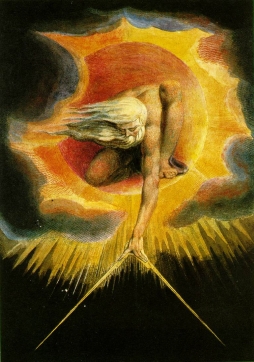 Perhaps my favourite fantasy writing is arguably not fantasy at all. The epics and prophecies of William Blake certainly read like fantasy to many people, I think, albeit fantasy in a distinctive, unfamiliar form. But is the word appropriate? Blake himself was a visionary — he literally saw visions — and may well have believed that some at least of his writing was literally true. Does the definition of fantasy reside in the writer, or the reader? And how would Blake himself want his writing to be viewed?
Farah Mendlesohn, in her book Rhetorics of Fantasy, argued that the term ‘fantasy’ did not necessarily apply to the works of Latin American magic realist writers. As I understand her, she argues that the cultures of these writers are distinct from the culture that produced ‘fantasy fiction,’ and that the writers therefore stand in a different relationship of belief to the fiction. Magic realist texts “are not meant to act as genre text. Instead, the world from which the text was written is the primary world. It only becomes fantastical because we Anglo-American readers are outsiders. … Magic realism … is written with the sense of fading belief. If we are looking for some form of it, we need the literature of a similar culture, one in which the presence of other powers is a real and vibrant thing, even if it must exist alongside scientific rationalism.”
I don’t know whether what Mendlesohn describes is necessarily a cultural outlook, or whether it can be a personal one. She acknowledges it can apply to writing from the American South. But take John Crowley’s novel quartet The Solitudes, which seems like a North American piece of magic realism and which very carefully builds in explanations for its metaphysical elements — Crowley suggests that the world remakes itself on occasion, with different rules and a rewritten history each time; magic might have worked once, the books say, but when the world last changed, not only did magic stop working, but history itself was changed so that in fact magic now never has worked. Does one need to concern oneself with Crowley’s own philosophical positions before determining whether his writing is fantasy? (In fact, it’s a more complicated question than that; briefly, the characters are half-aware that they’re characters in a story, and the text itself unfolds aware of its nature as a text. Whether this makes it more fantastic or less is an interesting point, but not what I want to talk about here.)
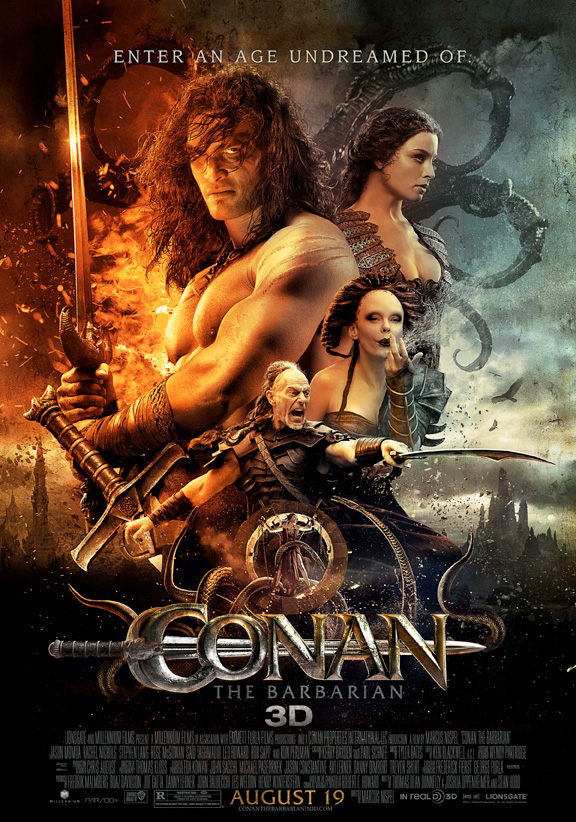 Friends, Bloggers, Conan Fans, lend me your ears! I come not to defend the new CONAN movie, but to present an informal overview that examines what works and what doesn’t work. To begin, I’ve seen a lot better movies … and I’ve seen a LOT worse movies.
 The new
  Master of Devils
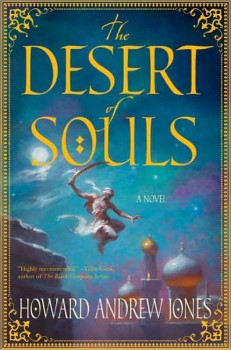 Sohaib Awan at Fictional Frontiers interviews Black Gate Managing Editor Howard Andrew Jones on his first novel The Desert of Souls, non-Western fantasy, juggling modern expectations in historical fiction, and much more:
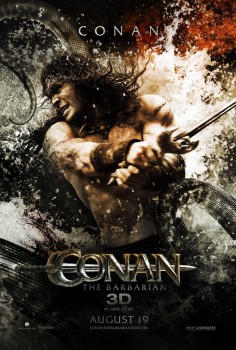 I’ve refrained from talking about Conan the Barbarian (2011) until now, despite my love for Robert E. Howard’s works. But now that we’re poised on the eve of its U.S. release, I thought I’d weigh in with my personal hopes—and fears—regarding the film.