Game Over? Atari’s U.S. Operations File for Chapter 11 Bankruptcy
 Atari, one of the most storied game manufacturers in history, has filed for bankruptcy protection in the United States, and has indicated it plans to to sell off its logo and most profitable videogame franchises.
Atari was incorporated on June 27, 1972 by videogame pioneer Nolan Bushnell and his partner Ted Dabney. Their first games included Pong, Asteroids, and Centipede. By the end of the 20th century, the company had fallen on hard times and essentially vanished. In 1998, Hasbro Interactive acquired Atari’s assets, including the name.
At this point, following the Atari brand gets a little tortured. The company currently operating under the name Atari was founded as GT Interactive in 1993 (long-time gamers may remember GT Interactive as publishers of Doom II, Unreal, Heretic, and Imperium Galactica). They changed names to Infogrames in 1999, and in 2003 licensed the Atari name and logo and changed their name to Atari Inc.
Through all the changes, Atari remained a premiere publisher, especially for fantasy fans. It owns or manages more than 200 brands, and in the last decade alone published Neverwinter Nights (2002), The Temple of Elemental Evil (2003), Master of Orion 3 (2003), Dungeons & Dragons: Dragonshard (2005), Dungeons & Dragons Online (2006), Star Trek Online (2010), Daggerdale (2011), and The Witcher 2 (2011). Its most recent release of note is the PC version of Baldur’s Gate Enhanced Edition.
The bankruptcy is intended to sever ties with its troubled French parent, Atari SA (previously called Infogrames), and secure additional funding to continue operations.
Atari US employs roughly 40 people and is seeking $5.25 million, primarily to develop games for digital and mobile platforms.
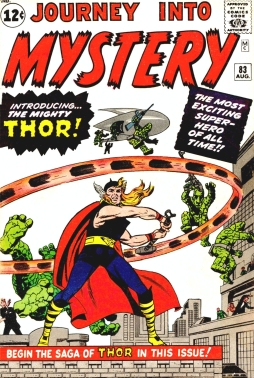 Journey Into Mystery first appeared in 1952, one of a number of anthology titles from publisher Martin Goodman’s line of comic books. Over the years, the title featured a lot of short horror, fantasy, and science fiction tales, many of them collaborations between editor/scripter Stan Lee and artists like Steve Ditko and Jack Kirby. Until 1962. At that point Goodman’s comics were beginning to change direction, following a revival of interest in the super-hero genre. A team book, The Fantastic Four, had taken off. A solo book had followed, The Incredible Hulk. Heroes would now be his company’s main product, and the line would soon come to be known as Marvel Comics. The horror anthology books would be taken over by recurring super-hero characters, and Journey Into Mystery would be the first of the bunch. So with issue 83, in August 1962, in a story credited to Stan Lee and artist Jack Kirby, it introduced its new lead: the mighty Thor, Norse god of thunder.
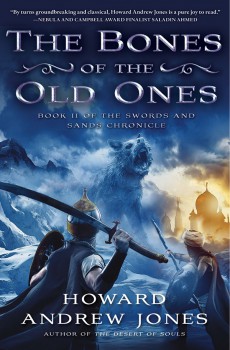 Gregory A. Wilson and Bradley P. Beaulieu interview Black Gate Managing Editor Howard Andrew Jones for episode 65 of Speculate!, the Podcast for Writers, Readers, and Fans.