Vintage Treasures: The Little Book of Vintage Sci-Fi
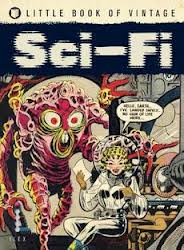 It’s a great time to be a Golden Age comics fan. If you’re interested in high-priced, archival-quality reproductions of 1950s science fiction and horror comics, there are plenty on the market.
This isn’t one of them.
The Little Book of Vintage Sci-Fi, in fact, is a tiny marvel of affordable comics nostalgia in a sea of overpriced hardcovers. It makes no pretense of offering complete issues, or highly collectible authors and artists, or re-colored anything. But for less than the price of a crummy SF paperback, it offers 112 full-color pages of gonzo Golden Age greatness from an assortment of impossible-to-find comics.
Opening with an 8-page introduction by Tim Pilcher, covering the history of 50s sci-fi comics in surprising detail, The Little Book of Vintage Sci-Fi contains five complete tales, including Explanation, Please! No. 1 Falling Frogs, and Out of the Unknown No. 1: Creature From the Crater. In between are glorious covers from Outer Space, Forbidden Worlds, Adventures Into the Unknown and others, depicting crashing alien spacecraft, stolen moons, and skyscraper-destroying dinosaurs.
There are even full-color reproductions of the classic advertisements that mesmerized me as a kid, including the “Jet” Rocket Space Ship — over six feet long, with levers that work, for only $2.98! — and the 98-cent Sensational Televiewer.
The Little Book of Vintage Sci-Fi was published on April 1, 2012 by Ilex Gift. It is $5.95 for 112 pages, and is one of a set of Little Books from the same publisher, all edited by Tom Pilcher. The others cover Vintage Horror, Sauciness, Crime , Combat, Terror, Romance, and Space. Collect them all!

 The students in Intro to Poetry read scared. They started the semester twitchy as rabbits. Poetry made them feel stupid. No, let’s be more specific: being asked to explain poetry made them anticipate humiliation. Their baggage from their high school English classes led them to expect, reasonably or not, that they had to be experts already, that they would be chastised in front of one another and punished with bad grades for not already knowing as much as their teachers did. They felt like newly licensed drivers trying to merge onto a freeway from a stop sign.

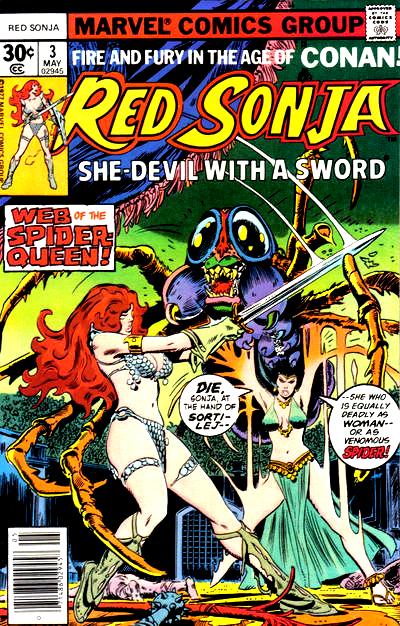
 The Hugo Award for Best Graphic Story was first given out in 2009. The category was a nice idea, especially given the increased prominence of comics in the media landscape, but I have to admit that up to this year, I’ve been underwhelmed by the choice of winners. Or, more precisely, winner, singular: Phil and Kaja Foglio’s webcomic Girl Genius took the award three times straight. I don’t dislike the comic, but from what I’ve read, I’d be hard-pressed to identify anything in it that makes it worth a major award ahead of any number of series — Hellboy or Mouse Guard or Wednesday Comics or RASL or All-Star Superman or you name it. After their third win, though, the Foglios announced they would decline to accept a nomination for the next year, in the interest of helping to establish the validity of the award. So the 2012 Hugo went to another title:
  ‘Tis the season for great book deals.