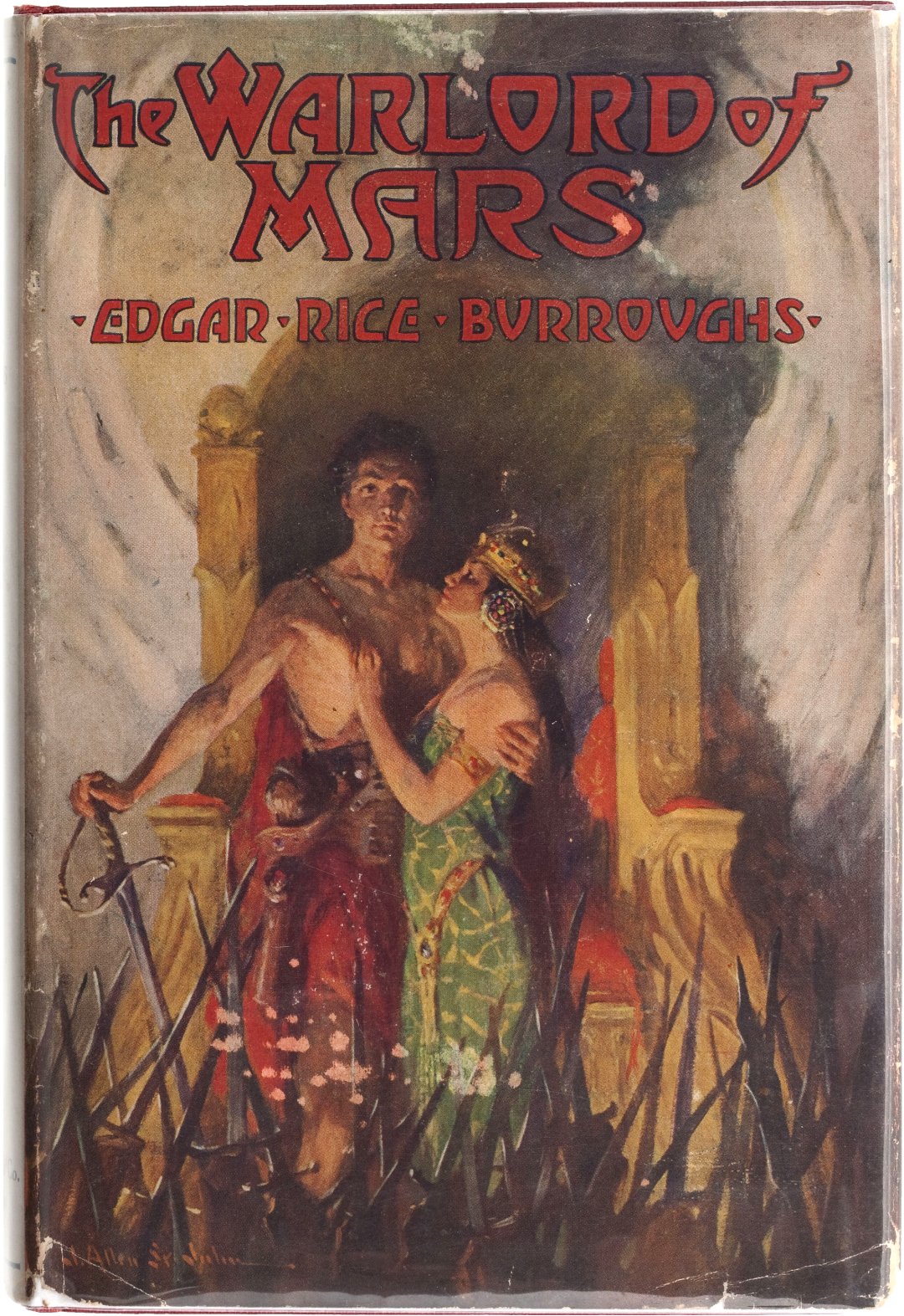
Affair of the Bear: The Oakdale Affair by Edgar Rice Burroughs
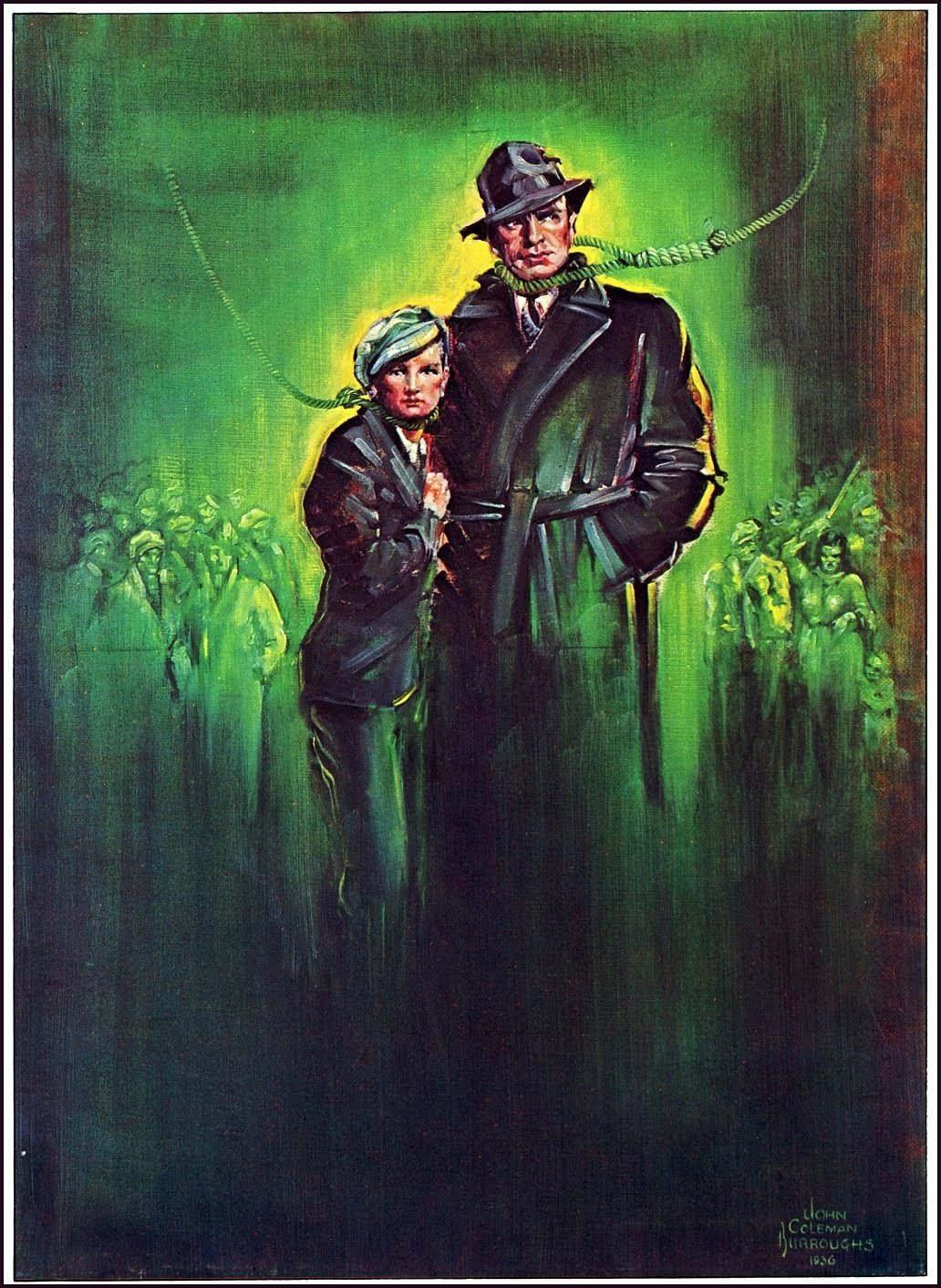 Yes, this is the 3,000th post on Black Gate. Discovered after the fact, of course. Never thought I’d be writing about a murder mystery centered on a bear for the occasion, but what the hey.
In the spring of 1917, as he was completing the last of the “New Tarzan Adventures” that would eventually fill the volume Jungle Tales of Tarzan, Edgar Rice Burroughs wrote a short novel (40,000 words) titled “Bridge and the Oskaloosa Kid.” A reader of the previous year’s The Return of the Mucker might recognize the name “Bridge” as belonging to that novel’s itinerant poet and co-hero. Burroughs liked the character so much that he spun him off into his own story: a crime drama/mystery, something different for the author.
Editor Bob Davis at All-Story found little to appreciate about ERB’s new tact when “Bridge and the Oskaloosa Kid” landed on his desk. He argued that its twist ending stretched credulity past what readers would tolerate: “Lord! Edgar, how do you expect people who love and worship you to stand up for anything like that? And the bear stuff, and the clanking of chains!” Davis may also have objected to mentions of one of the villains injecting morphine to feed an addiction. Although Davis remarked that Bridge was a “splendid character” in The Return of the Mucker and “well worth a great story,” the editor didn’t think this was it. He bounced the novel back to ERB.
Burroughs had his own doubts about “Bridge and the Oskaloosa Kid,” criticizing his performance as “rotten” even before he finished. But his name was still good for a sale in a magazine in 1917, and the novel ended up at Blue Book, printed in full in the March 1918 issue under the more economical title The Oakdale Affair. Editor Ray Long paid $600 for it, considerably less than ERB’s standard pay-rate at the time.
A year later, a movie titled The Oakdale Affair starring Evelyn Greeley premiered from World Film Company. It was the fourth film made from ERB’s work, and a rare non-Tarzan one. Somebody must have liked the book, the opinions of the author and his editor be damned!
What to make of this unofficial third novel of the “Mucker Trilogy,” a crime thriller/mystery with a vanished heiress, murderous drifters, gypsies, an enthusiastic child detective, a deadly bear, a lynch mob, a couple of dead bodies, and a chain-clanking ghost in a haunted house? Did ERB stray too far in looking for somewhere else for his poetry-loving Bridge to roam?



 When I